Asheville sits above 2,100 feet, and that elevation rewrites the timeline
Most curing charts were built for lowland jobs — the NC Piedmont, the coastal plain, a flat suburban lot outside Charlotte. Buncombe County operates on different physics. Asheville is above 2,100 feet in the Southern Blue Ridge, and much of the surrounding county climbs higher still. On a July afternoon, a south-facing driveway here can hit surface temperatures of 140–160°F even when the air temperature holds in the mid-80s. The National Weather Service office covering this area consistently records summer overnight lows in the low 60s — a swing of 80°F or more across a single 24-hour period.
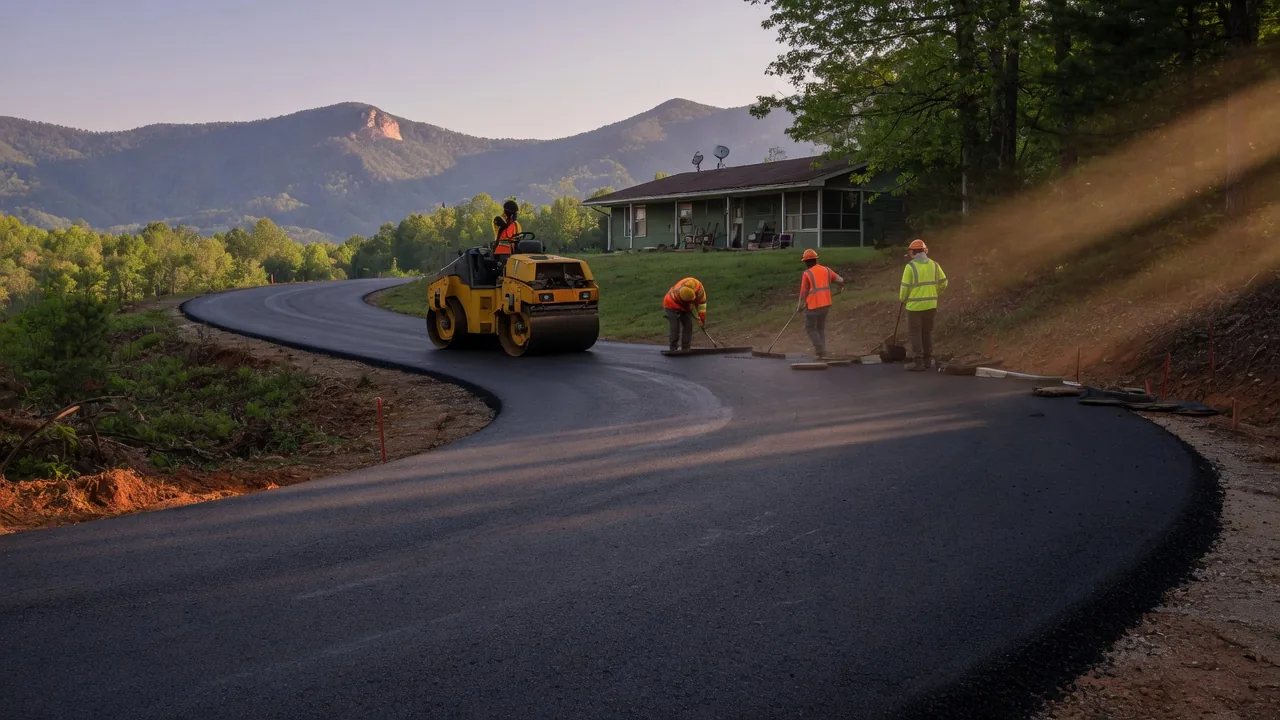
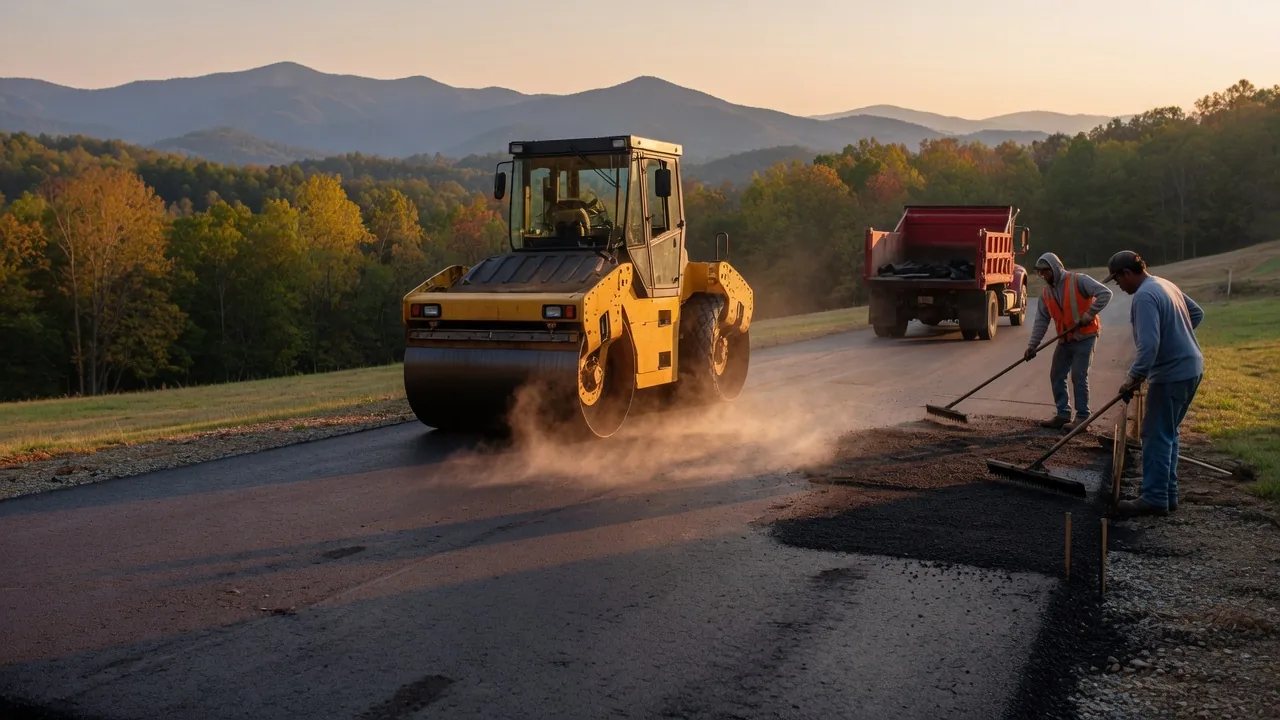
For fresh asphalt, that swing matters. Binder softens in the afternoon heat and firms overnight, cycling soft-to-firm-to-soft on repeat through the critical first weeks. On a flat lot in Wilmington, 24 hours is often a conservative target. In Asheville, 48 to 72 hours before the first vehicle is the floor on any summer day with highs above 80°F — closer to 72 on a hot, south-facing run. Mountain paving contractors who work regularly in Buncombe County build that cushion in because they have seen the alternative. A driveway paved on a 90°F Thursday can still show finger-depth softness by Friday evening; that is mountain summer physics, not a quality failure. The same driveway paved in October firms in 24 hours and holds by morning.
If you are planning the timing of the job itself rather than managing a fresh pour, the best time to pave a driveway covers how Asheville's mountain season and fall rain pattern should shape the scheduling decision.
Wait times by vehicle, load, and mountain-climate conditions
The table below reflects guidance calibrated to mountain-climate NC — not manufacturer spec sheets written for sea-level installs in Florida heat. Conditions in Buncombe County routinely exceed those assumptions from June through September.
| Situation | Minimum Wait | Notes |
|---|---|---|
| Foot traffic only | 3–6 hours | Stay off freshly raked seams and unsupported edges |
| Passenger car — mild day (60s–75°F high) | 24 hours | Avoid power turns; rotate parking spots through week one |
| Passenger car — hot day (80°F+ high) | 48–72 hours | Surface temps can exceed 140°F; binder still compressible under tire load |
| SUV or light pickup | 72 hours minimum | Greater axle load; keep tires away from unsupported edges |
| Delivery truck, moving van, or dumpster | 14 days minimum | Concentrated loads; use equipment pads where possible |
| Heavy equipment, RV, or concrete truck | 6–12 months | Full cure required; no exceptions on hillside lots |
Drainage is the variable every row above assumes is working correctly. Buncombe County has recorded 19 federal disaster declarations over 1973-2026, most tied to flooding and heavy rain events in the mountain terrain. A driveway that drains poorly while the base is still soft can settle unevenly within the first season — water undermining the compacted base shows up later as dips or cracking along the center line. Confirm sheet-flow direction before the crew packs up.
What's still happening in the pavement through the first year
Cooling is not curing. Asphalt binder keeps oxidizing and stiffening through repeated heat-and-cool cycles — it does not reach full structural strength until it has absorbed a full summer and, in Buncombe County, the freeze-thaw cycles that occur at elevations above 2,000 feet. That process typically completes in 6 to 12 months.
During that window, the surface is susceptible to concentrated pressure. A motorcycle kickstand, a vehicle jack positioned on bare pavement, a heavy planter left in one spot through July — all can leave depressions the pavement never recovers from. Turning a steering wheel while the vehicle is stationary (a power turn) scuffs binder in late June in a way that same surface would never show in December. Rotating where you park through the first summer prevents the tire-channel impressions that are the most common first-year complaint from homeowners who followed the 48-hour rule but then parked nose-in at the same angle every evening.
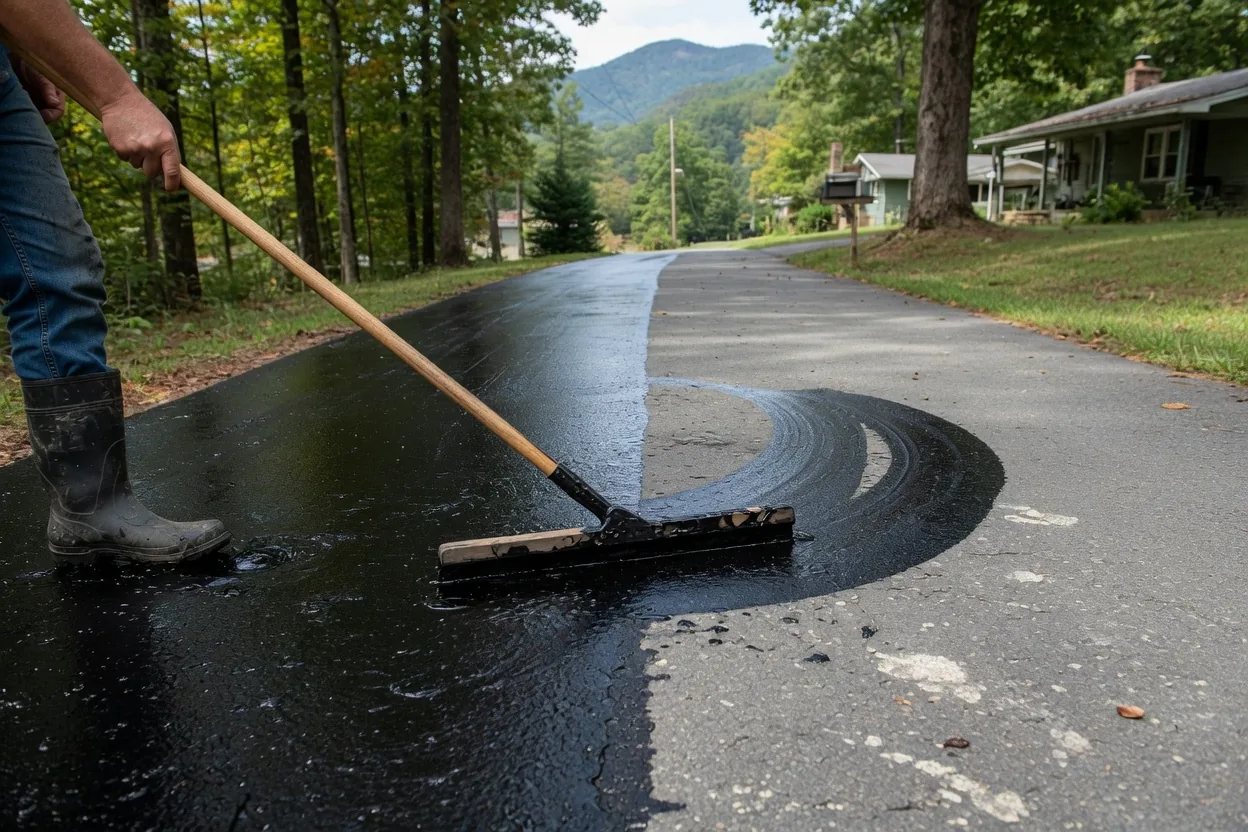
Sealcoating fits into this same long timeline, but timing it correctly matters: too early and you seal in volatiles that have not finished curing out. The sealcoating timing guide covers the correct window for Asheville's mountain climate, including how altitude affects the standard manufacturer guidance on application temperature and overnight low thresholds.
For a full picture of what the installation itself involves — base preparation, mix selection, and what separates a 20-year driveway from one that needs patching in year three — see the asphalt paving overview.
Driveway connections to state and city roads — what the permit governs
The wait time before driving on new asphalt is determined by chemistry and weather. The permit timeline is determined by the road the driveway connects to. These are separate processes, and conflating them is where project timelines slip.
A driveway that ties into an NCDOT-maintained road — which covers most residential streets outside Asheville's city limits in Buncombe County — requires an encroachment permit before paving begins. Applications go through NCDOT Connect. The permit governs tie-in geometry, sight distance to passing traffic, approach grade, and drainage at the curb cut. It does not tell you when to drive on new asphalt, but it does establish that work cannot legally begin until the permit is issued and that the tie-in must pass NCDOT inspection.
Inside Asheville city limits, the City of Asheville handles driveway and approach permits for city-maintained streets through its development services department. The fee is typically modest; the permit record matters at resale and for any insurance claim touching the approach. A contractor who suggests skipping the permit to save a few days of lead time is transferring that compliance exposure to the property owner — not saving them money.
Edges, petroleum, and the first 30 days on a mountain lot
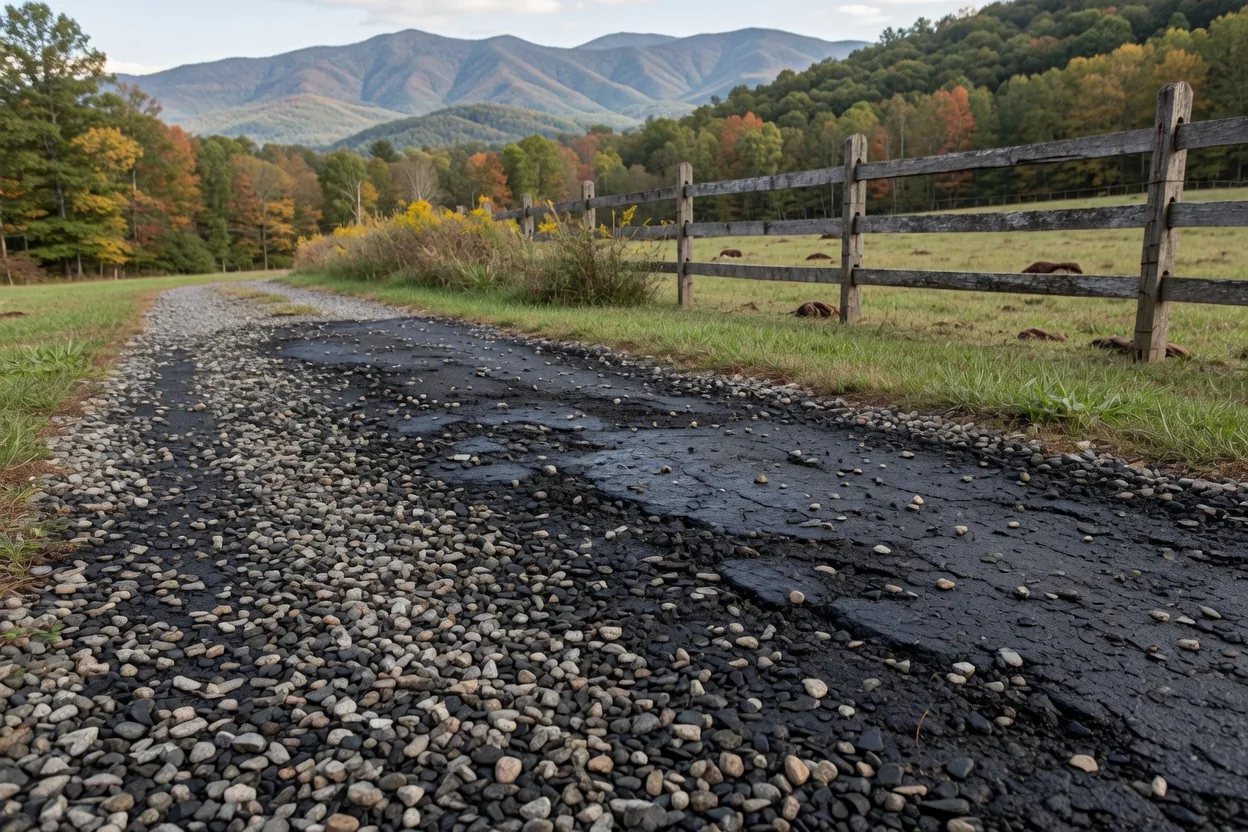
The unsupported edge is the most vulnerable point on a new driveway, and Buncombe County's terrain makes it more consequential here than on a flat suburban lot. When a driveway is cut into a hillside — standard across West Asheville, Weaverville, Black Mountain, and the county's rural stretches — the edge where pavement meets a drop-off or grass shoulder has no lateral confinement. Driving over that edge during the first month can crack it back three to six inches from the margin. That repair becomes a patch rather than a seamless extension of the surface. Keep tires at least a foot inside the unsupported edge through the first full season.
Petroleum products carry a separate early risk. Fresh binder is still somewhat soluble in petroleum-based fluids; an active oil or transmission fluid drip can soften the surface locally at the concentration point. Any vehicle with a known leak should stay on a different surface until the leak is repaired.
The National Weather Service consistently ranks the Asheville area among the wettest in the eastern U.S. — the Southern Appalachians intercept both Atlantic and Gulf weather systems. On fresh asphalt, standing water that pools for hours on a still-soft surface can work into edge gaps or thin seams. The grading done at installation is the protection against this; verify that the finished surface sheets water away from the structure and toward the intended drainage path before signing off on the job.
Before you plan around a fresh driveway, check the National Weather Service forecast for heat and rain in the first days, and if the driveway meets a state road, the NC Department of Transportation sets the rules for that connection.