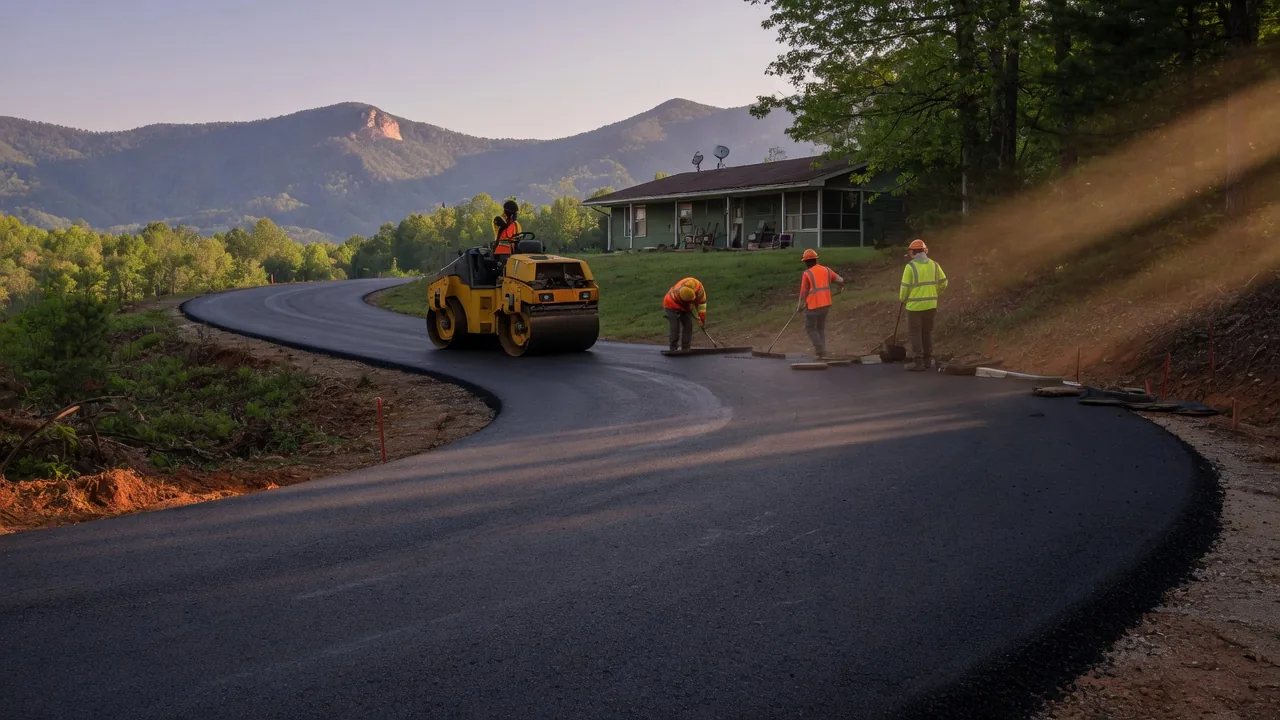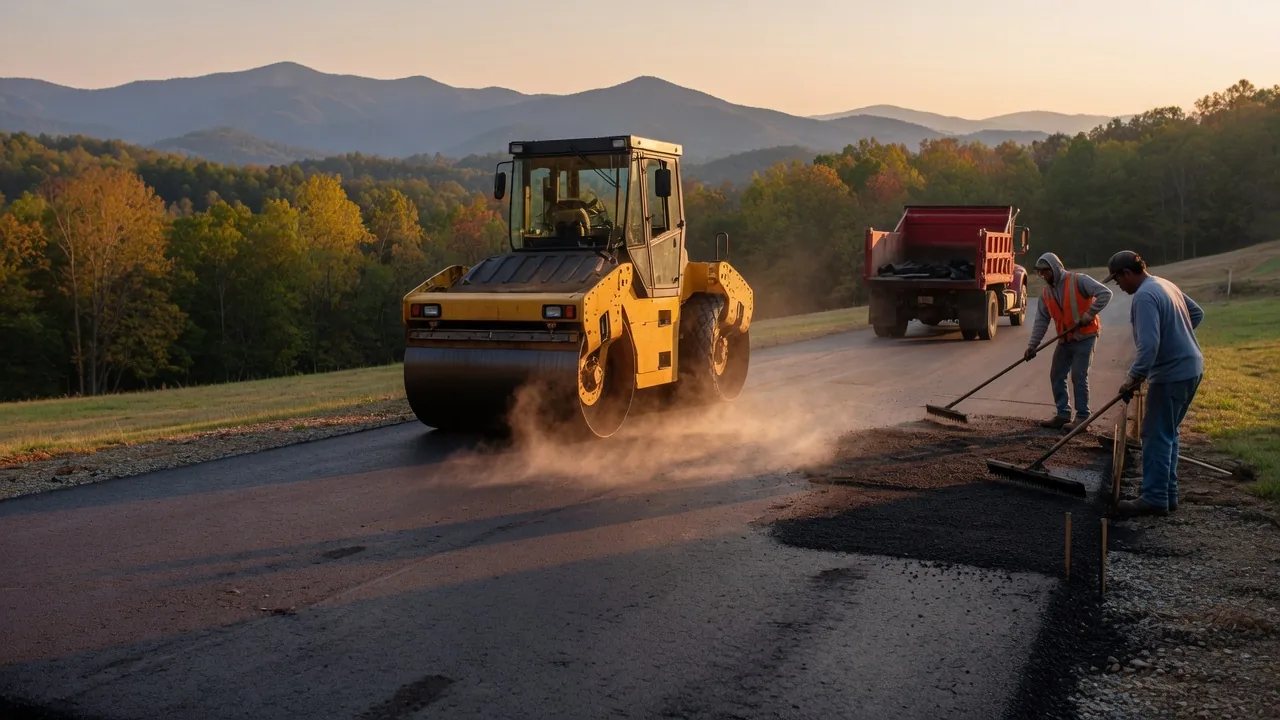
Elevation and clay soil change the calculation here
Asheville sits above 2,100 feet, meaning driveways here face more freeze-thaw cycles per winter than contractors in Charlotte or the Piedmont typically manage. That single fact reshapes the asphalt vs concrete driveway comparison for Western NC. The National Weather Service tracks Asheville's climate as distinctly colder than most of the state — freeze events that crack flat-ground concrete become heaving events when the subgrade is the red clay common to Buncombe County slopes. Clay absorbs moisture, expands, and pushes up whatever sits on top of it.
With 19 federal disaster declarations on record over 1973-2026, water moves through this county in volumes that flat-state drainage assumptions don't anticipate. The best driveway installation here starts with base preparation and grading, not a surface material choice. Get that wrong and neither asphalt nor concrete performs as expected. For a clear picture of long-term performance, see how long an asphalt driveway lasts — and factor in the mountain climate specifically.
Buncombe County's terrain varies sharply from one neighborhood to the next. Lots on north-facing ridges around Weaverville or Woodfin hold frozen ground longer into spring than south-facing lots in the Swannanoa Valley floor. A driveway on a shaded, north-facing slope may see twice the effective freeze-thaw cycles of one just a few miles away — a difference that statewide cost guides never capture. That variability is why a contractor who works regularly in the county quotes jobs differently than one pricing by a regional average. The French Broad River basin that defines much of this county's drainage character adds another layer: runoff moves fast off these ridges, and driveways that intercept that flow without proper edge drainage fail at the base layer long before the surface shows any visible sign of it.
Material comparison on the factors that matter in the mountains
Neither material wins across every category. The table below reflects conditions specific to Buncombe County: clay subgrades, winter freeze exposure, and the steep residential lots common throughout the Asheville area.
| Factor | Asphalt | Concrete |
|---|---|---|
| Upfront installed cost | $4–$8 per sq ft | $7–$14 per sq ft |
| Freeze-thaw resilience on clay | Good — flexes rather than cracks | Fair — prone to cracking on expanding subgrade |
| Lifespan with maintenance | 15–25 years | 25–40 years on flat, well-drained base |
| Slope grip in wet or icy conditions | Moderate; texture degrades over time | Better with broom finish; surface holds texture longer |
| Summer heat softening | Can soften in direct sun; Asheville's elevation keeps summers milder than lowlands | No softening; stays cooler underfoot |
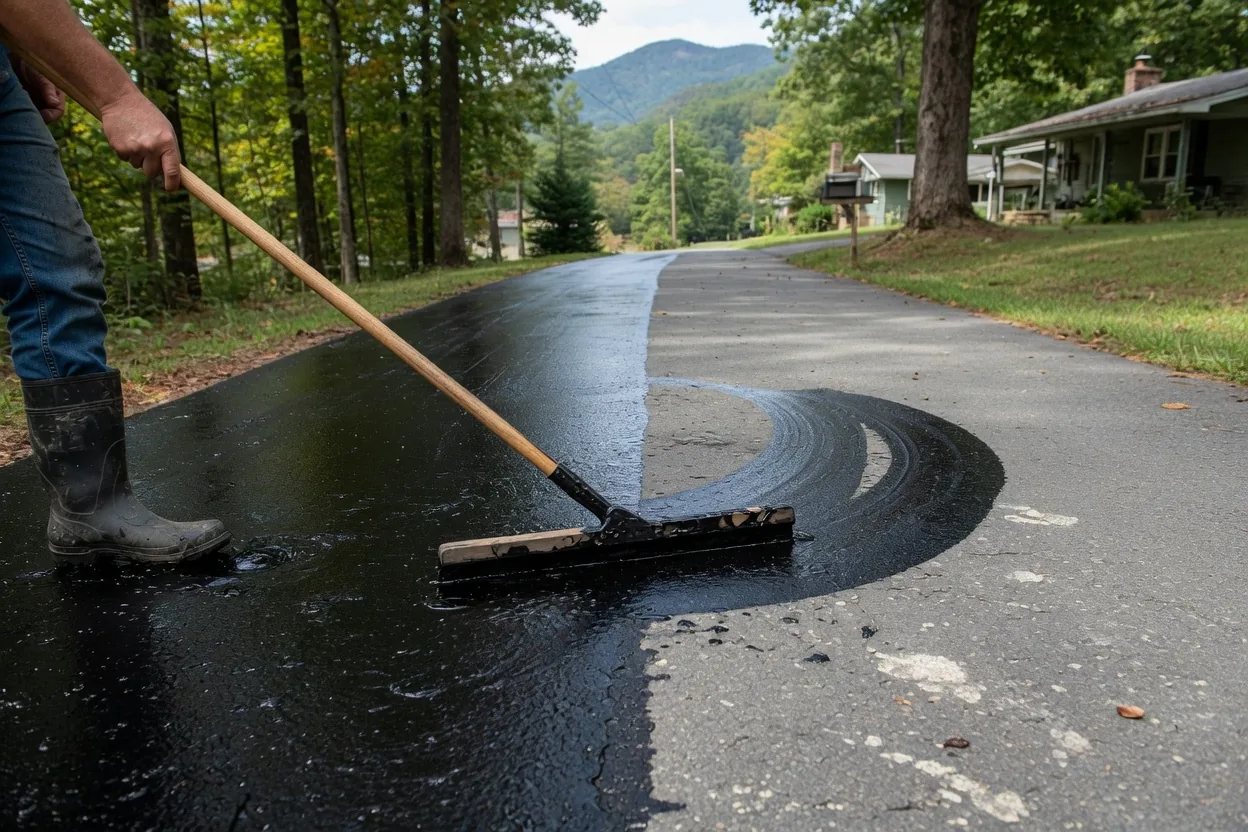
| Maintenance cycle | Seal coat every 3–5 years; see full cost detail | Periodic joint sealing; no annual treatment required |
| Repair visibility after damage | Patching visible but functional | Surface cracks harder to repair invisibly |
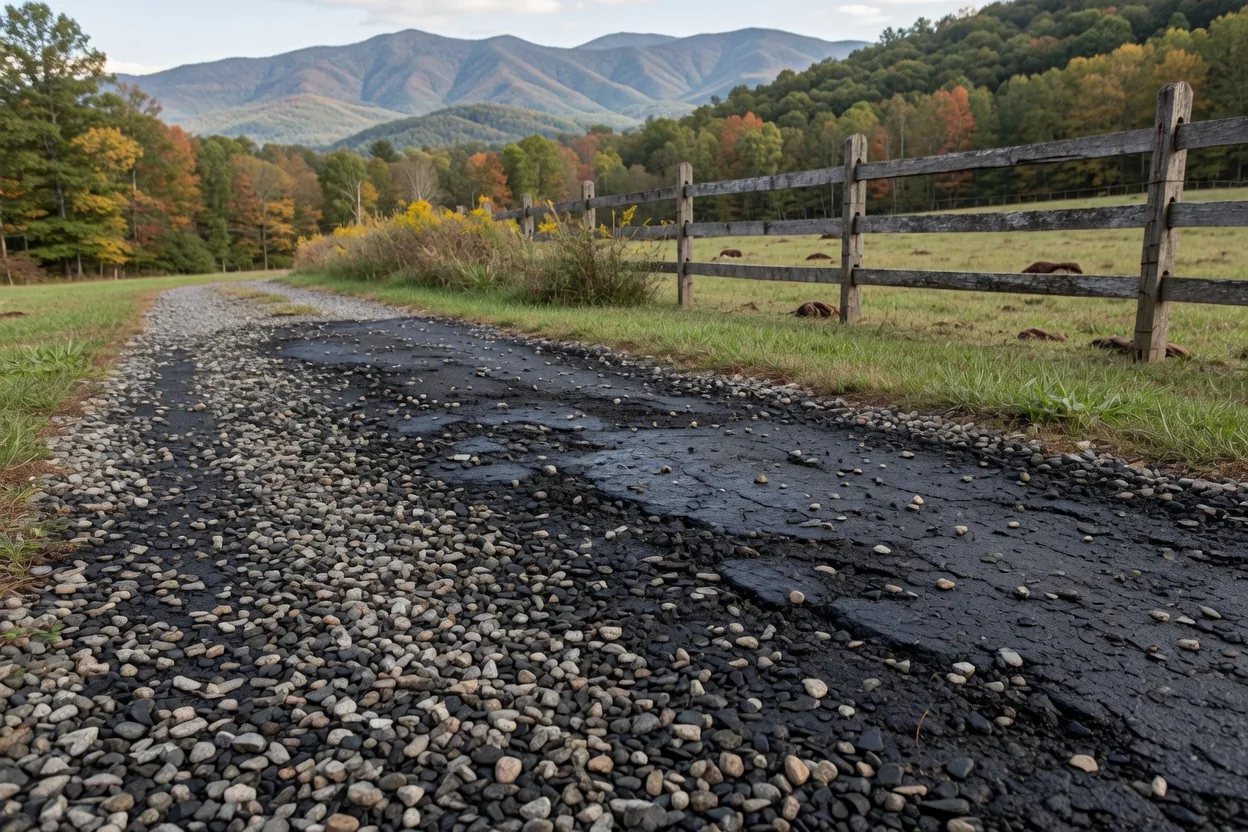
One alternative worth knowing for steep mountain grades: tar-and-chip driveways use an asphalt binder with aggregate pressed into the surface. That rough texture provides grip on November slopes where smooth asphalt can be unreliable, and the cost lands between asphalt and concrete.
Asheville's elevation deserves more attention in the summer heat softening row. The lowland concern about asphalt turning tacky in peak summer is less acute here than in Charlotte or Wilmington — the city's position in the Blue Ridge keeps afternoon highs recorded by the National Weather Service well below what Piedmont driveways endure on the hottest days. That said, south-facing driveways on exposed slopes do concentrate solar heat, and very dark asphalt on those surfaces can still soften on the hottest July afternoons in the Swannanoa Valley. A chip-seal or aggregate-surface finish addresses this while adding the traction benefit that mountain driveways need year-round — not just in winter.
Permits and NCDOT rules before any work begins
Driveway work in Buncombe County is not permit-free simply because it is on private property. Three separate rules layer on top of each other depending on location and scope:
| Situation | Requirement |
|---|---|
| Driveway apron connects to a state-maintained road | NCDOT driveway permit required — submit through NCDOT Connect; approval required before breaking ground |
| Work within Asheville city limits | City of Asheville Development Services reviews driveway modifications near public right-of-way; zoning or encroachment permit may apply |
| Land disturbance on a slope or near a stream buffer | Erosion and Sedimentation Control permit required; Buncombe County's terrain frequently triggers this threshold |
| Replacing an existing residential driveway in-kind, no expansion | Typically no permit required — but confirm material and ROW edge with your county inspector before breaking ground |
| Expanding driveway width near a state road | NCDOT permit required regardless of material or whether the existing apron was permitted |
The NCDOT permit is especially common in Buncombe County because many rural roads and mountain highways are state-maintained. A contractor who suggests skipping the permit to save a few days is placing the legal exposure on the property owner. That permit record also travels with the deed — unpermitted tie-ins to state roads surface during real estate due diligence, not after closing. For relevant licensing and code standards, the NC Department of Insurance Engineering and Building Codes division administers the residential building code framework that local inspections departments enforce.
The erosion and sedimentation trigger is particularly relevant in Buncombe County because even modest driveway work on a sloped lot can involve enough disturbed area to require a plan submittal. The county's ridge-and-hollow topography means that stormwater dislodged from a hillside driveway project does not stay on the property — it moves downhill toward neighboring lots, stream buffers, and eventually the French Broad watershed. Inspectors in this county are familiar with this pattern and will ask about it. Having drainage addressed in the project scope before the permit application is filed avoids re-submittal delays and signals to the reviewer that the contractor understands mountain conditions.
What driveway work costs in the Asheville area
Prices in Western NC run higher than statewide averages for two concrete reasons: material haul distances to mountain job sites, and the deeper base preparation that clay slopes require to survive the first winter. The ranges below cover installed cost including excavation, base, and surface — not surface-only overlays.
| Scope | Typical range |
|---|---|
| Asphalt overlay on sound existing base (per sq ft) | $2–$5 |
| New asphalt driveway, full base, average residential (600–800 sq ft) | $2,400–$6,400 |
| New concrete driveway, flat grade, average residential (600–800 sq ft) | $4,200–$11,200 |
| Steep-grade premium (slope prep, drainage, retaining as needed) | $500–$2,500 additional depending on severity |
| Seal coat on existing asphalt driveway | $200–$600 for a typical residential drive |
| Concrete crack repair and joint resealing | $150–$500 depending on extent |
The base depth requirement is where mountain jobs diverge most from flatland estimates. Clay soil that holds moisture through a wet Western NC winter expands enough to crack an underprepared driveway within its first season. Contractors who cut base depth to lower their bid are cutting the part of the job that makes either material last.
Aggregate and ready-mix concrete delivered to mountain job sites sometimes carry a haul premium not reflected in statewide cost guides. A job on a narrow ridge road with limited truck turnaround adds mobilization time that a flat suburban lot never requires. When comparing bids on a Buncombe County project, ask each contractor whether their price accounts for the specific access and grade at your address — not just an average job in the region. The difference between a quote built for a level lot near Asheville's urban core and one built for a steep driveway off Leicester Highway or Elk Mountain Scenic Highway can be several hundred dollars on identical square footage, even before any slope-prep line item is added.
Matching material to the property
Asphalt typically makes more sense on steep grades above roughly 10%, on lots with red-clay subgrade that drains slowly, on properties where budget limits the concrete premium, and where a 15–25 year lifespan with periodic sealing fits the ownership horizon. It flexes rather than fractures when the ground moves underneath it — and in Buncombe County, the ground moves.
Concrete typically makes more sense on flatter lots in the Asheville urban core where drainage is managed and subgrade is stable fill or compacted base, on driveways where finish appearance matters (stamped or colored concrete is an option asphalt cannot match), and on properties held long enough to amortize the higher upfront cost. The longevity advantage is real when the conditions support it.
Neither material repairs a drainage problem. If water pools on or beside an existing driveway, the fix belongs at the grading and base layer, not at the surface. Driveways in the French Broad watershed have learned this across 19 federal disaster declarations over 1973-2026. Solve the drainage; then choose the surface. A tar-and-chip surface is worth considering on longer mountain driveways where slope traction and cost both matter — it sits between asphalt and concrete on every relevant dimension.
Homeowners in the communities surrounding Asheville — Black Mountain, Swannanoa, Weaverville, Arden, and the Fairview corridor — face the same terrain questions as those inside city limits, often without city sewer infrastructure and with longer driveway runs connecting to state-maintained secondary roads. For those properties, the NCDOT permit question and the haul-distance cost factor are both more likely to apply than on a compact urban lot. The same clay subgrade and freeze-thaw exposure extend well beyond the Asheville city boundary, and the guidance on base depth and drainage applies with equal force across all of Buncombe County's residential areas.