Candler driveways run long, and that shapes every estimate
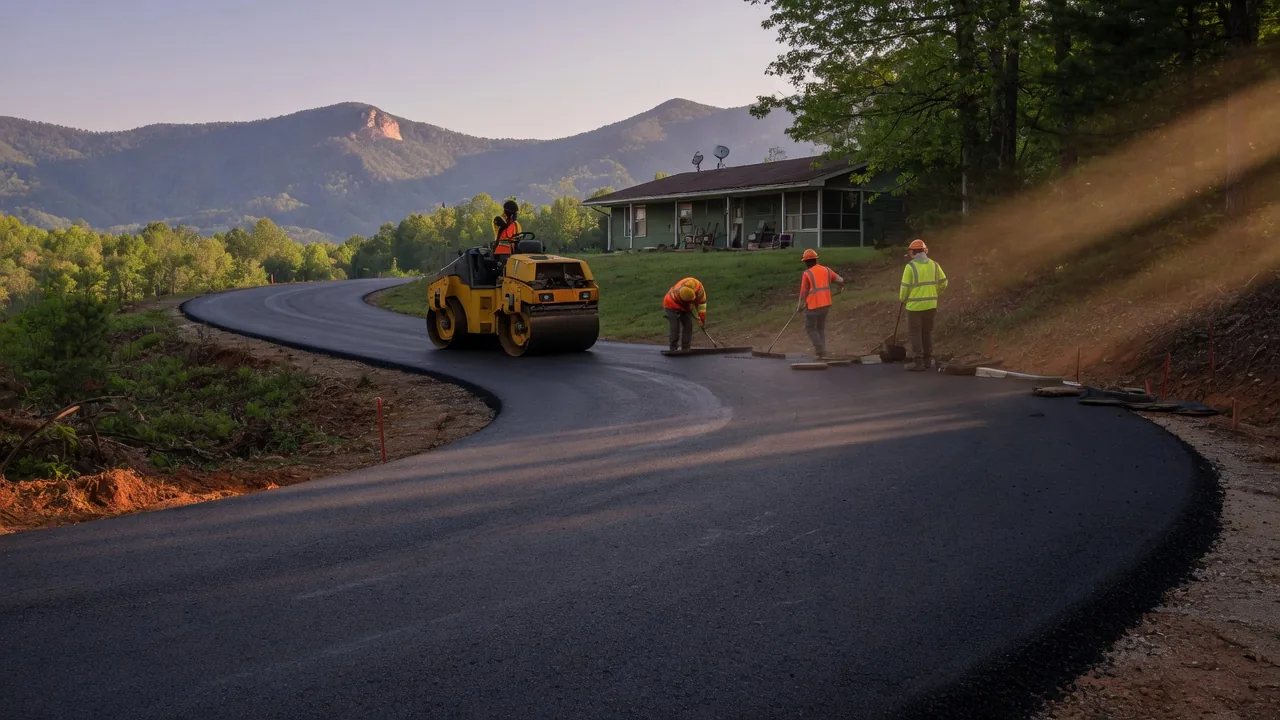
Most of Candler's residential driveways were never designed to a suburban standard. The unincorporated community sprawls across western Buncombe County, with properties on Hominy Creek bottomland, on wooded ridgelines above the I-40 corridor, and along the farm roads that feed off Smoky Park Highway. A 30-foot apron is the exception here; 150 to 400 linear feet of unpaved gravel is the baseline for many of these properties. That scale changes the job in ways that matter for budgeting.
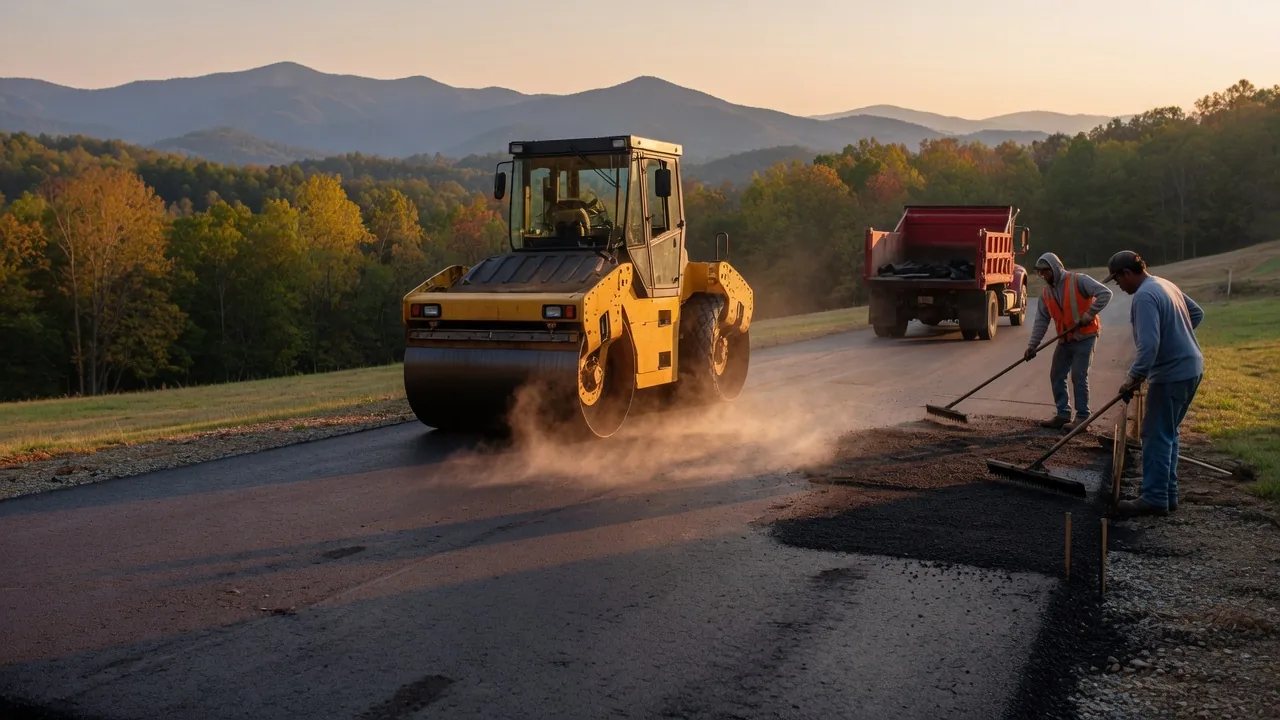
When a contractor quotes tar and chip per square foot, the rate stays consistent, but the total grows fast on a 300-foot driveway. A narrow 12-foot-wide drive at that length is already 3,600 square feet, nearly four times the 1,000-square-foot reference most cost guides use. The good news: mobilization costs spread across a larger job, and long rural driveways are exactly the application where tar and chip competes best against both gravel and hot-mix asphalt. The full product overview at our tar and chip driveways page explains the comparison in detail.
Mountain precipitation and what it does to a paved surface
Buncombe County's climate is not friendly to surfaces that hold water. The National Weather Service records well above average annual precipitation for this region, and western Buncombe sees enough repeated frost to degrade thin or porous surfaces over time. Tar and chip handles these conditions better than many alternatives because the embedded aggregate breaks surface tension, shedding water rather than allowing it to pool in surface pores. The textured finish is especially useful on shaded north-facing driveways common on the hillsides above Candler.
The storm history in this county makes drainage a structural concern, not a cosmetic one. Buncombe has recorded 19 federal disaster declarations over 1973-2026, with storm and flood events making up the bulk of that record. A driveway whose base has been repeatedly undercut by runoff, or one that channels water toward a foundation rather than away from it, fails at the surface first. A properly graded tar and chip installation, crowned slightly with side drainage channels where the grade demands it, will outlast a flat pour on a poorly drained lot by several seasons in these conditions.
What Candler tar and chip jobs typically cost
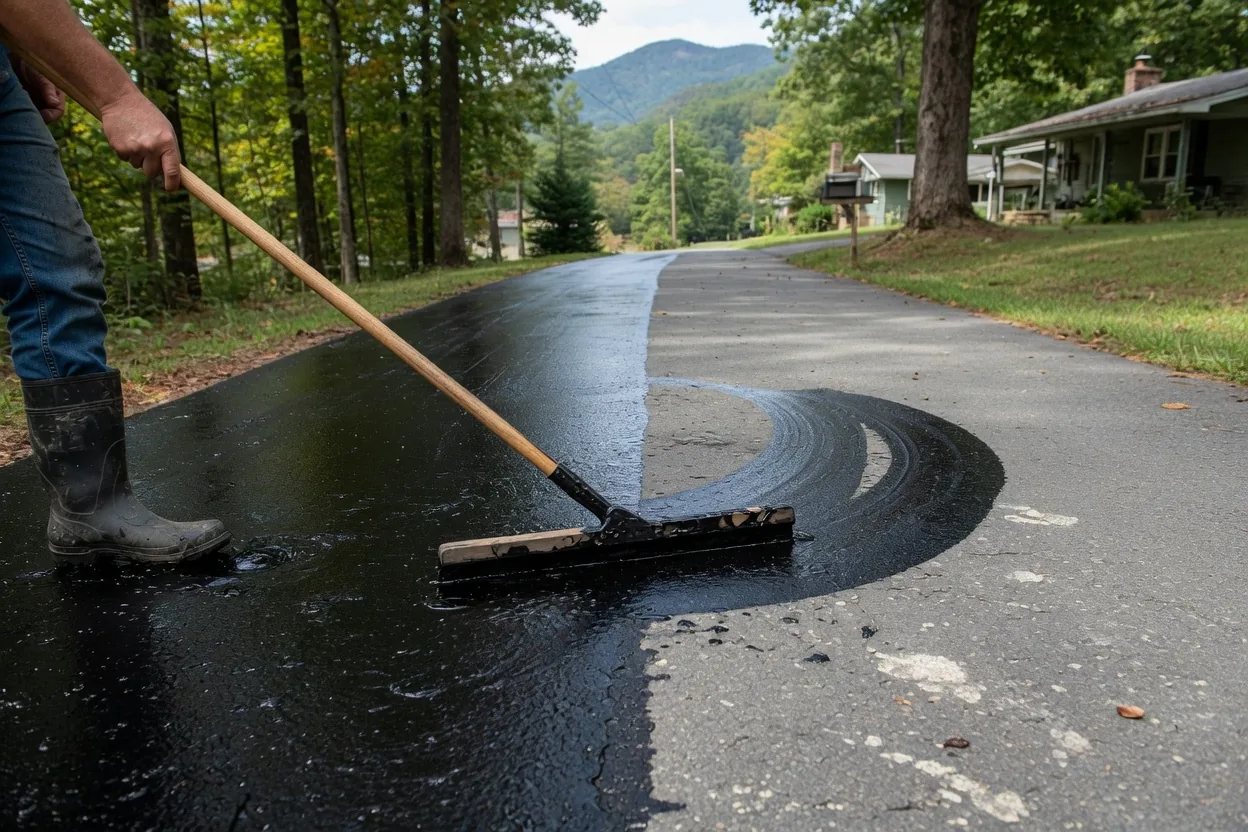
The full cost breakdown page covers line-item ranges for base prep, chip grade, and edge treatment. The short version for western Buncombe: plan on $3.50 to $6.50 per square foot installed. A stable existing base with minimal correction work puts a job toward the low end; steep grades, soft spots requiring excavation, or a long run with drainage channel work pushes toward the top of that range.
| Scope | Square Footage | Estimated Installed Range |
|---|---|---|
| Seal coat on stable existing base | ~1,000 sq ft | $3,500 – $4,500 |
| Base correction + full tar and chip | ~1,000 sq ft | $4,500 – $6,500 |
| Long rural driveway, standard install | ~1,500 sq ft | $5,250 – $9,750 |
| Double-width or loop driveway | ~2,000 sq ft | $7,000 – $13,000 |
Two items consistently push Candler jobs toward the upper end of their range: a soft or settled base that requires new aggregate before the surface coat, and a state-road connection that requires a driveway encroachment permit before work can begin. Neither is unusual in this part of Buncombe County, and both should be priced into any serious quote before a crew shows up.
State-road frontage and the permit step most owners miss
A significant share of Candler properties connect directly to NCDOT-maintained routes. US 74, Smoky Park Highway, and the secondary state roads branching off the I-40 corridor are all state right-of-way. When your driveway meets one of those roads, an encroachment permit is required before any paving work begins. The permit governs sight-distance clearance, culvert sizing, and approach grade, standards that exist to prevent driveways from creating hazardous pull-off conditions on higher-speed roads.
Permit applications go through the NCDOT Connect portal, and NCDOT can require removal and reconstruction of any unpermitted approach at the property owner's expense. A contractor who does not ask about road frontage type during the estimate phase has missed a critical scoping question. That question belongs in the first phone call, not after the crew has already started grading the approach.
Properties on county-maintained gravel roads or private access easements do not require the state permit, but the drainage and sight-distance principles still apply, particularly on properties where the driveway grade steepens toward the road connection.
What your existing gravel tells the crew before they quote
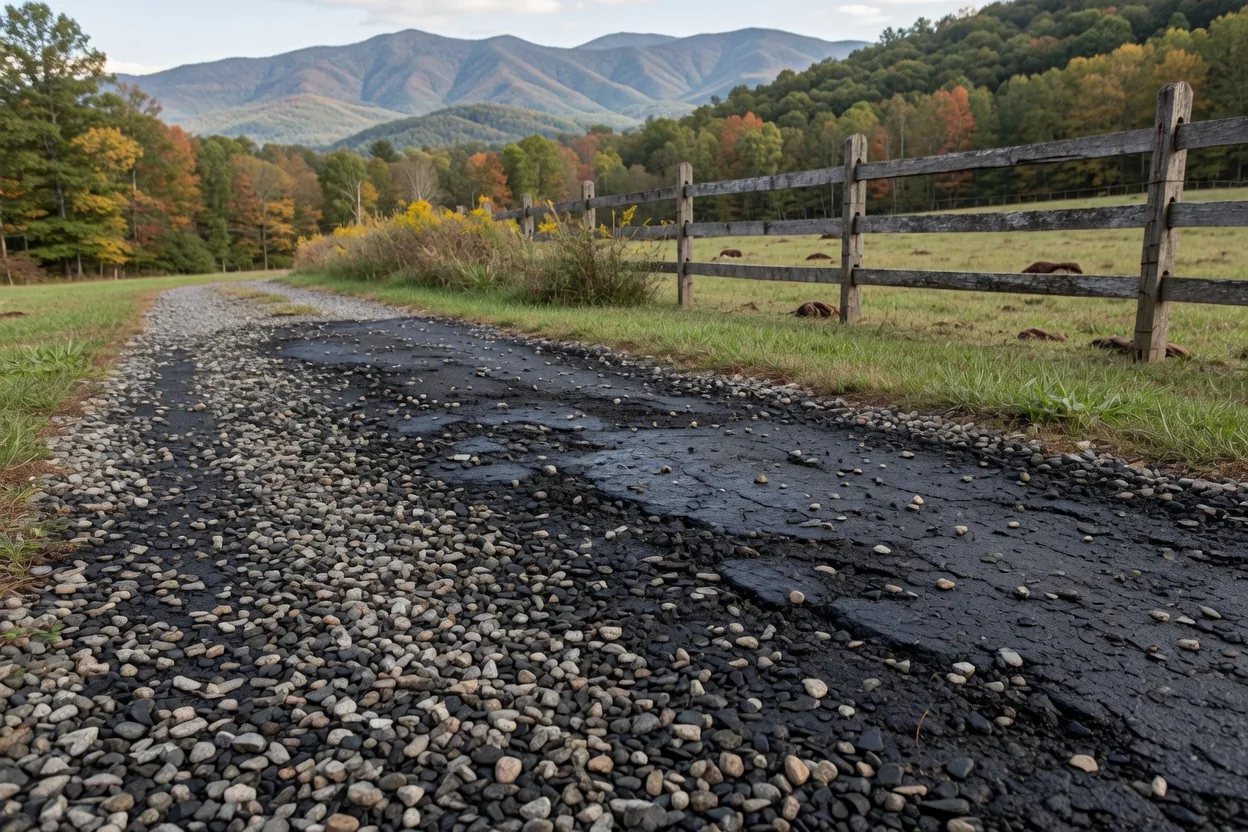
A large share of Candler driveways are currently unpaved gravel, and many of them are ready for a surface upgrade without starting from scratch. The key variable is base condition: a well-compacted gravel bed with consistent depth and no soft spots is a candidate for direct chip seal application. A gravel drive that has heaved, rutted through the center, or settled unevenly in wet areas needs base correction first, or the chip seal will mirror those failures within a season or two.
The gravel-to-paved surface conversion guide covers the evaluation process in detail. The short field test: walk the drive after a rain and mark any spots that hold standing water or feel soft underfoot. Those are the areas any honest quote should address before pricing the surface coat. Skipping that step does not save money; it moves the problem from the estimate to a warranty callback.
Three questions that separate a careful crew from a cheap one
Ask how they assess the existing base before they price the job, specifically what they look for and how base corrections are quoted separately from the surface coat. A contractor who delivers one number without addressing base condition has either confirmed it is sound through a real inspection or has not thought about it. Know which one you are dealing with before signing anything.
Ask about chip grade selection. The stone aggregate used in tar and chip comes in multiple sizes; larger chip provides better traction on grades and sheds water more readily, while smaller chip gives a smoother finish suited to flat surfaces with regular passenger-car traffic. A rural mountain driveway in Candler is rarely a case for the finest chip available.
Ask for the drainage plan before you commit. Water running toward the house rather than away from it is the most common callback problem after a chip seal installation, and correcting drainage after the surface is down costs far more than addressing it during initial grading. The right answer from any experienced crew is a specific description of how the finished surface will shed water, not a general reassurance that it will be fine.