Slope is what most pricing guides don't account for
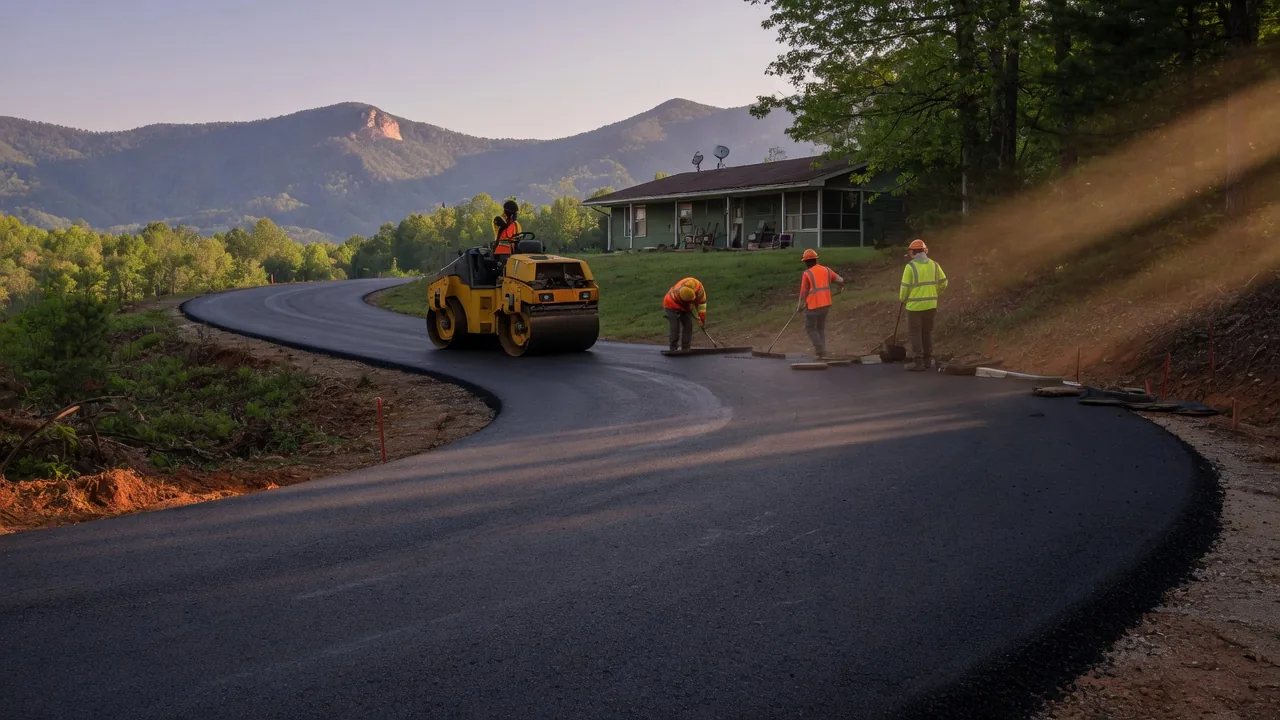
Most tar and chip pricing guides treat driveways as flat rectangles. Buncombe County driveways are often neither. A property on a ridge above West Asheville or Weaverville may have a driveway that climbs 40 feet over 200 linear feet — a grade steep enough that surface texture stops being an aesthetic choice and becomes a functional one. Tar and chip's embedded aggregate gives natural grip that smooth hot-mix asphalt cannot match on an icy or wet grade, which is why it appears so often on mountain lots where the alternative is a slick surface in a January rain.
Slope also shapes the drainage design, and drainage is where jobs that look similar in square footage can diverge sharply in cost and longevity. Water moving down a steep chip-seal surface needs somewhere to go that does not undercut the base layer. A well-installed mountain job includes crown grading or channel cuts at the low edge; a job that skips that step turns the first hard storm into a warranty conversation. Buncombe County has recorded 19 federally declared disasters over 1973-2026, and saturated-soil events are exactly when underdrained driveways fail in ways that are expensive to repair.
How the surface is installed, step by step
A typical residential driveway goes down in a single day — but the steps that determine whether it lasts seven years or twelve happen before the distributor truck with hot asphalt arrives.
- Base assessment and prep. Existing gravel is graded, compacted, and checked for soft or saturated spots. On mountain lots, this sometimes means adding crushed aggregate depth where slope and rainfall have washed material downhill over time.
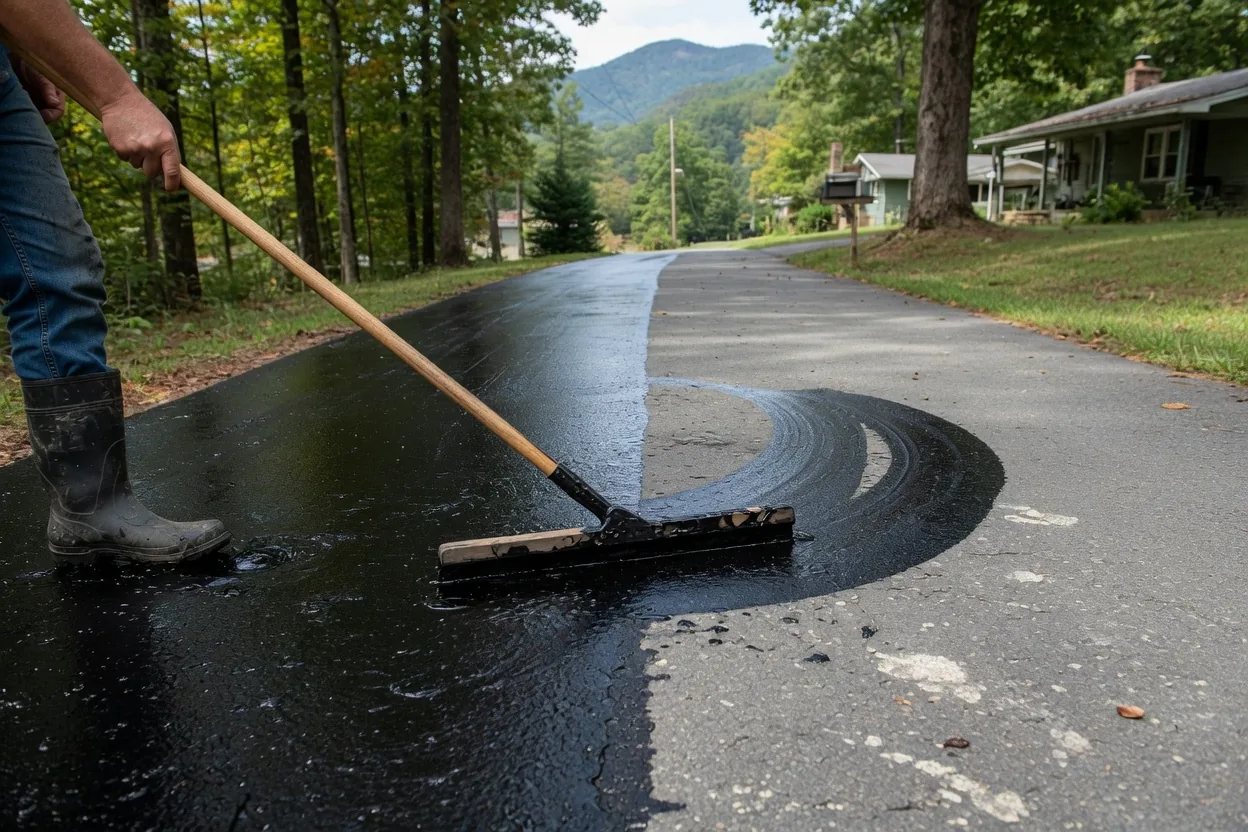
- Hot asphalt application. A distributor sprays a uniform layer of liquid asphalt at controlled temperature. Application rate and temperature are the two variables the crew manages; ambient conditions are the ones they work around — mountain valley weather changes fast.
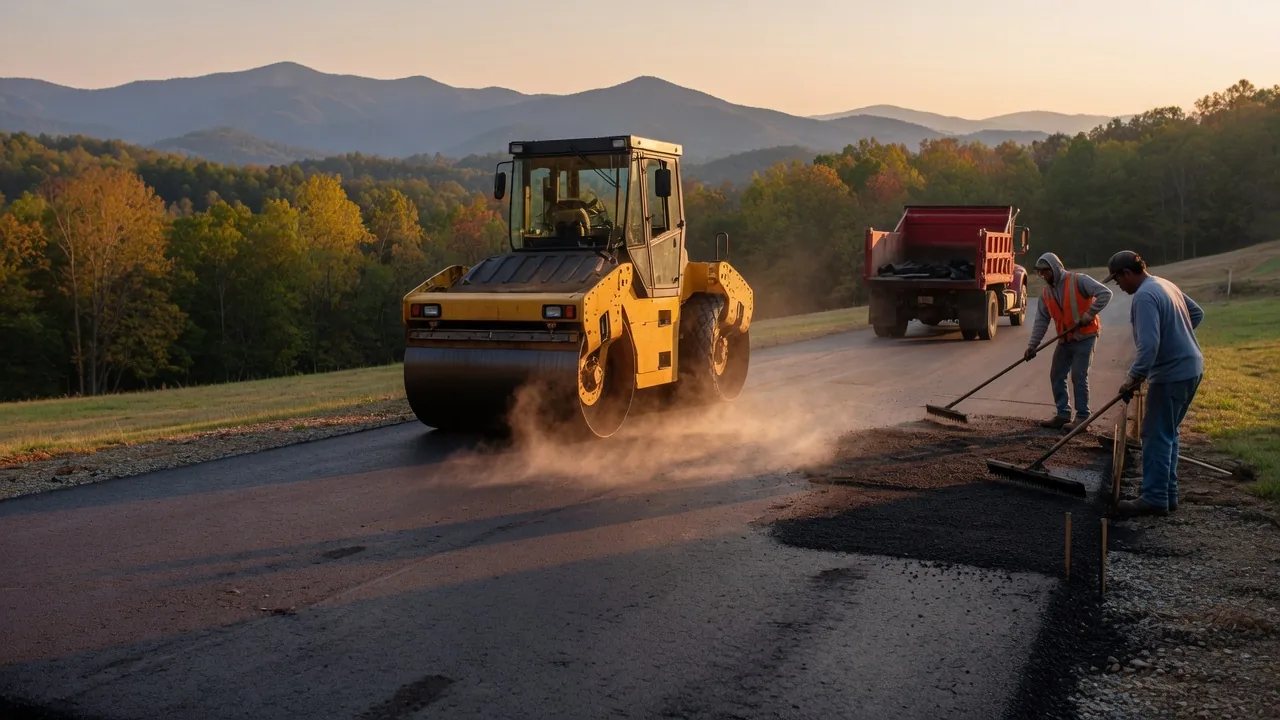
- Aggregate spread and roll. Crushed stone — sized for the application — is spread immediately and rolled in while the asphalt is still hot. The chips embed and lock here; once cured, the surface texture is set.
- Sweep and cure. Loose stone is swept off after 24–48 hours and the surface cures fully over the following week. Some loose chip migration in the first few days of traffic is normal.
When a driveway connects to a road maintained by the state, a driveway permit is required before work begins. Applications go through NCDOT Connect — the requirement applies to new driveways and significant modifications, not resurfacing in place. If the road at the apron is city-maintained, the City of Asheville has its own encroachment permit process for work at the curb line.
What it costs and what moves the number
Installed pricing in Buncombe County runs $3.50–$6.50 per square foot. A standard 1,000 sq ft driveway lands around $3,500–$6,500 all in. The table below shows how scope shifts the number within that band:
| Scope | Typical installed range |
|---|---|
| Flat residential driveway, solid existing base (1,000 sq ft) | $3,500–$4,500 |
| Moderate slope or partial base repair needed (1,000 sq ft) | $4,000–$5,500 |
| Steep grade or significant base rebuild required (1,000 sq ft) | $5,000–$6,500 |
| Decorative or colored aggregate upgrade (per sq ft, added) | +$0.50–$1.25 |
| Full base layer replacement (per sq ft, when needed) | +$1.00–$2.00 |
The single biggest variable most homeowners underestimate: two driveways the same square footage on the same street can price differently based entirely on base condition. A surface that has been gravel for years with no compaction work will need more prep than one sitting on a properly built crushed-stone pad. See the full cost breakdown for a line-item look at what drives each figure.
Base depth, drainage, and what the freeze cycle does here
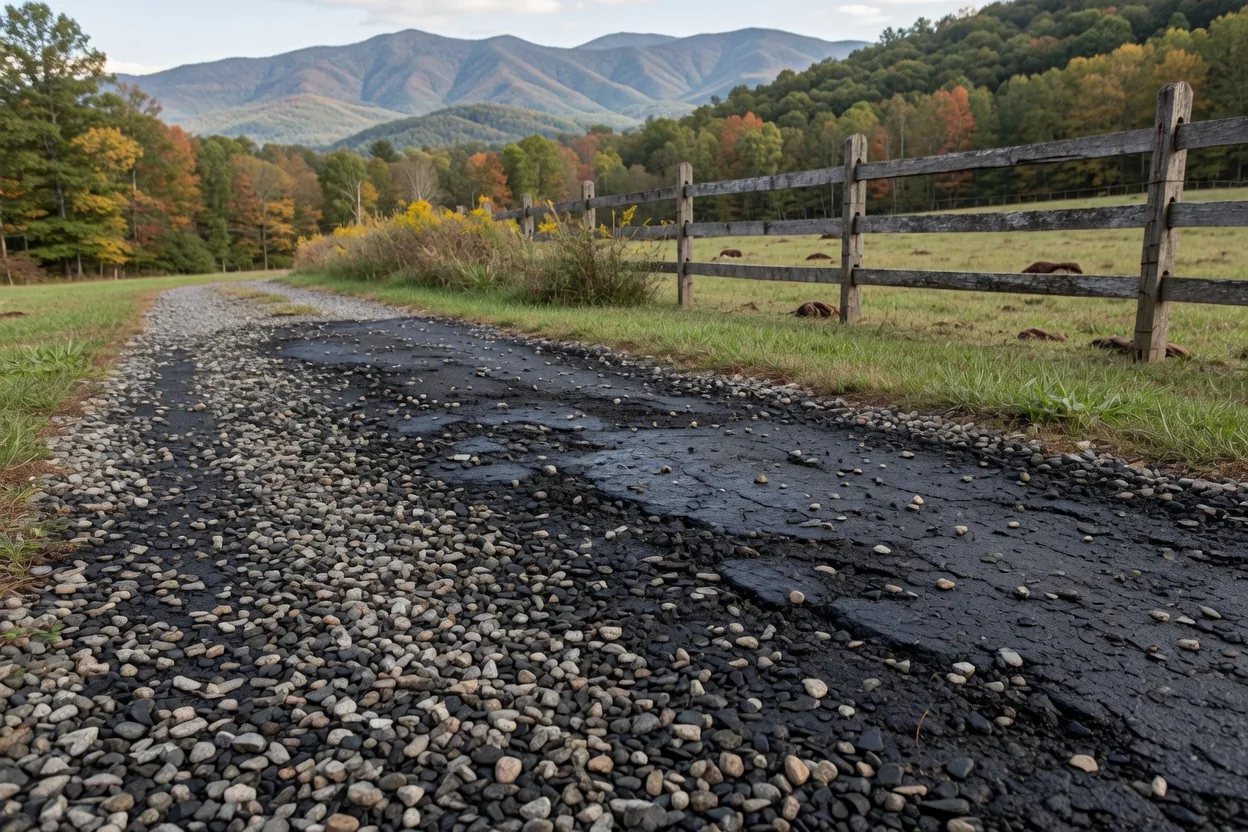
Asheville averages roughly 47 inches of rainfall a year, and the National Weather Service data for the southern Appalachians shows mountain valleys are prone to intense rainfall events that regional averages understate. The consequence for chip seal is straightforward: the surface layer — typically 3/8 to 3/4 inch of embedded aggregate over liquid asphalt — is durable but thin. It follows whatever the base beneath it does. A base that absorbs water and has nowhere to route it will fail quickly; the chip seal on top just shows you where.
The secondary stress is freeze-thaw cycling. Asheville sits at roughly 2,100 feet elevation, and freezing temperatures arrive reliably every winter. Water trapped in a poorly-drained base expands on freezing and contracts on thaw, and over a few seasons that movement opens edge cracks and works heaves into the surface. A base built with proper slope drainage and adequate compacted depth handles this cycle cleanly. A base built to minimum spec does not. When reviewing any chip seal quote, ask specifically what crushed aggregate depth the crew is pricing and how drainage is addressed at the low edge — those two details separate a driveway that holds up from one that needs work inside three years.
When chip seal makes sense, and when another surface does
Tar and chip fills a specific market gap: more durable and lower-maintenance than gravel, less expensive than full hot-mix asphalt, and with a surface that reads as natural stone from the street. That last point matters in Asheville's mountain neighborhoods and planned communities where smooth-black paving can feel out of place or conflict with HOA covenants. If you are upgrading from a gravel driveway and wondering whether to go all the way to asphalt, the gravel-to-asphalt conversion page covers the trade-off directly. If longevity and near-zero maintenance over decades is the priority, the asphalt vs. concrete comparison is the right read.
Where chip seal underperforms: tight turning radii with heavy vehicles (spinning tires dislodge aggregate), and driveways that see regular steel-blade plowing (blades can lift chips at surface seams). For a standard mountain residential driveway with passenger vehicles those conditions rarely apply, but they are worth naming before a crew pours the bid.
The one question worth asking before committing to any surface: what is the base actually built on? Chip seal laid over an inadequate base is money spent twice — the surface fails, and you are back to base work regardless. Base first, surface second, in that order every time.