Grade changes the job before anything else does
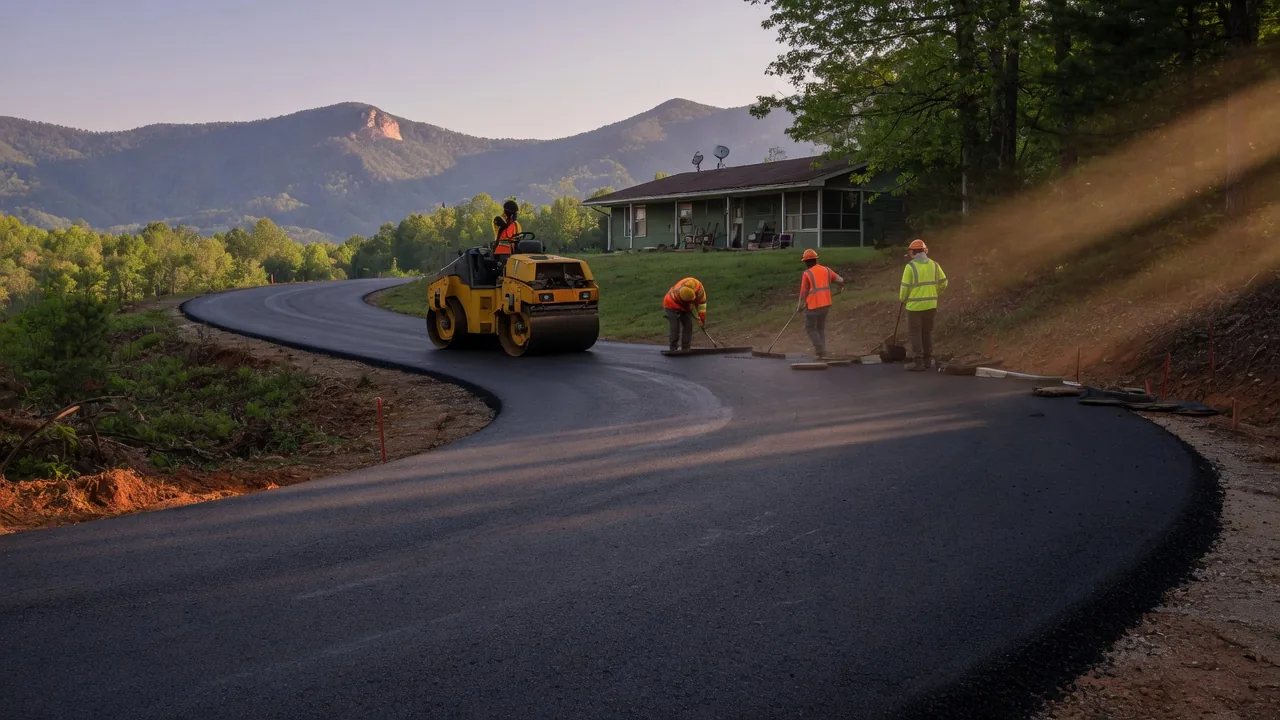
Fairview occupies a stretch of eastern Buncombe County where residential lots climb steeply from valley roads toward the ridgelines above Cane Creek and the Swannanoa corridor. That terrain shows up immediately in driveways: a 60- to 120-foot run with 10 to 20 percent grade is common here, and a hillside driveway does not behave the same as a flat suburban pad once sealer hits it. Gravity pulls uncured material toward the base, leaving the crown thin and pooling at the bottom — which cures into a tacky, uneven surface that tracks back into the house and wears unevenly.
Crews that work this terrain regularly adjust for it: multiple lighter passes instead of one heavy application, working top-to-bottom so each pass tacks before the next goes down, and accounting for setup and positioning time on a narrow rural approach. A contractor quoting a flat per-square-foot rate without walking your driveway has not priced the slope into the job — and that shows up in the finish. The right place to start is with a crew that treats the grade as a given, not an exception.
Long approaches off county roads create a second variable: equipment that cannot turn around on a steep, canopy-covered run requires hand tools or multiple truck repositions, both of which add labor time. Mention your approach length and access when you call; it changes the quote in a way that flat-lot pricing never anticipates.
How this microclimate ages asphalt faster than you expect
The hardwood canopy above Fairview driveways — oak, maple, tulip poplar — creates two chronic problems for asphalt. It keeps moisture on the surface longer after rain than an open driveway would see, accelerating oxidation through micro-pore water cycling. And it drops tannic acids that chemically degrade the asphalt binder over seasons of contact. Neither effect is visible until the surface has already lost meaningful life.
South- and west-facing driveway sections also age faster than shaded ones on the same run. UV exposure at Buncombe County's elevation accelerates oxidation on open sections while canopy slows it elsewhere, producing uneven aging across a single driveway — where one end is ready for sealcoat and the other still looks new. The patchier the oxidation pattern, the more critical application timing becomes.
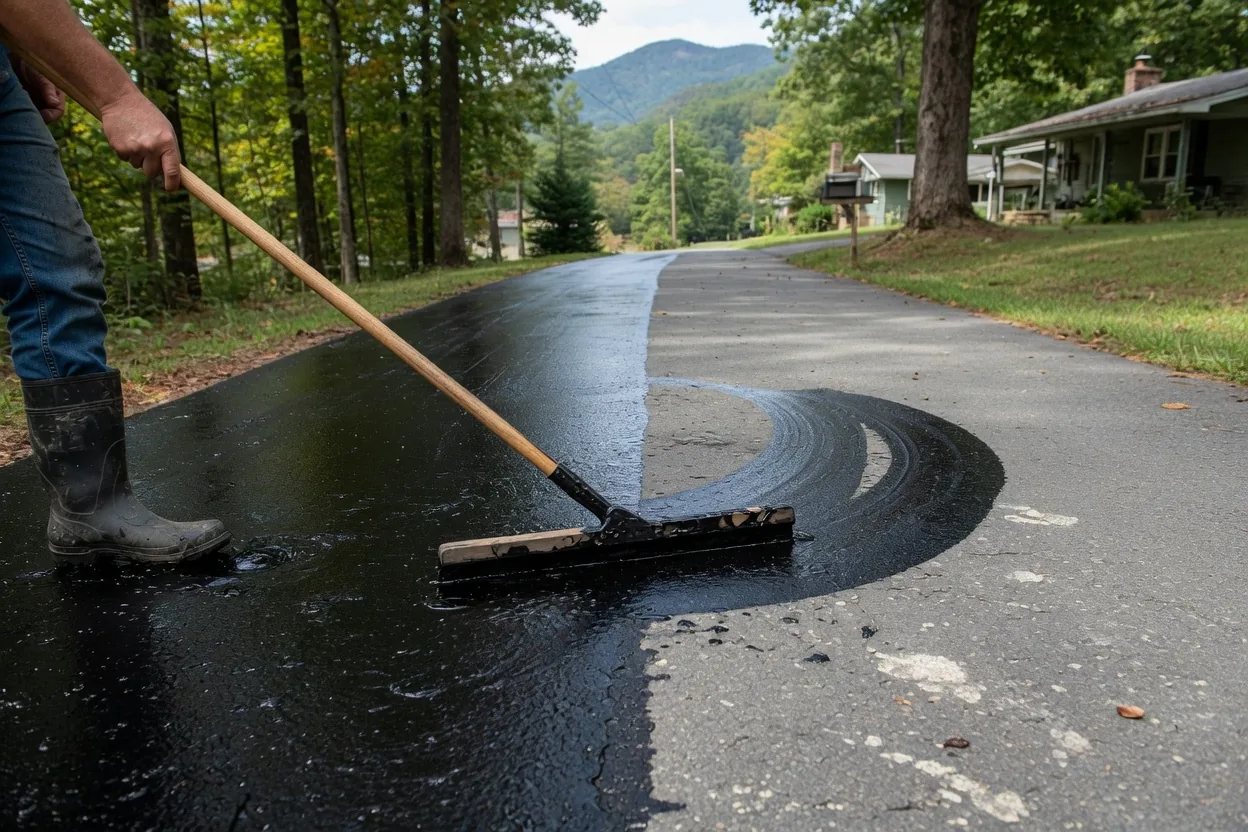
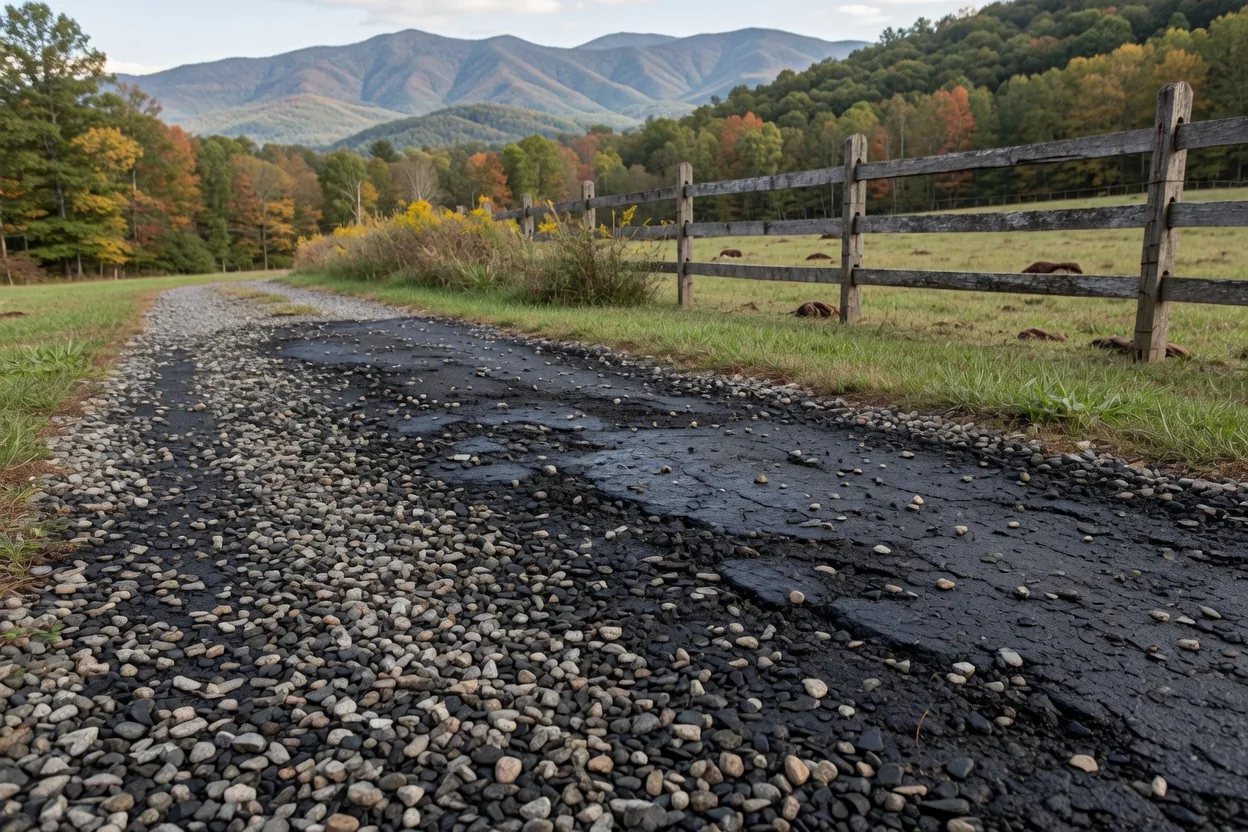
Temperature swings add the mechanical load. Elevation here keeps hard freeze events later into spring than the Piedmont experiences, and the damage pattern is specifically the overnight freeze-thaw cycle — not a sustained deep freeze, but edge-of-ice-point cycling that forms in a crack, expands, and releases repeatedly. Sealcoat closes the surface porosity that gives water access to that cycle. Once the surface has moved past gray oxidation into fine-line cracking, crack fill must go down before any sealer is applied. See the guide at when to sealcoat after paving for the window between too-soon on fresh pavement and too-late on an aged one.
What sealcoating costs in Fairview
The full sealcoating service runs $0.18 to $0.35 per square foot in this area, which translates to the ranges in the table below. Grade, surface condition, access, and whether crack prep is needed move the final number within that band. The sealcoating cost guide breaks out individual line items for those comparing quotes against market rate.
| Scope | Typical Price Range | What moves the number |
|---|---|---|
| Single-car driveway (600–900 sq ft), two coats | $110–$315 | Short approaches; steep grade still common on smaller lots |
| Standard two-car driveway (1,800–2,400 sq ft), two coats | $350–$850 | Fairview baseline; grade and surface condition are primary movers |
| Crack fill before sealing | Add $75–$200 | Any crack wider than a quarter coin needs fill before sealer |
| Steep-grade multiple-pass labor | Add $50–$120 | Hillside lots above roughly 10% grade |
| Edging detail around retaining walls or tight borders | Add $50–$100 | Common on cut-lot driveways in Fairview's hillside subdivisions |
Storm history and why sealed asphalt outlasts bare pavement here
Buncombe County's federal disaster record — 19 declarations across 1973-2026 of record — is overwhelmingly storm and flood events, each pushing water at paved surfaces built for drier assumptions. Sealcoat's waterproofing function is the primary reason sealed driveways survive those cycles better than oxidized bare pavement: a sealed surface sheets water toward drainage edges; an unsealed one absorbs it, and the freeze-thaw cycle does the structural damage from there. The National Weather Service data for western NC shows the Fairview area receiving above-average annual precipitation, frequently delivered in concentrated events that saturate rather than sheet off. Orographic lift off the eastern Blue Ridge wall amplifies local storm totals compared to Asheville proper, which sits in a comparatively mild rain shadow.
The practical takeaway: the window between a driveway that looks fine and one that needs major repair compresses in this climate. A proactive sealcoat cycle — typically every three to five years depending on sun exposure and canopy coverage — costs a fraction of patching or repaving a surface that has absorbed several heavy storm seasons without a sealed barrier in place.
Permits, product choice, and what to confirm before work begins
Most residential sealcoating jobs in Fairview require no permit — recoating existing pavement does not add impervious surface and does not trigger local plan review. The exception is any work that modifies an apron at a state-maintained road. If a job extends a driveway connection to an NCDOT right-of-way, a permit through the NCDOT Connect portal is required before work begins. The NC Department of Transportation sets standards for any improvement within road right-of-way, and unpermitted work in that zone can require removal at the property owner's expense. Your contractor should know whether the scope triggers one and should say so before the estimate is signed.
On product selection: ask any crew whether they are applying coal-tar emulsion or asphalt-based sealer. Coal-tar carries environmental restrictions that vary by municipality and is banned outright in some jurisdictions. Asphalt-emulsion is the standard residential product in this region and is compatible with the stormwater drainage patterns common to Fairview's rural lots. If your driveway drains toward a swale, tributary, or drainage easement — common on hillside lots in this part of Buncombe County — get the product data sheet before work begins.