The freeze-thaw problem that shapes every job here
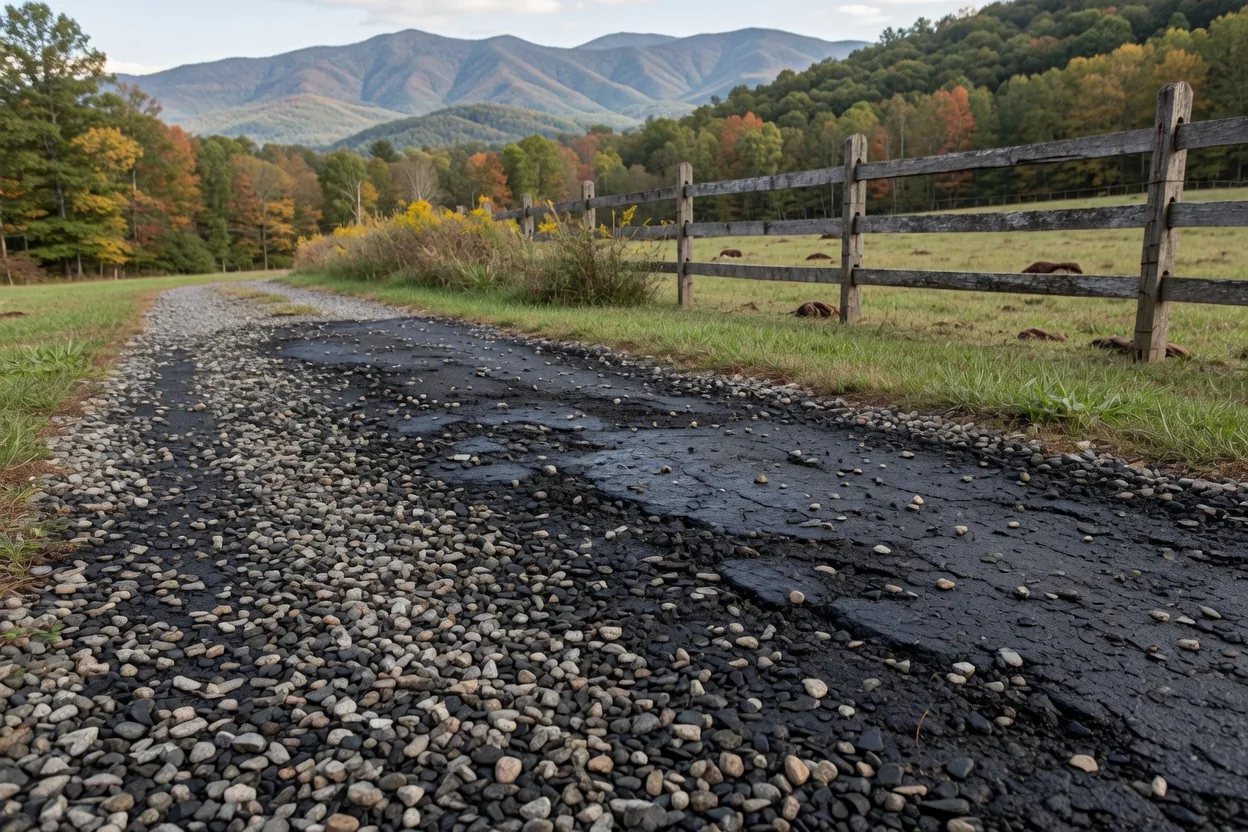
Weaverville sits in the northern corner of Buncombe County at mountain elevation, and that geography is the starting point for any asphalt conversation in this town. The Blue Ridge foothills produce more freeze-thaw cycles per season than piedmont towns an hour to the east — overnight lows drop below freezing while afternoon temperatures climb back above, and that cycling is precisely how small cracks in oxidized asphalt expand into spalling and raveling. A driveway that might hold up eight or nine years without maintenance in the lower Piedmont can show significant surface degradation faster here, which makes sealcoating less of an optional upgrade and more of a scheduled maintenance item.
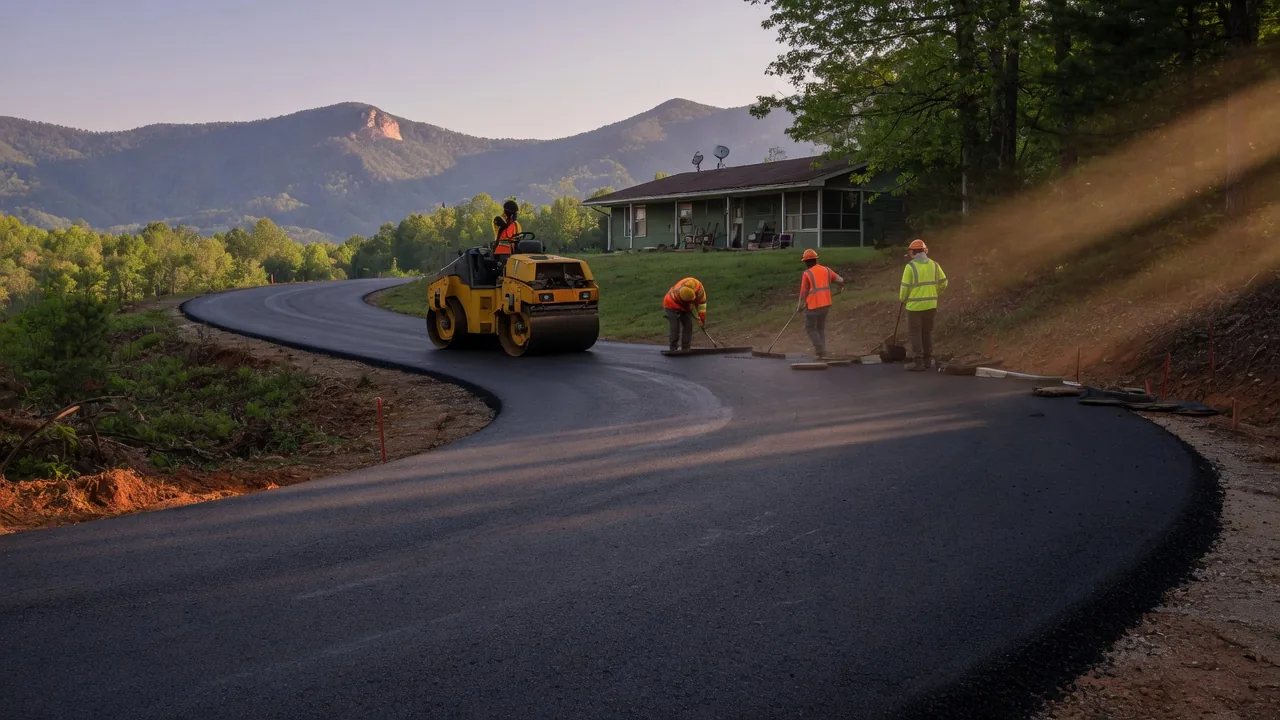
The housing mix adds a second layer. Weaverville has grown steadily as a bedroom community for Asheville, producing neighborhoods that range from older established streets off Main Street to newer subdivisions carved into ridge and slope lots. Older driveways here often carry years of oxidation and aggregate loss; newer installations on steep approaches face runoff pooling at the downhill end that accelerates edge breakdown. Both types can be sealed, but a contractor who can only squeegee flat surfaces is not set up for the ridge lots north of downtown.
The town itself is compact, but most of the residential growth sits in subdivisions that ring the downtown and push into the hillsides. Driveways here are not particularly long by rural standards, but the grade changes are real. A driveway on a 10- or 15-degree slope sheds sealer differently at the top than at the bottom, and the prep that matters on flat work — clean surface, sound edges — matters more when water is actively moving across the job.
How job scope and driveway size drive the price
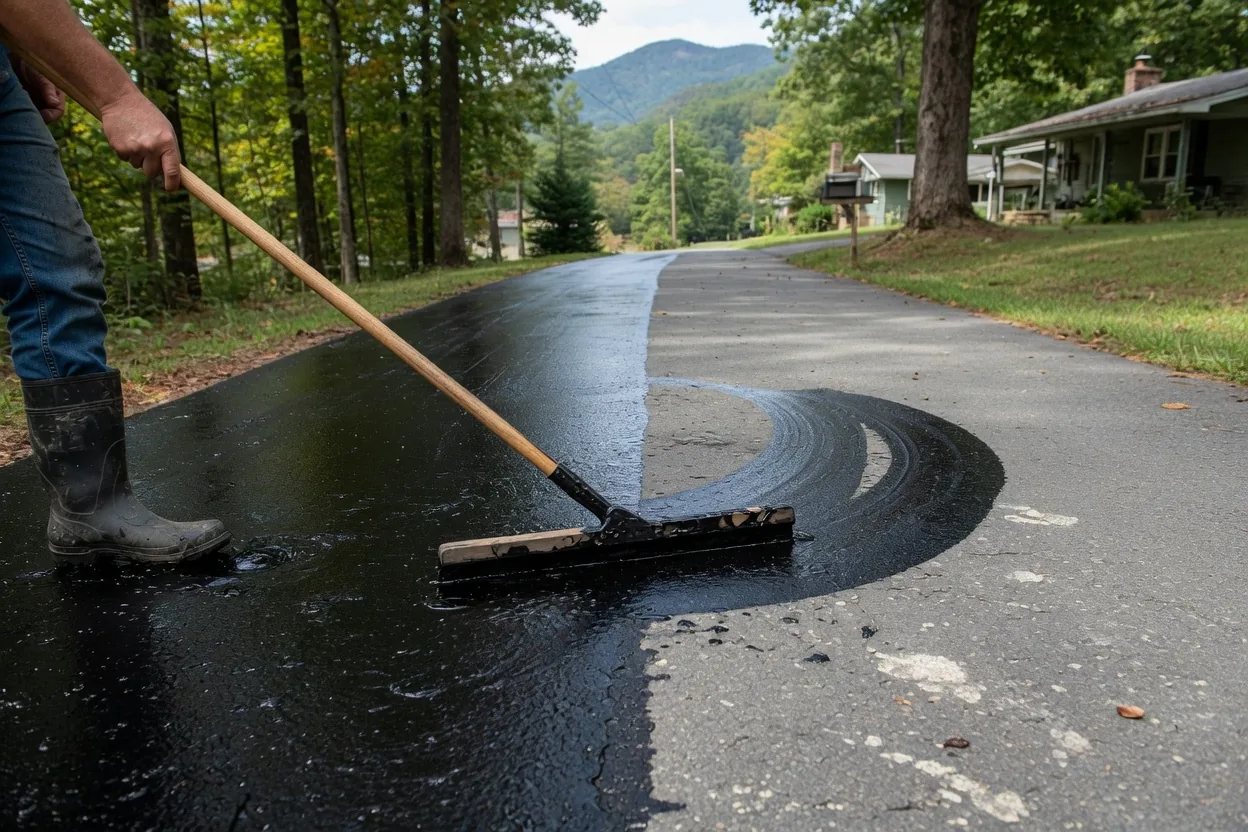
Driveway sealcoating in Weaverville runs about $0.18 to $0.35 per square foot for two coats of emulsion sealer. The full line-item breakdown lives at our sealcoating cost guide; the table below covers the scope ranges most common on residential jobs in this area.
| Job scope | Est. size | Two-coat range |
|---|---|---|
| Single-car driveway | 400–600 sq ft | $72–$210 |
| Standard two-car driveway | 1,000–1,500 sq ft | $180–$525 |
| Large or long approach | 1,500–2,400 sq ft | $270–$840 |
| Crack fill before sealing | — | $80–$200 add-on |
| Edge detail / hand-brushed borders | — | $50–$120 add-on |
A sloped driveway on one of the ridge subdivisions north of downtown can add material and labor that a flat-lot quote will not capture. Squeegee work on grade takes longer, and a second material pass is often needed at the low end where runoff concentrates. Make sure those items appear on any written estimate before work begins.
The crack fill line item is worth emphasizing: a contractor who skips it is not saving money, they are shortening the job's lifespan. Water entering an unsealed crack freezes at elevation, expands, and widens the gap; every winter without crack fill is another cycle of damage that sealer cannot undo after the fact.
A narrower application window than most homeowners expect
Sealcoating requires both ambient and surface temperatures above 50°F, with no rain forecast for at least 24 hours after the last coat. That is a standard rule everywhere, but mountain elevation compresses the window on both ends of the calendar. In Weaverville, the reliable season runs from late April through early October. Shoulder-season jobs are possible on favorable stretches, but they carry real risk if a contractor is not tracking overnight lows carefully.
The National Weather Service forecast for the Asheville area is the right temperature reference for this zone rather than a national average, because mountain valley microclimates can run several degrees cooler on a ridge lot in Weaverville than on a downtown Asheville reading at the same hour. A sealer applied before overnight temperatures fully recover from a cold snap can whiten, peel, or fail to bond within the first season.
The practical implication is that high-demand weeks in Weaverville fill up in late spring, when crews are working off a winter backlog and homeowners are booking in the same window. Planning sealcoating for May or September provides better scheduling flexibility and avoids the midsummer heat that can cause sealer to dry too fast on south-facing surfaces.
New asphalt is a separate timing question entirely. How long to wait after paving covers the curing window; sealing too early traps the oils that need to off-gas and can leave the surface permanently tacky.
Storm drainage and what it means for asphalt here
Buncombe County has recorded 19 federal disaster declarations over 1973-2026, the majority of them storm and flood events. Heavy rainfall in this terrain saturates soil bases, erodes driveway shoulders, and deposits debris that holds moisture against the asphalt edge long after the storm passes. Sealing over a base that has absorbed a water hit conceals the damage without addressing it; the surface looks intact for a season before the soft spot beneath telegraphs through as cracking or surface depression.
Before any sealcoating work, it is worth observing where water exits the driveway during a hard rain. If it sheets across the surface and undercuts the edge — a pattern common on sloped lots in this county — drainage correction belongs before the sealer goes down. Driveways that connect to NCDOT-maintained roads have ditch and runoff requirements that govern any edge modification; apron changes at a state road connection also require a permit filed through NCDOT Connect before any grading begins.
The full sealcoating service page covers what a proper condition assessment includes before a quote is written.
What separates a real quote from a number on a clipboard
Three questions worth asking any contractor: How do you handle existing cracks before the sealer goes down? What minimum temperature do you require at application and the following night? And will you flag a drainage issue if you see one, or just quote the seal?
A contractor who skips crack fill, vague-answers the temperature requirement, or walks past a drainage problem without mentioning it is offering a cosmetic treatment; the driveway will look sealed, but the underlying failure continues running. The cost breakdown page outlines what each line item on a thorough quote should cover and why jobs that skip those steps tend to come back sooner.
Weaverville is a small enough market that word-of-mouth carries real weight, but some crews are traveling from Asheville proper and quoting from a distance without seeing the specific grade or drainage situation on your property. An in-person estimate is the minimum standard for any job above a few hundred square feet; a phone or online number without a site visit is a starting range, not an estimate.