Most Asheville lots don't give the driveway a flat start
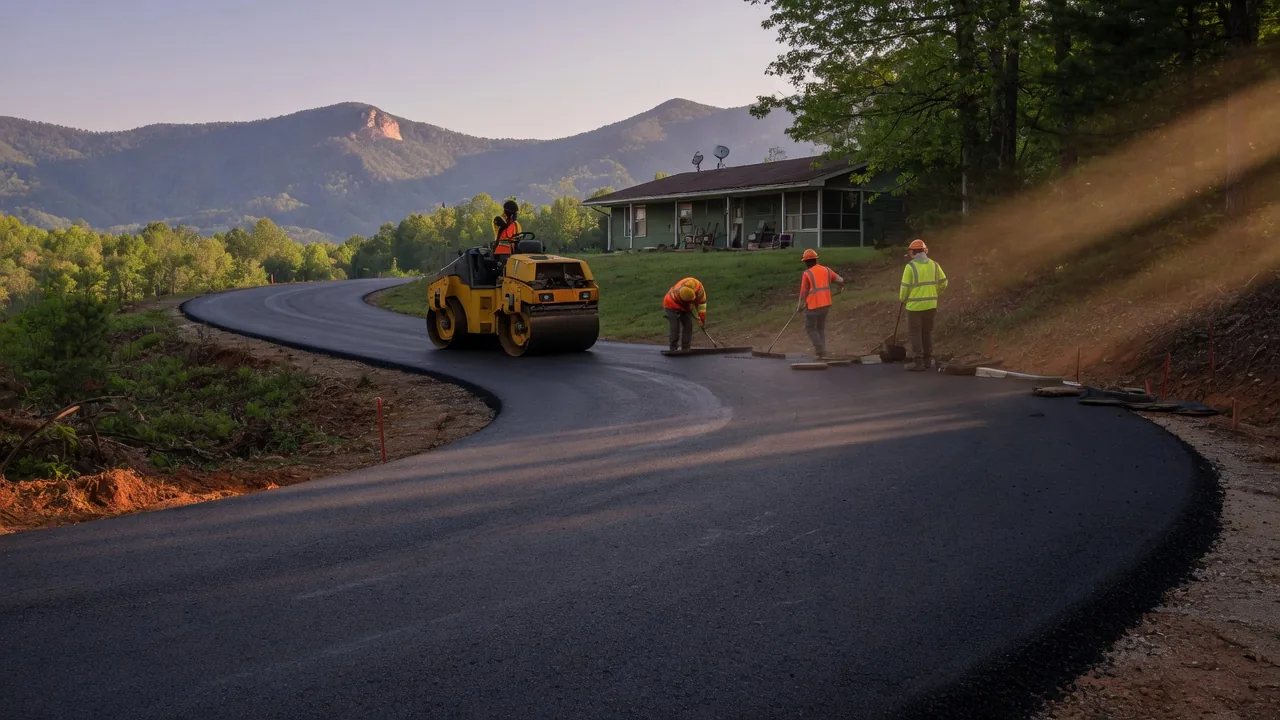
Buncombe County's topography is the first thing a paving contractor registers on site. Residential lots in North Asheville, Kenilworth, and along the French Broad River corridor are built on land that climbs, terraces, and drains in every direction. That grade is the job variable that shapes every scope here more than mix type, machine age, or crew size. A driveway that climbs toward the house channels water toward the foundation on every rain event; one that pitches steeply toward the street can undercut its own base within a few seasons if drainage isn't engineered during installation.
The older housing stock adds another layer. Homes in Montford and West Asheville often have narrow, steep approaches where the paving has to account for an old stone curb or a retaining wall on the uphill side. Newer development off Town Mountain Road and Elk Mountain Scenic Highway sits on engineered fill, where base stability depends on how that fill was compacted — sometimes years before the paving contractor ever showed up. Both situations change the scope. Understanding how asphalt paving behaves under those conditions is what separates a complete quote from a cheap one in this market.
The Buncombe County price picture
For a full line-item breakdown, the asphalt driveway cost page covers the working ranges in detail. The short version for Buncombe County: new residential paving runs $4 to $8 per square foot installed, with most driveways landing between $3,500 and $12,000 depending on size, slope, and how much base work the site needs. The table below gives a working reference by scope.
| Scope | Typical Range | Primary variable |
|---|---|---|
| Overlay on sound existing base | $3,500–$5,500 | Driveway area |
| Full replacement, flat or gentle slope | $5,000–$8,500 | Base depth required |
| Full replacement, grade above 8% | $7,500–$12,000 | Drainage and base engineering |
| Gravel-to-asphalt conversion | $4,500–$10,000 | Existing base condition |
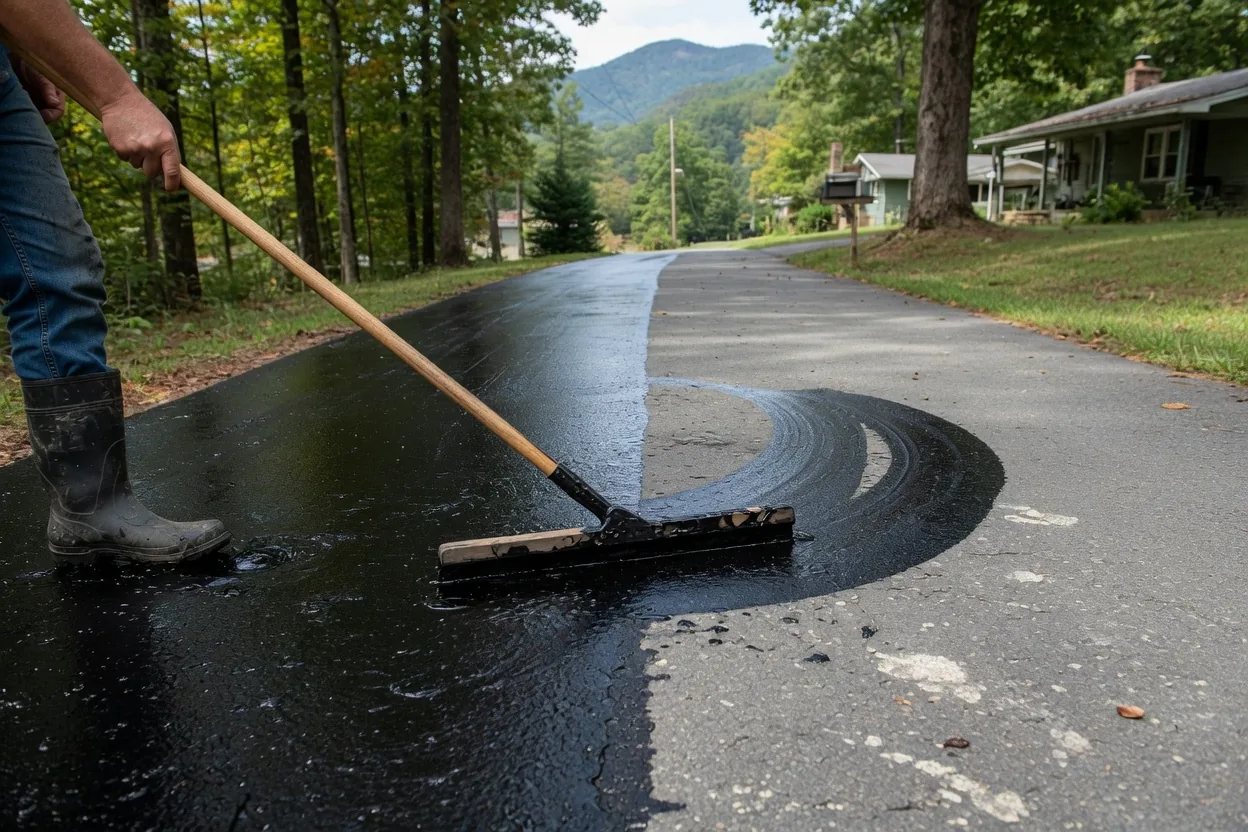
| Crack sealing and patching | $400–$1,800 | Area and depth of damage |
Jobs above 8 percent grade should show drainage as a separate line item in the bid, not bundled into a flat rate per square foot. A bid without that line item either undercounts the work or skips it entirely — neither outcome serves you when mountain water starts moving.
The base is where mountain driveways succeed or fail
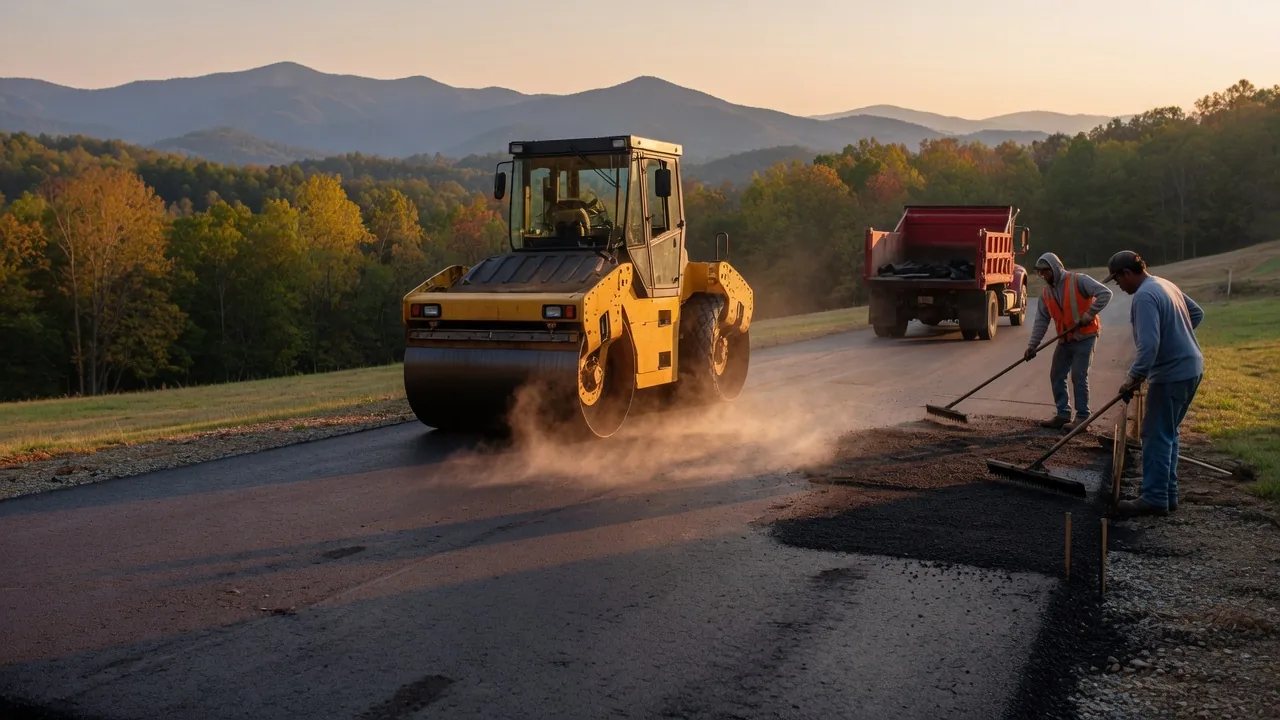
Asphalt is only as good as what it's sitting on, and that is especially true in mountain terrain. A well-compacted crushed-stone base — typically four to six inches for residential driveways — handles the freeze-thaw cycles and heavy rain events that Buncombe County regularly sees. Without it, the asphalt starts cracking and shifting within a few seasons regardless of how clean the surface work looks on installation day.
The storm record matters here. Buncombe County has recorded 19 federal disaster declarations over the 1973-2026 period, with storm and flood events driving the majority of them. Each event pushes water against and under pavement at volumes that test any base. Proper drainage — a crowned surface, a swale on the uphill side, or a catch basin on steep approaches — keeps that water from migrating beneath the asphalt and lifting it from below. The NC Department of Transportation mandates base and drainage standards for state-maintained roads for the same engineering reason; residential driveways aren't held to those specs, but the physics are identical.
Ask any contractor for their base specification before signing. A complete answer names the material, the compacted depth, and the grading approach for drainage. A vague answer — "we put down base and compact it" without specifics — is worth probing further before you commit.
Converting a gravel driveway on a mountain lot
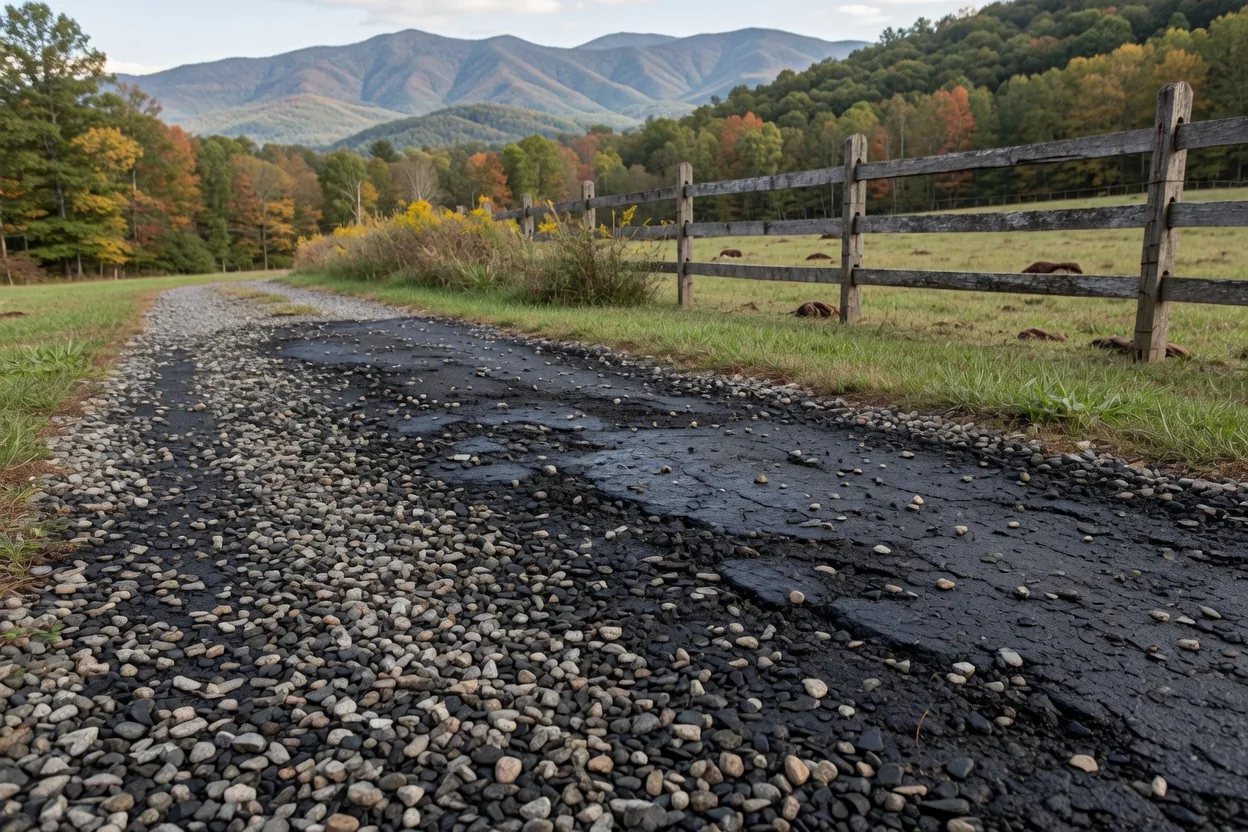
Unpaved approaches are common across Buncombe County, particularly on hillside lots west of Asheville and on rural parcels that pre-date paved road access. The gravel-to-asphalt conversion process depends almost entirely on what the gravel is sitting on. A driveway that has been graded well, crowned for drainage, and compacted over years may need only minor rework before asphalt goes down. A soft or uneven base that collects standing water requires excavation, proper aggregate fill, and recompaction — that's where conversion costs move toward the upper end of the range.
One practical test before you call anyone: walk the driveway after the next hard rain and note where water stands. Clean drainage and a surface that feels consistent underfoot means the conversion scope is smaller. Wet spots or soft patches mean base work comes first. Telling a contractor what you observed saves time during the estimate and helps you separate bids that price site reality from those that price an ideal lot.
Permits, road connections, and what to ask before you sign
Any driveway that connects to a state-maintained road requires a driveway encroachment permit through NCDOT Connect before paving begins. Inside city limits, the City of Asheville administers right-of-way permits when work touches the curb line or affects public drainage infrastructure. Both processes are routine for experienced local crews — but confirm during the estimate that the contractor pulls the permits and that permit costs are included in the quoted price. If they're not, ask why.
Beyond permits: ask specifically for references on jobs with meaningful grade, and ask the contractor to describe the drainage plan for your lot before they describe the asphalt. A crew that can walk through why they're crowning the surface a particular direction, or where runoff is going once it leaves the driveway edge, has worked mountain terrain before. A crew that quotes a single rate per square foot without walking the slope is pricing a flatland job on a mountain lot. That difference usually shows up within two or three winters.