Elevation changes the failure pattern
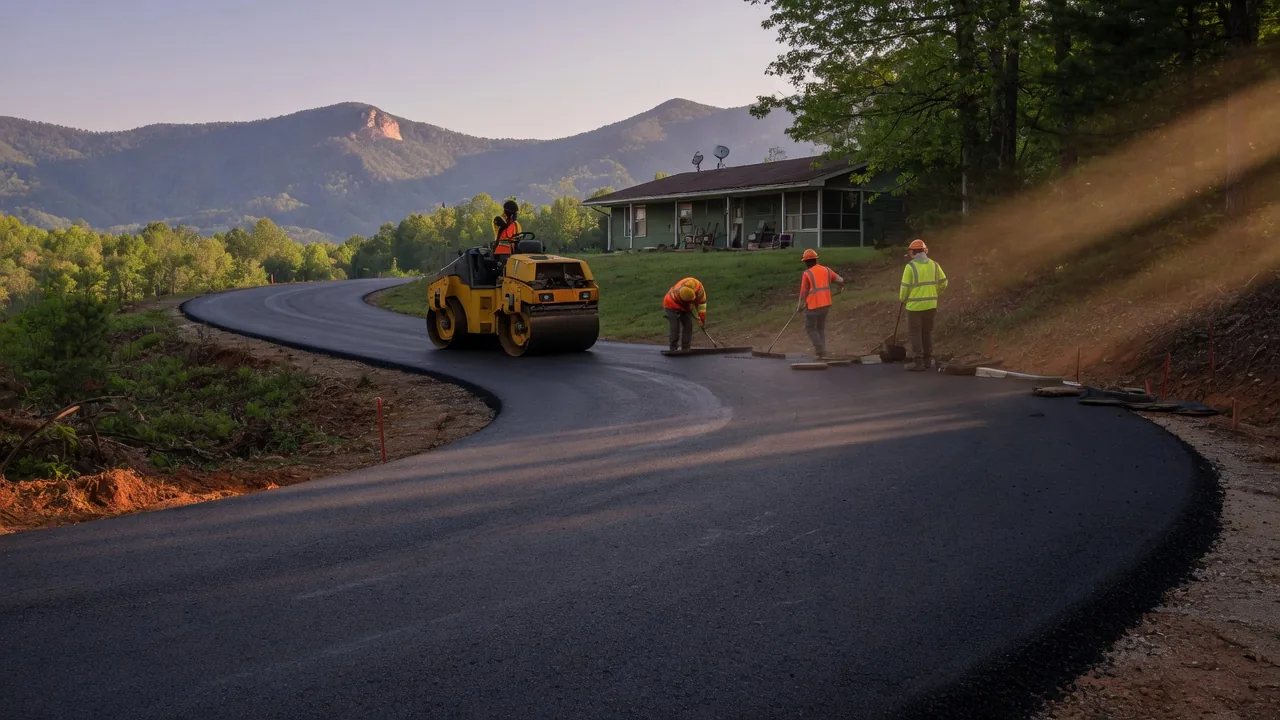
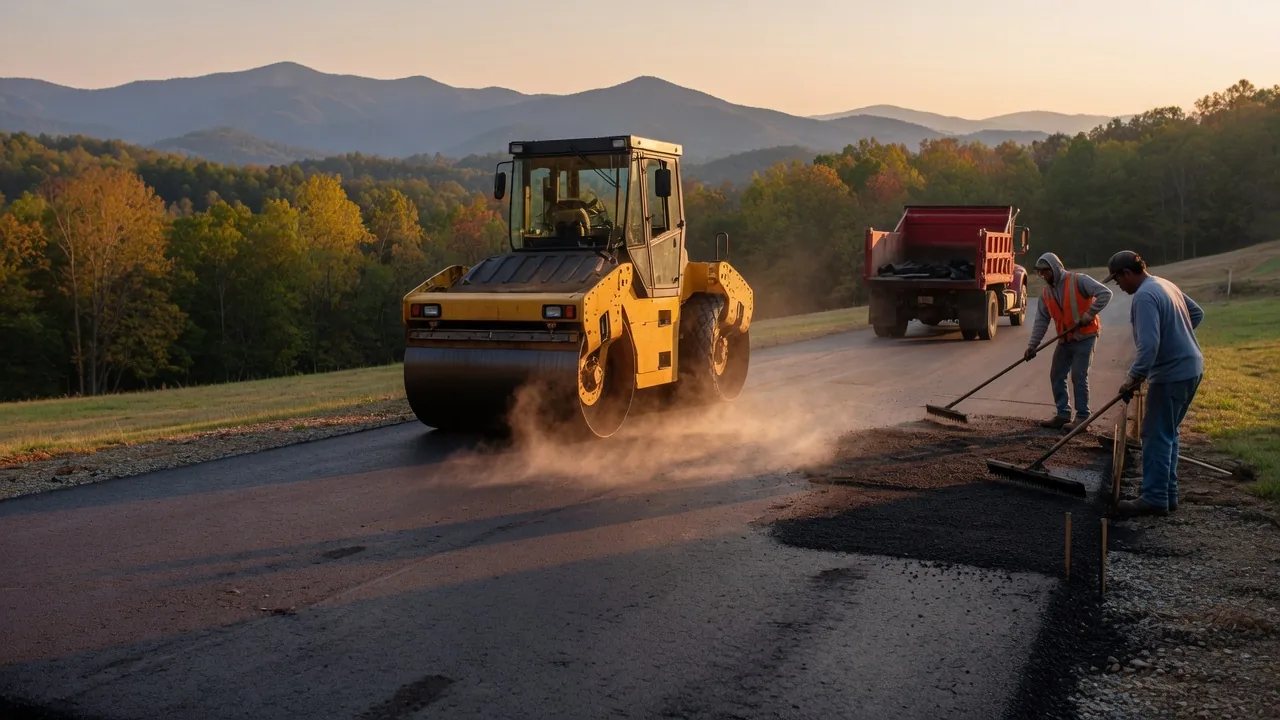
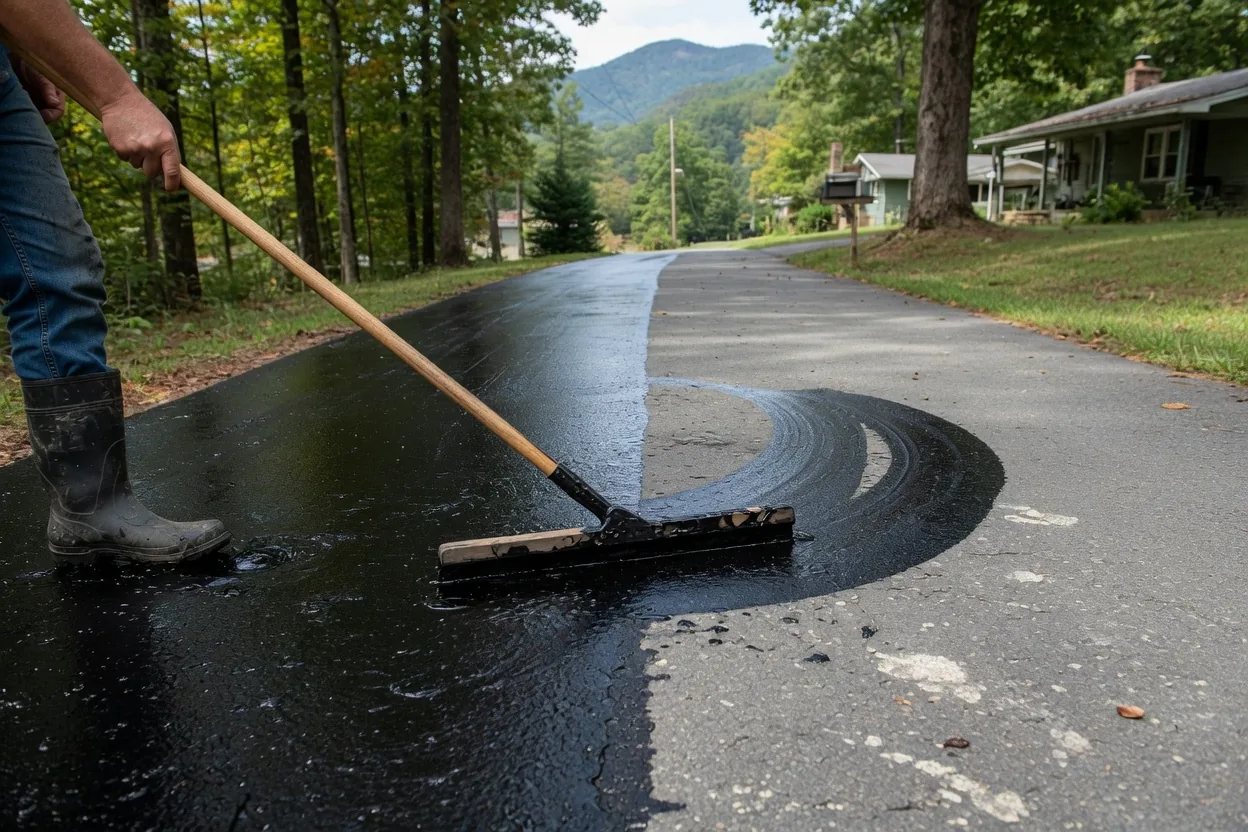
Asheville sits between roughly 2,100 and 2,600 feet above sea level, which puts it in a climate category that most North Carolina homeowners never deal with. Winter freeze-thaw cycling is real here: overnight temperatures drop, water trapped in surface cracks expands as it freezes, then thaws and contracts, then repeats. One winter can open a hairline crack into a pothole. A driveway on a steep lot in Kenilworth or off Town Mountain Road adds a second variable on top of that: grade pushes runoff directly into cracks rather than off to the side, and standing water at the base of a steep run softens the subbase until it can no longer support the surface above it.
The result is that Buncombe County driveways tend to fail faster and in more varied patterns than driveways in piedmont or coastal NC. A repair approach that ignores grade and drainage fixes today's visible damage while the next failure forms underneath. The full picture of what asphalt driveway repair looks like here starts with identifying the failure mode, not measuring the square footage.
Reading what your driveway is telling you
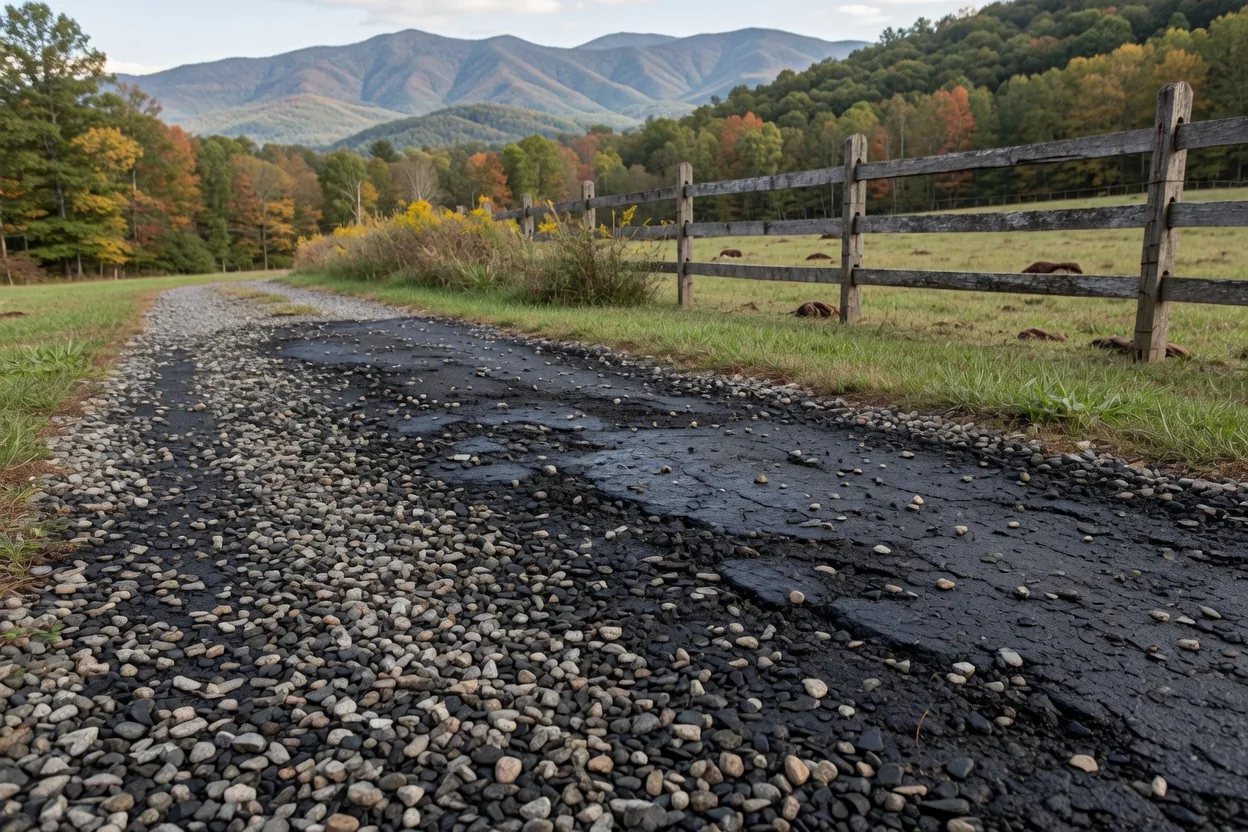
Alligator cracking, the web of interlocking fissures that resembles scaled skin, almost always points to base failure or subgrade softening from below. In Asheville's clay-heavy mountain soils, that softening typically comes from water intrusion. Surface sealing over alligator cracking delays the symptom without touching the cause; a proper repair excavates to the failed layer. Potholes are often more repairable in isolation, but a cluster of them in the same zone on a hillside lot usually signals base trouble. The potholes guide covers how to tell a patchable hole from one pointing at a deeper problem.
Edge cracking runs along the driveway perimeter where asphalt has no lateral support, and on Buncombe County's many sloped lots it appears first on the downhill side as the base begins to migrate. Transverse cracks, straight lines running perpendicular to the drive direction, are the most common freeze-thaw byproduct in Asheville; they respond well to crack filling when caught before they widen past a quarter inch. Width matters more than length: a crack you can fit a nickel into that was hairline last season is moving structure, not settling in place.
What repairs typically cost around Asheville
Cost in Buncombe County varies more by underlying condition than by surface area alone. Steep grades add drainage work, failed bases add excavation, and mountain-climate patching materials carry a modest premium over piedmont pricing. The table below covers common residential scopes:
| Repair Scope | Typical Range |
|---|---|
| Crack sealing (linear runs, hairline to quarter-inch) | $250 – $450 |
| Single pothole patch | $300 – $500 |
| Multiple potholes or scattered surface damage | $500 – $900 |
| Partial resurfacing (one lane or damaged section) | $800 – $2,500 |
| Extensive repair with drainage correction | $1,500 – $4,500 |
Steep-grade jobs routinely include drainage line items that a flat-lot quote never shows. Treat any bid that skips the drainage conversation as incomplete rather than affordable. Any scope that modifies a road connection may carry permit fees on top of these ranges.
Water is the real demolition crew
Buncombe County has recorded 19 federal disaster declarations across 1973-2026, nearly all of them tied to storm and flooding events. Each one pushed water at driveways and subgrades built for drier assumptions, and the cumulative effect shows in the county's residential asphalt stock, especially on the ridge lots and cut-and-fill grades common throughout Asheville's residential neighborhoods. The National Weather Service records for the Asheville area document a steady pattern of high-intensity rain events layered on top of the elevation-driven freeze-thaw cycle, a combination that exhausts asphalt faster than either factor alone.
Before any repair spend, grade and drainage deserve honest scrutiny. A driveway that routes runoff toward the garage foundation, or that collects flow from the uphill neighbor's property, will cycle through repairs indefinitely. Gutters, grading, and channel drains are sometimes the repair, or at minimum a prerequisite for one that holds. The City of Asheville provides stormwater guidance for homeowners managing hillside drainage, and a contractor who doesn't ask about water before laying material is a flag worth noting.
Permits, road connections, and right-of-way
Most driveway repair within the existing footprint, crack filling, patching, and resurfacing over an intact base, does not trigger a permit in Buncombe County. The threshold shifts when work extends to or modifies the driveway apron at the public road. Driveways connecting to a state-maintained road fall under NCDOT driveway permit rules; applications for those connections run through NCDOT Connect. Any work within the City of Asheville right-of-way typically requires advance coordination with city public works. A contractor who doesn't ask about your road connection before starting is bypassing a step that can create liability for the homeowner.
Hiring for mountain-grade work
The practical checklist for Asheville: ask whether the crew has done steep-grade repair in Buncombe County specifically, because grade changes material choice, compaction approach, and drainage sequencing in ways that flatland experience doesn't prepare for. Ask how they diagnose base failure versus surface failure before writing a number, since the difference between those two repairs can be over a thousand dollars. Ask what they do about water before any asphalt goes down. The answer to that third question separates a repair that outlasts the next hard rain from one that doesn't.
Mountain-climate asphalt work calls for materials suited to freeze-thaw cycling, mix specs and sealant formulations that crews without high-elevation experience may not stock or specify. For larger structural scopes, North Carolina contractor licensing rules apply; verify licensing status through the NC Department of Insurance before signing anything. When you're ready for a real scope and a real number, the contact form on this page connects you to crews that know Buncombe County grades.