Clay beneath the pavement
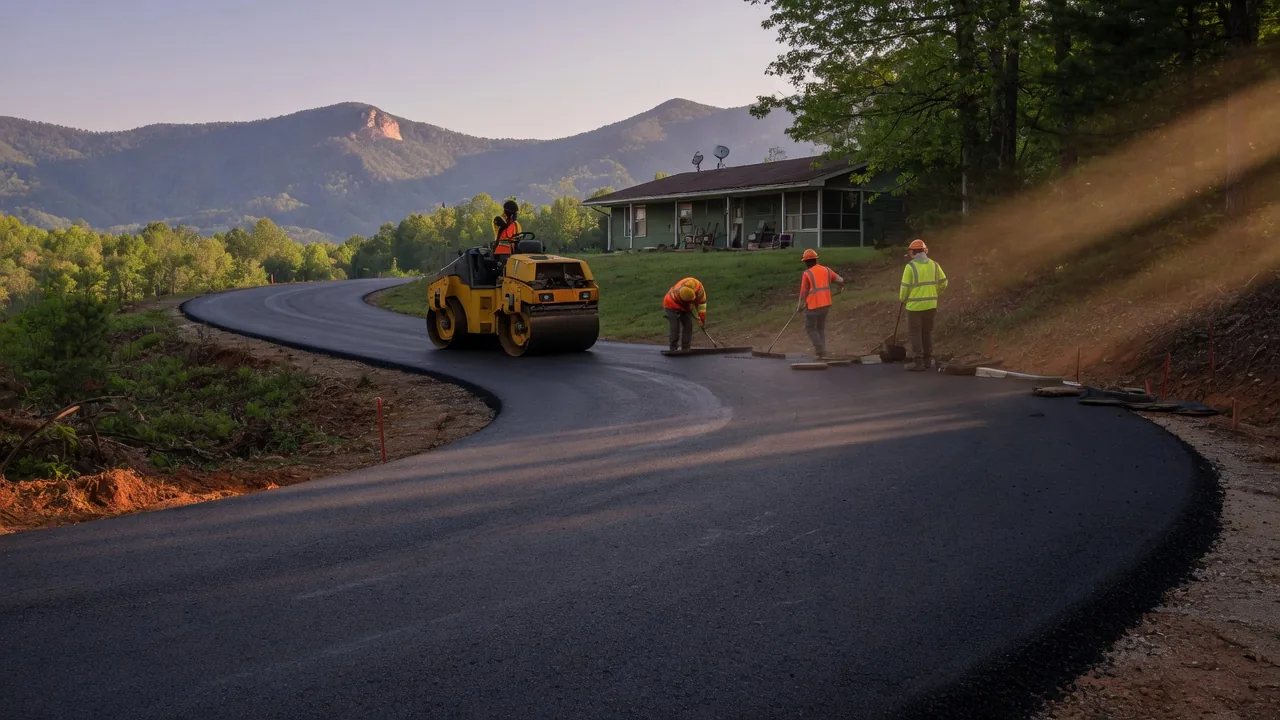
Candler sits at the western edge of Buncombe County where mountain terrain softens into the French Broad River corridor, and the soil beneath most driveways here carries that transition in the form of red clay. It is expansive, moisture-driven, and fundamentally different from the rockier subgrades on the steeper ridges closer to Asheville. When that clay saturates after a heavy spring, it lifts. When summer dries it out, it drops. Asphalt laid over it takes that movement personally.
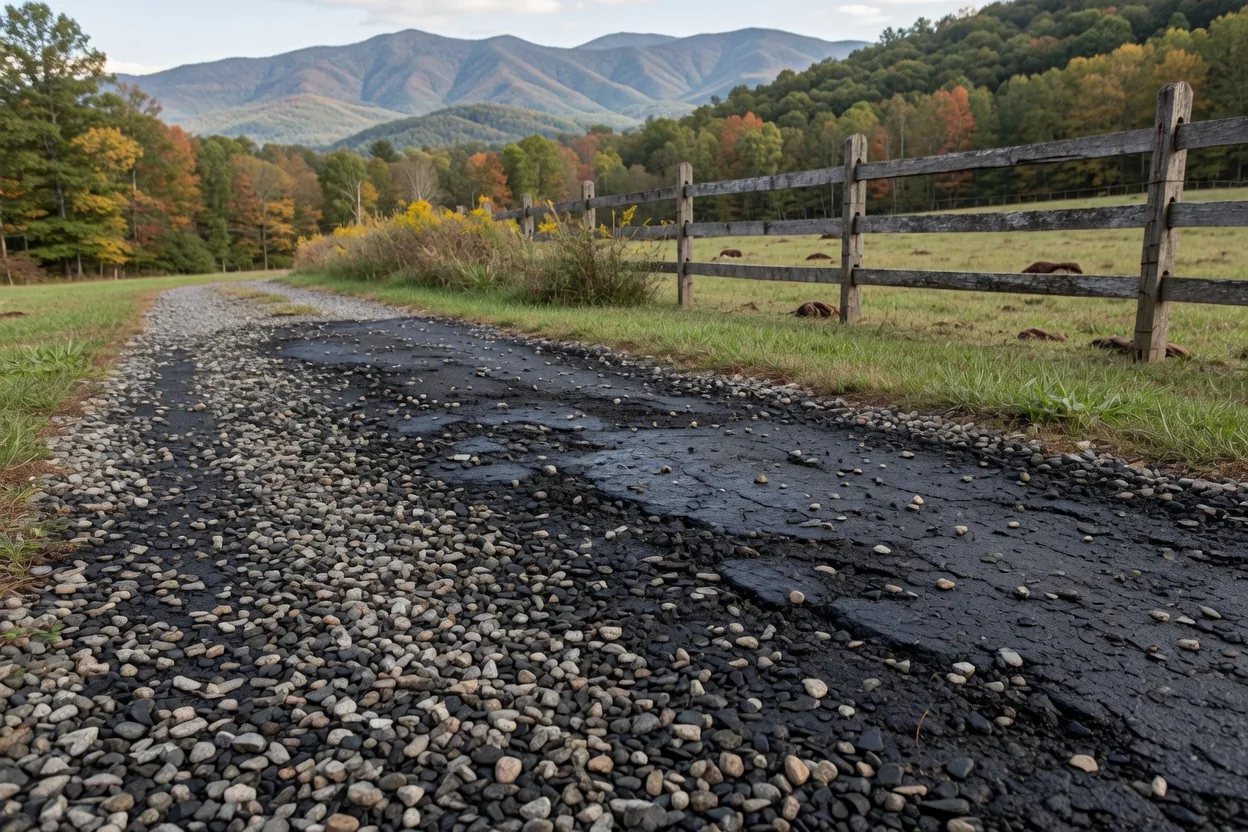
The results show up as cracking patterns that return even after fresh patches. Transverse cracks run perpendicular across the drive where the base contracted and pulled the surface mat apart. Alligator cracking spreads in wheel tracks where the subbase softened from water infiltration. On the steeper Candler grades, edge raveling appears where drainage ran under the mat instead of off the surface.
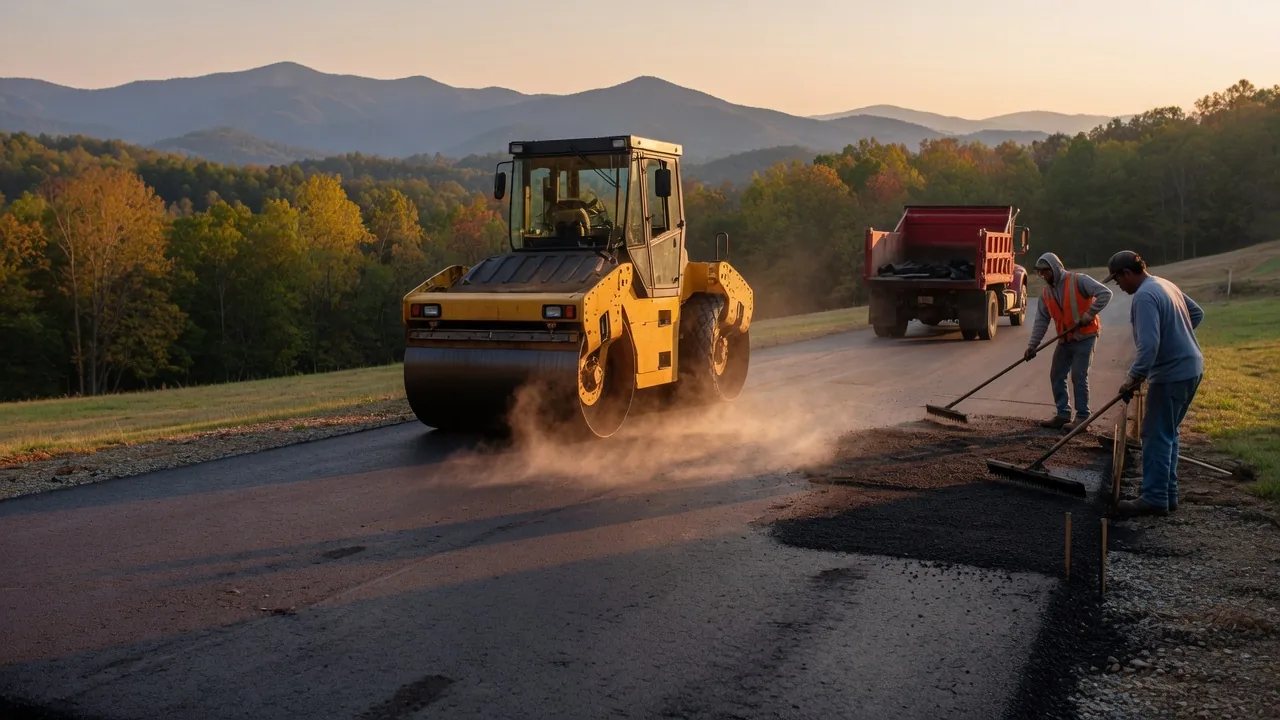
Properties in this area also tend toward longer driveways than urban Asheville: former farm lots, subdivided rural parcels, and newer developments set back from the road. A fifty-foot apron and a three-hundred-foot rural run are not the same repair job. More linear footage means more surface exposed to the same subgrade problem, and a quote built around a short city apron may not cover what your driveway actually needs.
The age of Candler's residential stock adds another layer. A significant share of driveways here were laid during the buildout of the 1980s and 1990s, which means they are running on thinning surface life and worth evaluating regardless of visible damage. Potholes and soft spots on drives of that vintage often signal base failure, not surface wear alone. The right starting question is not which material to use. It is where the water goes.
Repair scopes and what they run in this area
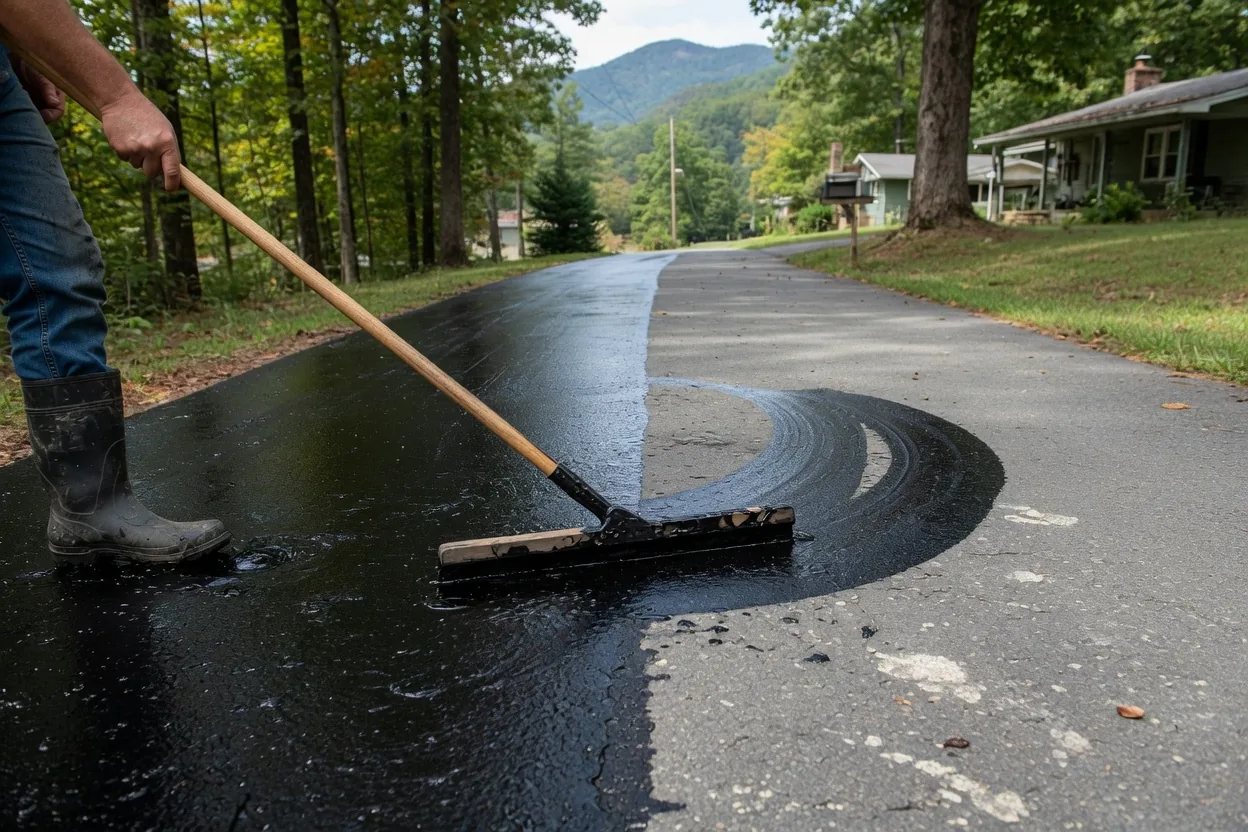
The table below covers common residential repair scopes around Candler. A broader breakdown lives on the asphalt driveway repair page; the ranges here assume a correctable or sound base.
| Scope | Typical range | What drives the cost |
|---|---|---|
| Crack sealing (single or linear runs) | $250–$500 | Crack width, total length, edge prep needed |
| Pothole patch (one to three holes) | $300–$700 | Depth, base condition, hot-mix vs. cold patch |
| Multiple cracks and minor patching | $500–$900 | Total affected area, drainage work included |
| Edge repair and grade correction | $700–$1,800 | Drainage rework scope, linear footage affected |
| Partial mill and overlay | $1,500–$3,200 | Section length, base prep, equipment access |
| Full residential resurfacing | $2,800–$4,500 | Total driveway length, drainage work required |
The jump from a lower row to a higher one almost always comes down to base condition. A pothole that has been open through a season, or cracking that has let water into the base through multiple freeze cycles, moves any job up in scope. What looks like a $400 patch can become a $1,200 base-and-patch once the surrounding surface is probed. Any quote that skips the base assessment is worth questioning before you sign it.
Storm history and seasonal timing
Buncombe County carries a long storm record: 19 federal disaster declarations over 1973-2026, with storm and flooding events representing the majority. Those declarations do not just damage county-maintained roads; they saturate the subgrade under residential driveways for days at a time, soften the base, and accelerate the clay movement that defines this soil type. A driveway that held through five years of ordinary rain can fail after one sustained wet season.
The National Weather Service records for western North Carolina document a pattern that makes repair timing matter. Significant rain events in late spring and early fall push moisture into the soil just before the freeze cycle begins. Water that enters a crack in October expands when it freezes, widens the crack, and pushes the surrounding asphalt upward from below. A hairline crack in October can be a three-inch gap by March without a single car crossing the driveway.
That seasonal rhythm has practical implications for repair scheduling. Late-summer repairs, when the clay has dried and contracted slightly, allow better joint adhesion and more stable base prep than patches applied during mud season. Storm-caused edge washing and freeze-driven alligator cracking look similar from above but require different scopes below. Repairs made while the subgrade is still wet sit on a substrate that will shift again before the patching material cures properly. An inspection that only surveys the surface is missing where the damage actually starts.
The permit question and what to ask before hiring
Driveways that connect to NCDOT-maintained roads require a driveway encroachment permit for any work that modifies the approach geometry, widens the connection, or changes drainage at the right-of-way edge. For repairs done in place — crack sealing, patching, and resurfacing without altering the footprint — no permit is typically required. Work that changes where water exits onto a state road, or alters the curb cut, does require one. Permit applications for state-road connections run through NCDOT Connect, and a contractor unfamiliar with that process is worth asking about directly before any road-adjacent work begins.
Three things separate the contractors worth hiring from those worth passing on. First: how do they evaluate the base before quoting — do they probe soft spots on foot or walk the surface from a distance? Second: do they address drainage before or alongside the surface repair, or only the visible symptom? Third: can they describe what failed in your specific driveway rather than offering a generic description of asphalt aging? A contractor who answers all three concretely, walks the driveway with a probe, and ties the drainage observation to the damage they plan to address is one worth getting a number from. On red clay subgrade with the seasonal movement this area sees, those answers matter more than the price per square foot. The repair guide covers what a complete first visit should include and what it should rule out.