Slope is the variable Asheville estimates usually get wrong
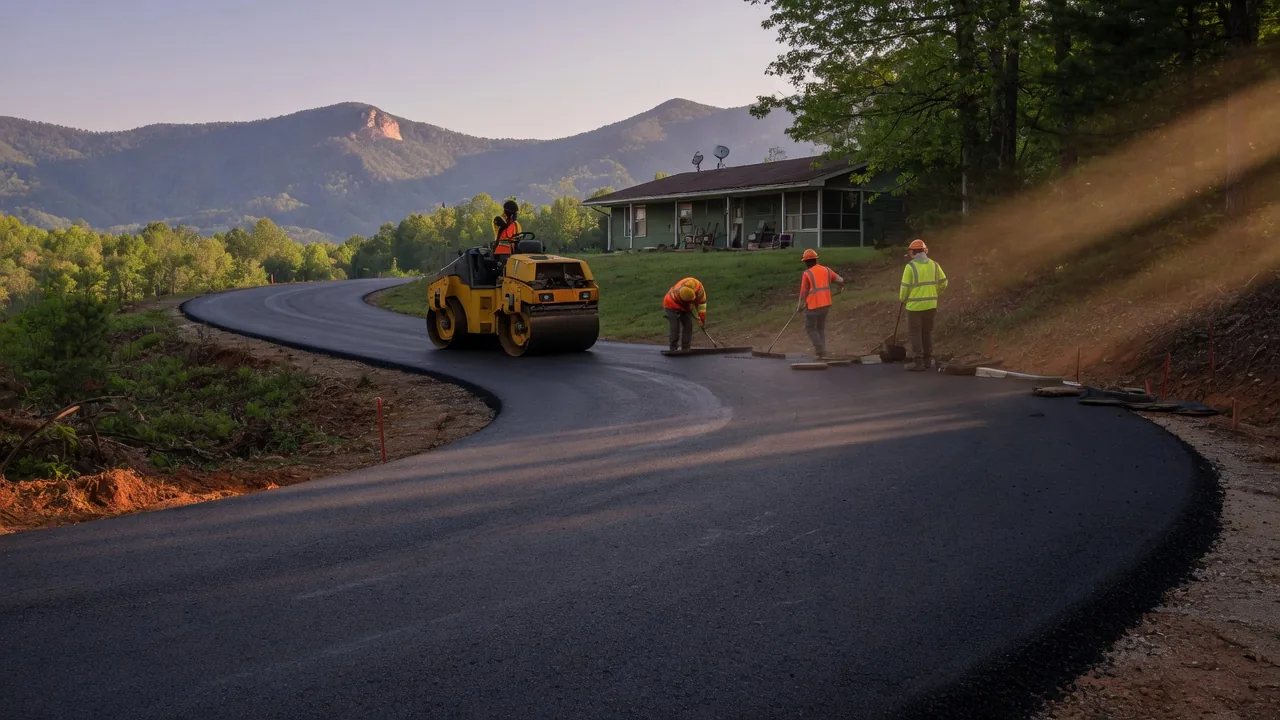
Most residential driveways in Buncombe County run uphill from the curb, sometimes steeply enough to shed a heavy rain fast and pool at the base edge between storms. That grade is what separates a driveway that overlays cleanly from one that needs base work first. Asheville's annual rainfall ranks among the highest of any inland city in the Southeast — a fact borne out by National Weather Service historical records for the southern Appalachians — and water moving along a pitched driveway erodes the base edge in ways flat-country overlay guides never mention.
Before any asphalt resurfacing job here earns a price, the edge condition matters as much as the surface condition. A driveway draining toward the house foundation is a drainage problem wearing asphalt clothing, and a two-inch overlay will not reverse that direction of flow. The right first question on any sloped lot in this county is where the water goes during a hard rain, and whether the answer changes with a new surface on top.
What a resurfacing job actually includes
Asphalt resurfacing places a new hot-mix layer over an existing base that is structurally sound. A typical residential job runs one day:
- Base and edge assessment. The crew checks for alligator cracking, soft spots, and failed edges. Any of these signal base failure that an overlay cannot fix — localized patches come first, and widespread failure means the job is a replacement.
- Surface prep. Loose material, vegetation at the edges, and old sealant that would prevent bonding are cleared. On steeper driveways, a light milling pass removes just enough surface to keep the finished height compatible with garage aprons and curb transitions.
- Tack coat. A thin asphalt emulsion bonds the new layer to the old one. On a sloped driveway this step is what keeps the overlay from migrating under traffic heat.
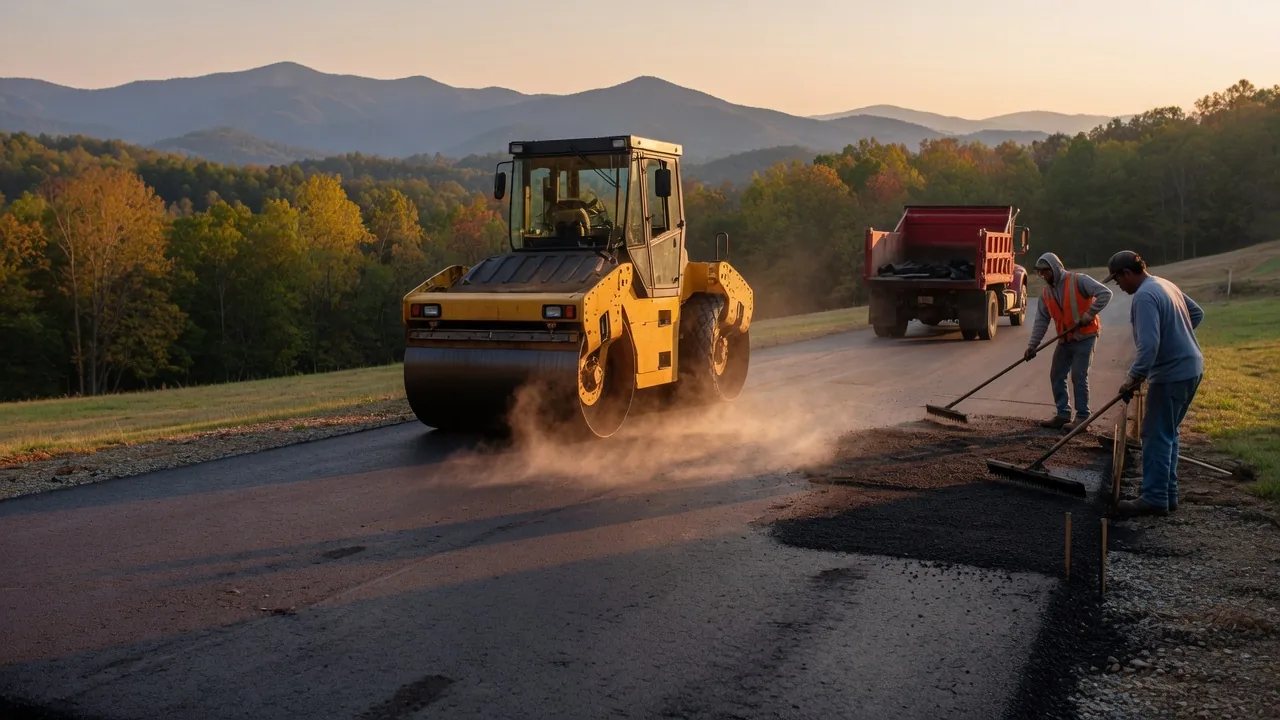
- Overlay placement and compaction. Hot-mix asphalt is spread and compacted; residential overlays here typically run 1.5 to 2 inches compacted. Steeper grades and heavier use warrant thicker lifts.
- Edge detailing. Seams at garage slabs, walkways, and the street apron need to be tight and properly sloped. Open seams are where WNC freeze-thaw cycles begin pulling an overlay apart.
For driveways connecting to a state-maintained road, NCDOT may require a driveway encroachment permit before any work at the apron. That requirement belongs in the contract — skipping it can mean rework at the homeowner's cost.
What resurfacing costs in this region
Per-square-foot pricing for asphalt resurfacing runs $2.25–$5.50 installed in western North Carolina. A standard two-car driveway falls in the $1,800–$4,800 range. The spread is real, not a hedge — the full cost page on this site works through the variables in detail, but in Buncombe County the biggest drivers toward the top of the range are grade, drainage prep, and base edge condition going in.
| Scope | Approx. size | Installed range |
|---|---|---|
| Single-car driveway overlay | 200–300 sq ft | $450–$1,650 |
| Standard two-car driveway | Typical residential | $1,800–$4,800 |
| Steep-grade or drainage-prep surcharge | Per job | Add $400–$1,000 |
| Edge rebuild before overlay | Per linear foot | Add $8–$18/lf |
Asphalt material costs track oil markets and change seasonally — a bid from last spring is not a current number. Storm seasons also compress contractor schedules and surface base damage that had been invisible. Buncombe County's 19 federal disaster declarations over 1973-2026 include events that saturate soil and compromise driveway bases, which is why post-storm demand can move both timing and pricing.
When resurfacing is the right call — and when it is not
A well-timed overlay on a sound base extends driveway life by a decade or more at a fraction of replacement cost. The right candidate has surface cracking and weathered texture but a base that does not flex underfoot, edges that have not heaved or separated from the surrounding soil, and drainage that moves water away from the structure. Driveways in that condition are exactly what overlays were designed for.
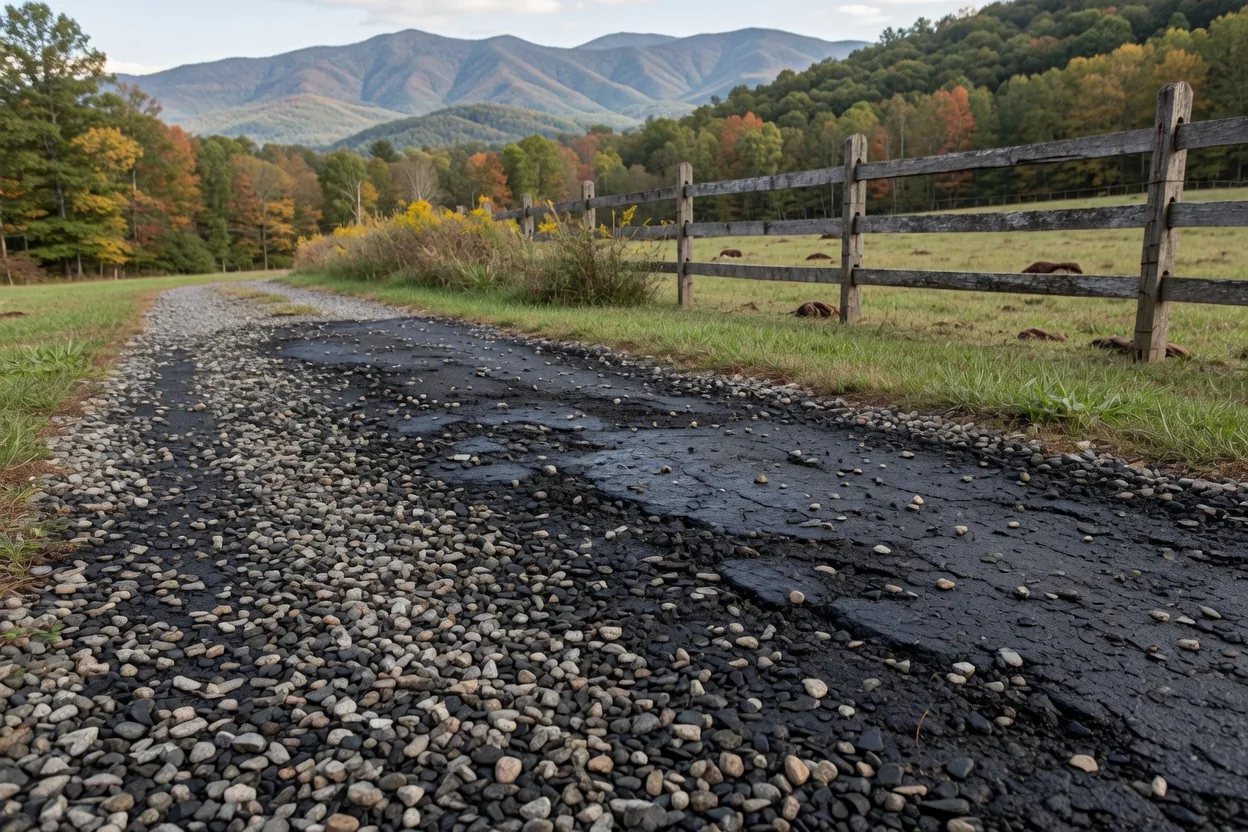
The wrong candidates are harder to identify without walking the driveway in wet conditions. Alligator cracking — the interconnected pattern that looks like dried mud — means the base has failed structurally. Overlaying it produces a surface that re-cracks in the same places within one to two seasons, which is an expensive way to avoid a diagnosis. On mountain lots with significant cut-and-fill, an apparently sound surface can sit on base material that was never properly consolidated. That scenario needs structural repair before any overlay, or a full replacement where the base is rebuilt correctly. The repair page covers what those options involve and what an honest pre-bid inspection should flag.
Permits, drainage rules, and the curb connection
Resurfacing within an existing footprint generally does not require a building permit in Buncombe County. Expanding that footprint — widening the driveway, adding a parking pad, or extending the apron — can trigger stormwater review. Inside Asheville city limits, the City of Asheville's stormwater ordinance applies to new impervious surface; county standards govern outside the city boundary. The practical test: if you are adding pavement area, confirm requirements before the crew arrives.
Work touching a state highway right-of-way is a different category entirely. NCDOT requires a driveway encroachment permit for any alteration at a driveway connecting to a state-maintained road, which covers a substantial share of rural Buncombe County properties. Applications go through NCDOT Connect. Reputable asphalt contractors working this region know the requirement and will note permit responsibility explicitly in a written contract. If a proposal does not address it, ask before signing.
Making the overlay last in a wet climate
A new overlay on a sound base should last 10 to 20 years in western North Carolina with routine maintenance. What shortens that range here more than in drier climates is water at the edges and freeze-thaw cycling at any open seam. Keeping the driveway's edges sealed, maintaining enough center crown to shed water rather than absorb it, and filling new cracks before they widen are lower-cost maintenance steps that extend the interval between overlays considerably.
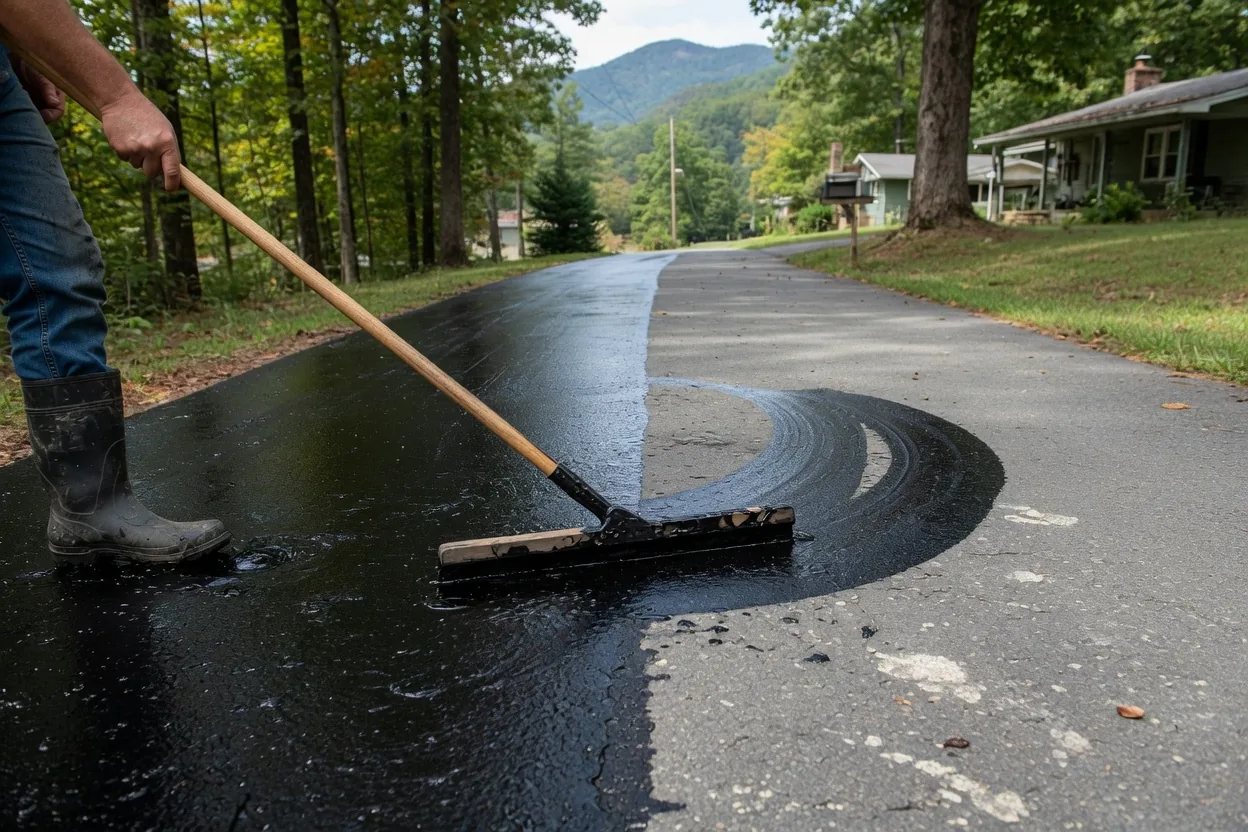
Seal coating slows oxidation and keeps the surface from going brittle, but it does not add structural life and should not be applied to fresh asphalt for at least 12 months. After that, seal coating every three to five years is a reasonable cadence in this climate. For a realistic timeline of when sealing, crack filling, and eventual resurfacing fit into a driveway's full life cycle in the southern Appalachians, the driveway longevity page on this site lays it out by condition and use type.