Henderson County grade and what it means for every quote
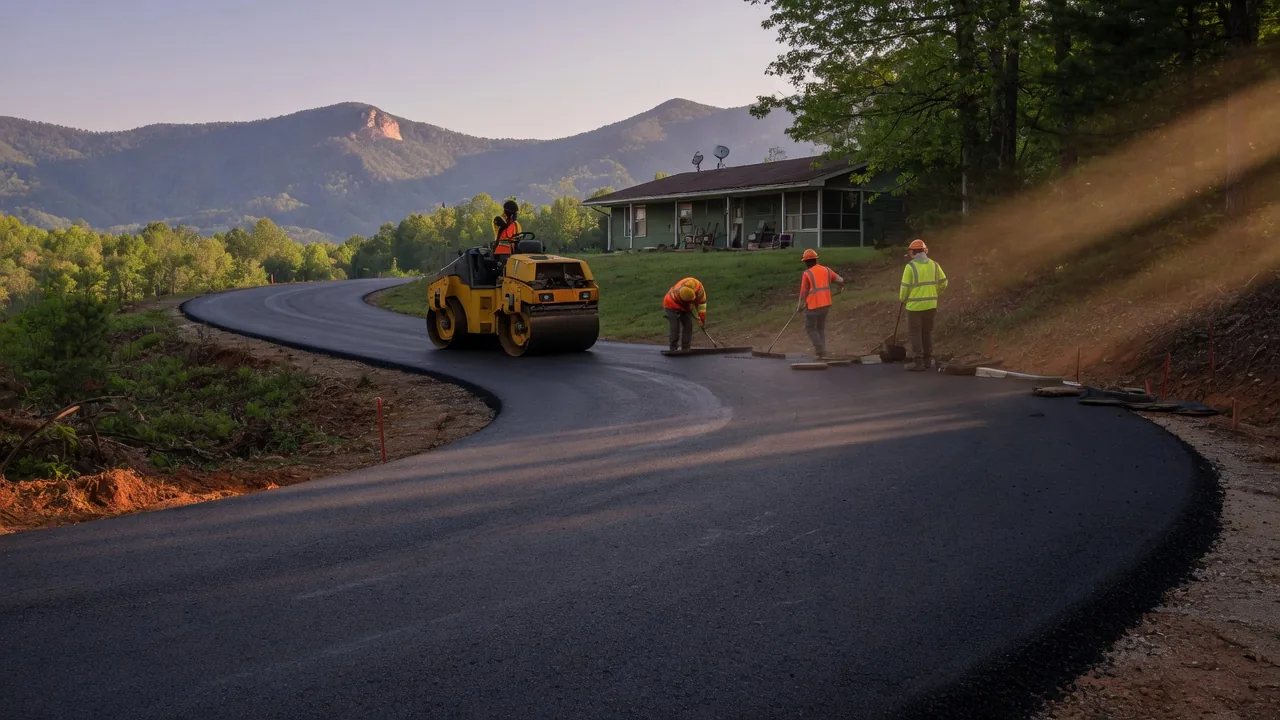
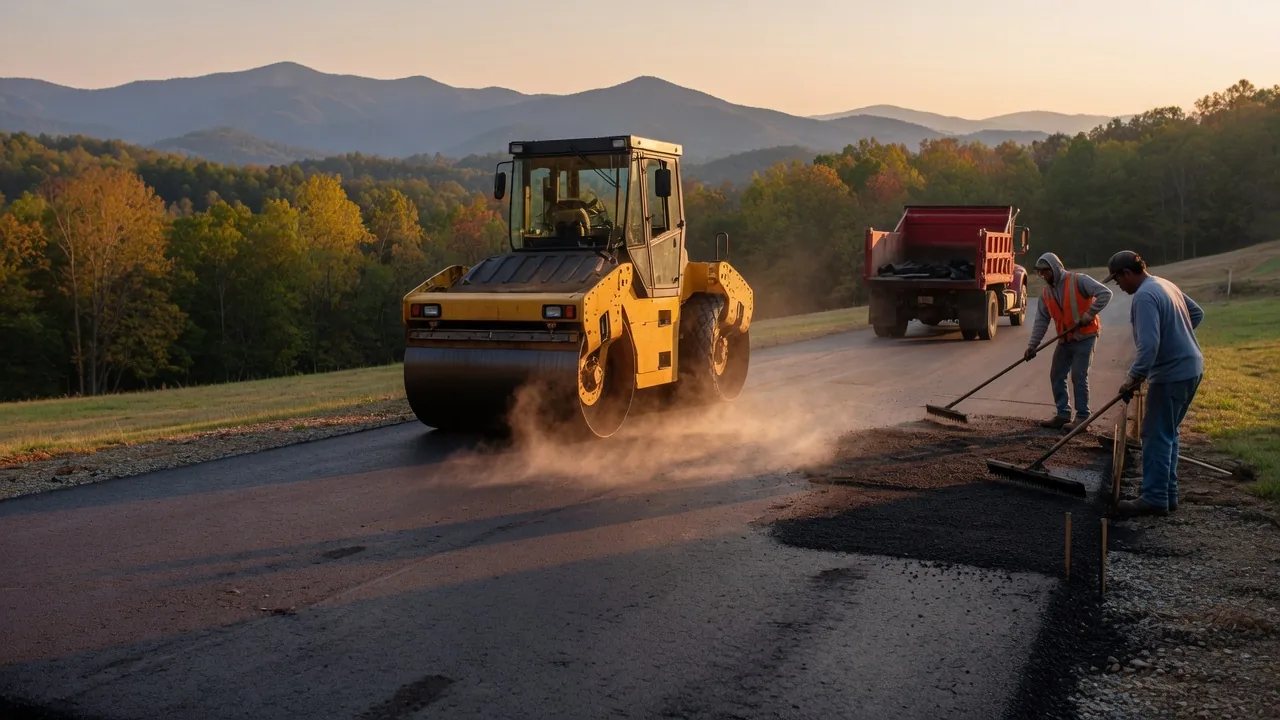
Hendersonville sits at roughly 2,100 feet on the southern Blue Ridge plateau, and the residential properties throughout Henderson County follow the rolling apple-orchard terrain that defines the area. A long approach driveway climbing toward a farmhouse in Mills River, a gravel-to-garage run on a Flat Rock estate lot, a steep cut toward a newer home off Dana Road — these are the shapes tar and chip actually takes in this county. Almost none of them are flat for their full length.
That slope is the central fact every quote here has to account for. Drainage crown angles change on a climbing run; edge containment matters more when rainfall wants to track down the center of the mat; aggregate size affects how well chip holds to emulsion on grades above eight percent. A crew quoting a Henderson County driveway without asking about grade is pricing the easier version of the job, not yours. The full breakdown of how this surface handles mountain terrain — including what a properly graded slope install includes that a flatland spec leaves out — is at our tar and chip overview.
What the work costs across Henderson County scopes
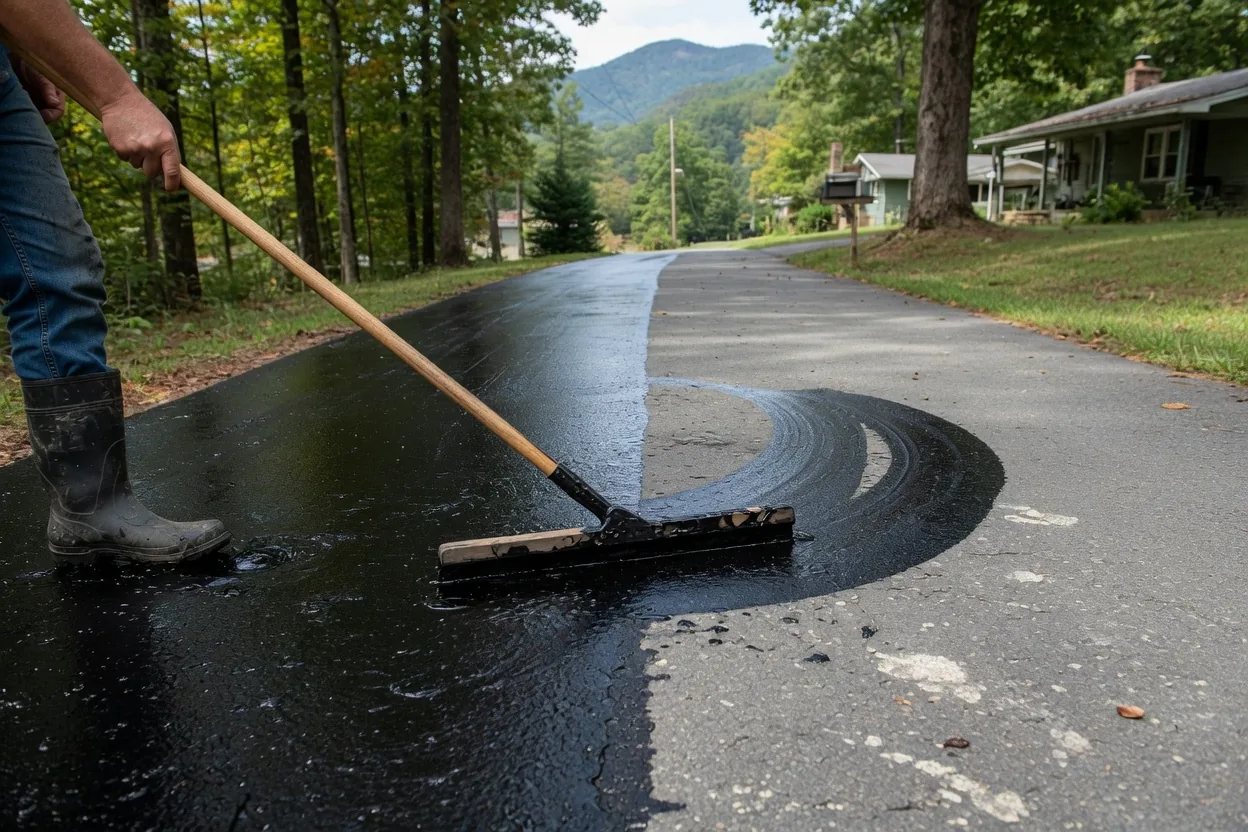
Price here follows three variables in order: square footage sets the material and labor floor; grade drives drainage and access costs on top of that; base condition determines how much prep is required before the first emulsion coat goes down. A well-maintained flat driveway over compacted gravel runs at the low end. A long climbing approach over soft or uneven ground runs at the high end. The tar and chip cost guide breaks down what each line item covers; the table below maps the most common Henderson County residential scopes to their typical installed price.
| Scope | Price per sq ft (installed) | What drives the number |
|---|---|---|
| Flat approach, sound compacted base | $3.50–$4.50 | Minimal drainage work, standard aggregate |
| Moderate grade, existing gravel base | $4.00–$5.50 | Base inspection required; grade adds drainage prep |
| Steep grade or soft-base correction needed | $5.00–$6.50 | Full drainage prep, edge containment, possible regrade |
| Long rural driveway (2,000+ sq ft) | $3.75–$6.00 | Aggregate haul distance a factor; larger area can offset unit cost |
| Gravel upgrade to tar and chip | $3.50–$5.50 | Depends on base compaction and moisture condition |
Any bid that doesn't itemize drainage separately should prompt a follow-up question. On a sloped Henderson County lot, drainage prep is not an optional add-on — it is part of what the job includes.
Rainfall, storms, and what fifty inches a year does to a driveway
Henderson County receives more than 50 inches of rainfall in an average year, channeled by the Blue Ridge topography directly downhill toward driveways, foundations, and low-lying approaches. The federal disaster record confirms what long-time residents already know: 16 declared events touch this county (1978-2026), the great majority of them storm and flood in character. Each of those events tested every drainage decision that was or wasn't made during installation.
The National Weather Service identifies two peak loading periods for western North Carolina: late-summer convective storms that can concentrate two inches of rain in under an hour, and early-spring rain-on-snow events that saturate frozen ground before it can drain. Both hit driveways from the uphill side. A surface installed with positive crown and clean drainage swales sheds both events and still looks right in year eight; one installed without that prep channels water down its center until the emulsion fails. The drainage principles behind NCDOT's road design standards apply to private driveways for the same physical reason they apply to state roads — water doesn't respect right-of-way lines.
When a gravel driveway stops making sense
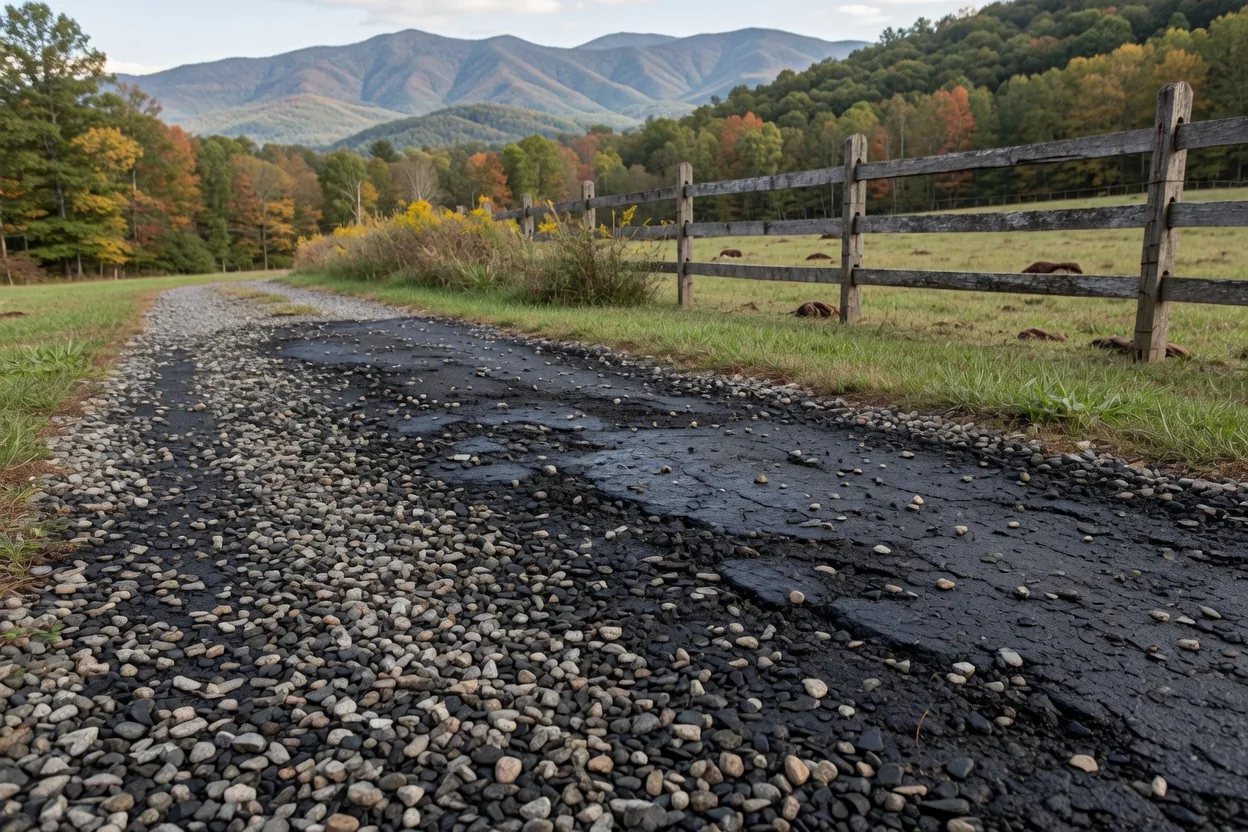
A significant share of Henderson County's rural properties — particularly on the eastern and northern edges where lot sizes run large — have gravel driveways maintained through annual regrading. The cycle works until it doesn't: ruts return faster each year, washout repairs eat into the regrading budget, and eventually the math favors a bound surface. Tar and chip occupies the practical middle ground between loose gravel and hot-mix asphalt: lower cost than full paving, better performance than gravel, and a surface that handles slope drainage well when installed correctly.
The upgrade path works when the existing gravel base is compacted and drains cleanly. A well-maintained drive is often close to ready for chip without significant base work. One with soft spots under the surface, heave from root pressure, or zones where water stands after rain needs base correction first — otherwise the new surface reflects those problems within a season or two. The gravel-to-asphalt comparison covers the base evaluation criteria that apply equally to a tar and chip conversion.
Permits, NCDOT, and finding a crew built for this terrain
Driveways connecting to a state-maintained road in Henderson County require a driveway permit from NCDOT before construction begins. Applications go through NCDOT Connect, and the process carries specific requirements for sight distance, approach angle, and drainage that affect how the driveway gets laid out. If you're unsure whether your road is state-maintained, Henderson County's development services office can confirm and point you to the correct review process. Starting work without the permit risks a stop-work order mid-project.
On the contractor side, ask three questions specific to this market: whether the crew has completed comparable-grade driveways in Henderson or the surrounding mountain counties (flat-piedmont experience does not transfer to a climbing approach); how they handle drainage at the uphill edge; and whether they manage the NCDOT permit or pass that step to you. A contractor who handles the permit application has done it before and understands the requirements. Use the cost guide to compare bids line by line rather than final totals — scope differences in drainage and base prep hide easily in a single bottom number.