What altitude does to an asphalt driveway
Black Mountain sits above most of its Buncombe County neighbors on the eastern edge of the Swannanoa Valley, and that elevation is the single variable that separates a repair here from one in the lower valley towns. Higher elevation means more freeze-thaw cycles per winter: temperatures that drop below freezing at night and climb above it by afternoon, expanding and contracting any water that has found its way into an existing crack. Over a single winter, that cycling turns a surface crack into a structural one and converts a small pothole into a spreading edge failure.
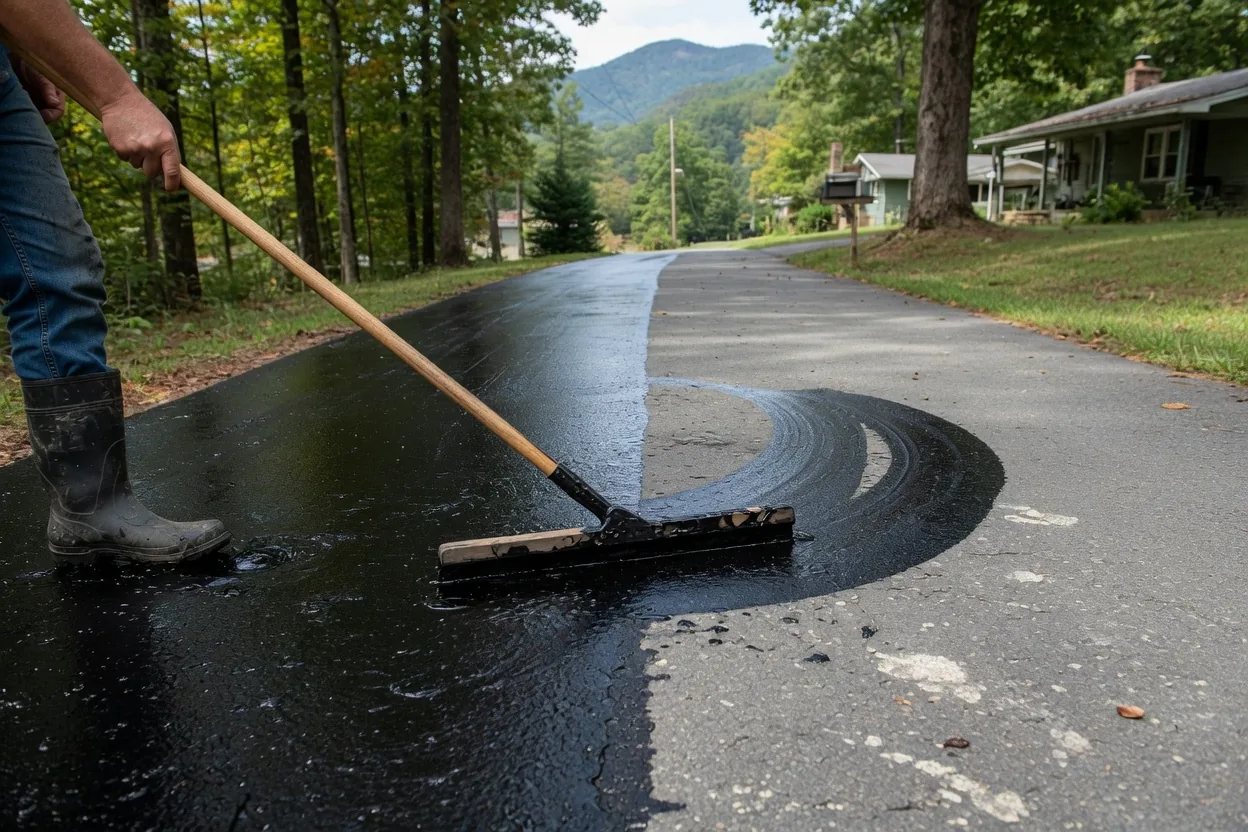
Homeowners here regularly notice damage accelerate between late February and early April, when temperature swings are widest and melt-refreeze cycles run almost daily. A driveway that looked stable in November can carry a half-dozen new cracks by spring. That is not a maintenance failure — it is physics, and it argues for sealing cracks early rather than watching them grow. The deeper a freeze works into unrepaired asphalt, the more expensive the spring repair. The main asphalt driveway repair page covers the full range of services that address this cycle.
Reading the damage on a mountain driveway
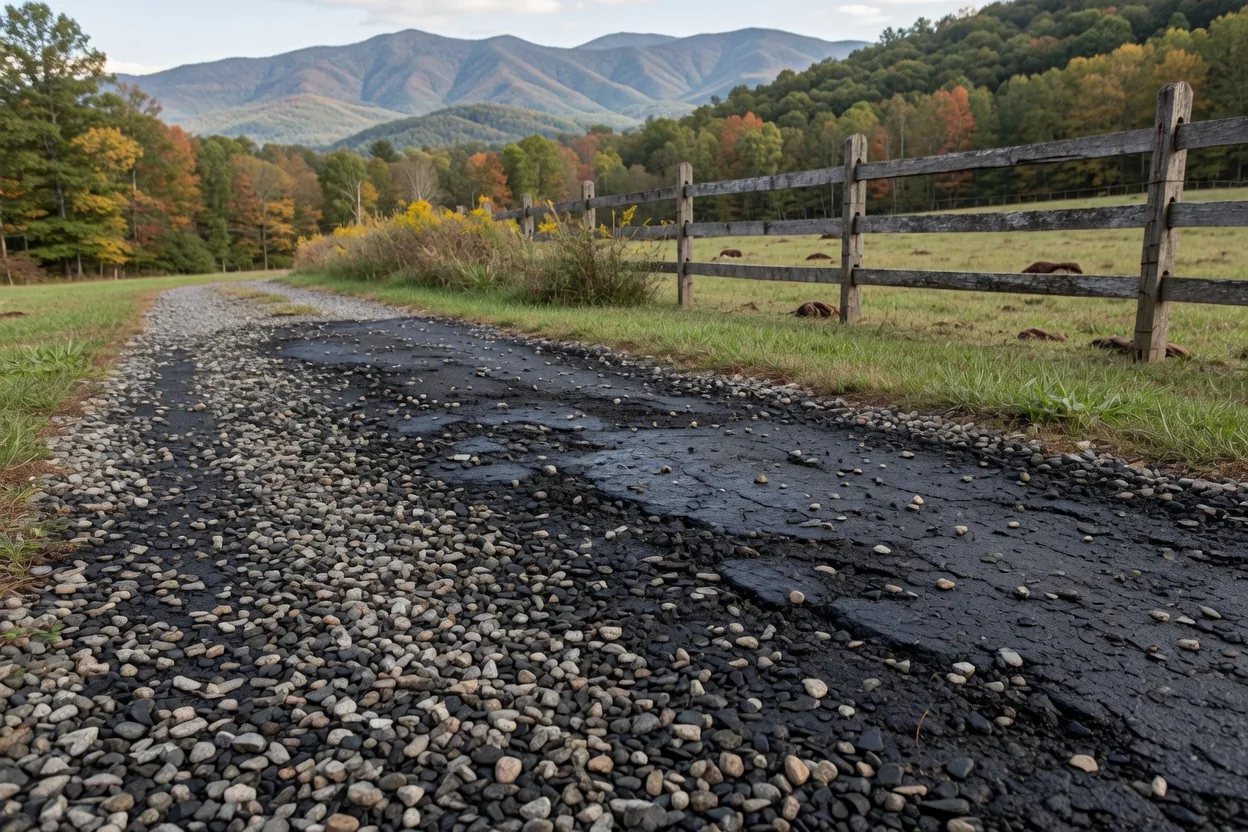
Asphalt in Black Mountain fails in a recognizable order. Surface cracks appear first: longitudinal seams running with the slope on steeper drives, and alligator cracking — a grid of interconnected cracks — on flatter sections where water pools after rain. Potholes follow where cracking has progressed deep enough for the base material to soften or wash out. Edge crumbling is common on driveways without curbing or edge restraint, where freeze-thaw pressure pushes material outward each season.
Two details that change the repair approach: slope and substrate. A driveway that drops sharply off the road puts shear stress on any patch, and patches placed without addressing drainage will fail before the next winter. The other question is what lies under the asphalt — many Black Mountain properties sit on fill or mountain soil that compacts unevenly. A pothole that keeps returning is almost always a base problem, not a surface one. The asphalt driveway cracking guide explains which crack patterns point to surface wear versus deeper base movement, and driveway potholes covers base repair scope in more detail.
Repair scope and what it costs here
Repair cost in Black Mountain tracks scope more than zip code. The table below reflects typical ranges for residential jobs in this area; steep grades, difficult equipment access, or base failures push estimates toward the upper end of each range.
| Repair scope | Typical range |
|---|---|
| Hairline and fine crack sealing | $250–$450 |
| Pothole patching, 1–3 potholes | $300–$650 |
| Edge crumbling repair | $350–$700 |
| Multiple cracks and patching | $500–$900 |
| Surface reseal with crack repair | $700–$1,800 |
| Partial overlay on damaged section | $1,200–$3,200 |
| Full driveway overlay | $2,000–$4,500 |
Access adds to cost faster on mountain roads than flat ones. A long, steep driveway that limits equipment size or requires extra truck passes will carry a line item for it. Any bid that does not mention grade, access, or drainage for a Black Mountain job should prompt a follow-up before you agree to it.
Water before asphalt — the drainage question
Buncombe County carries 19 federal disaster declarations spanning 1973-2026, with the majority involving storm and flooding events. Black Mountain sits at the head of the Swannanoa Valley, and when heavy rain moves through the area, runoff concentrates here. That history explains something counterintuitive about asphalt work on this side of the county: water is usually the primary cause of failure, and paving is the secondary fix.
Before any patch or overlay, the drainage question needs an honest answer: where does runoff go when it leaves the driveway? If the answer is into the base, no surface repair will hold through more than one winter. Regrading a shoulder, extending a gutter run, or improving the ditch line along the road edge often sets up a repair that actually lasts. The National Weather Service documents the precipitation patterns that explain why mountain drainage is not a minor detail — annual totals at higher Buncombe elevations run well above the statewide average, and the Swannanoa Valley concentrates that rainfall further.
When permits enter the picture
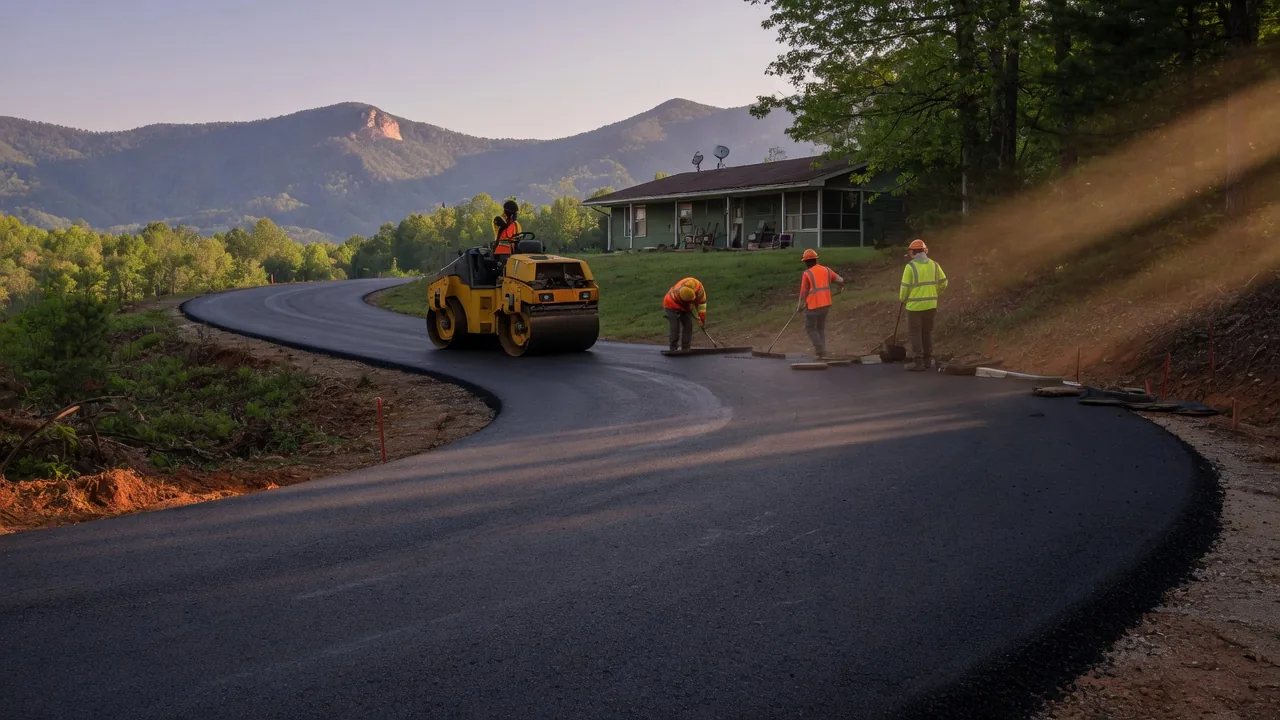
Most residential driveway repairs — crack sealing, patching, and overlaying the existing paved surface — do not require a permit in Buncombe County. The situation changes when work touches the driveway approach: the connection between your driveway and the NCDOT right-of-way. Any modification to that connection, including changes to apron grade, curb cut width, or the drainage swale alongside it, requires a driveway permit application through NCDOT Connect. Skipping that step on a road-connection change can mean forced removal and rebuilding at the homeowner's cost.
Most roads in rural Buncombe County and within Black Mountain's neighborhoods are state-maintained, so the NCDOT threshold applies more often than homeowners expect. Ask the contractor whether the driveway approach is in scope before work begins; a clear answer to that question is a reasonable indicator of how well they know local rules. NCDOT publishes current permit requirements and thresholds for residential driveway connections.
What to ask before hiring here
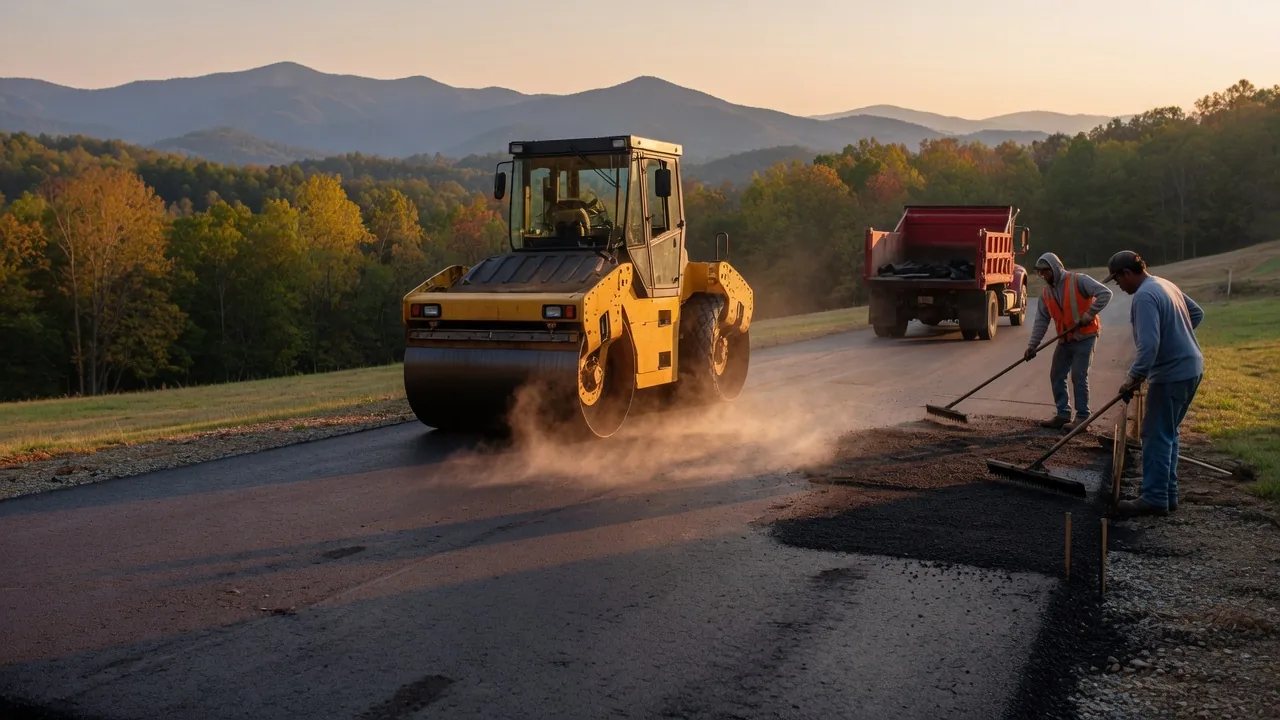
Three questions that matter in Black Mountain specifically: ask whether the crew has worked on comparable grades, since flat-lot experience does not transfer cleanly to steep access and cold-temperature cure; ask what drainage work is included or recommended alongside the repair; and ask about material temperature on cold days. Hot-mix asphalt applied when temperatures are dropping does not cure properly, and the working season in these mountains closes earlier than in the valley below. A contractor who works this market regularly will know their window and price accordingly.
For any job that touches the road connection, the NCDOT permit question is not optional. For everything else, let scope determine your paperwork: crack sealing on a small driveway is a handshake job, and a $3,000 overlay deserves a written contract with scope, drainage notes, and a warranty term spelled out.