Grade changes everything about a Canton driveway
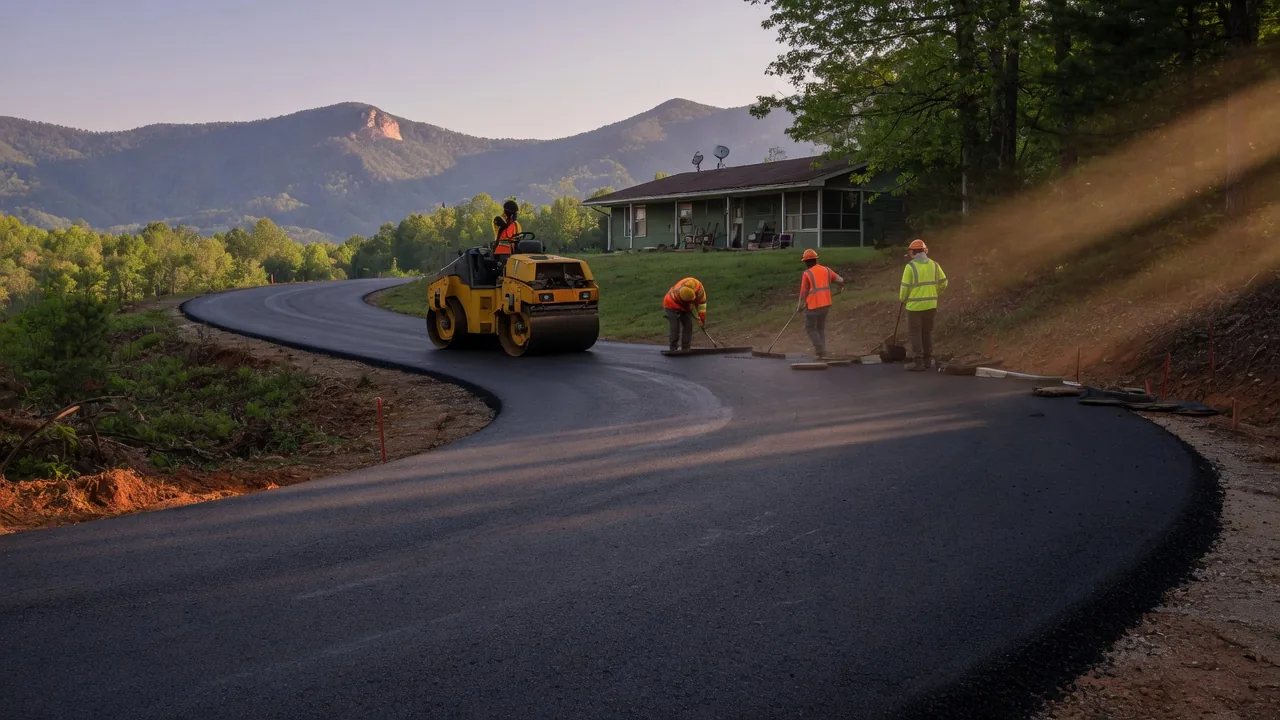
Canton sits in the Pigeon River valley, but flat driveways are rare here. The residential runs that climb off US-19 and US-23, that switchback toward the hillside neighborhoods above downtown, that stretch out toward Clyde and the rural stretches of Haywood County — most carry grade. Some are gentle, some run steep, and that fact alone separates paving in this market from paving in the Piedmont.
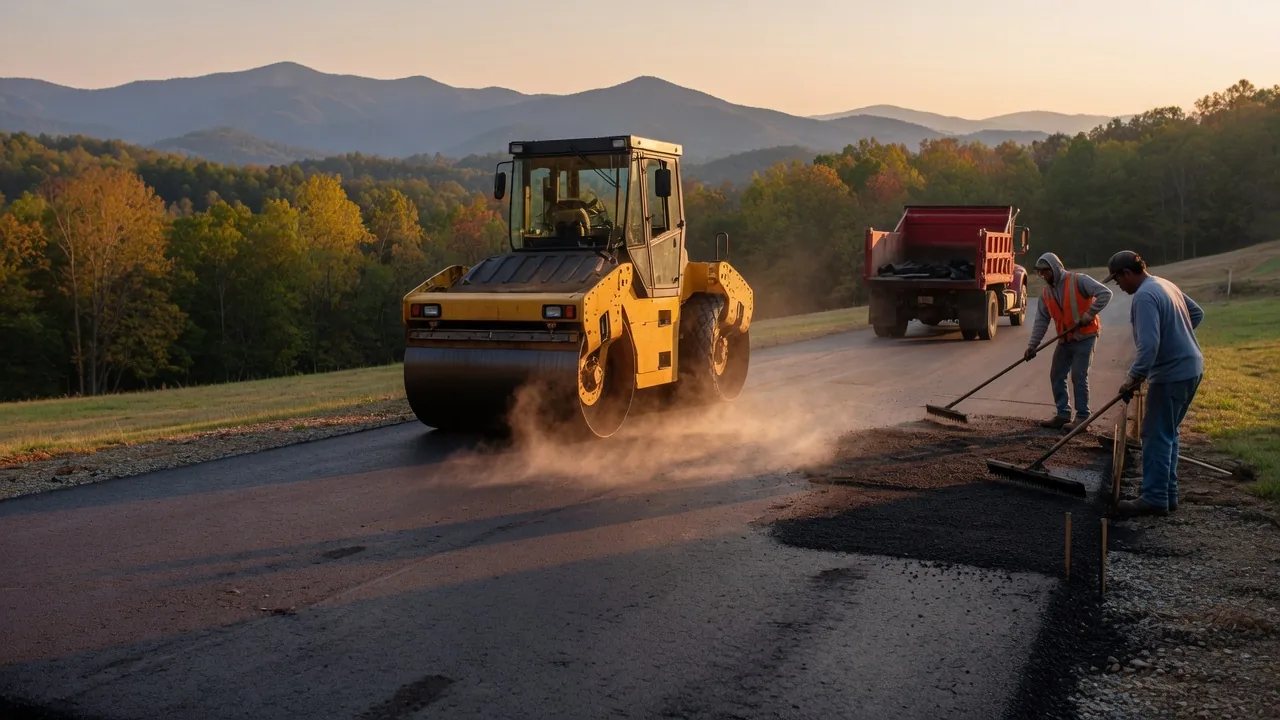
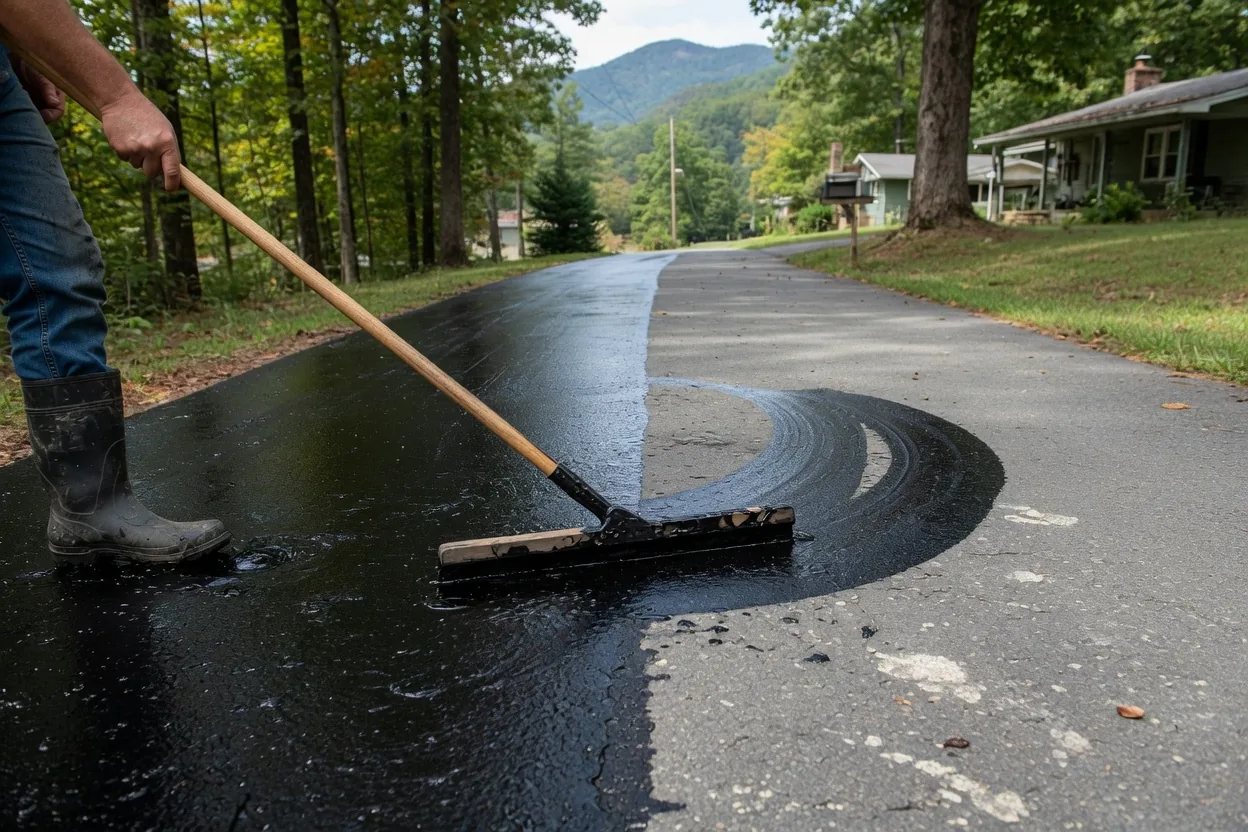
For tar and chip specifically, slope is not just a logistical nuisance. Hot liquid asphalt binder applied on a grade will want to run before the aggregate sets, so application rate and temperature window are tighter than a flat job demands. Chip size matters more on a slope too: angular, coarser aggregate keys into the binder under roller pressure in a way that fine stone cannot, and on a grade that mechanical interlock is what keeps chip from migrating downhill through the first hard winter. A crew pricing all driveways identically regardless of pitch is quoting the wrong job for Canton.
Valley-bottom properties carry a different risk. Haywood County has absorbed 19 federal disaster declarations over 1973-2026, most of them storm and flood family, and the Pigeon River flooding history is well documented. Any driveway on river-adjacent or low-lying ground needs drainage properly evaluated before a binder coat goes down. A weak base soaked by the first major storm takes the surface with it.
What the job costs in Haywood County
The full scope-to-cost breakdown lives on the tar-and-chip driveway cost page, but here is how jobs typically price across the range of conditions found in this county. Grade and base condition are the two variables that move a quote from the low end to the high end:
| Scope | Typical Rate | What drives it |
|---|---|---|
| Flat or gentle slope, single coat | $3.50 – $4.50/sq ft | Standard application, minimal base prep |
| Moderate grade (roughly 5–10%) | $4.50 – $5.50/sq ft | Heavier aggregate spec, slower rolling passes |
| Steep grade or long rural run | $5.50 – $6.50/sq ft | Tight binder window, chip selection, multiple passes |
| Base or drainage correction (add-on) | $0.80 – $1.50/sq ft | Soft spots, poor drainage, root intrusion |
| Two-coat application (add-on) | $0.50 – $1.20/sq ft | High-traffic areas, extended maintenance interval |
A 1,000-square-foot driveway at those rates runs $3,500 to $6,500 installed; longer rural driveways, which are common across Haywood County's hillside parcels, scale accordingly. For homeowners converting an existing gravel surface, base condition often determines whether the gravel can stay as substrate or needs correction first — see the gravel driveway conversion guide for what that assessment covers.
How mountain climate shapes chip-seal longevity
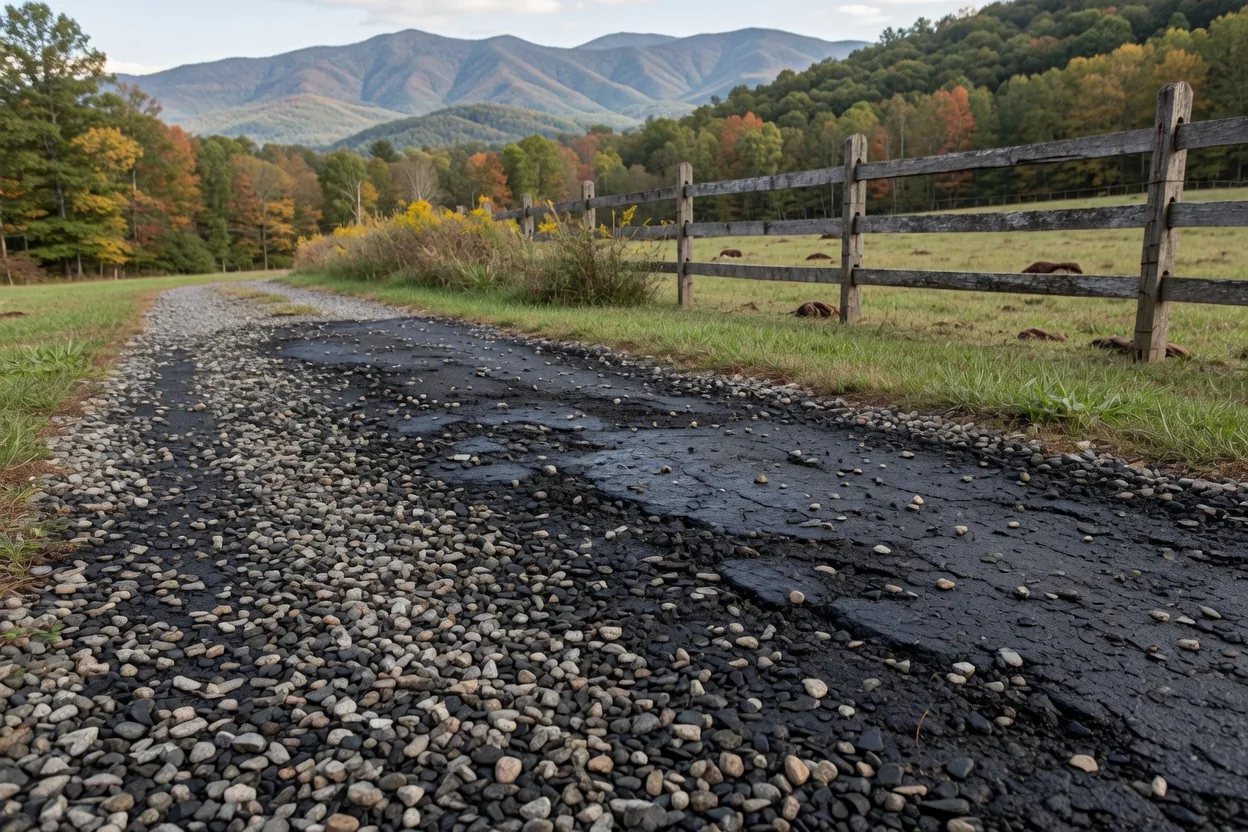
Haywood County winters behave differently from the Piedmont markets where most paving price guides are written. The National Weather Service data for western North Carolina shows considerably more freeze-thaw cycles per winter season than Charlotte or Raleigh, and each crossing of 32°F is a mechanical stress event for any paved surface. Tar and chip handles this better than smooth asphalt does: the embedded aggregate layer distributes thermal contraction rather than letting stress concentrate into a single crack plane, and the chip surface provides a UV barrier for the binder underneath that bare asphalt lacks entirely.
A properly installed chip-seal driveway in this climate reliably lasts 7 to 12 years before needing a refresh coat, assuming grade and drainage were addressed correctly at installation. North-facing driveways under heavy tree canopy trend toward the shorter end of that range — persistent shade means slower drying after rain and sustained moisture that ages the binder faster. If shade is a factor on your site, plan a maintenance coat at the seven-year mark rather than waiting for visible surface failure.
Traction is also a practical consideration. On Canton driveways that climb toward a detached garage or switchback to a hillside entrance, the textured chip surface holds noticeably better than smooth asphalt when it is wet or iced. That is not a small thing when the slope runs to your front door.
NCDOT permits for Canton driveway work
Most Canton residential driveways connect to a state-maintained road, and if they do, NCDOT requires a driveway permit before construction or significant modification begins. Applications go through NCDOT Connect, and the permit covers sight-distance requirements at the road edge, the allowable apron grade at the tie-in, and drainage structure adequacy at the connection point. These are not formalities — the apron grade requirement affects how far from the road edge the paved surface can start and at what pitch, which directly changes the effective length and grade profile of the job.
For tar and chip driveways, the apron section takes the highest stress load: turning vehicles at low speed put lateral shear on the chip surface, and that first several feet from the road edge should be spec'd and compacted with that in mind. Any contractor with regular Haywood County experience will have handled this before; ask them specifically how they treat the road tie-in and what the permit timeline looks like before you schedule work.
What to ask a crew before they start in Canton
Three questions separate a prepared contractor from one underspeccing a slope job. Ask what chip aggregate size they plan to use and why — the right answer for a flat driveway is not the right answer for a steep one, and a knowledgeable crew will say so without hedging. Ask how they adjust binder application rate on a grade — the mechanics are genuinely different and a crew that does slope work regularly will have a direct answer. And ask how drainage gets handled before binder goes down: whether that means regrading, adding a swale, or recommending base correction, the answer tells you whether they are solving the whole problem or only the surface.
See the tar-and-chip driveways service page for a full breakdown of what a proper scope inspection covers and what your written quote should include before you sign anything.