Elevation is the factor flatland quotes miss
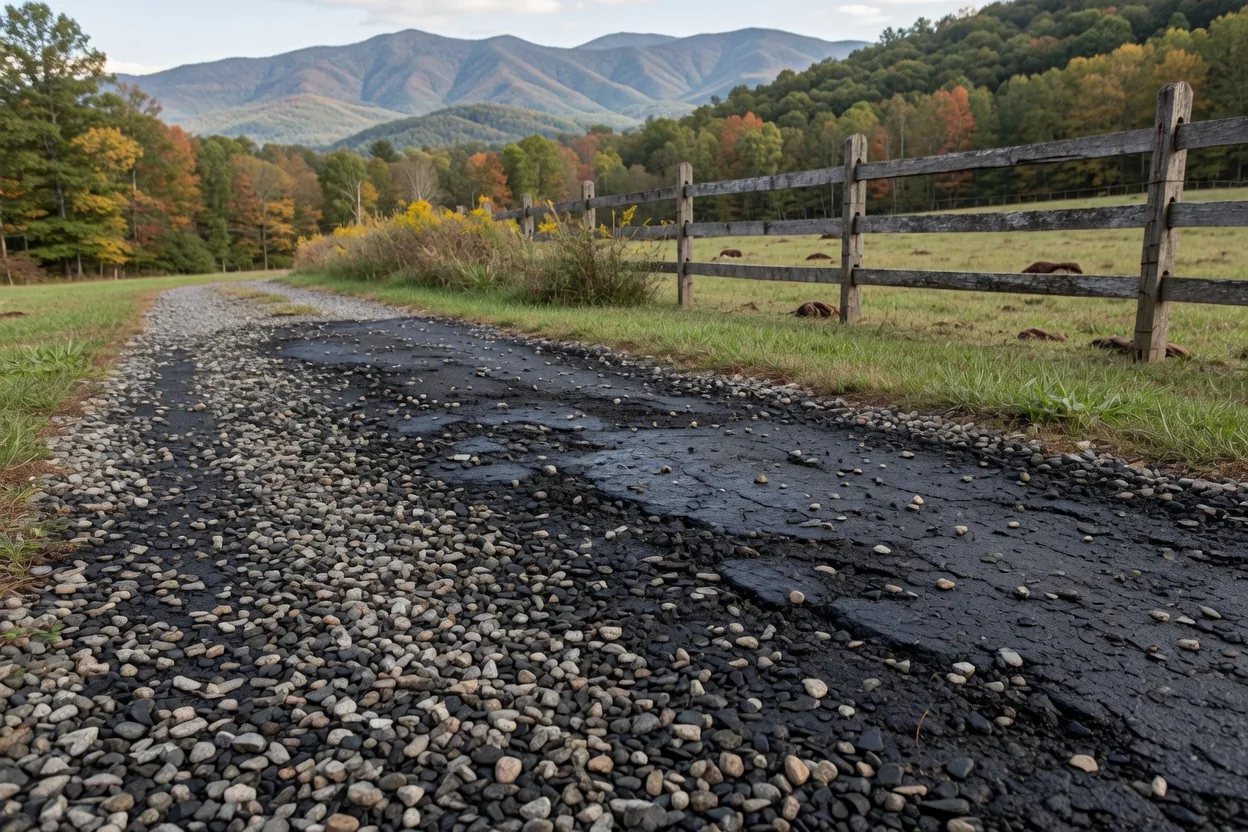
Hendersonville sits above 2,200 feet, and that altitude is the detail that separates this market from sealcoating jobs in the Piedmont or coastal Carolina. The Blue Ridge delivers genuine freeze-thaw cycling through the cooler months — overnight temperatures drop well below freezing while afternoons recover into the forties, and asphalt contracts and expands through those daily swings until the binder oxidizes, opens micro-cracks, and begins to spall. An unsealed driveway in Henderson County reaches visible deterioration faster than the same pavement laid at lower elevation. The question here is not whether to sealcoat; it is whether you have already waited too long.
Henderson County also sits in one of the wetter corridors of the Appalachians. Moisture-laden weather systems lose altitude over the ridgeline and deposit rain and ice at a rate flatland comparisons do not capture. That water works into every crack the thermal stress opened, enlarges it through freeze-thaw pressure, and eventually undermines the base. Sealcoating on an apple-country driveway — Hendersonville is the county seat of one of the top apple-producing counties in the state — is active maintenance against two real enemies, not a cosmetic touch-up. That framing changes how you budget for the work and how you evaluate bids when they arrive.
What a complete sealcoating job actually covers
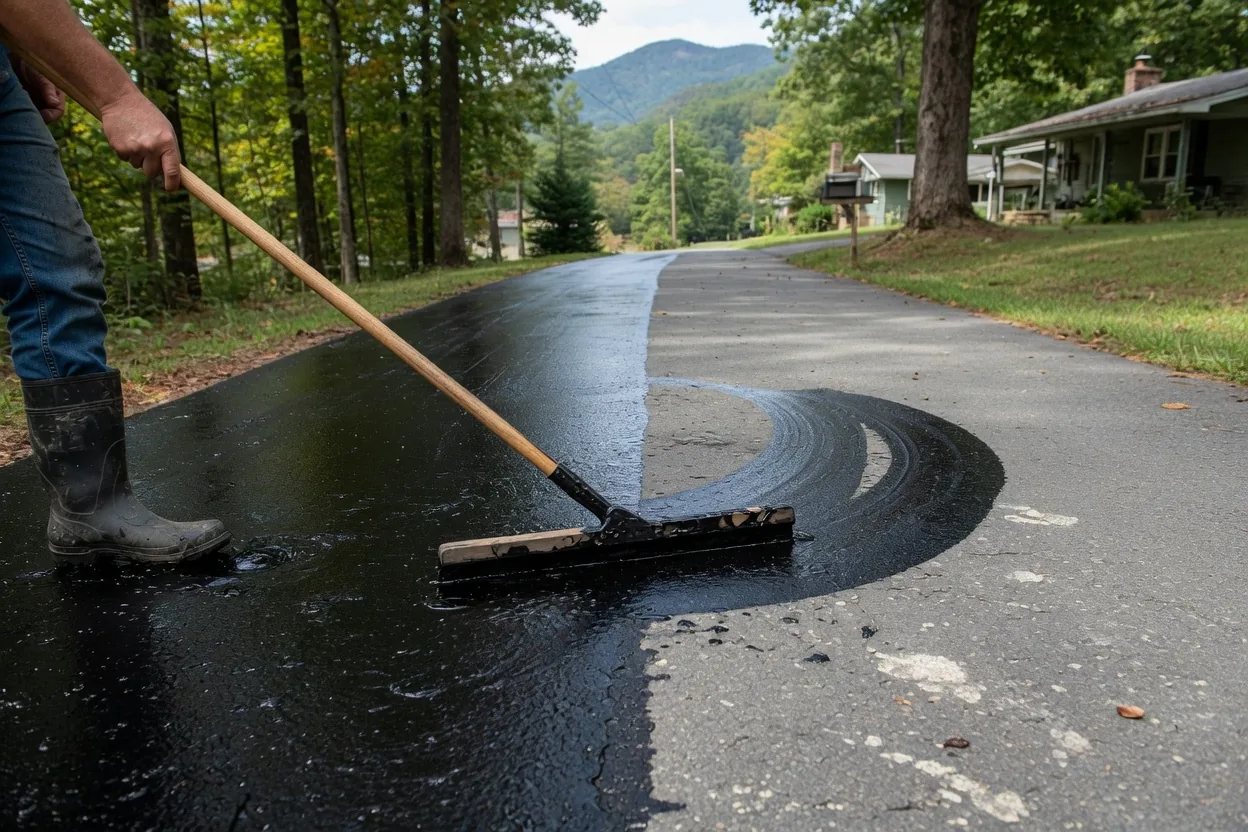
A professional sealcoating job in Hendersonville starts before the first drop of product goes down. The surface gets cleaned — pressure washing or mechanical blowing clears debris, loose aggregate, and the tire oils that prevent adhesion. Any crack wider than a hairline is filled as a separate step; bridging over an open crack with sealer leaves a void underneath that keeps moving, and the sealer fails at that point first. Two coats then go down edge to edge with adequate cure time between them. The finished surface sheds water, blocks UV oxidation, and extends pavement service life by years at a cost that is a fraction of replacement.
Sloped driveways require a technique adjustment that flat-lot applications skip entirely, and most Hendersonville properties carry meaningful grade. Sealer is a liquid that flows during application, and a crew applying it at uniform pressure across a slope ends up with thin coverage at the high side and pooling risk at the low side — including at the garage apron, where standing water does the most long-term damage. The right crew accounts for grade, adjusts coverage rate accordingly, and has enough local job history to back the method. For a full picture of what the service should include, the sealcoating overview walks through the standard process and the shortcuts to watch for when comparing bids.
Hendersonville sealcoating costs by job scope
Pricing in this market tracks the $0.18 to $0.35 per square foot range that holds across western North Carolina, with surface condition, grade, and crack fill as the primary variables. A well-maintained driveway that needs only a refresh coat falls near the low end; a surface with visible oxidation, scattered cracks, and a steep pitch sits near the top. Driveways on meaningful grade also require more careful product management during application, which adds to labor time on larger jobs. The table below reflects typical scope-to-cost relationships for Henderson County driveways; for a full line-item breakdown, see the sealcoating cost guide.
| Job Scope | Approximate Size | Estimated Range |
|---|---|---|
| Single-car driveway, good condition | ~600 sq ft | $110–$210 |
| Two-car driveway, lightly weathered | ~1,800 sq ft | $350–$550 |
| Two-car driveway, crack fill included | ~2,000 sq ft | $430–$700 |
| Large or long driveway, aged surface | ~2,400 sq ft | $500–$850 |
A bid that omits crack fill as a line item on a surface that clearly needs it is not a low price — it is the prep cost deferred to a premature failure. Edge detail on aprons connecting to public roads is a separate item on any row above.
The calendar window that actually works at this elevation
Mountain sealcoating has a narrower installation window than most homeowners expect. The product requires pavement surface temperatures above 50°F and a dry forecast for at least 24 hours after application — requirements that rule out anything near frost season and cut into early spring and late fall when Henderson County weather is least predictable. The practical working window runs from late spring through early September, with midsummer the safest stretch for a job that can cure fully before the next rain system moves through. The National Weather Service mountain forecast for this region is worth checking before scheduling, because a three-day dry window that gets cut short by a ridge event leaves sealer that is not cured and pavement that is not protected.
New pavement introduces a separate timing question. Asphalt that was recently laid needs time to off-gas and harden before sealer is applied — too soon and the coating traps volatiles, softens in summer heat, and begins to track. The guide on timing after new pavement covers the standard waiting period and what factors in mountain climates can extend it. Henderson County's storm and flood history — 16 federal disaster declarations spanning 1978-2026 — reflects the weather pattern that makes scheduling on a solid forecast more than a preference on a job that cannot be redone cheaply.
What to ask before a crew starts on your driveway
Three questions separate a thorough sealcoating contractor from one that owns a squeegee and a drum. Ask how they handle cracks: fill-and-seal as a single pass is a shortcut, and a crew that can explain why those are separate steps has enough repairs behind them to know the difference in outcomes. Ask about their approach to sloped driveways and whether they have references on grades comparable to yours. And ask about the product — coal-tar emulsions, asphalt-based sealers, and acrylics perform differently through freeze-thaw cycling, and a crew that can walk through the tradeoffs has the local job history to back the recommendation.
For driveways that connect to a state-maintained road, NCDOT Connect tracks driveway permit requirements — most residential sealcoating on an existing surface does not trigger a permit, but work that alters drainage patterns or the apron geometry at a state road can bring NCDOT requirements into play. The Henderson County development standards apply similarly at the local level. When you are comparing bids, anchor against the cost guide — a quote significantly below the local range almost always means crack fill and surface prep are out of scope, and you will see exactly where they were skipped within a season or two.