How a mountain slope turns your driveway into a runoff collector
A driveway on a Buncombe County ridge lot isn't just a parking surface. On a property cut into a west-facing hillside above Kenilworth, or stepping down off Town Mountain Road, the driveway is often the lowest managed strip on the entire lot — and every foot of uphill lawn, retaining wall seep, and neighboring grade finds its way there. The same Appalachian terrain that makes these lots valuable is what funnels water running down your driveway with more force and volume than anything a flat suburban lot ever sees.
Flat-county driveways shed water toward the street and disperse. A Buncombe slope lot driveway collects from above, accelerates, and exits at a single low corner — usually onto a state-maintained road shoulder or across a gravel ditch. That exit point matters: it determines whether your fix stays entirely on your property or whether NCDOT has standing in how the work gets done.
Understanding that concentration dynamic is step one. Step two is noticing whether the water is carrying material with it. Grit, fines, or aggregate washing into the road ditch means the base layer is already moving — and a cosmetic patch will fail in the same spot next season.
What unchecked slope runoff does to asphalt
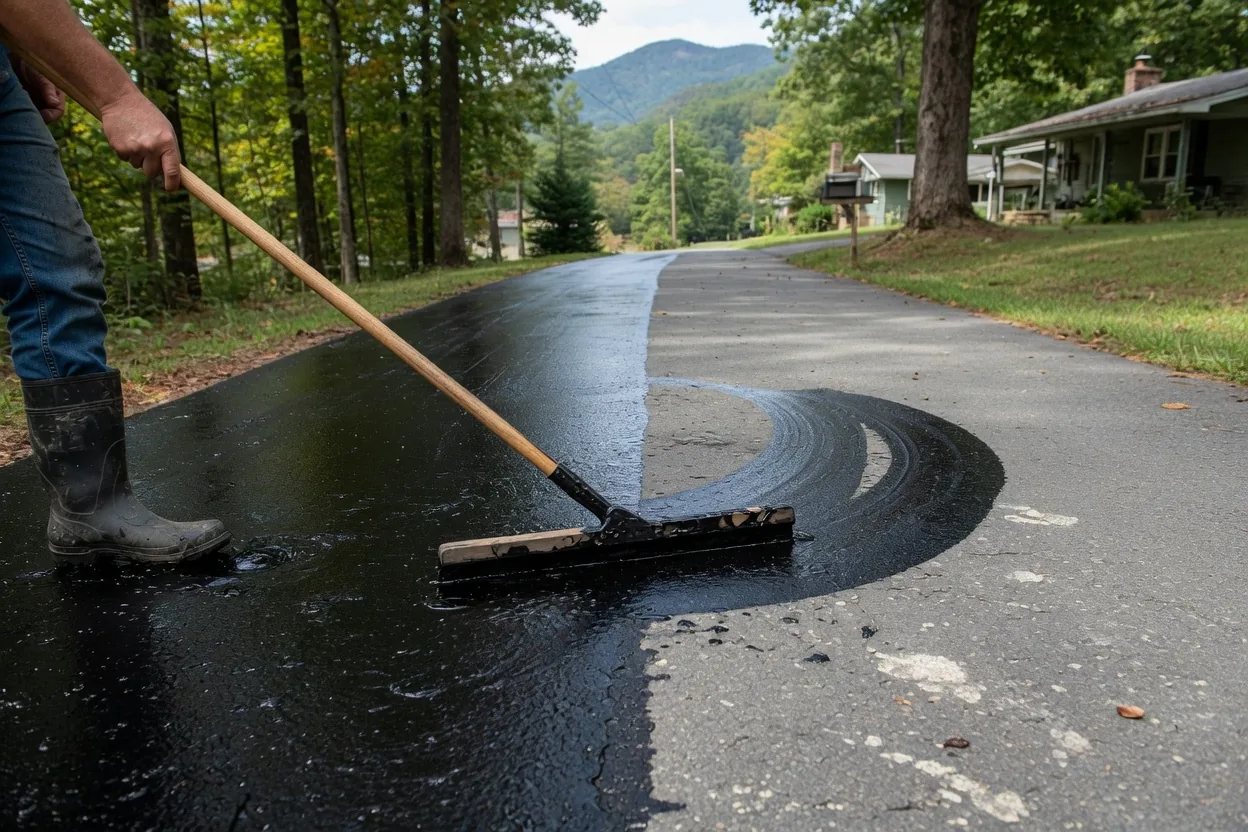
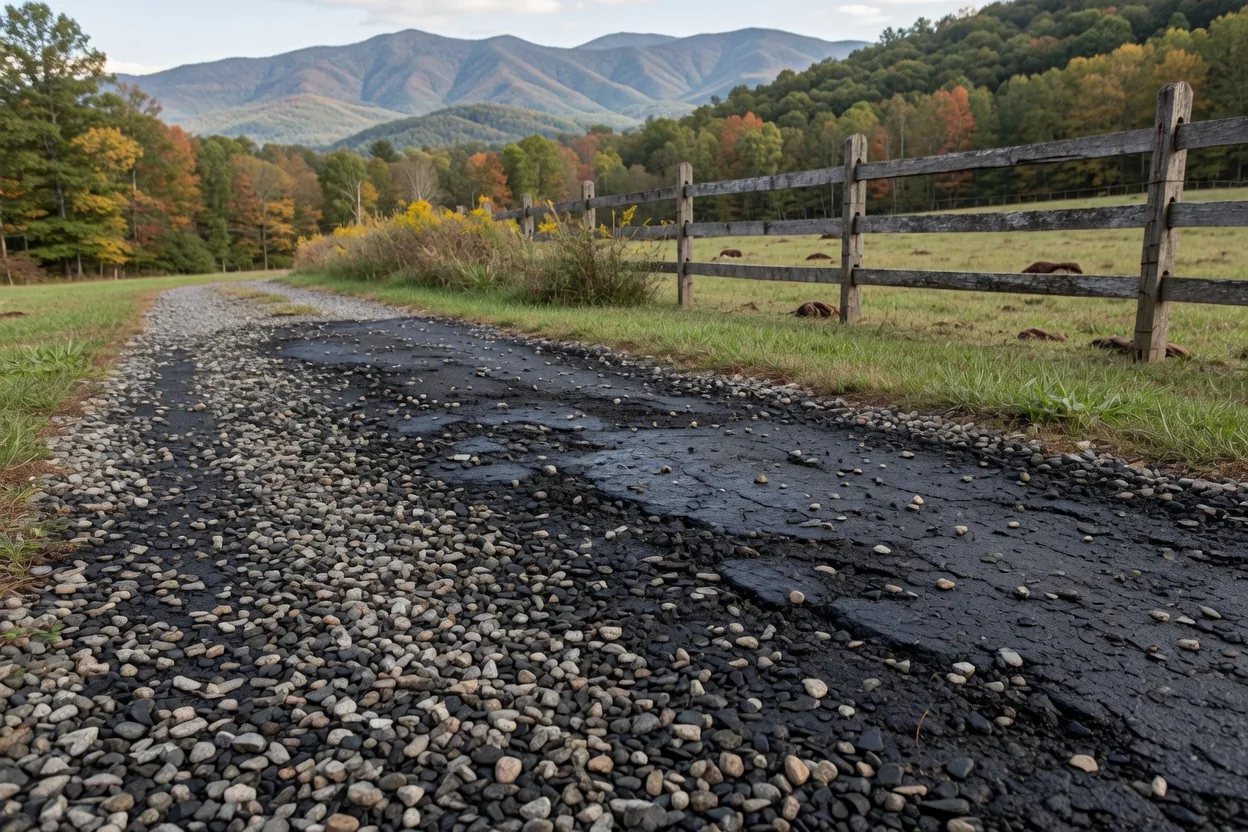
Asphalt pavement handles water well when it moves across the surface and off it quickly. It fails when water finds a path under it. On a steep driveway, the failure sequence is predictable: concentrated flow erodes the compacted aggregate base at the low edge first, the pavement loses its support layer, and within a season or two you see edge crumbling, longitudinal cracking parallel to the slope direction, and shallow depressions where the base has migrated downhill.
Buncombe County has recorded 19 federal disaster declarations spanning 1973-2026, nearly all in the storm and flood family. Each one sends short-duration, high-intensity rainfall at slopes and driveways that were built for average conditions. The National Weather Service Asheville office documents that the events causing the most residential drainage damage are brief intense downpours — the kind that overwhelm existing drainage capacity in twenty minutes — not slow soaking rain over days. That distinction matters when sizing a channel drain or culvert: design for the short hard event, not the annual average.
If water is ponding at the garage apron for more than an hour after rain clears, or if you can see ruts forming in the gravel shoulder below the driveway exit, the base is being affected now. An asphalt driveway repair that skips the drainage source is likely to reopen in the same place within two to three years.
Fix options and what each scope costs
The right solution depends on where the water originates, how much grade you're managing, and whether the existing pavement is structurally sound enough to build on. A mid-slope channel drain is a different scope and price than a full repave with cross-slope correction. The table below covers the common fixes for Buncombe County slope lots — not flat-yard installs, which use different materials and carry different labor assumptions.
| Scope | Typical range | Best for |
|---|---|---|
| Channel drain across driveway width | $800–$1,800 | Intercepting sheet flow mid-slope before it accelerates to the road |
| French drain or gravel swale at uphill edge | $600–$1,500 | Uphill property water overrunning the driveway surface |
| Culvert extension or replacement | $1,200–$2,800 | Undersized pipe at road entry that backs water uphill in heavy rain |
| Edge repair with regrade and base reset | $1,500–$3,500 | Existing edge crumbling from base loss — fix the grade before patching surface |
| Full repave with cross-slope correction | $3,500–$8,000+ | Driveway pitched wrong at original install; surface and base both reset |
These ranges reflect standard residential driveway work. Long steep runs, tight ridge-lot access, and hand-work sections above equipment limits all add to labor. The steep driveway paving page covers what changes on grades above 10 percent — equipment, mix spec, and compaction method all shift.
When the fix at the road edge needs a permit
Most roads in unincorporated Buncombe County are state-maintained, which means any work that modifies the ditch line, extends a culvert, or changes the driveway approach grade can require an NCDOT encroachment permit. This requirement exists because a redirected drainage outlet on one property can push water onto a road shoulder or an adjacent lot downhill. Permit applications go through NCDOT Connect, the state's online encroachment portal — the same system used for commercial driveway permits but available for residential work as well.
If the driveway is within Asheville city limits, the City of Asheville has its own stormwater management requirements; significant grading or changes to impervious surface near a drainage way can trigger a land disturbance review before work begins. The practical rule: if the fix involves touching the road ditch, extending a culvert, or regrading beyond the right-of-way line, confirm permit requirements before any crew mobilizes. A contractor who works these Buncombe lots regularly will know which jobs need the call — it's a fair question to ask when getting quotes.
What separates a slope-lot paving crew from a general one
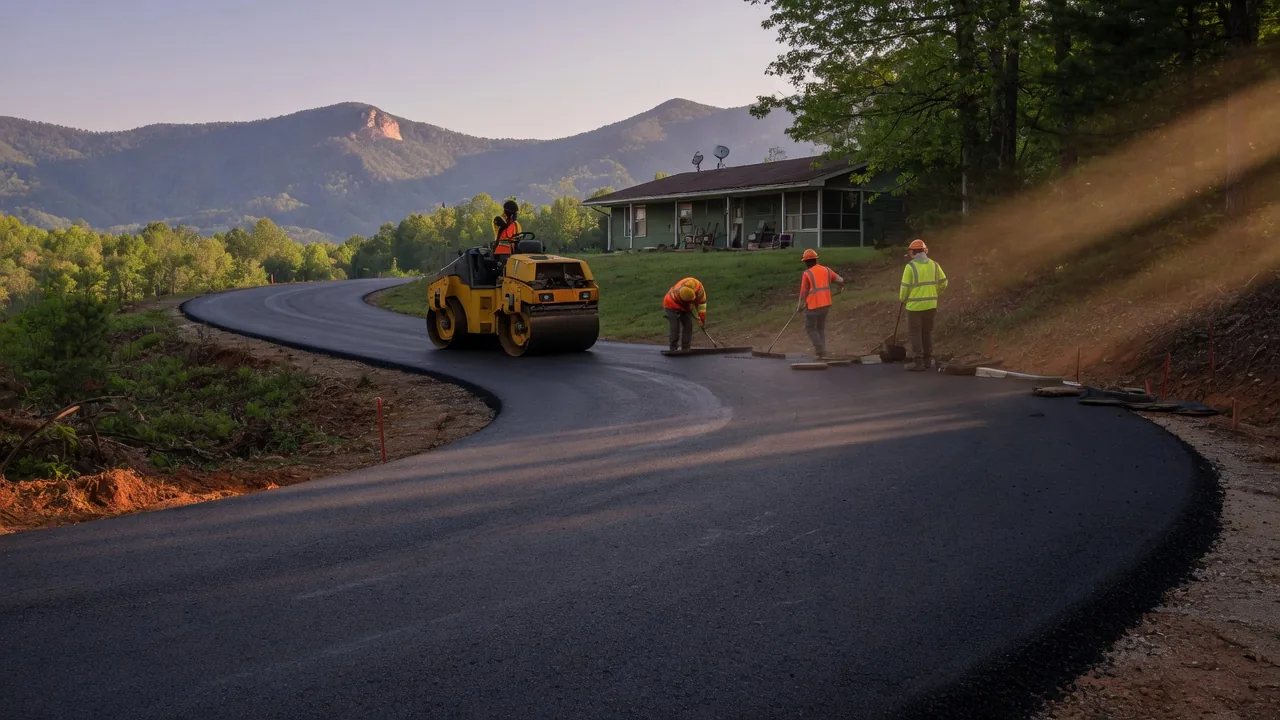
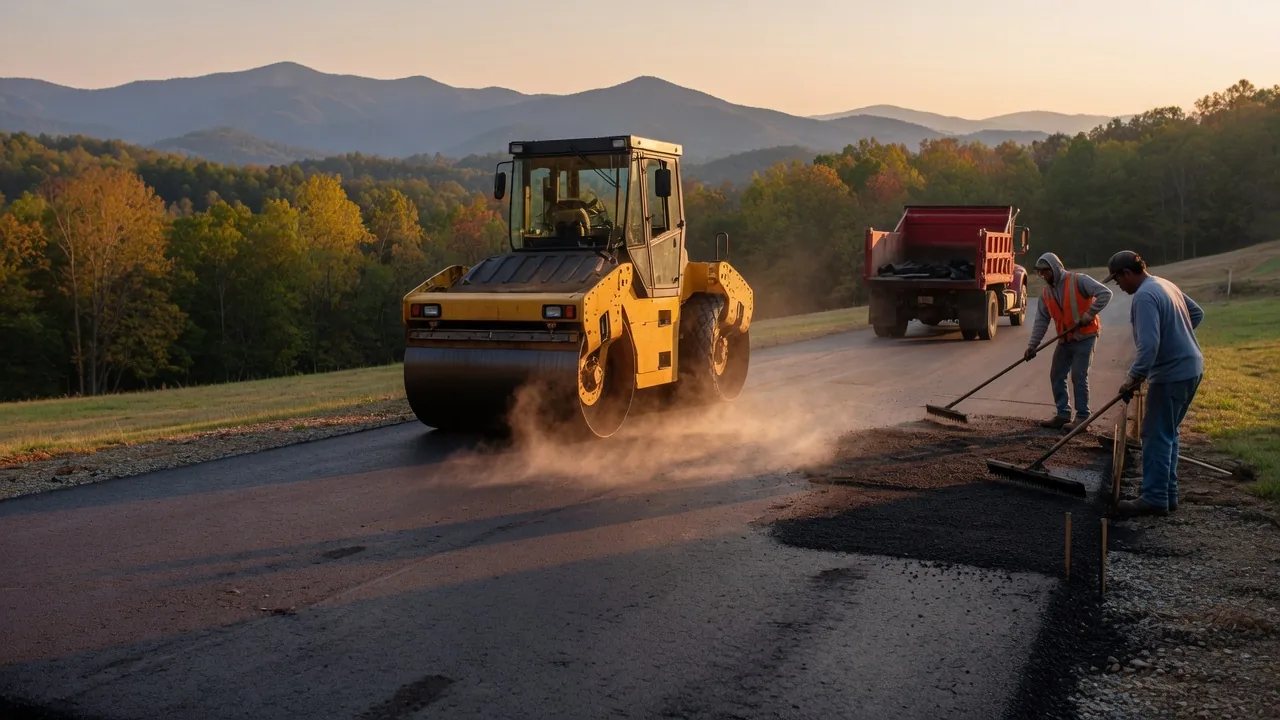
Not every asphalt operation is equipped for grade work. Standard paving equipment — straight-run pavers and large rollers — is harder to run on a 12-degree residential driveway with a wall on one side and a drop on the other. Ask specifically whether the crew has completed driveway drainage installs on cut-and-fill lots in Buncombe County, and ask for a reference on a comparable grade. That one question separates crews that have worked mountain properties from those that have not.
A proper quote for a drainage fix should include where the intercepted water exits the property — not just where the drain sits. A channel drain that discharges into the yard four feet from the problem has relocated the problem. Ask for the full drainage path in the written scope before signing. The asphalt paving overview covers the line items that belong in any honest Buncombe County quote, including what to expect on slope and drainage work specifically.