Why mountain elevation changes the repair equation
Buncombe County driveways sit above 2,000 feet — some neighborhoods in the higher ridges considerably more. That elevation is the fact that separates asphalt driveway repair here from the same job on the piedmont or the coast. Freeze-thaw cycles that Charlotte or Wilmington contractors almost never encounter are a seasonal reality in Asheville: water enters a surface crack, freezes, expands, and widens a hairline fracture into a two-inch split by February. A cold patch that holds five years on a flat Raleigh lot may fail in two winters on a steep west Asheville lot if the underlying drainage issue is not addressed first.
Slope is the second factor. Many Buncombe driveways descend sharply from the street, which means every significant rainstorm that does not drain laterally becomes erosion pressure at the edges. That edge failure is the leading cause of persistent cracking on mountain lots — and it looks like a surface problem until you pull up the broken section and find saturated base material underneath. If your driveway shows edge cracking that returns after patching, read what is actually driving those cracks before spending money on another surface repair.
Repair scope, from crack fill to full overlay
Asphalt driveway repair is not one job. The right scope depends on what has failed and why:
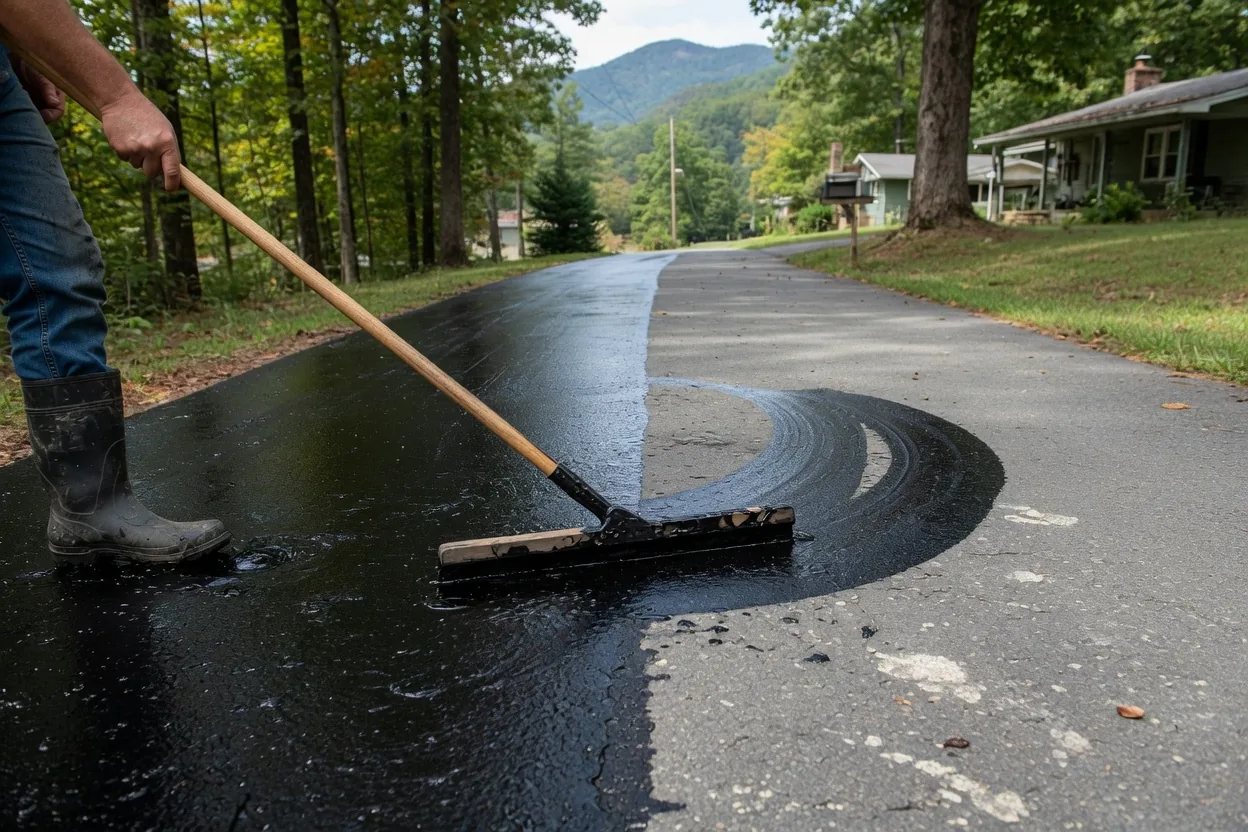
- Crack sealing. Routing and filling linear cracks to stop water entry. Effective only when cracks are isolated and the base beneath is still sound.
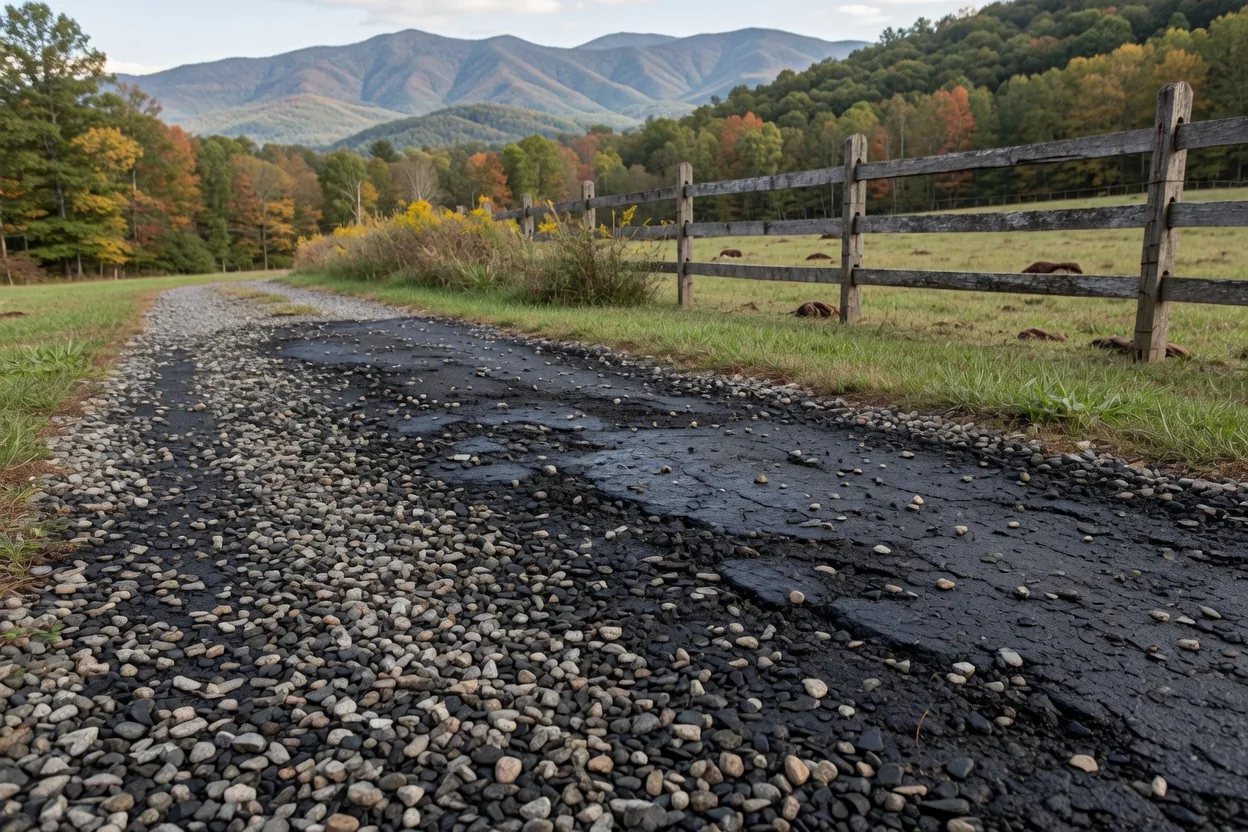
- Pothole patching. Cutting out the failed area, compacting a proper base, and filling with hot-mix or quality cold-mix asphalt. See the pothole repair guide for when cold patch is adequate and when it is a short-term placeholder.
- Section removal and replacement. Removing and rebuilding a discrete area that has lost base support — common on steep Buncombe driveways where one spot has developed a void or washout below the surface.
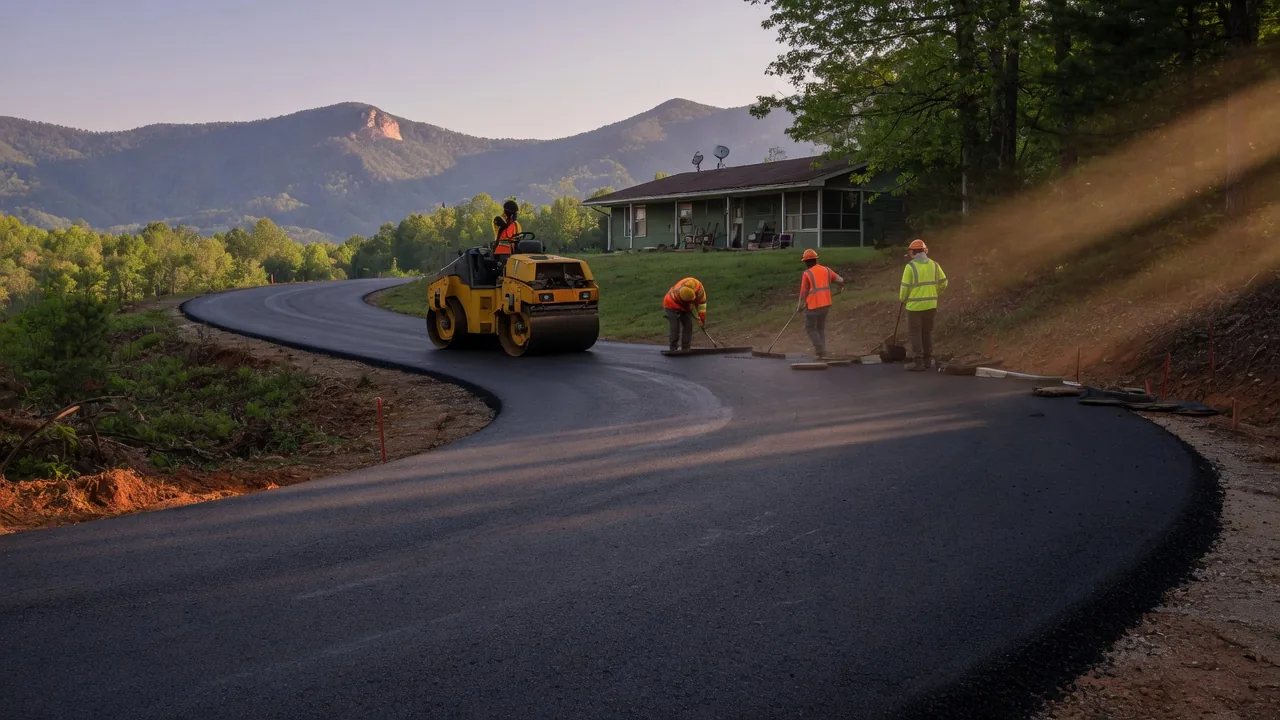
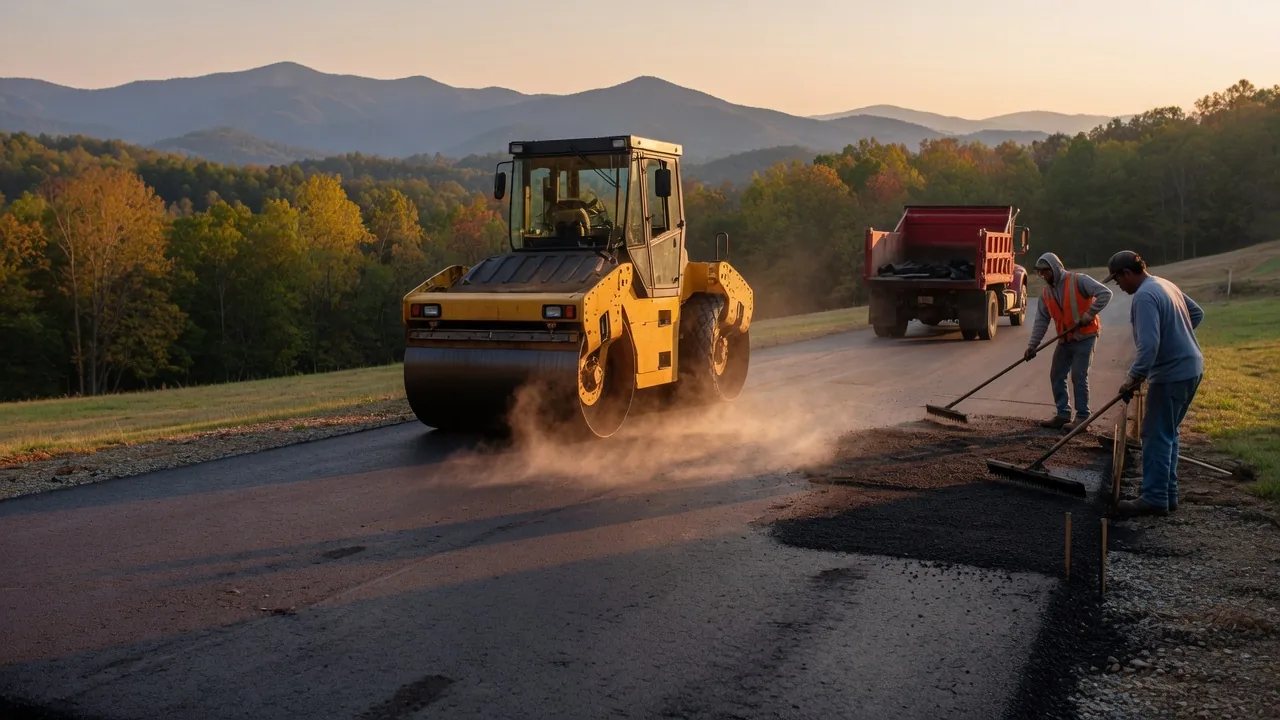
- Mill-and-overlay. Grinding off the worn top layer and paving a fresh surface. The right call when cracking is widespread but the base is structurally intact. Resurfacing details and decision factors are covered separately.
| Repair Scope | Typical Range |
|---|---|
| Crack sealing (isolated cracks) | $250–$500 |
| Single pothole patch (up to 2 sq ft) | $250–$450 |
| Multiple potholes or failed section | $450–$900 |
| Mill-and-overlay (per sq ft) | $2.50–$5.00/sq ft |
| Single-car driveway overlay (~500 sq ft) | $1,250–$2,500 |
| Two-car driveway overlay (~800 sq ft) | $2,000–$4,000 |
What it costs and what moves the number
Most residential asphalt driveway repairs in Buncombe County run $300–$4,500 depending on scope. Crack and pothole work lands in the lower half of that range; a full mill-and-overlay on a larger driveway approaches the top. A few factors specific to mountain lots push quotes toward the higher end:
- Steep grade. Driveways with significant pitch require equipment repositioning, crew safety steps, and in some cases hand-work where a paving machine cannot safely operate. Grades above 10% reliably add to material and labor cost.
- Access limitations. Narrow roads, tight turns off a ridge road, or limited truck staging area add mobilization time — a factor that flat suburban lots rarely face.
- Failed base material. When the sub-base has been saturated and lost its bearing capacity, new asphalt on top will fail quickly. Excavating, recompacting, and adding base stone adds cost but is the only repair that lasts.
- Retaining features. Edge walls, curbs, or drainage channels at the driveway perimeter complicate machine access and increase the hand-work share of the job.
Asphalt material costs track petroleum prices and fluctuate seasonally — a quote from March may differ from the same scope quoted in August, which is worth factoring into timing if the repair is not urgent.
Water and drainage — what most repair quotes skip
Buncombe County has recorded 19 federally declared disasters over 1973-2026, most of them driven by heavy rainfall events that push mountain drainage systems past capacity. Your driveway is downstream from your yard, your neighbor's yard, and sometimes an entire hillside of runoff — and a repair quote that prices the surface without asking where the water goes is an incomplete answer.
The National Weather Service documents multi-inch rain events for the southern Appalachians that are routine enough to treat as a design condition, not an exception. If your driveway crown drains water toward the edges and the shoulders press tight against a slope, every heavy storm is a stress test. Patching potholes without correcting the drainage pattern is the most reliable way to be repatching the same spots in two years.
Before any repair contract, ask the contractor to identify where water exits the driveway surface. On flat or slightly crowned driveways that answer is simple; on steep mountain lots it should involve looking at where runoff travels during a rainstorm, not just at the pavement itself.
Permits, road connections, and what the rules require
Most driveway repair within a private property boundary does not require a permit in Buncombe County — patching potholes and sealing cracks is maintenance, not new construction. Two situations change that:
- Driveways connecting to a state-maintained road. If your driveway meets a road under NCDOT jurisdiction, work that alters the connection point, grade, or dimensions may require a driveway encroachment permit. Applications go through NCDOT Connect. A simple crack fill or pothole patch well away from the roadway connection generally does not trigger this requirement.
- Properties within Asheville city limits. The City of Asheville has its own development services requirements for work that changes impervious surface area or drainage patterns. A mill-and-overlay on an existing footprint is typically maintenance; widening or extending the driveway may require a review.
When in doubt on either point, a call to the relevant office before signing a repair contract is faster than unwinding work done without authorization. Your contractor should know which jurisdiction applies and whether a permit is needed — that knowledge is part of what a licensed professional brings.
When repair no longer makes sense and replacement does
A repair holds when the base is intact and the surface failures are isolated. Once cracking covers more than a third of the driveway area, or the base material has been compromised in multiple locations, a mill-and-overlay is usually the better investment than successive patches — each patch on a failing base is buying months, not years. Full driveway replacement, which involves removing all existing pavement and rebuilding from the base, is a larger scope than overlay work and is not the default answer for most residential driveways in reasonable condition.
On mountain lots, the useful test is whether the driveway drains correctly when it is intact. If a section keeps failing in the same location after proper repairs, that spot has a drainage or sub-base problem that surface work will not solve. The right sequence is: fix the drainage, rebuild the base, then surface. Getting that order wrong is expensive.