Long drives on rolling ground
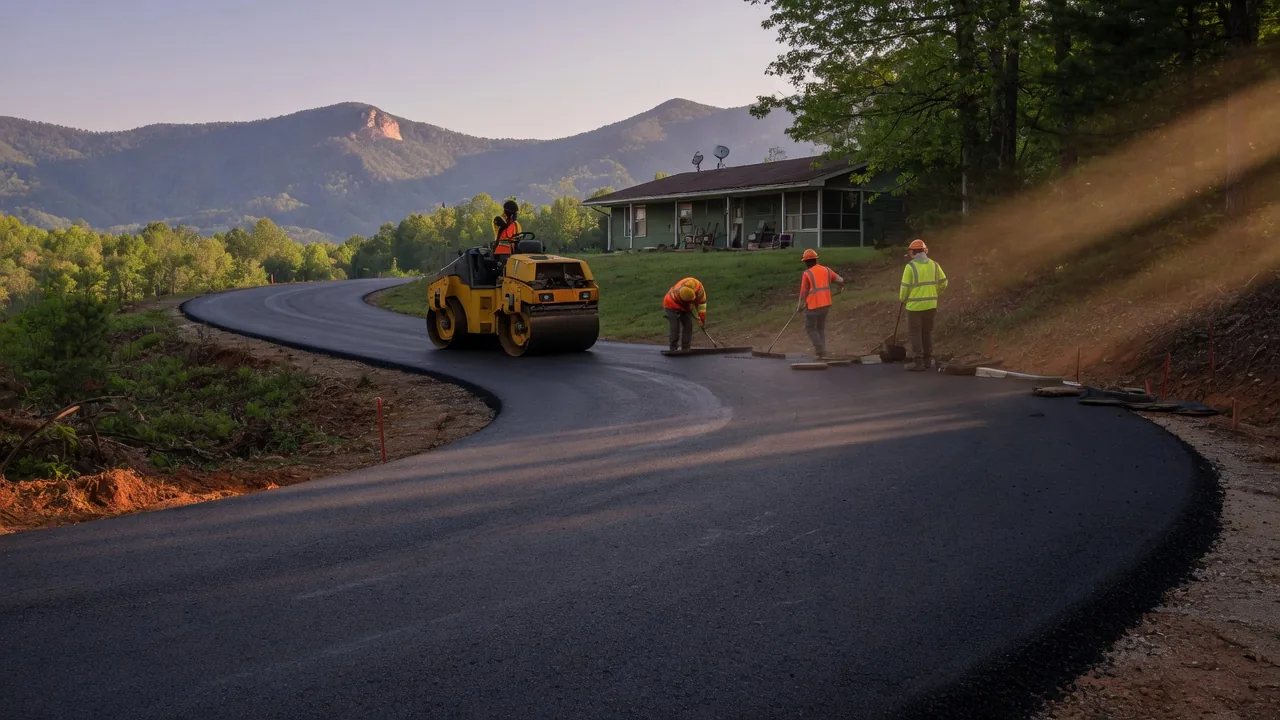
Fletcher sits at the southern edge of the Asheville metro, where Henderson County's rolling farmland meets the foothills. Properties along the Airport Road corridor, the rural stretches toward Edneyville, and the subdivisions that have grown up around the county's agricultural land routinely have driveways that run 150 to 300 feet. Long enough that full asphalt gets expensive fast. Too high-traffic for gravel to stay put.
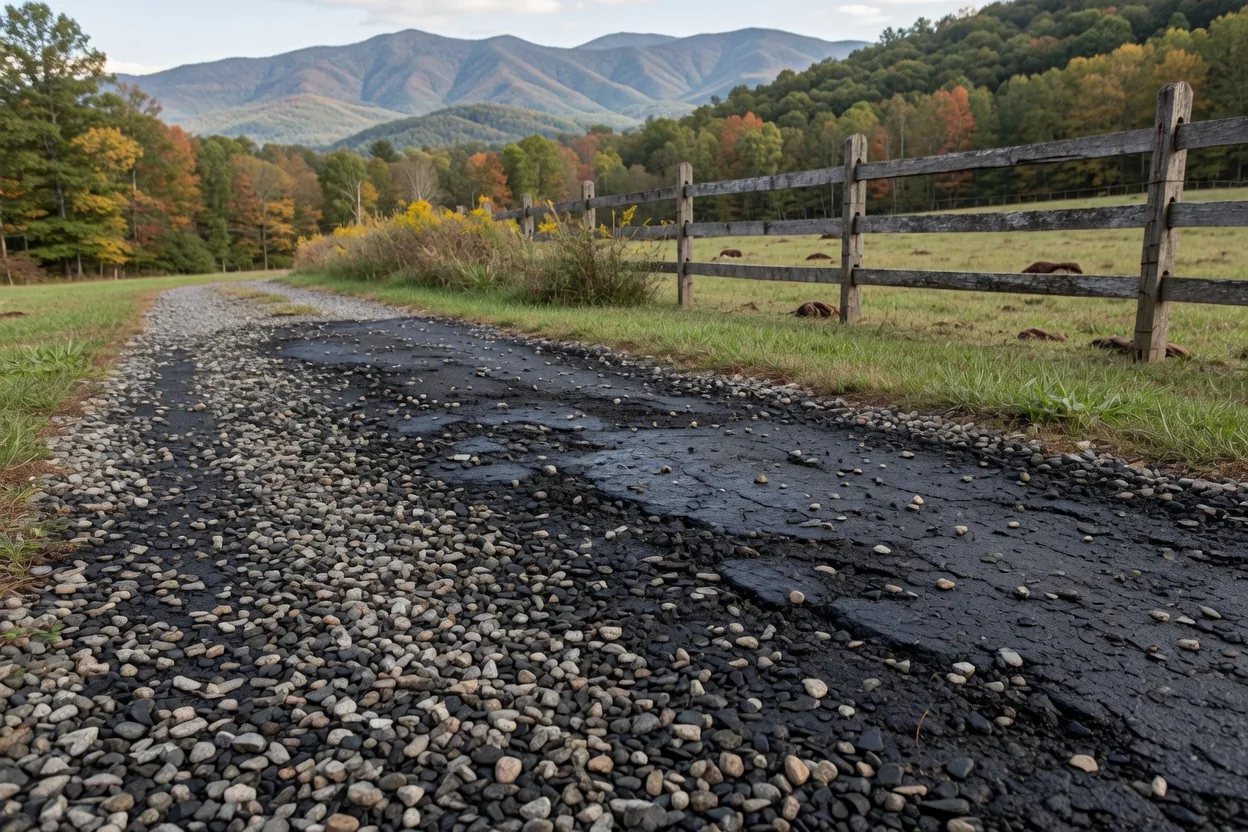
Tar and chip lands in the gap: a bound surface with the texture and drainage behavior of gravel, the durability of asphalt, and a cost per square foot that makes long rural runs genuinely affordable. The embedded aggregate is also a traction asset on a drive that gets wet every time a mountain storm comes through.
The terrain here has a specific consequence. Henderson County's rolling grades are gentle enough that chip-seal lays cleanly, but they generate real drainage pressure at the toe of the slope. Water needs to exit the drive, not pool against the apron. That concern comes back up in the base preparation discussion below. If you are currently on gravel and weighing the move to a hard surface, the gravel-to-hard-surface guide covers the decision in full, including when a gravel base is structurally ready to build on and when it needs regrading first.
What a Fletcher job typically costs
Around Fletcher, installed tar and chip runs $3.50 to $6.50 per square foot. The spread is real: drive size, base condition, stone chip selection, and slope all move the number. Oversized aggregate or specialty chip color pushes toward the top of the range. A job on a gravel base that is already compacted and draining well comes in lower than a new installation on bare ground.
| Scope | Approximate Size | Installed Range |
|---|---|---|
| Short suburban drive | 400–600 sq ft | $1,400–$3,900 |
| Standard rural drive | 800–1,200 sq ft | $2,800–$7,800 |
| Long country lane | 1,500–2,500 sq ft | $5,250–$16,250 |
| Gravel base conversion (add-on) | any | +$0.50–$1.00/sq ft |
| Second seal coat (add-on) | any | +$0.75–$1.25/sq ft |
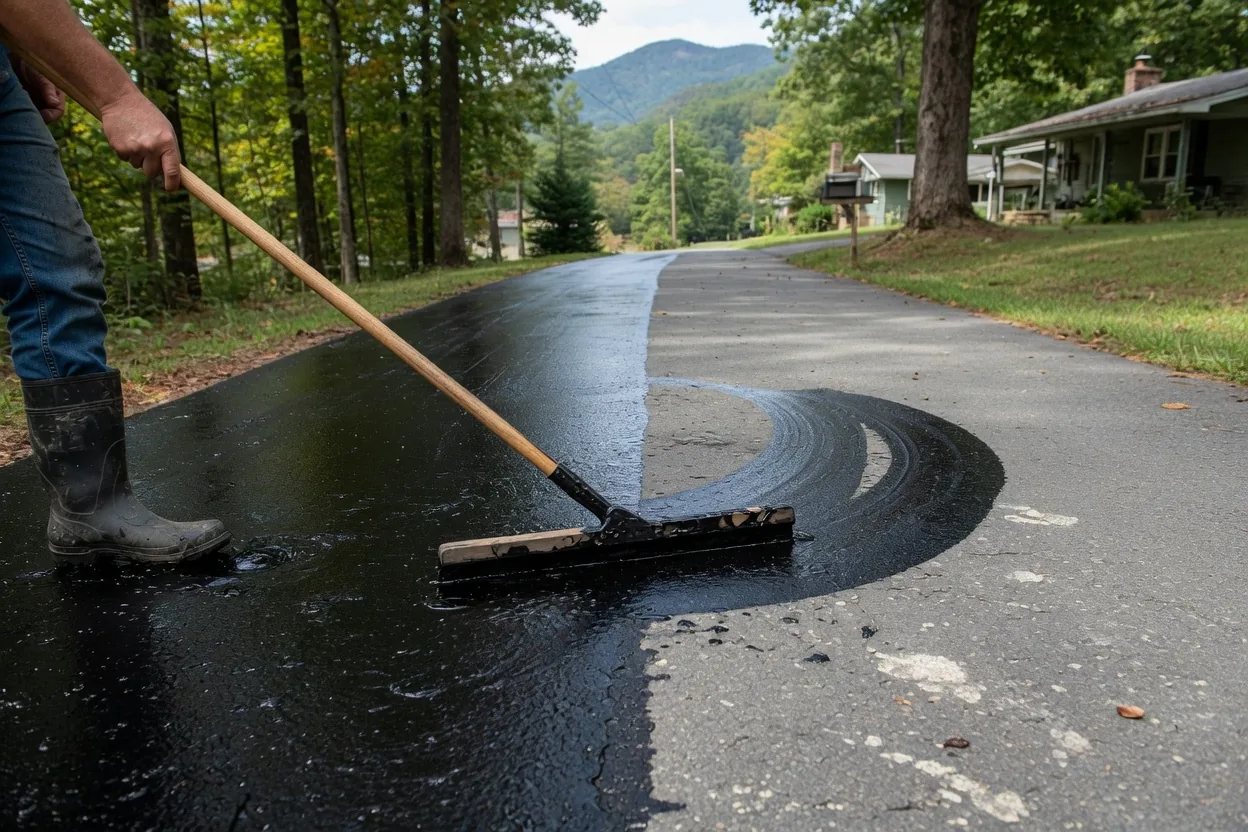
Every figure assumes professional installation with a compacted base, hot liquid asphalt binder, and a single-layer chip-seal application. For a detailed breakdown of what drives cost within that range, the tar and chip cost guide has line-item data organized by scope and base condition.
Mountain rainfall and what it does to your base
Henderson County sits in the southern Blue Ridge, and its position in the French Broad River watershed means it sees significant storm activity. The federal disaster record for this county includes 16 declared events spanning 1978-2026, the majority of them storm and flood events that push water at driveways, culverts, and road aprons simultaneously. A chip-seal surface installed without adequate drainage fails from the bottom: water saturates the sub-base, the binder loses adhesion, and the chips shed within a season or two.
National Weather Service climate data for western North Carolina shows annual precipitation well above the state average, with the heaviest rainfall concentrated in spring and in the remnants of late-summer tropical systems. Before any surface goes down, a contractor should evaluate crown, cross-slope, and where water exits the drive at the road. A culvert at the apron that ties into roadside drainage is not optional on any drive that has standing water after a heavy rain.
This is why base preparation is not the line item to negotiate away. A thin chip-seal over soft or poorly drained base will shed chips and crack within two or three seasons regardless of how well the surface coat is applied.
Connecting to a state road: the permit step
The majority of rural driveways in Henderson County connect to roads maintained by NCDOT rather than a local municipality. That connection requires a driveway encroachment permit before construction starts. The permit governs where the drive meets the road shoulder, its width, and the drainage requirements at the connection point. Working without one creates title and compliance problems that can require expensive corrections at the point of sale.
NCDOT Connect is where permit applications are submitted; the county's NCDOT district office handles approvals and field inspections. The process is not complicated for a standard residential driveway connection, but the permit must exist before the crew arrives and the completed work must match the approved scope. A contractor who works regularly in Henderson County will know the current approval timeline and should pull the permit as part of the project scope.
For the standards that govern work near state-maintained roads in North Carolina, the NC Department of Transportation publishes roadway encroachment requirements under its construction and permits section.
Getting chip-seal right on a mountain schedule
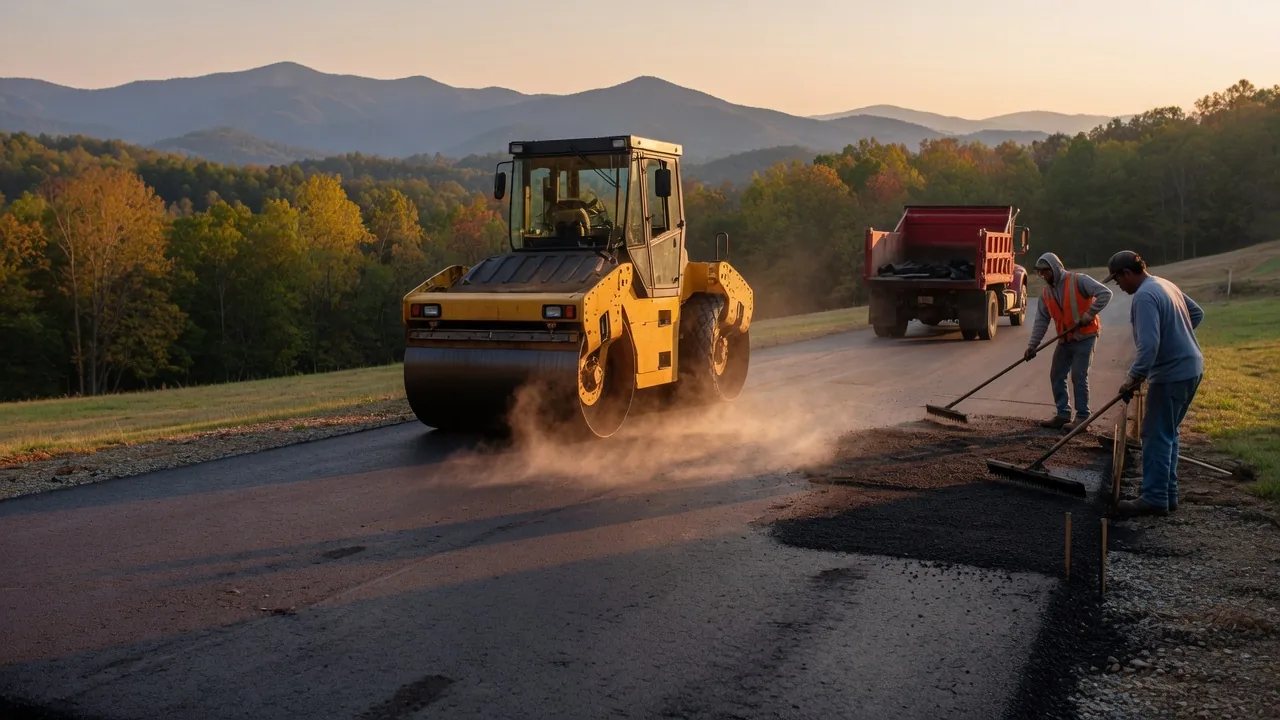
Chip-seal has a narrow installation window: the binder has to be hot and the aggregate applied immediately, which means crew size, equipment readiness, and weather alignment all have to line up at the same time. In the mountains, that window closes fast when afternoon storms build from the southwest, a pattern that affects Fletcher from late spring through early fall more than it does piedmont markets. A job that loses its weather window mid-application has to be redone.
Three things worth confirming before you commit to a contractor: ask whether the crew has installed chip-seal on Henderson County terrain specifically, since the rolling grades and rural road connections have their own characteristics; ask for a written scope that itemizes base preparation separately from the surface installation; and confirm who pulls the NCDOT encroachment permit if the drive connects to a state-maintained road. That last item should be standard practice, not a negotiation.
The tar and chip overview page covers what a proper installation sequence looks like from grading through final brooming, so you can evaluate what a crew is actually doing when they are on your property.