Where the terrain changes the job
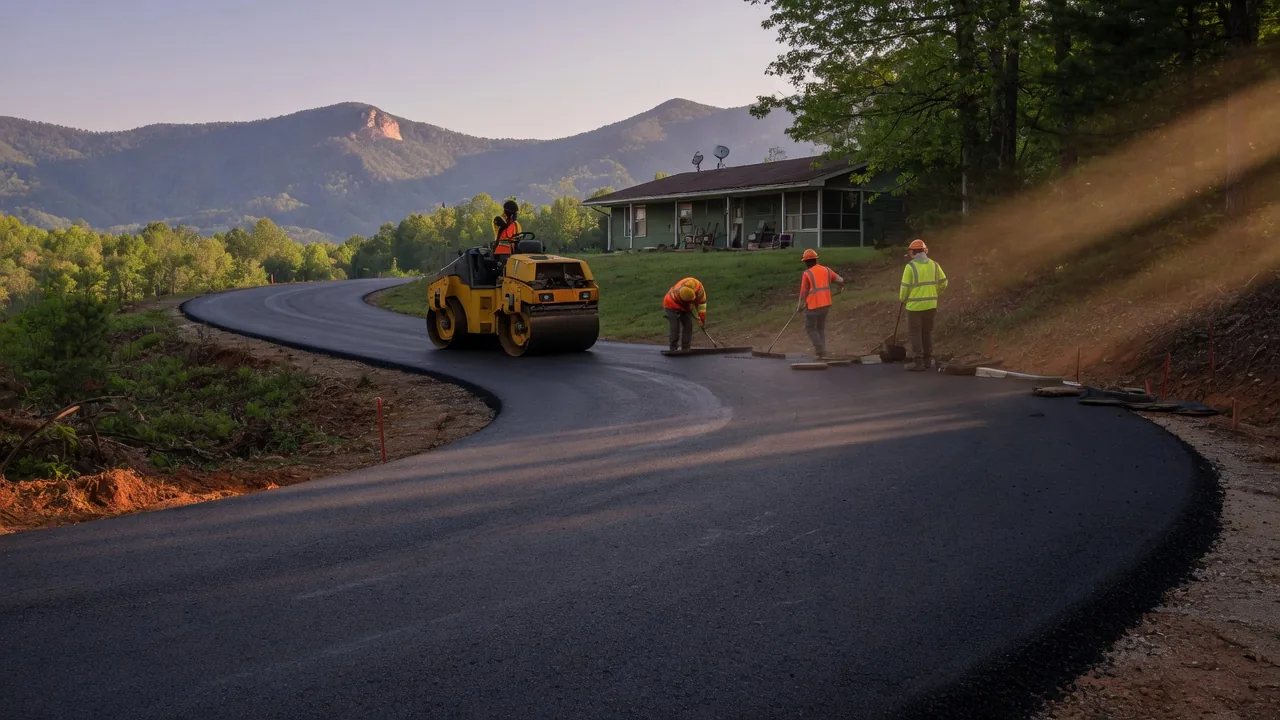
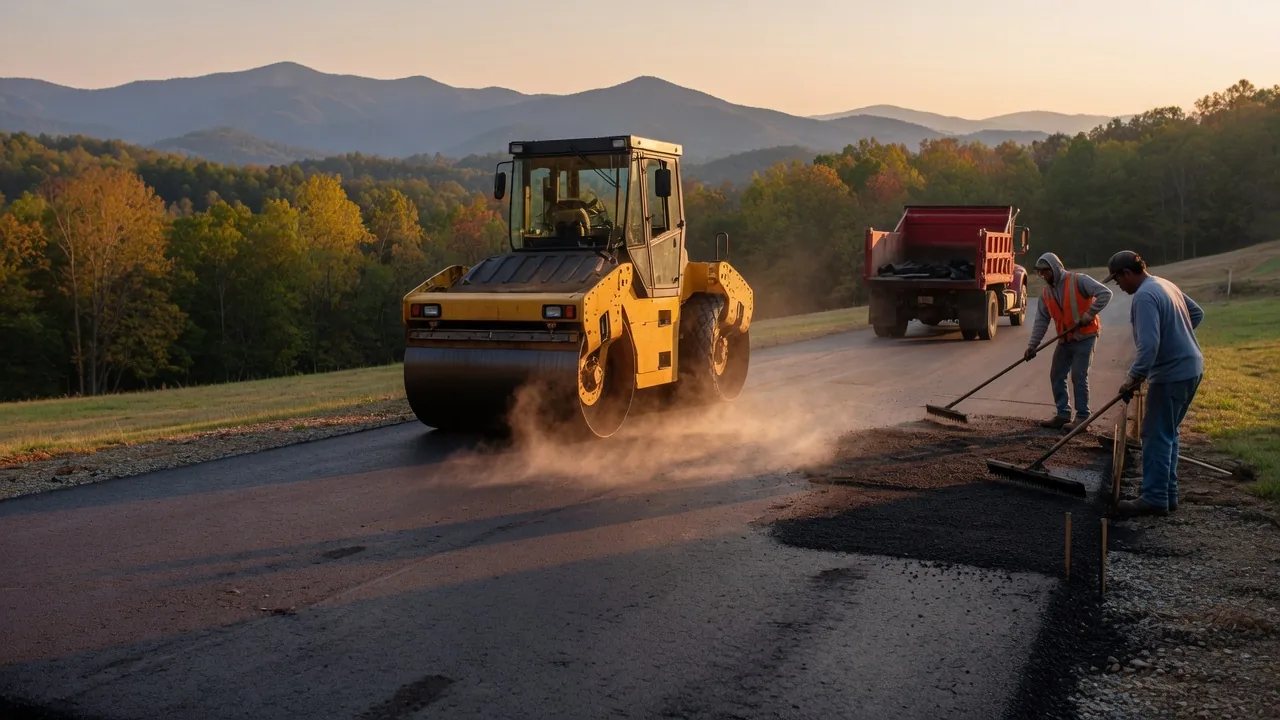
West Asheville drains toward Candler, and so does much of the runoff from the ridges above Hominy Creek valley. That geography shapes every driveway in the area: water collects at edges, slopes shed flow unevenly, and rural lots along Smoky Park Highway and New Leicester Highway often stretch well past 100 feet from road to garage. A driveway that long carries more edge footage exposed to uphill runoff and more surface area where a thin coat fails fast when the mountain winters arrive.
The combination of Buncombe County elevation and western North Carolina rainfall is the one thing any honest sealcoating quote here should reflect. Sealcoating is the same category of work anywhere — clean the surface, fill the cracks, apply two coats — but the rate of wear that makes the service necessary is genuinely faster at this elevation. Crews calibrated to piedmont conditions may not build that into their reapplication recommendations. For Candler driveways, the useful starting point is knowing your actual square footage and your driveway's age and condition, not accepting a flat package price.
What the mountain climate does to asphalt
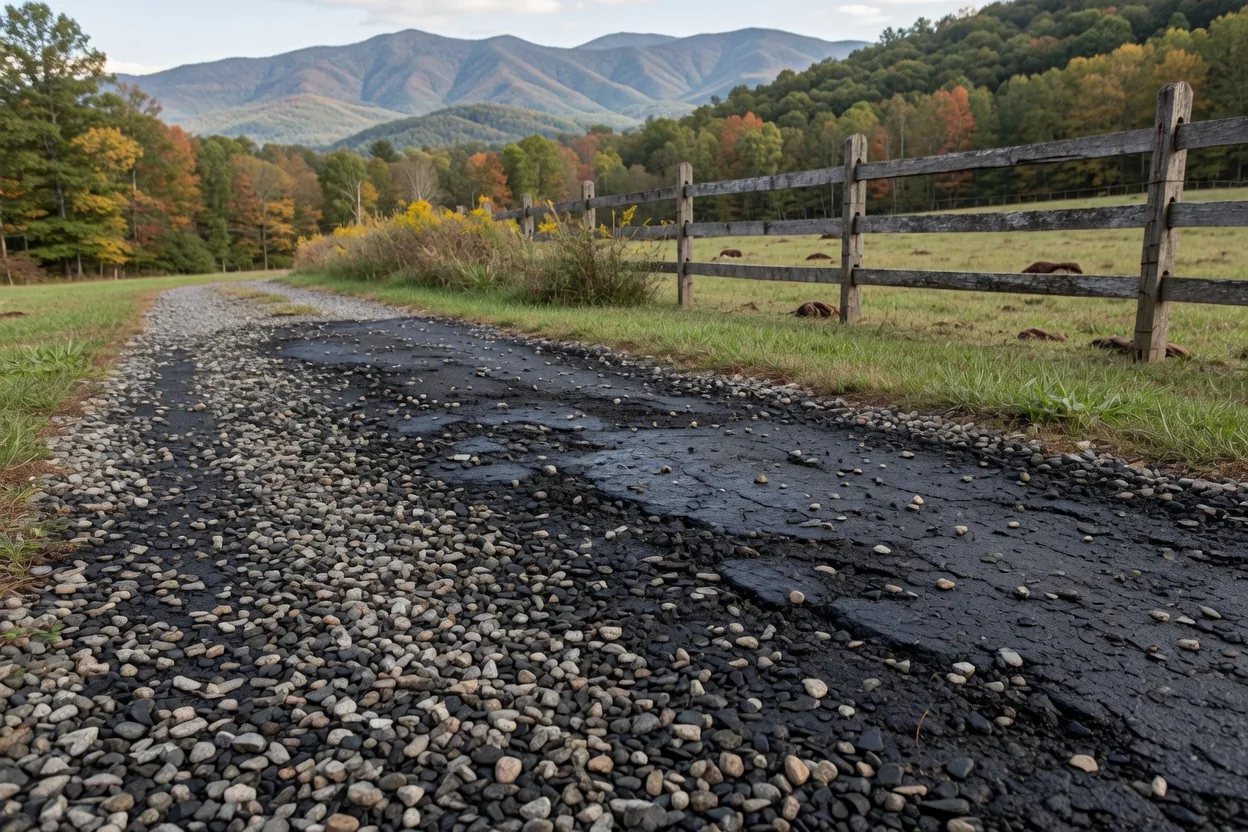
Freeze-thaw cycling is the primary mechanical threat to asphalt in this elevation range. Water enters surface micro-cracks, temperatures drop below freezing, and that water expands roughly nine percent. Repeat that sequence across a Buncombe County winter and hairline cracks become structural cracks. The National Weather Service tracks the mountain precipitation patterns that drive this process; in Candler's elevation band, wet and cold often overlap rather than alternate, which is the most damaging combination for unsealed asphalt.
UV oxidation runs alongside freeze-thaw as the second threat. Mountain elevations receive harder solar exposure than the Piedmont, which accelerates the oxidation that turns dark flexible asphalt into brittle gray surface. Once asphalt oxidizes, it loses its ability to shed water and flex under load. Sealcoating interrupts that process — it does not reverse it. A driveway that is already gray and cracking needs crack fill before a coat goes down. See the full sealcoating overview for how those two scopes interact and where one ends and the other begins.
The broader storm and water history of this county adds context. The 19 federal disaster declarations on record here (1973-2026) fall heavily into storm and flooding categories. For driveways, that history means edges and drainage patterns in Candler have been under repeated load, and newer construction on graded lots along the county's growth corridors is particularly exposed until established vegetation stabilizes uphill runoff.
Scope and cost for west Buncombe driveways
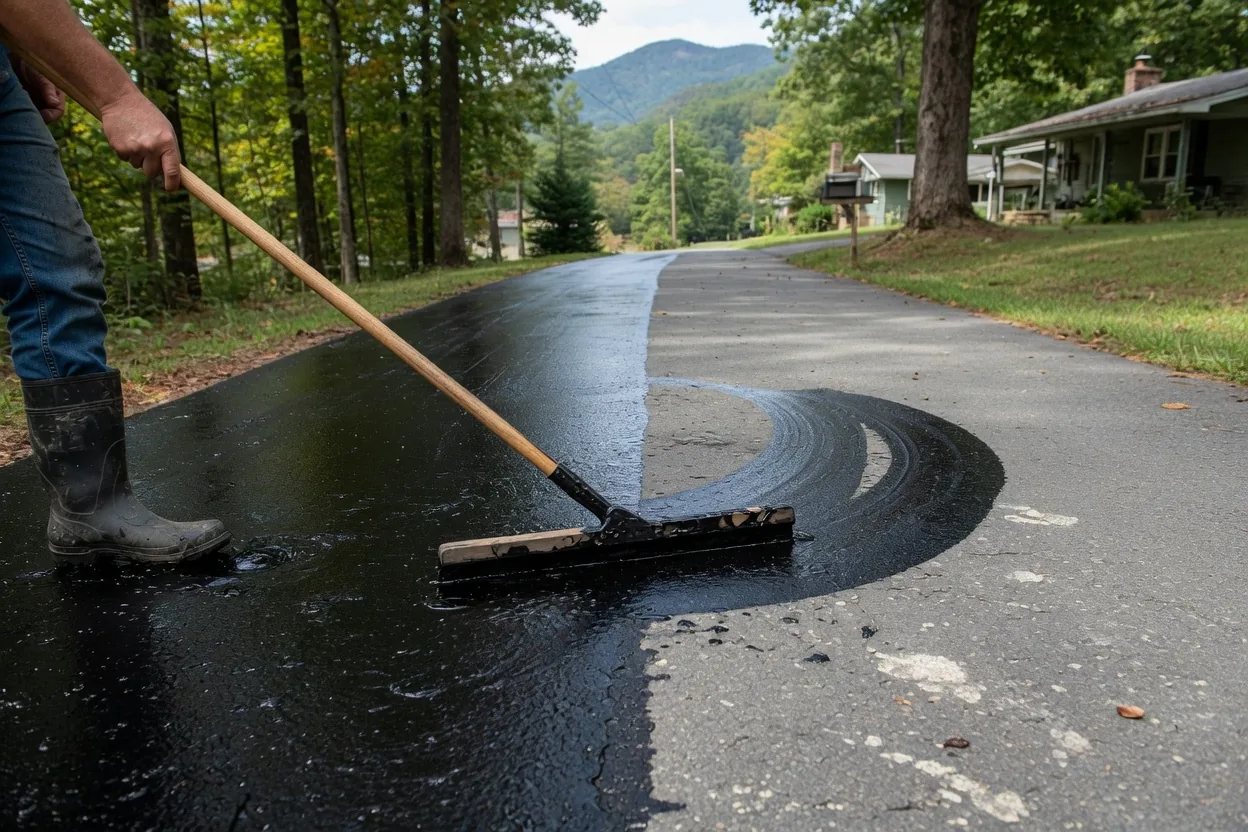
Candler tracks closely with county-wide pricing — the full line-item breakdown is at sealcoating cost. The base rate of $0.18 to $0.35 per square foot covers material and labor on a clean, ready surface. What moves a Candler quote toward the top of that band is driveway length, slope, and prep work. Crack fill, edge trim, and surface washing are add-ons that should appear as separate line items in any complete proposal.
| Scope | Typical Range |
|---|---|
| Small single-car driveway, 2 coats | $180 – $360 |
| Standard two-car driveway, 2 coats | $350 – $650 |
| Long rural driveway (150 ft or more), 2 coats | $550 – $850 |
| Crack fill prep added to any job | $75 – $200 additional |
| Edge trim on sloped driveway approach | $50 – $150 additional |
Any quote that skips crack fill or edge work on a driveway that visibly needs it is not a lower price — it is an incomplete scope. The ranges above assume a standard coal-tar or asphalt emulsion sealer; premium rubber-modified products run toward the top of the range and carry a longer reapplication interval, which can offset the higher upfront cost on a long rural driveway.
When to seal and when to wait
Sealcoating in the mountains has a shorter viable application window than most homeowners expect. Product manufacturers specify a minimum temperature of 50 degrees Fahrenheit with temperatures rising; at Buncombe County elevations, that window opens later in spring and closes faster in fall than in the Piedmont. The practical season runs roughly late April through October, with the caveat that any forecast rain or low overnight temperature within 24 hours of application puts the cure at risk.
New asphalt is a separate timing question. If your driveway was recently paved, the binder needs time to fully cure before a seal layer goes down. The specifics depend on mix type and application temperature — the full interval and the reasoning behind it are in how long after paving to sealcoat. In a climate with a shorter warm-season window, that timing is worth planning around before the season closes.
For established driveways, a two-to-three-year cycle fits this climate. A driveway that has gone five or more years without a coat is likely oxidized to the point where power washing and crack sealing become part of the job scope, and the price changes accordingly. Plan in late summer for a fall slot, or in winter for the earliest spring opening before crews book up.
What to ask before you hire in Candler
Three questions worth putting to any crew: whether they adjust product application rate for mountain temperature swings; whether their quote reflects your actual measured square footage or a standard package; and whether they have a plan for edge sealing on sloped or graded approaches. Those answers reveal whether a crew is pricing your specific driveway or averaging across a different job type entirely.
One compliance point worth knowing: if your driveway connects to an NCDOT-maintained road, work that touches the curb cut or connection point may require an encroachment or driveway connection permit. Most sealcoating jobs on private driveway surfaces don't trigger that threshold, but any corrective edge work or regrading at a state road approach is worth confirming through NCDOT Connect before the crew starts. Candler sits along several state-maintained routes where this comes up more often than it would inside an incorporated city limit.
References from driveways similar to yours — long rural runs, sloped approaches, stone-bordered edges — carry more weight than the lowest per-foot rate quoted on a job that looks nothing like what those references required.