Slope is the variable Buncombe County driveway quotes cannot skip
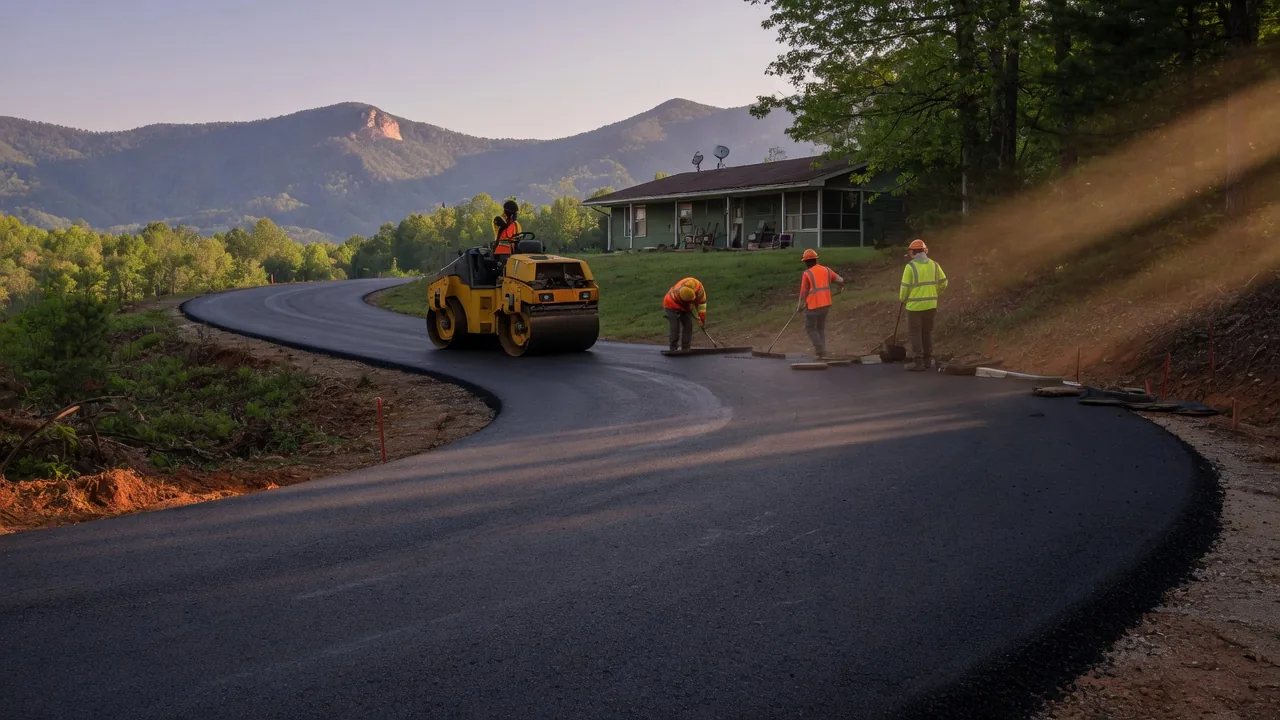
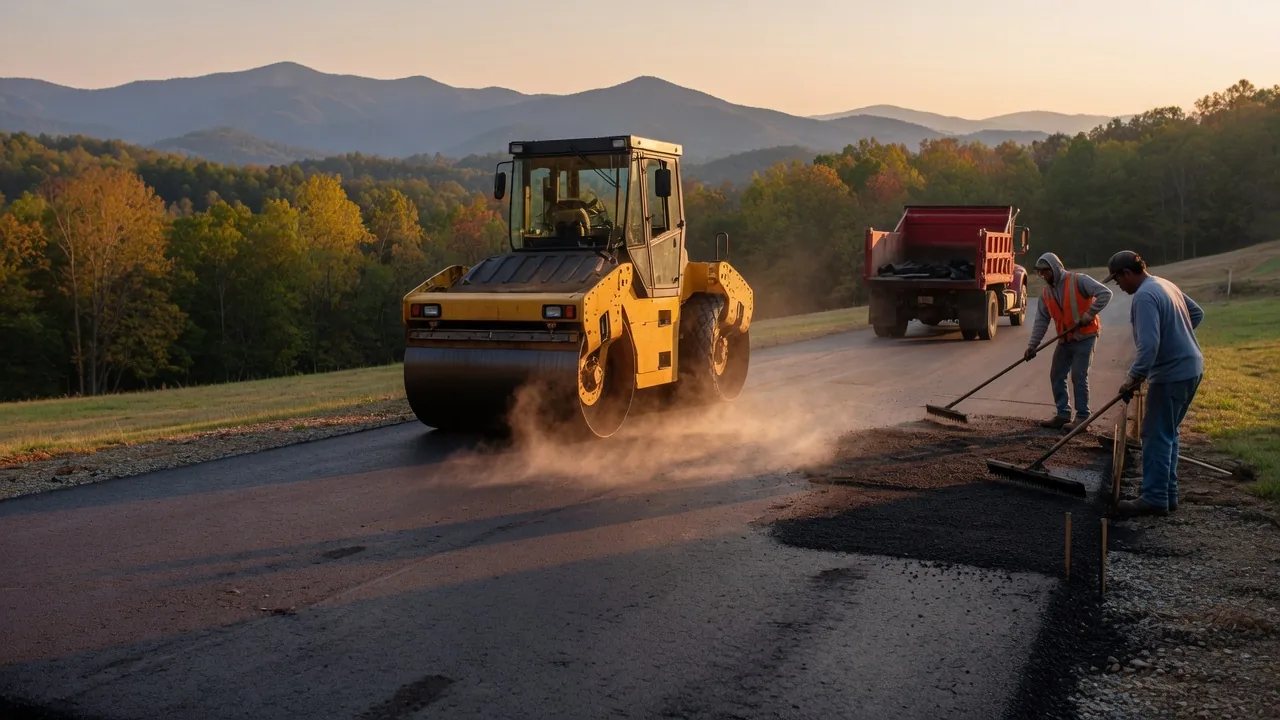
Flat-lot asphalt estimates from other parts of the state don't translate well to Buncombe County. The long runs down to the road in Black Mountain, the ridge lots above East Asheville, the winding drives off secondary roads in Weaverville — they all share the same challenge: grade. That grade changes the job at every step. Regrading loose gravel on a slope takes longer than on flat ground, drainage must be engineered in rather than hoped for, and paving equipment needs more time and passes to achieve a smooth, compacted mat.
A quote built for a flat Piedmont lot will underprice an Asheville-area mountain job by a significant margin before the first load of asphalt arrives. This page covers honest working ranges for Buncombe County specifically — once you understand what moves the number here, you can compare bids sensibly and spot one that is leaving out the hard parts.
Elevation across Buncombe County spans a wide range — from the French Broad River valley near downtown Asheville up to the ridgelines above Swannanoa and along the Elk Mountain corridor. That spread means even neighboring properties can have dramatically different base conditions. A south-facing slope baked by afternoon sun expands and contracts more than a shaded north-facing run, and a driveway that catches full western exposure may need a slightly different asphalt mix formulation than one tucked under a tree canopy. A contractor who prices every lot the same has not walked yours closely enough.
What Buncombe County homeowners actually pay
| Scope of work | Typical Buncombe range | What drives it |
|---|---|---|
| Gentle grade, existing base is solid and well-crowned | $7,000 – $10,500 | Minor regrading, 2" asphalt mat, straightforward machine access |
| Moderate slope, gravel needs full regrading and soft-spot repair | $9,500 – $14,000 | Remove degraded material, compact fresh crusher run, build drainage crown |
| Steep or winding lot with drainage correction required | $13,000 – $18,000 | Swales or channel drains, multiple machine passes, tight-turn maneuvering |
All three lines assume an average residential driveway of roughly 1,200 to 1,500 square feet. The per-square-foot range is $6 to $14 — grade, base condition, and drainage access spread that gap wider here than in flatter counties. A contractor who quotes well below the low end of the range for a mountain lot should explain exactly what they are and are not including in that number.
Winding driveways common in older Buncombe County neighborhoods — particularly those platted before cul-de-sac layouts were standard — often present tight turns that slow equipment and reduce efficiency, adding labor time that a flat per-square-foot rate does not reflect. Ask whether the bid accounts for any curves or switchbacks on your specific lot, and whether tight access limits the equipment size the crew can deploy.
What happens to the old gravel before asphalt goes down
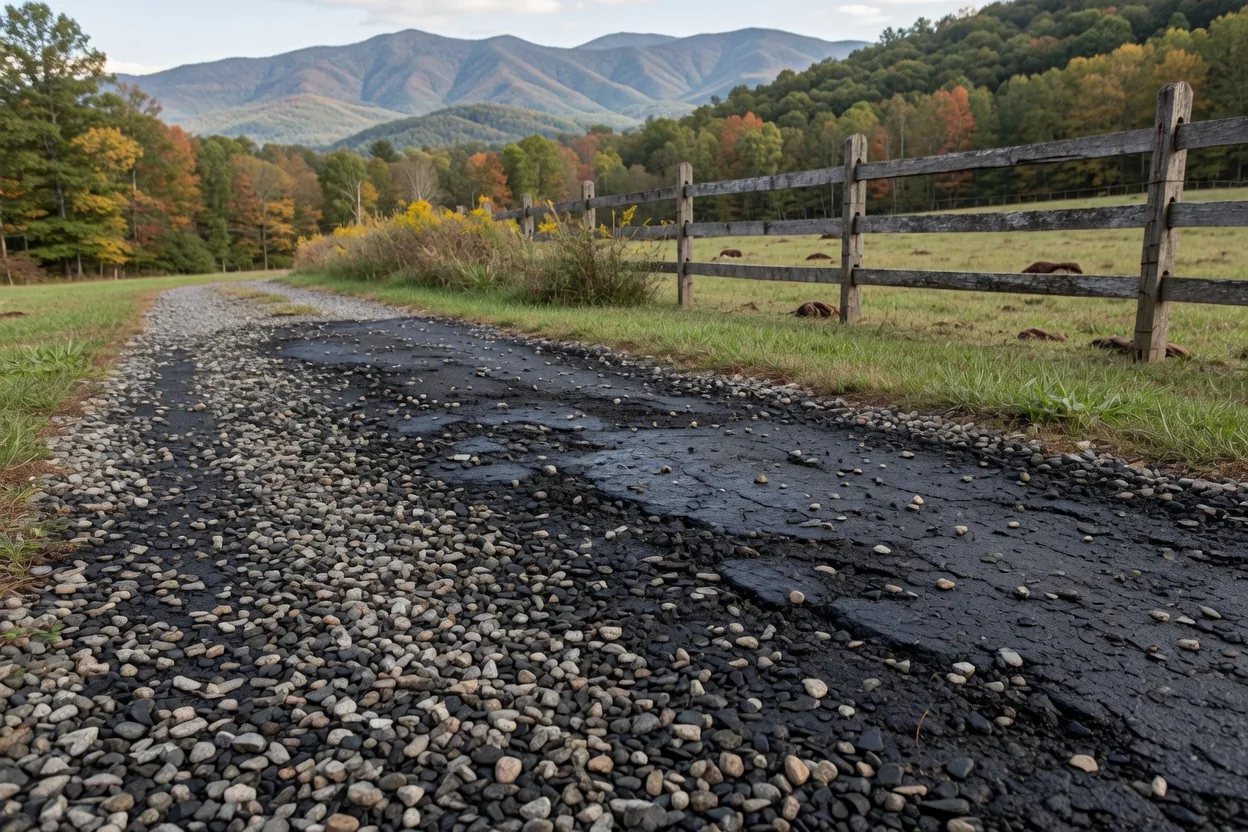
The most common misunderstanding about converting a gravel driveway to asphalt is that the existing gravel is free base material. Sometimes it qualifies — if it is well-graded crusher run, properly crowned, and has not migrated downhill over the years. On sloped Buncombe lots, that is rarely what you find. Existing gravel is often a mix of surface rock and churned subgrade material, soft in the low spots, rutted at the entry, and higher at the edges than the center. Asphalt placed on that base flexes and cracks within a few seasons.
A quality conversion involves grading the existing gravel to a true crown or directional slope, testing compaction, filling soft areas with fresh 21-AA crusher run, compacting in lifts, and only then placing the asphalt mat. That base-prep step is where most of the cost variability in this county lives — it is also where corners get cut most often. Ask every bidder to line-item base work separately from paving. A contractor who can't break those numbers apart probably isn't pricing that work at all.
Western NC's wet winters add a compounding challenge that does not show up on Piedmont job estimates: water that infiltrates a poorly prepared base freezes, expands, and heaves the asphalt from underneath. This freeze-thaw cycle is more pronounced at the higher elevations found across much of Buncombe County than at valley-floor lots near Asheville's core, and it is the reason base depth and compaction quality matter more here than they would in warmer, flatter terrain. A solid base that sheds water laterally — rather than pooling under the mat — is the practical defense against that seasonal stress. Budget conversations that skip this step are often the ones that lead to warranty disputes the following spring.
Our gravel-to-asphalt conversion guide walks through the full process step by step if you want to know what a crew day should look like on your property.
Drainage, rain, and why this county's weather record matters
Buncombe County has recorded 19 federally declared disasters over 1973-2026, the majority tied to heavy rainfall and flooding events. When a slow-moving storm stalls over the Blue Ridge, an unprotected driveway cut into a hillside behaves like a channel: water accelerates downslope, undercuts the asphalt edge, and carries base material away from underneath the pavement. The National Weather Service records for the Asheville area document why drainage is not optional here — this is one of the wettest inland counties in the Southeast, and that history shows up directly in how long improperly drained pavement lasts.
A correctly paved mountain driveway accounts for water before the first truck arrives: the surface crown sheds runoff to the sides, swales or channel drains carry it away from the pavement, and the asphalt edges are keyed into stable soil rather than laid on top of loose stone. None of that is extraordinary work, but it adds labor and sometimes material cost. Any scope that skips it is a scope that will need to be redone.
Swales dug alongside the driveway are the most common drainage solution on Buncombe County mountain lots. A properly sized swale routes sheet flow away from the paved surface and toward a natural drainage outlet at the bottom of the lot. On steeper runs where a swale alone cannot keep pace with the volume of water a heavy rain delivers, contractors may install channel drains across the width of the driveway — the grated trench drains visible cutting across many Asheville-area driveways near the road entry — to intercept water before it gains enough speed to erode the asphalt edge. Both approaches add cost, but the absence of either approach adds far more cost in early resurfacing.
Permits and road connections in Buncombe County
Paving a private driveway on your own property does not typically require a Buncombe County building permit. The permit question shifts when your driveway connects to a state-maintained road — in that case, an NCDOT driveway permit is required before any work begins. Most driveways off NC secondary roads fall into this category. The NC Department of Transportation manages these applications and sets minimum sight-distance standards and culvert-sizing requirements where a driveway crosses a ditch line.
Properties within the City of Asheville's limits should also check with City of Asheville development services before signing a contract — city stormwater rules can impose impervious-surface thresholds that limit how much new hard surface a single project can add. Weaverville, Black Mountain, and unincorporated county parcels generally fall under county and NCDOT rules only, but confirming your road's maintenance status before work begins saves permit delays later.
Culvert sizing is one NCDOT requirement that catches homeowners off guard: if your driveway crosses a roadside ditch, the pipe underneath must meet minimum diameter standards based on the drainage area it serves. A paving contractor familiar with NCDOT standards will size and install the culvert as part of the job scope; one who is not may leave the homeowner to address a permit violation after the pavement is already in place. Clarify culvert responsibility in writing before the job starts.
Getting a price that holds through the job
Three habits separate solid bids from ones that inflate at change-order time:
- Ask for base prep as its own line item. The cost of regrading, removing weak material, and adding fresh stone should be a separate number, not folded into a per-square-foot paving rate. That is the line most likely to shift once digging starts on a mountain lot.
- Walk the drainage path together. Stand at the top of your driveway after a rain and show each bidder where water accumulates and where it exits. A contractor who prices a drainage solution is pricing the real job; one who says drainage is not their concern is telling you something useful.
- Check the bid against the county range. A number well below the table above on a sloped Buncombe lot usually means base work or drainage has been underpriced or skipped. How a contractor responds when you ask them to walk through their scope tells you more than the figure itself.
Timing also matters in this part of Western NC. Late summer and early fall — after the heaviest convective rain season but before the first hard freezes — give new asphalt the best window for full curing before winter thermal stress begins. That is not always a scheduling luxury, but if you have flexibility, asking your contractor about the timing implications for your specific lot elevation is a reasonable part of the planning conversation.
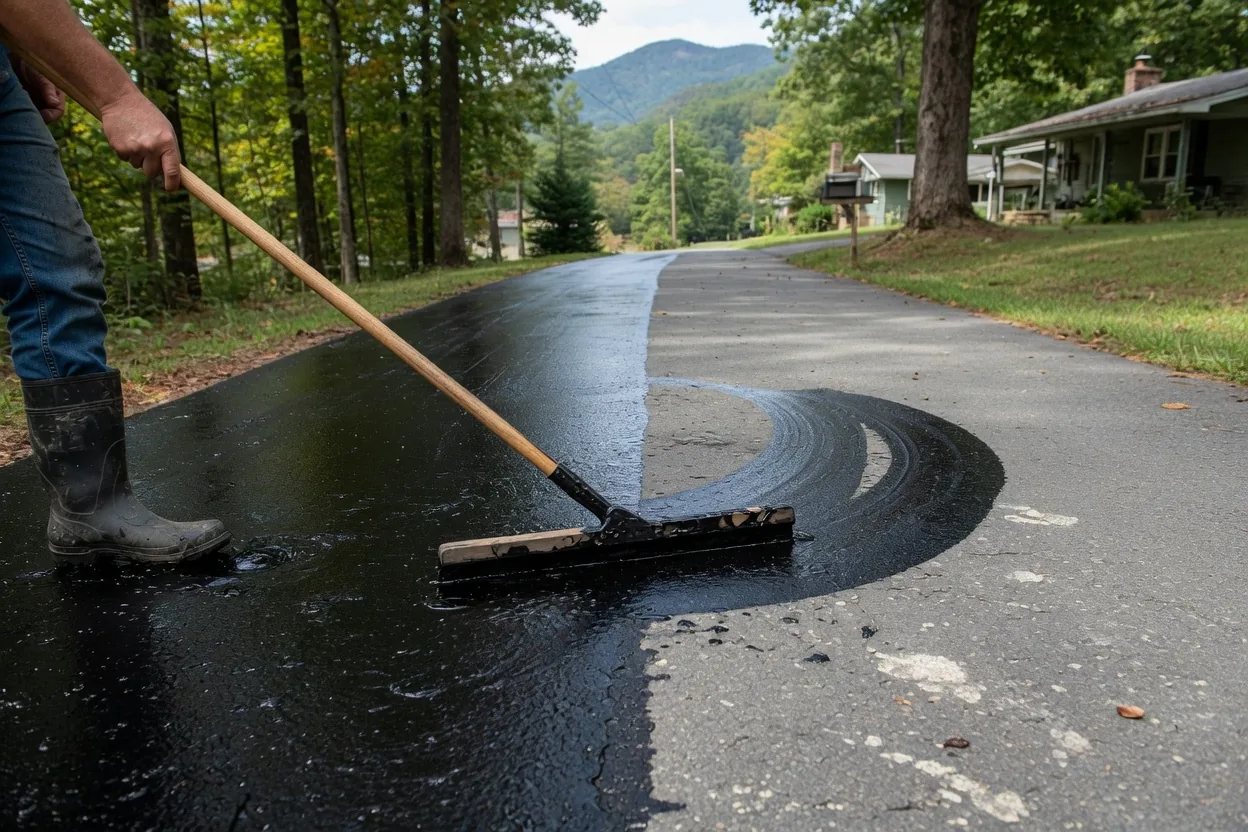
Weighing your options before committing to asphalt? Our tar-and-chip cost guide covers that alternative for mountain driveways, and the full asphalt driveway cost guide gives the broader regional picture for Western NC.