Why freeze-thaw cycles hit harder up here
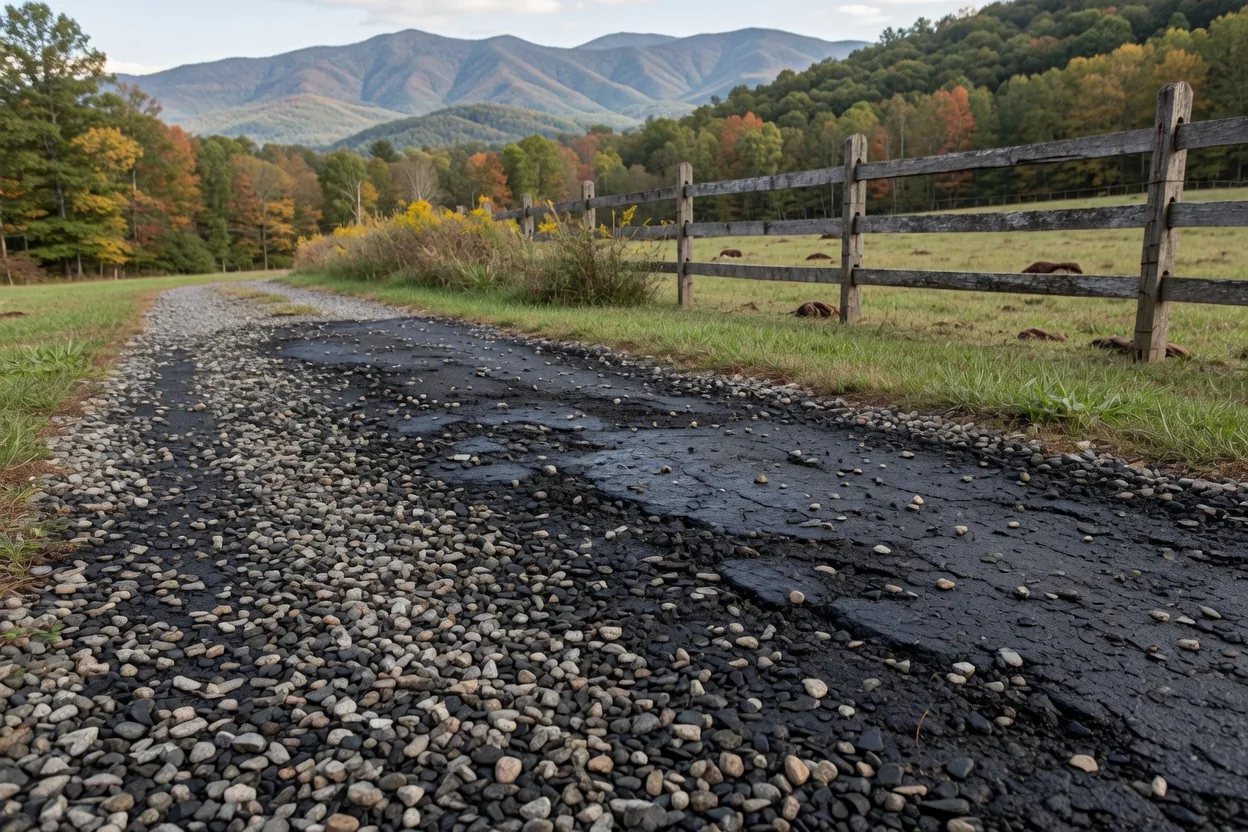
Weaverville's location in the northern reach of Buncombe County places it at higher elevation than the communities along the Asheville valley floor. That altitude difference means more hard-freeze events per winter and more freeze-thaw cycles as temperatures swing through spring and fall. Water that finds its way into a surface crack in October expands when it freezes, forces the crack wider, and by March what was a hairline has become a network wide enough to pocket a quarter.
The terrain adds a second variable. Residential properties here range from relatively flat subdivisions near the town center to long sloped approaches on forested lots off county and state routes. On the sloped lots, uphill runoff crosses the driveway surface during heavy rain events, erodes the shoulder, and starts edge cracking that works inward season by season. Left untreated, that edge fraying becomes the networked cracking pattern that signals sub-base trouble rather than a surface issue.
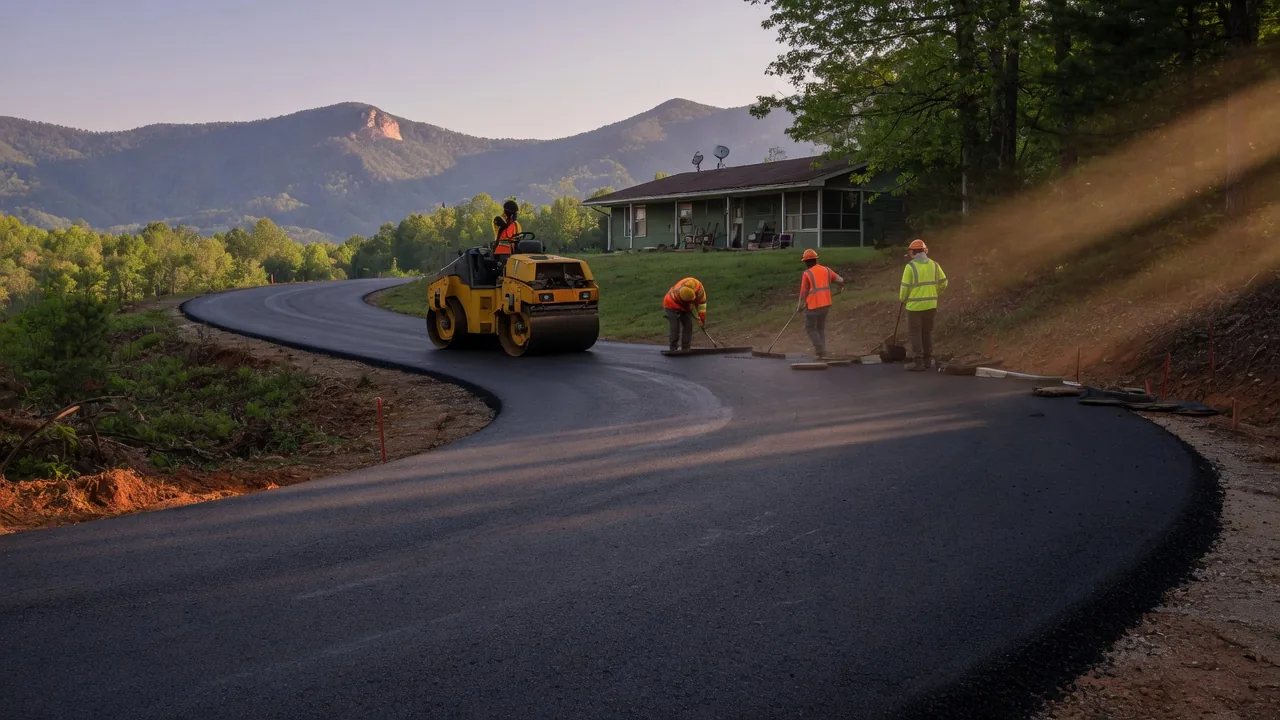
Weaverville's housing stock spans the full range from older properties near the historic town center to newer subdivision development cut into the hillsides. Older driveways may have been laid over sub-bases that no longer meet current standards; newer driveways on cut-and-fill lots often deal with settling fill material beneath the pavement. Both types show up in repair calls, and each calls for a different conversation about what the fix actually includes.
What repairs cost around Weaverville
Asphalt driveway repair near Weaverville follows the same scope-driven pricing as residential asphalt repair across the state, with local terrain pushing jobs toward the higher end of their ranges when slopes or poor drainage are factors. The table below gives working ranges for the most common repair types; a final quote depends on access, sub-base condition, and whether drainage work needs to happen alongside the pavement.
| Repair scope | Typical range | What drives the price |
|---|---|---|
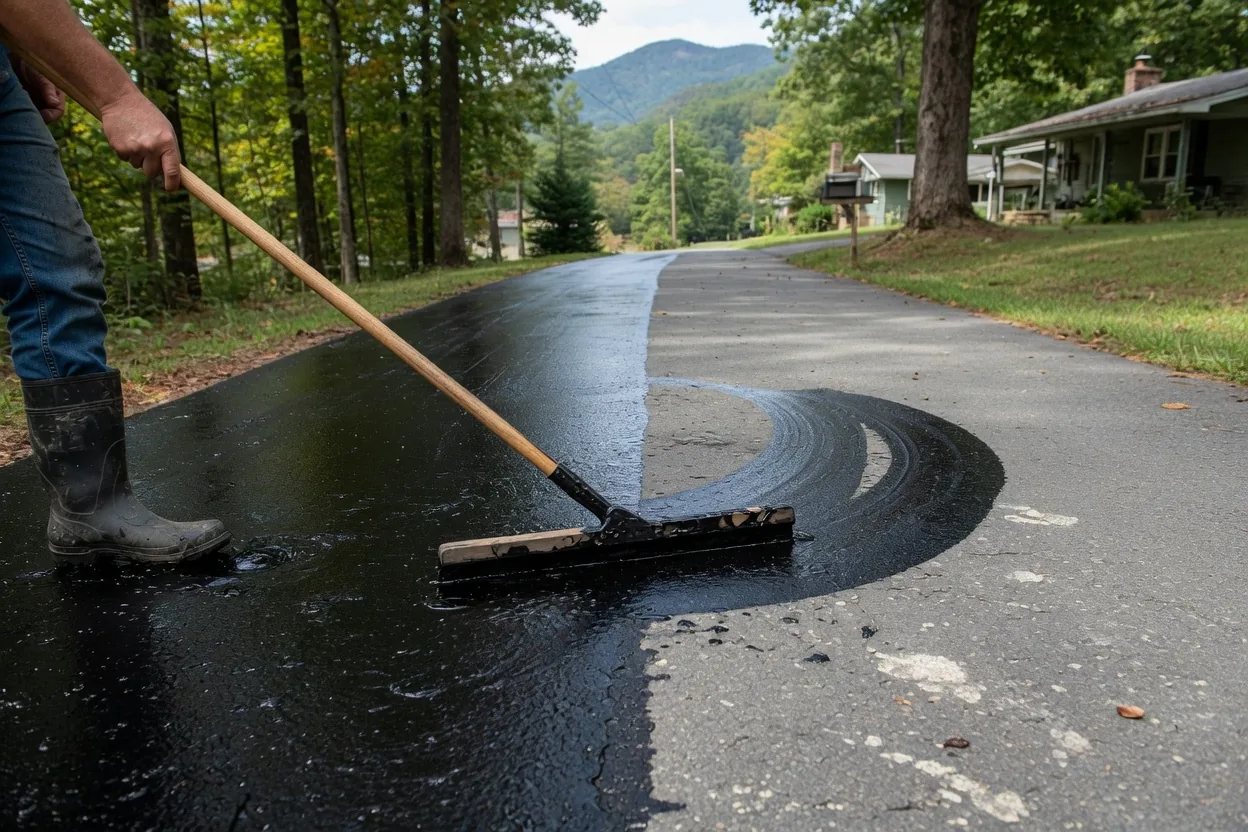
| Crack sealing (up to 1 in. wide) | $250–$500 | Best done in fall before freeze cycles force cracks wider |
| Single pothole patch | $300–$700 | Depth and base condition; cold-patch is cheaper but shorter-lived |
| Multiple cracks and spot repairs | $400–$900 | Common scope after a hard winter on an aging driveway |
| Small section replacement | $700–$1,800 | Sub-base repair usually required on mountain lots |
| Larger sectional repair | $1,200–$3,000 | Slope, drainage regrading, and site access can all add line items |
| Full residential driveway repair | $2,500–$4,500 | Base prep and regrading on sloped lots typically included |
Jobs on steep approaches in the hillside areas surrounding town regularly carry drainage and regrading costs that flatland quotes never show. Any bid that omits those line items should be treated as incomplete rather than affordable.
When storm runoff drives the repair call
Buncombe County has seen 19 federal disaster declarations over 1973-2026, the majority tied to storm and flooding events. Weaverville's position in the upper watershed means heavy rain arrives with velocity: water moving downhill off forested ridges reaches driveways quickly and in volume. A storm that drops two inches in an hour can carry sub-base material out from under a driveway apron in a single event, leaving a surface that looks intact but has nothing solid underneath it.
The National Weather Service documents the Appalachian terrain effect on precipitation: short, intense events are common from late spring through fall, and they cause more driveway damage than slower, lower-intensity rain that gives drainage time to work. Potholes that appear within weeks of a storm are almost always a sub-base failure story. Patching the surface without addressing the drainage path produces the same pothole in the same location after the next hard rain. Address the drainage first, then the pavement.
State roads, driveway permits, and the right-of-way line
Much of the road network serving Weaverville's residential areas is state-maintained and falls under NCDOT jurisdiction outside municipal limits. Any repair or reconstruction that changes the driveway apron or its connection to the road edge requires a driveway permit before work begins. That includes widening the entrance, regrading the apron for drainage, or any work within the right-of-way. Applications go through NCDOT Connect; working without a required permit can result in a stop-work order and a requirement to remove completed work at the property owner's expense.
Repairs entirely on private property (crack sealing, pothole patching, and sectional work that does not touch the road edge) do not typically require a permit. If you are unsure where the right-of-way boundary falls on your lot, your Buncombe County parcel data or the local NCDOT division office can confirm the line before any work begins. Getting that answer before you hire a crew avoids surprises on both sides of the job.
Finding a crew that knows mountain paving
Three questions worth asking any contractor before you sign: Have they worked on sloped driveways in Buncombe County, and can they show references on your specific repair type? Do they include a drainage assessment before they price the surface? And what base prep are they including for any section replacement?
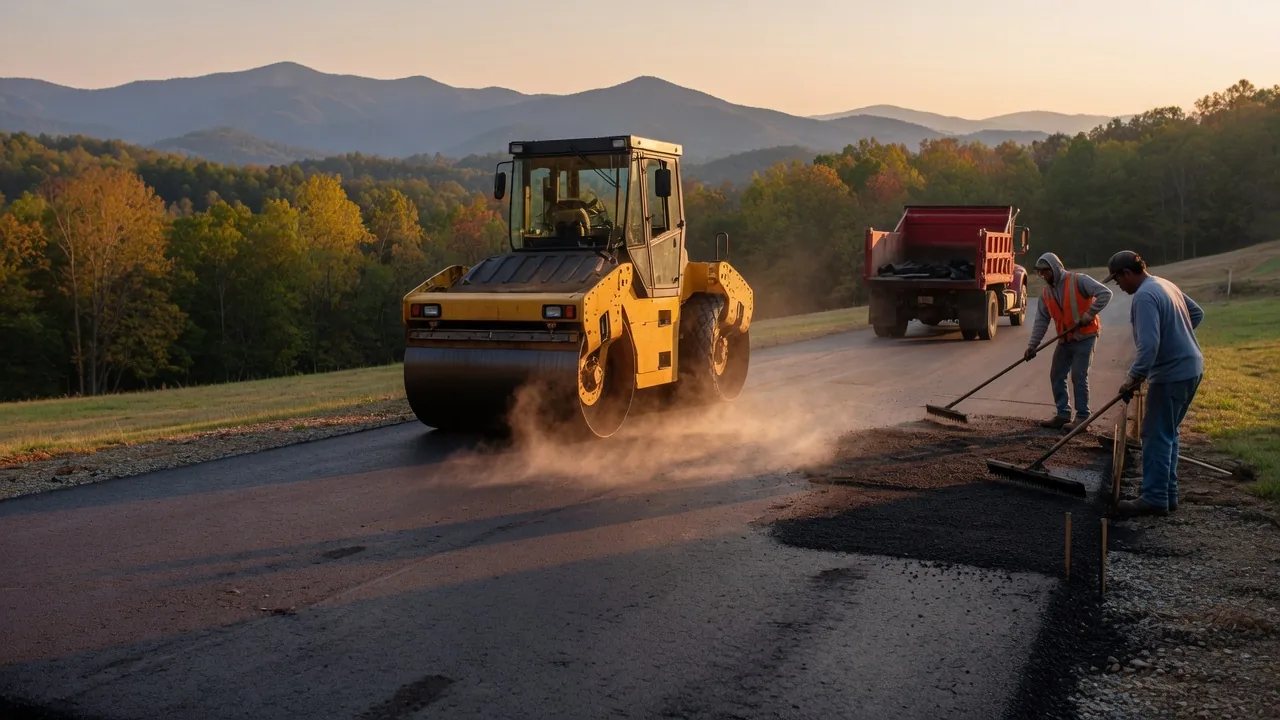
The drainage question separates crews that repair asphalt from crews that re-patch it every two seasons. A contractor experienced with this terrain will assess the grade and edge drainage before pricing a job, because a surface-only fix on a drainage problem is a temporary fix. The full residential asphalt repair guide walks through what a complete scope includes and what to ask when comparing estimates. When you are ready to move forward, use the form on this page and note whether the damage appeared after a storm event or developed over multiple winters — that detail shapes the scope conversation from the start.