Brevard's rainfall is both the argument for sealcoating and the scheduling problem
Transylvania County ranks among the wettest counties east of the Mississippi — a fact that shapes every asphalt maintenance decision a homeowner here makes. Mountain terrain lifts storm systems and wrings rainfall from them; driveways carved into hillsides absorb that runoff at their edges, where cracks form first and water works deepest. An unsealed surface weathers measurably faster here than the same pavement on flat piedmont ground.
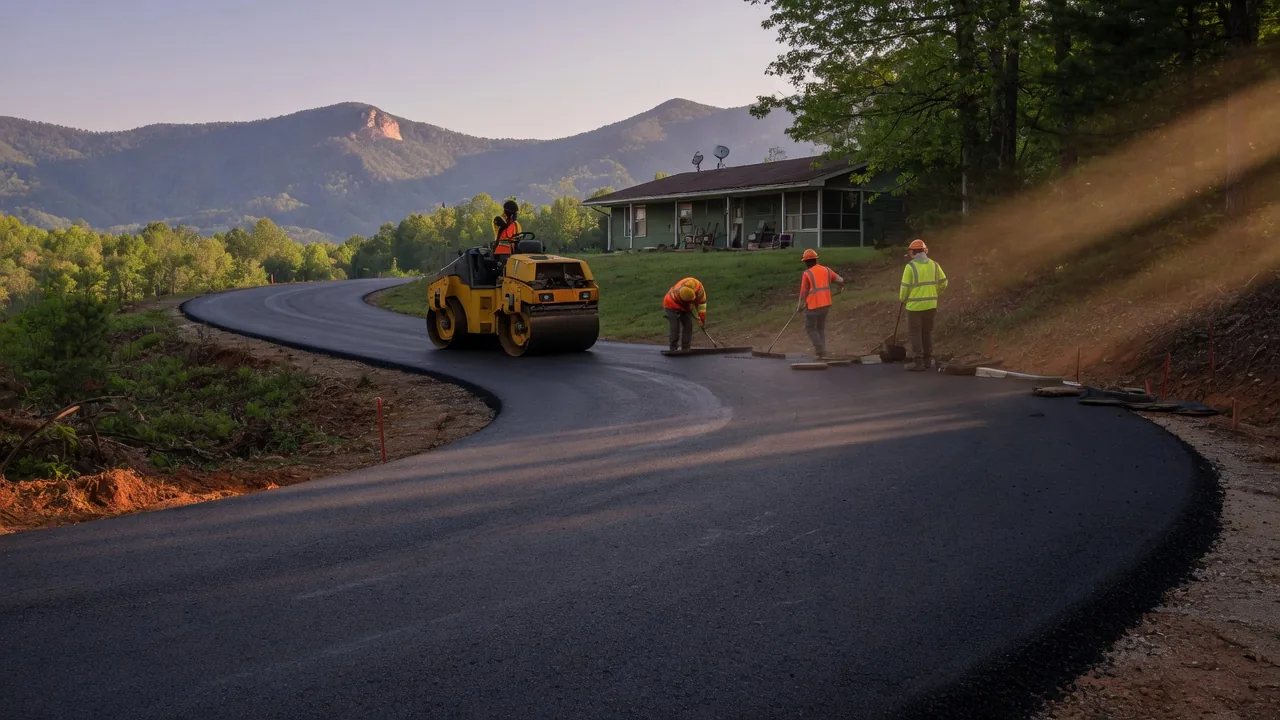
The housing stock reinforces this. Brevard's mix of older in-town homes on modest lots, retirement properties on wooded ridge roads, and vacation cabins accessible only by long, steep asphalt drives means there is no single typical driveway job here. What they share is exposure: mountain UV in summer, heavy rainfall year-round, and hard freezes in winter that expand every crack that collected water in the fall.
The scheduling challenge cuts the other way. Sealcoat requires a surface temperature above 50°F, a fully dry substrate, and a clear 24-to-48-hour window after application. In Brevard, those conditions arrive reliably from late spring through early fall — but they can disappear on a day's notice. Check the National Weather Service forecast before confirming any job date. The sealcoating overview explains what happens when material goes down on a cold or damp surface — the short answer is that it bonds poorly and peels sooner than an untreated driveway would have cracked.
If your driveway apron meets a state-maintained road, any work affecting that connection requires a review through NCDOT Connect before a crew starts — routine sealing on a private surface does not, but the distinction matters when work reaches the road edge.
What jobs cost in this area
Sealcoating prices by the square foot, with surface condition, slope, and coat count as the main variables. The full breakdown is in the sealcoating cost guide; the working ranges for Brevard and surrounding Transylvania County:
| Scope | Typical range |
|---|---|
| Small single-car driveway, two coats | $180–$350 |
| Standard two-car driveway, two coats | $350–$580 |
| Large or extended mountain driveway, two coats | $580–$850 |
| Crack fill before sealing (add-on) | $50–$150 extra |
| Edge clear-out and debris removal | Typically included |
Steep driveways can carry a slope surcharge — more time, more care, and occasionally different equipment for a crew working safely on grade. Ask about it before the job is quoted so the contract number matches your expectation. Any bid that skips crack prep on a Brevard driveway that hasn't been sealed in several years is dropping a line item, not offering a discount.
Reading the surface — when to act and when you've waited too long
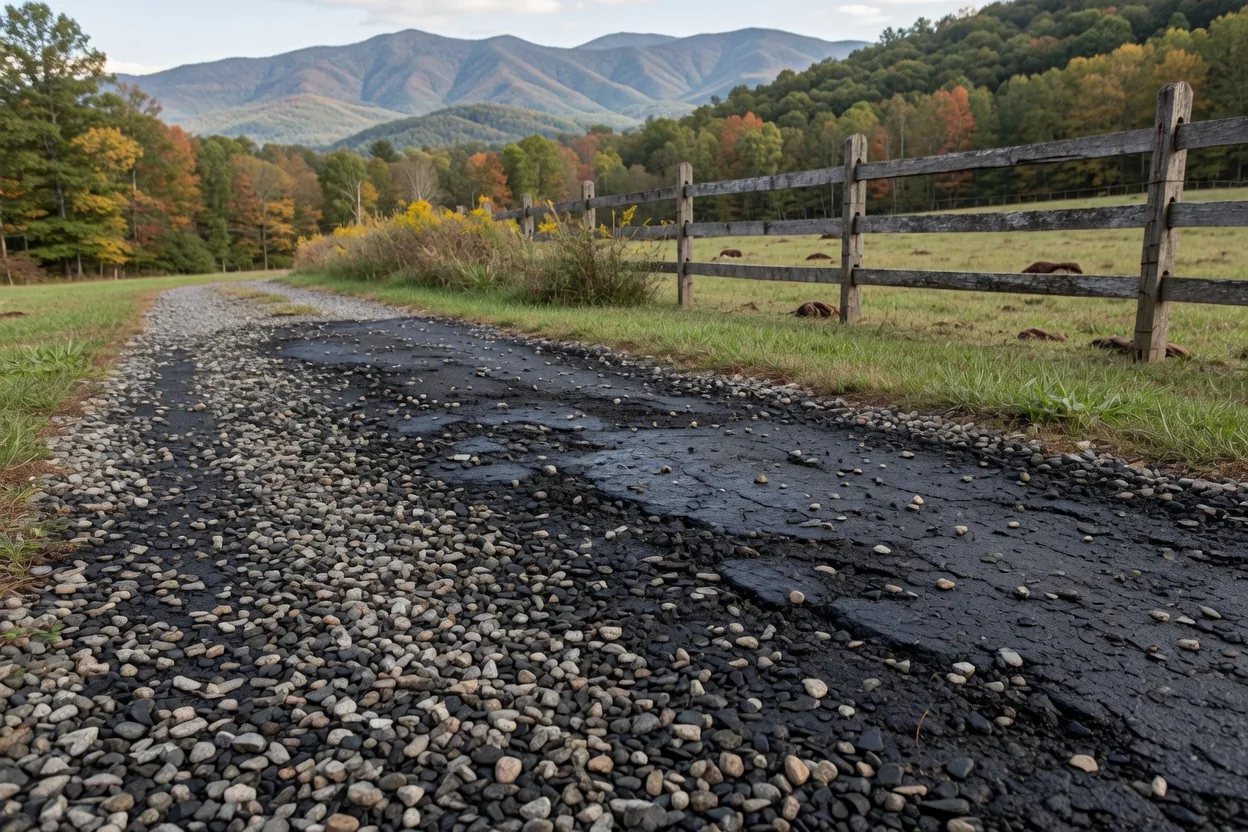
The right time to sealcoat is when asphalt has oxidized to a flat gray but before surface cracking has spread into a map pattern across the field. A driveway that fades from jet black within a few years of installation or last sealing is telling you that UV and water are winning. Common tells in this climate: aggregate becoming visible at the surface where the binder has worn thin, water sitting in small depressions after rain rather than sheeting off, and hairline cracks at the edges where runoff channels toward the driveway from the uphill terrain.
Waiting too long looks different. Cracks wider than a quarter-inch that have opened and closed through multiple freeze cycles, soft spots near the uphill edge where water has worked under the base, and sections that flex slightly underfoot are signs that sealing is still useful but no longer the whole answer. Structural repair comes first in those cases, then a seal coat once the surface is solid. A proper first inspection separates those two categories before any material is ordered or any prep work begins.
What a proper application covers
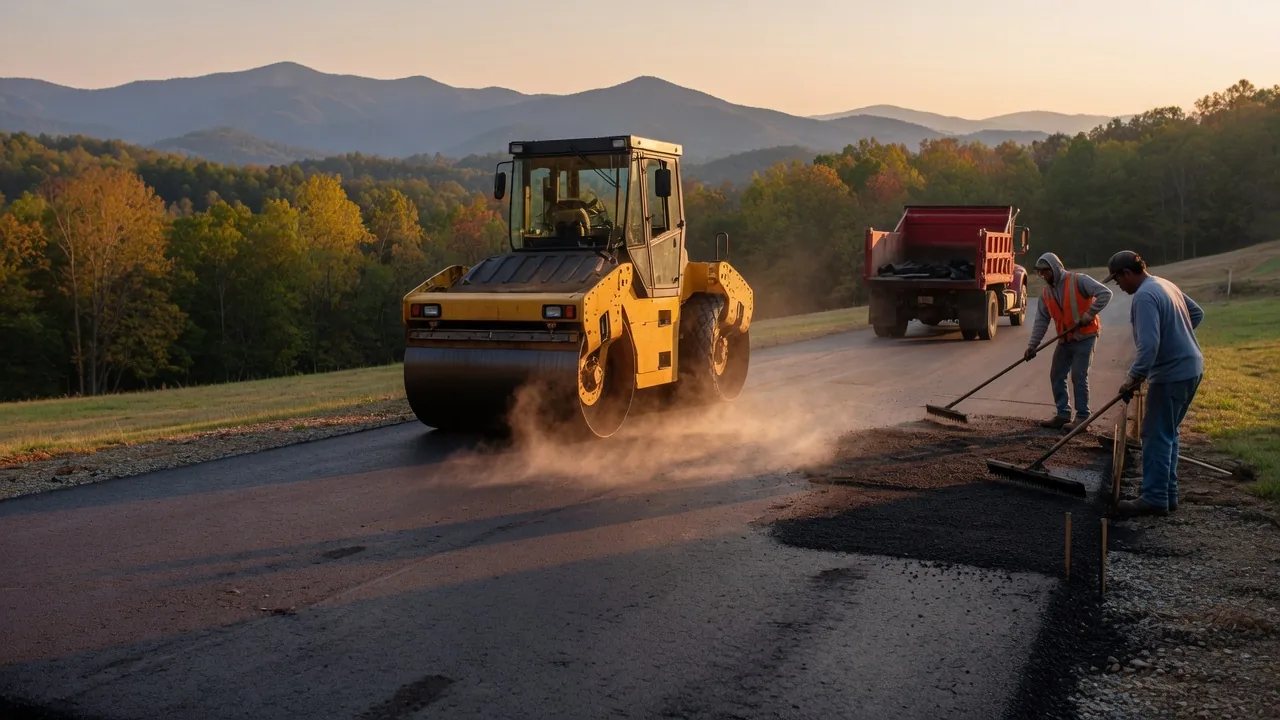
A professional sealcoating job starts with prep: vegetation cleared from the edges, cracks wider than a hairline filled with flexible crack filler and allowed to tack before the seal goes down, and the surface blown clean of debris and standing moisture. On a Brevard driveway that means paying particular attention to the uphill edge, where organic material accumulates during the wet seasons and moisture already sits against the asphalt longer than it should.
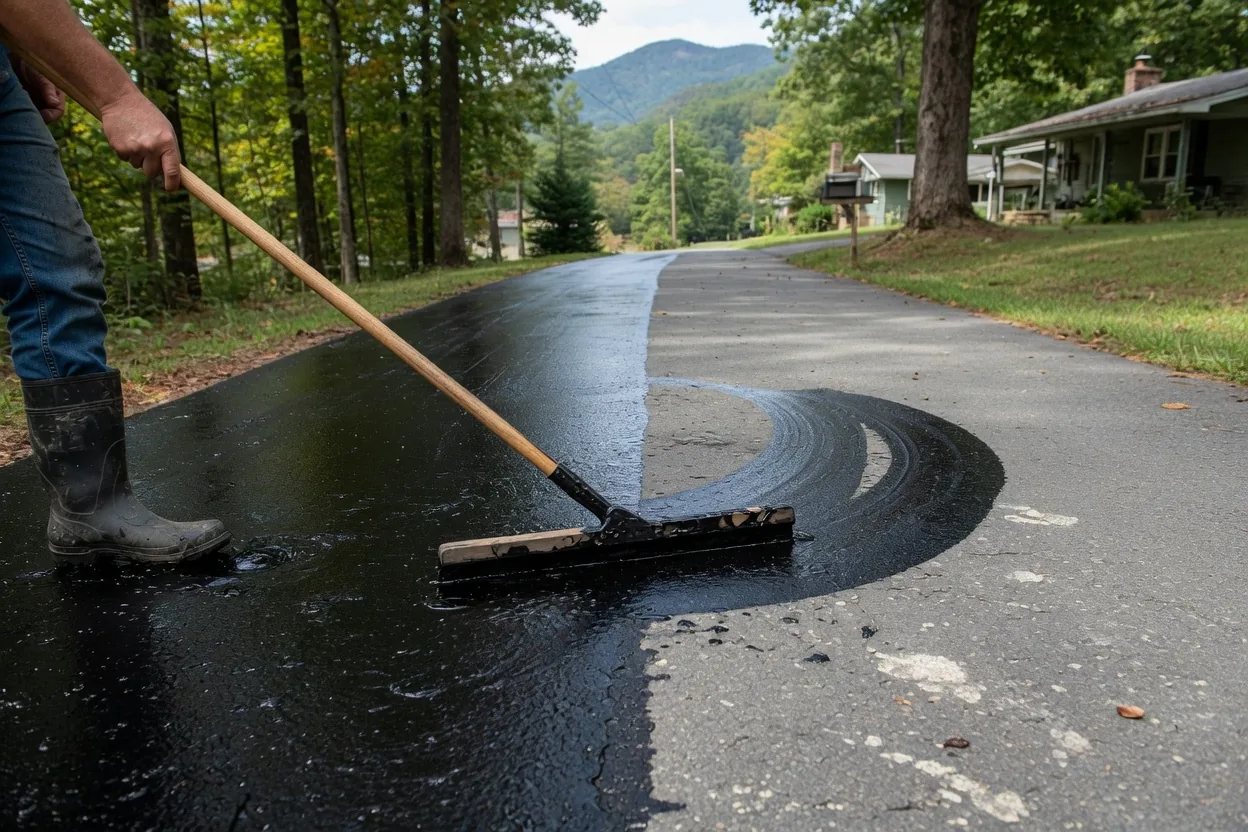
Two coats is the standard for mountain-climate work — the first coat brushed or squeegeed in for penetration, the second applied after the first has properly set. A single-coat application on a driveway that sees Transylvania County weather is a short-term fix; the combination of UV intensity and rainfall cycling exhausts a thin coat in roughly half the time it would last in a drier county.
Crews working near a state road right-of-way should be familiar with the standards the NC Department of Transportation applies to work within that margin. On private driveways the practical measure is workmanship: clean edges without overspray onto adjacent surfaces, consistent coverage with no pooling seams where coats overlapped carelessly, and drainage that moves water off the surface rather than toward the foundation or the uphill neighbor's property line.
Storms, federal declarations, and what they mean for asphalt
Transylvania County has recorded 16 federal disaster declarations over 1993-2026, the majority linked to flooding and severe storms. Each one pushed water at every surface and foundation in the county — and the driveways without recent sealcoat showed the damage first, with accelerated edge cracking and softening of the base layer where water sat rather than ran off.
The pattern repeats at smaller scale every heavy rain season. Homes on ridge roads above Brevard face a drainage challenge that flatland driveways do not: runoff that would sheet off a level suburban surface instead channels toward the uphill edge of a slope driveway. A crew that lays bead lines across a grade without thinking about where that water exits is creating a problem while solving another one.
Sealcoating does not make a driveway flood-proof. What it does is close the surface against the everyday water intrusion that, over years, turns small cracks into base failures. In a county with Transylvania's storm record and rainfall totals, that difference compounds quickly — a well-maintained sealed surface stays several maintenance cycles behind an unmaintained one in the time it takes to reach full replacement.