The Elevation Factor Asheville Driveways Can't Ignore
Buncombe County sits at roughly 2,100 feet in the heart of the Blue Ridge, and plenty of its neighborhoods and rural routes climb well above that. That elevation reshapes how asphalt ages through a mountain winter in ways that Piedmont and coastal NC homeowners rarely have to think about. According to National Weather Service climate records for the Asheville area, the region cycles through meaningful freeze-thaw events that flatter parts of the state largely avoid. Moisture enters a hairline crack, freezes overnight, expands, and leaves a wider gap by morning. Repeat that sequence across a full season on an unsealed surface and visible deterioration arrives in three or four years instead of ten.
Terrain compounds the problem. The hollows, ridgeline cuts, and long descending runs from road to garage that define so many Buncombe County properties mean water doesn't drain at the same rate across a driveway's full length. One half sheds runoff efficiently; the other half collects it, softens the base, and develops ruts well ahead of the rest of the surface. Getting drainage designed right at installation isn't a cosmetic finishing step here — it's the single largest variable in whether a driveway reaches 15 years or 25. The 19 federal disaster declarations recorded in this area over 1973-2026 are a reminder that water events in the Blue Ridge aren't rare, and every significant rainfall tests a driveway's base and edge construction.
Realistic Lifespan Ranges by Condition and Site
Lifespan isn't a single number — it's a range shaped by installation quality, slope, tree canopy, maintenance history, and local climate exposure. The figures below reflect honest expectations for Buncombe County conditions, not manufacturer warranties.
| Condition | Typical Lifespan |
|---|---|
| New install, proper compacted base, sealed on schedule, gentle grade | 20–25 years |
| New install, proper base, sealed on schedule, steep or shaded grade | 15–20 years |
| New install, adequate base, never sealed | 12–15 years |
| New install, shallow base or uncorrected drainage | 8–12 years |
| Resurfaced overlay on structurally sound existing asphalt | 10–15 additional years |
| Resurfaced overlay on failing or saturated base | 3–6 years before cracking returns |
One detail specific to the Asheville area worth noting: heavy tree canopy holds moisture on pavement far longer than open driveways experience. A driveway on a north-facing slope under mature hardwoods can stay wet for days after a rain event, staying saturated longer into a freeze window and aging measurably faster than identical pavement on an exposed lot a quarter mile away.
The Maintenance Sequence That Determines Which End of the Range You Hit
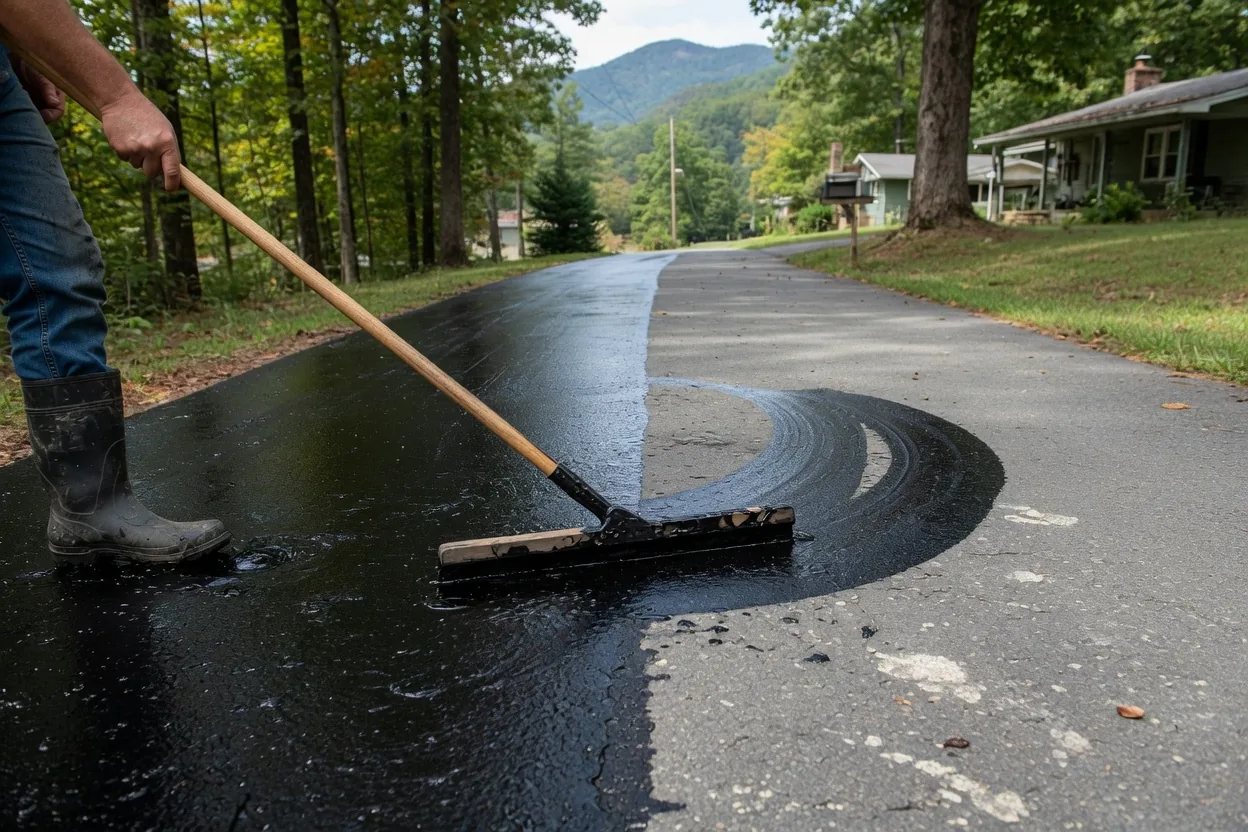
The highest-return action a Buncombe County homeowner can take is sealcoating on schedule — typically every 3-5 years, with the shorter interval appropriate for heavily shaded surfaces, high-traffic driveways, or any pavement that shows oxidation (graying and brittleness) faster than average. Sealcoat closes the oxidation pathways that make asphalt crack prematurely and blocks the water infiltration that mountain winters turn into structural damage. A driveway that gets its first seal at 2-3 years and is maintained from there consistently and routinely outperforms one that gets sealed at year 8, when surface damage has already set the trajectory.
Crack filling belongs on the same annual calendar. A crack under a quarter inch is a maintenance line item; left through a Buncombe County winter, it becomes a base repair. The sequence that stretches driveway life most cost-effectively: clean and fill cracks in late summer or early fall, apply sealcoat once temperatures will hold above 50 degrees for a full 24-hour cure window, and protect the surface from traffic until curing is complete. Timing matters more here than in warmer NC counties because the window between warm-enough-to-cure and cold-enough-to-freeze is shorter in the mountains, and applying sealcoat too late in the season produces a coat that never fully bonds.
When the Surface Is Telling You to Resurface Instead of Seal
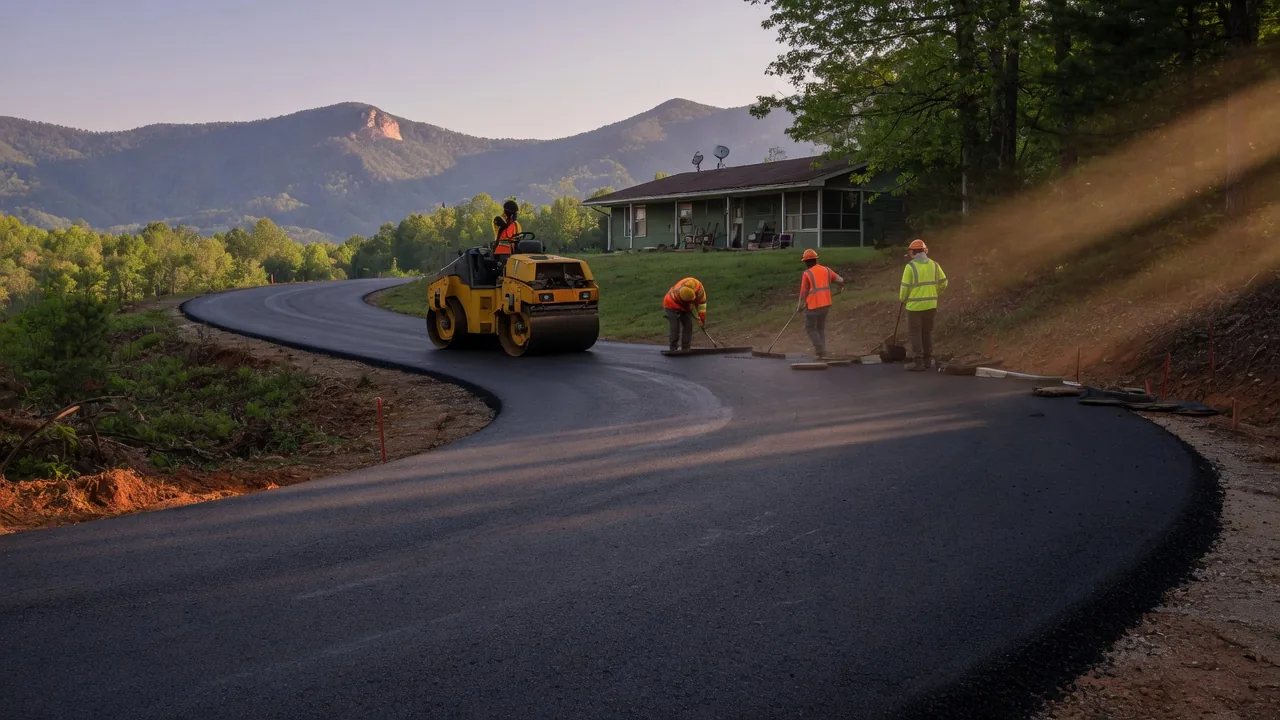
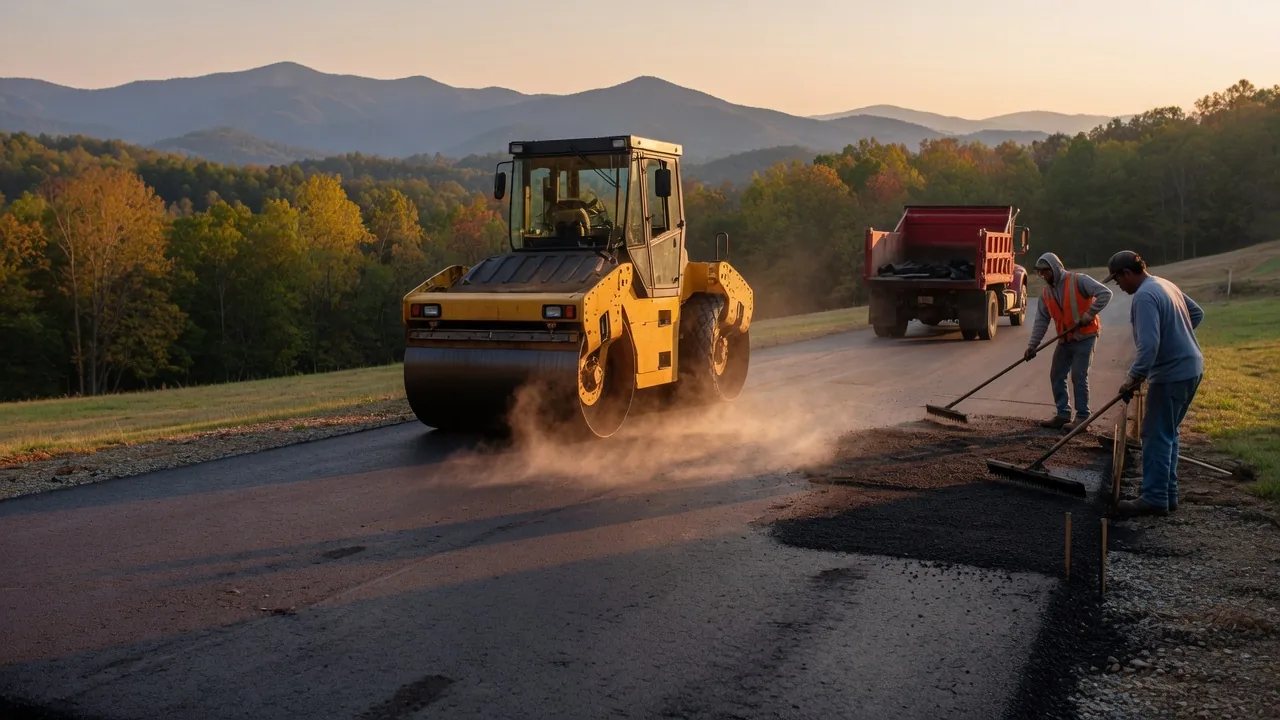
Resurfacing lays a new layer of asphalt over existing pavement — it restores surface function and appearance when the base is still structurally intact. It costs considerably less than full tear-out and replacement, typically running in the $3-$6 per square foot range for residential work in the Asheville area, compared to $8-$15 or more per square foot for full removal and new installation. The math works only when the base earns it.
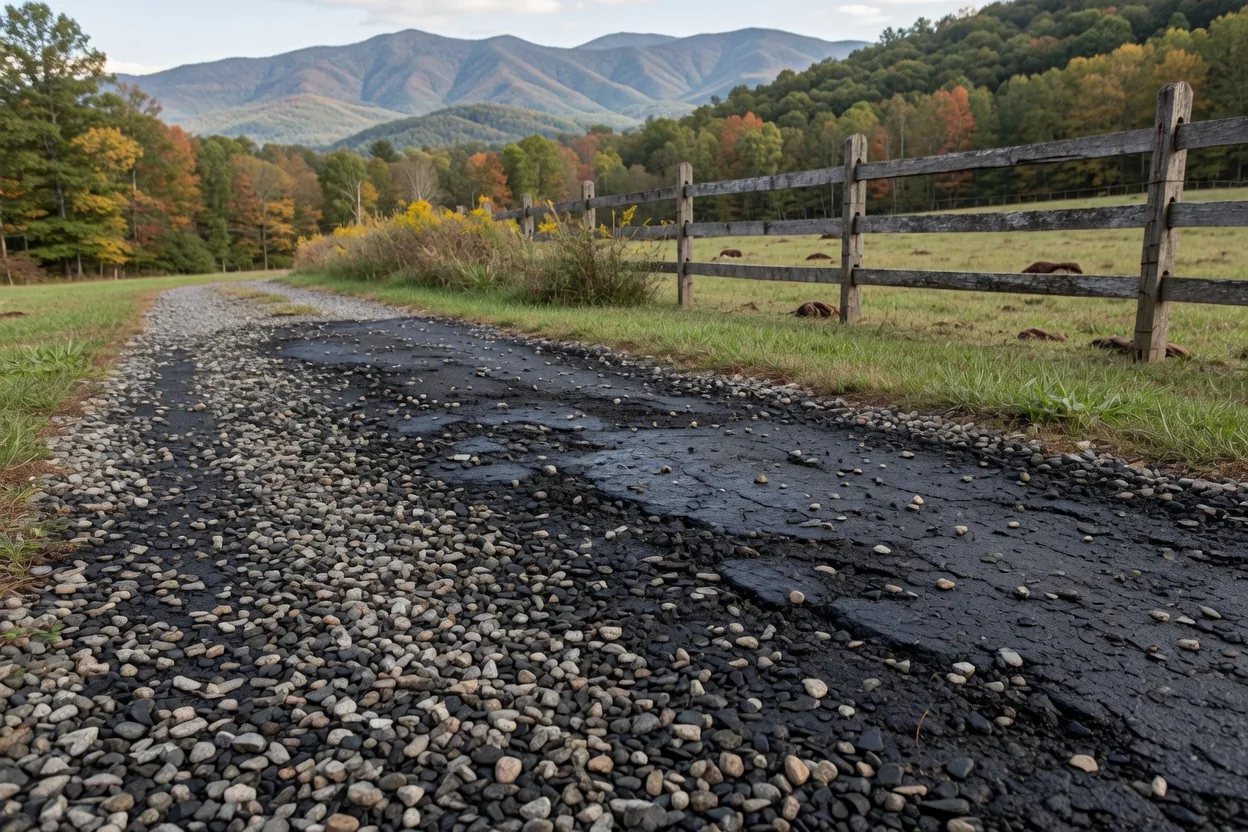
The honest threshold: if alligator cracking — the interconnected, web-like pattern that signals base failure rather than surface oxidation — covers more than roughly 25-35% of the driveway, resurfacing is borrowing time rather than buying it. Alligator cracking on a Buncombe County driveway almost always traces back to one of three causes: a base that was undersized for the clay-heavy mountain soils, drainage that was never corrected at installation, or a grade or culvert issue that silently concentrated water beneath the pavement over years. A new surface layer over any of those conditions produces the same failure pattern on a shorter timeline.
For homes where the material choice itself is genuinely in question — particularly steep-grade lots where winter deicers are used regularly — the asphalt vs. concrete comparison covers how the Buncombe County climate and terrain affect that decision specifically.
What Work Triggers a Permit in Buncombe County
Most driveway maintenance — sealing, crack filling, resurfacing an existing footprint — doesn't require a permit. New connections to public roads, and any work that substantially alters where a driveway meets a roadway, do. North Carolina's Department of Transportation requires a driveway permit for new or substantially changed access points onto state-maintained roads; applications are submitted through NCDOT Connect and cover sight-distance geometry, alignment, and drainage design. In Asheville city limits, access work connecting to city-maintained streets runs through the City of Asheville Engineering Department instead of NCDOT.
| Work | Permit Required? |
|---|---|
| New driveway connecting to a state-maintained road | Yes — NCDOT driveway permit via NCDOT Connect |
| New driveway connecting to an Asheville city street | Yes — City of Asheville Engineering Department |
| Resurfacing existing driveway, no change to access point or width | Generally no |
| Widening an existing driveway at the road connection | Likely yes — confirm with NCDOT or city before starting |
| Significant grading or drainage work on a sloped lot | Land-disturbance permit may apply — check with Buncombe County |
The paving contractor should pull the permit — a company that regularly works Buncombe County roads handles these applications routinely. A contractor who pushes to skip it to save time is worth scrutinizing: the permit documents the access geometry and drainage design, and that documentation protects the homeowner if questions arise later.