Elevation is the first line on every repair scope
Henderson County sits on the eastern escarpment of the Blue Ridge at an elevation that most NC towns never reach, and that elevation writes itself into every asphalt repair scope. The county seat clears 2,100 feet, and the orchard ridges above Kanuga Road climb higher still. That altitude means meaningfully more sub-freezing nights per year than the NC Piedmont, and those extra freeze-thaw cycles are the primary driver of driveway failure here. Water enters a hairline crack, freezes overnight, expands, and forces the crack wider. Repeat that across thirty or forty winter nights and a sealed-looking surface in October becomes a field of potholes by April.
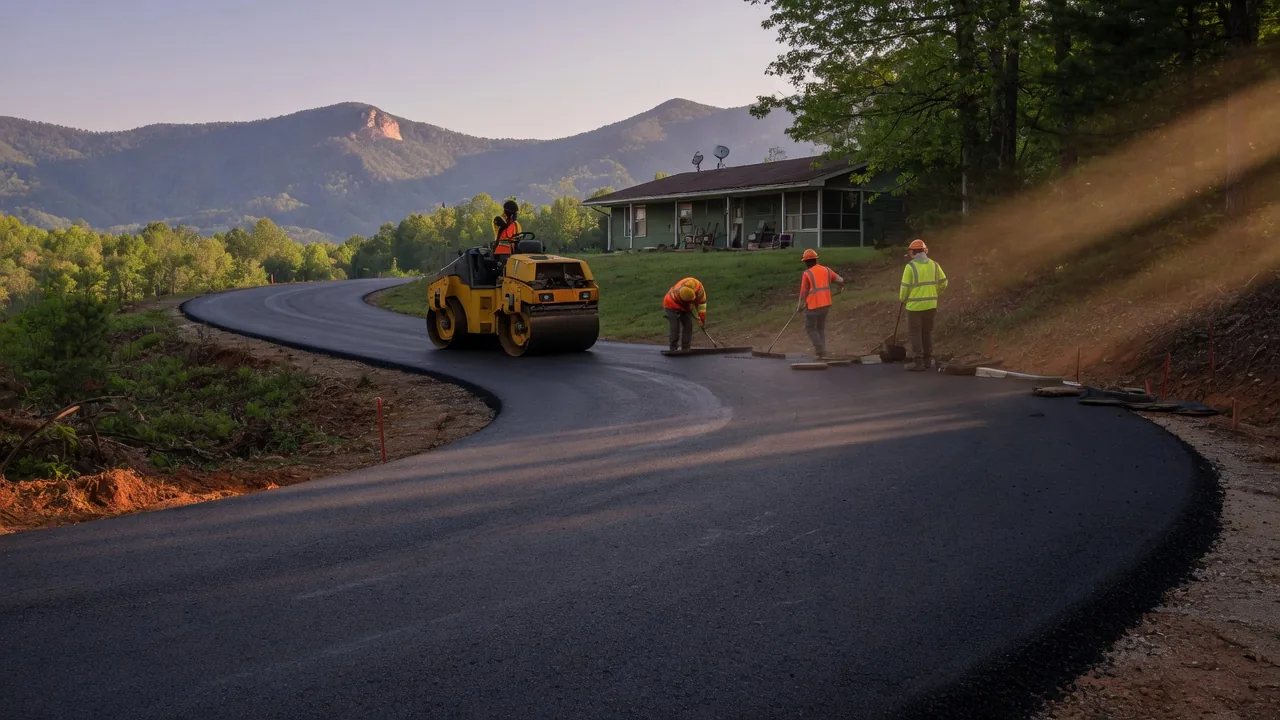
Older neighborhoods near downtown — the flat historic streets, established subdivisions in Laurel Park — sit on aging asphalt that has absorbed years of that cycling. Newer development on the ridges carries a different problem: steep grades that shed runoff fast but concentrate it at the apron edge and sub-base margins. The repair logic differs for each, and the right scope starts with which situation you are in. For a full breakdown of what a proper assessment covers before any work begins, see the asphalt driveway repair overview.
Reading your driveway's failure pattern
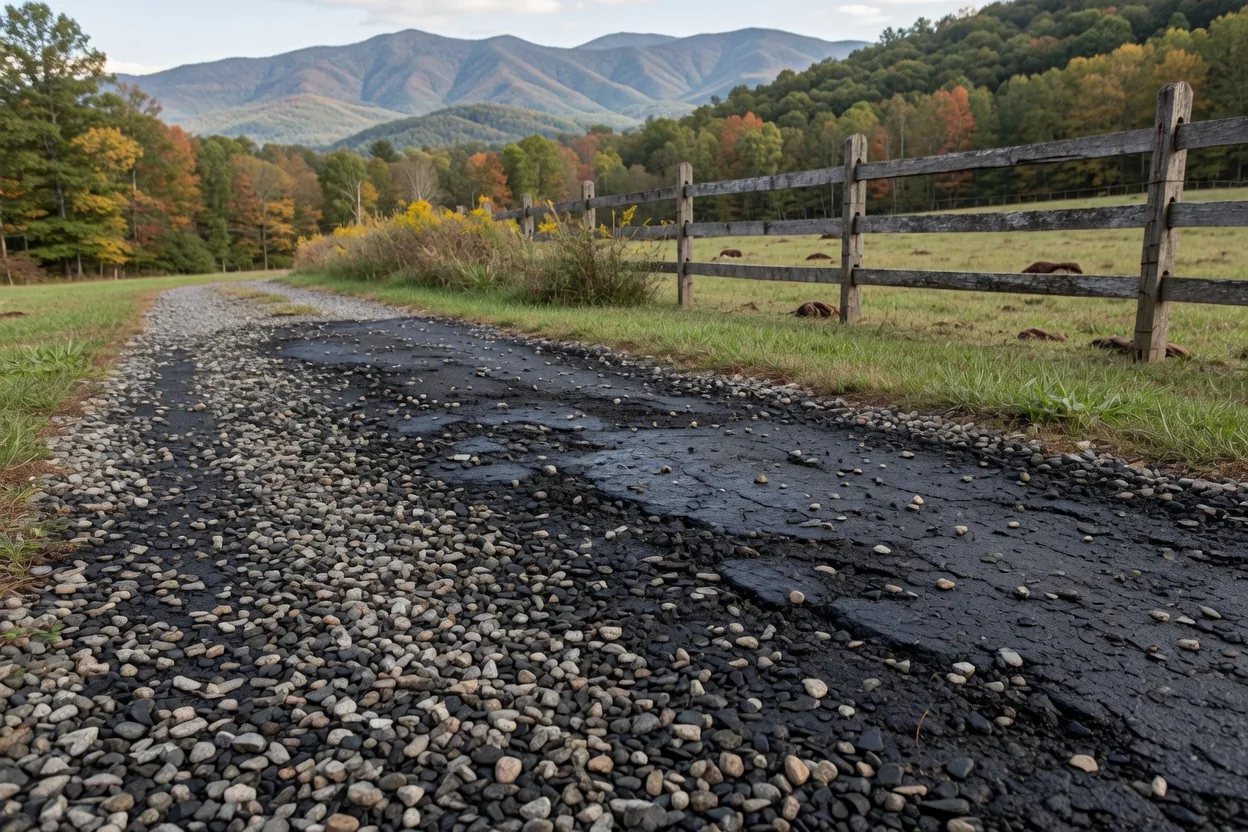
Not every crack points to the same repair. Alligator cracking — the interconnected web that looks like dry mud — almost always signals that the sub-base has taken on water and softened. Linear cracking down the centerline or along the edges is usually freeze-thaw or thermal expansion without sub-base involvement. A single pothole that opened after a hard winter is freeze-thaw at a weak spot in the surface layer.
The pattern tells you whether a patch will hold. A pothole over a solid sub-base can be filled and sealed and last several years. That same patch over a wet or failing sub-base returns the following spring regardless of what fills it. Asphalt driveway cracking covers each failure type in detail, including how to distinguish a surface problem from a base problem. If cracking spans more than a third of your driveway, a sub-base assessment belongs in any quote you take seriously — and driveway potholes addresses the repairs that go beyond a straightforward patch.
What repairs cost in Henderson County
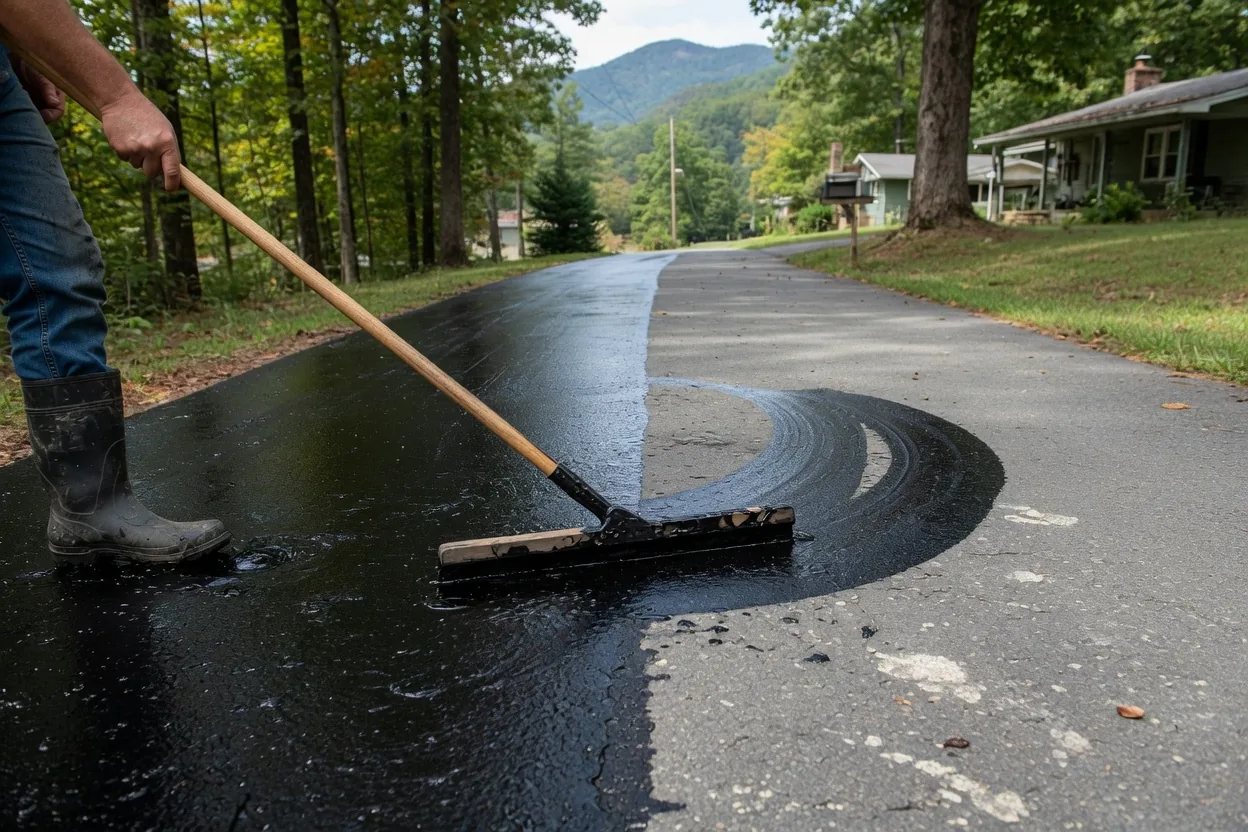
Most residential asphalt repair jobs in Henderson County land between $300 and $4,500. Slope, sub-base condition, and total square footage are the three variables that move the number most. A quote given over the phone without a sub-base assessment is pricing surface appearance, not the actual repair.
| Repair Type | Typical Scope | Price Range |
|---|---|---|
| Crack filling | Hairline to 1-inch cracks, routed and sealed | $250–$450 |
| Pothole repair | One to several potholes, hot- or cold-patch material | $300–$700 |
| Edge and apron repair | Crumbling shoulder or road transition, up to 30 linear feet | $350–$800 |
| Section replacement | 50–200 sq ft of failed surface on stable base | $500–$1,800 |
| Full driveway overlay | New surface layer over sound existing base | $1,500–$3,500 |
| Full repave with base work | Sub-base repair plus new asphalt surface | $2,500–$4,500 |
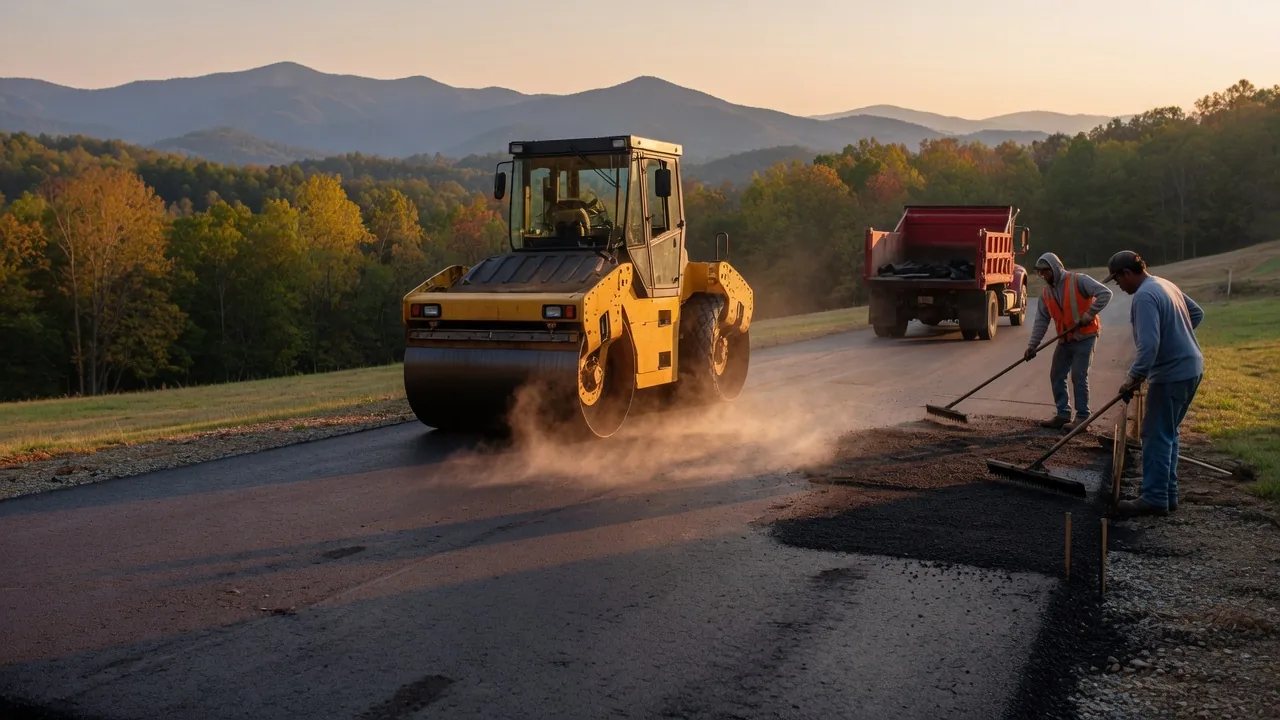
Jobs on sloped driveways — common in the ridge neighborhoods above Hendersonville — often require additional base prep steps that flatland quotes never include. Verify that any estimate accounts for your actual grade before you compare numbers across contractors.
Storm water and the sub-base problem
Henderson County has 16 federal disaster declarations on record spanning 1978-2026, most from storm and flood events that pushed heavy water through mountain creek drainages and across ridge-top properties. That history matters for asphalt because surface water that has nowhere to go finds the path of least resistance — typically the edge of a driveway and then under it. The National Weather Service issues flood watches specific to Henderson County drainages; a watch for your part of the county is a practical prompt to walk your driveway afterward and flag anything that appeared or widened.
Drainage is upstream of asphalt in every repair sequence. A well-patched surface over a saturated sub-base is a short-term repair. Any scope addressing a recurring pothole or a section that keeps cracking should answer the water question first — grading, edge drainage, and where uphill runoff goes — before any asphalt work is scheduled.
When a driveway permit is required
Repairs entirely on private property generally do not require a permit. The exception is any work that extends to the road apron or into the NCDOT right-of-way — repaving or regrading the transition from your driveway to the roadway, for example. Work in that zone requires a driveway permit filed through NCDOT Connect before cutting or paving begins. For roads maintained by Henderson County rather than the state, the county public works office can confirm whether a separate local approval applies.
The permit question takes one phone call to answer and prevents a stop-work order mid-project. Ask your contractor which authority maintains the road your driveway connects to before any apron work is scheduled.
Three questions that separate lasting repairs from fast quotes
Ask whether the crew has worked on sloped driveways in Henderson County — grade changes how base prep is staged and how compaction is performed, and a flat-lot process on a hillside driveway shows quickly in how the edges fail. Ask how they assess sub-base condition before finalizing a price — a contractor who quotes over the phone without checking the base is pricing surface appearance, not the repair. Ask what their plan is for water: does the scope include grading corrections or edge drainage, or does it simply lay new asphalt over the existing grade? That answer tells you whether you are buying a lasting fix or a delay until next spring.