Long drives on the eastern Blue Ridge
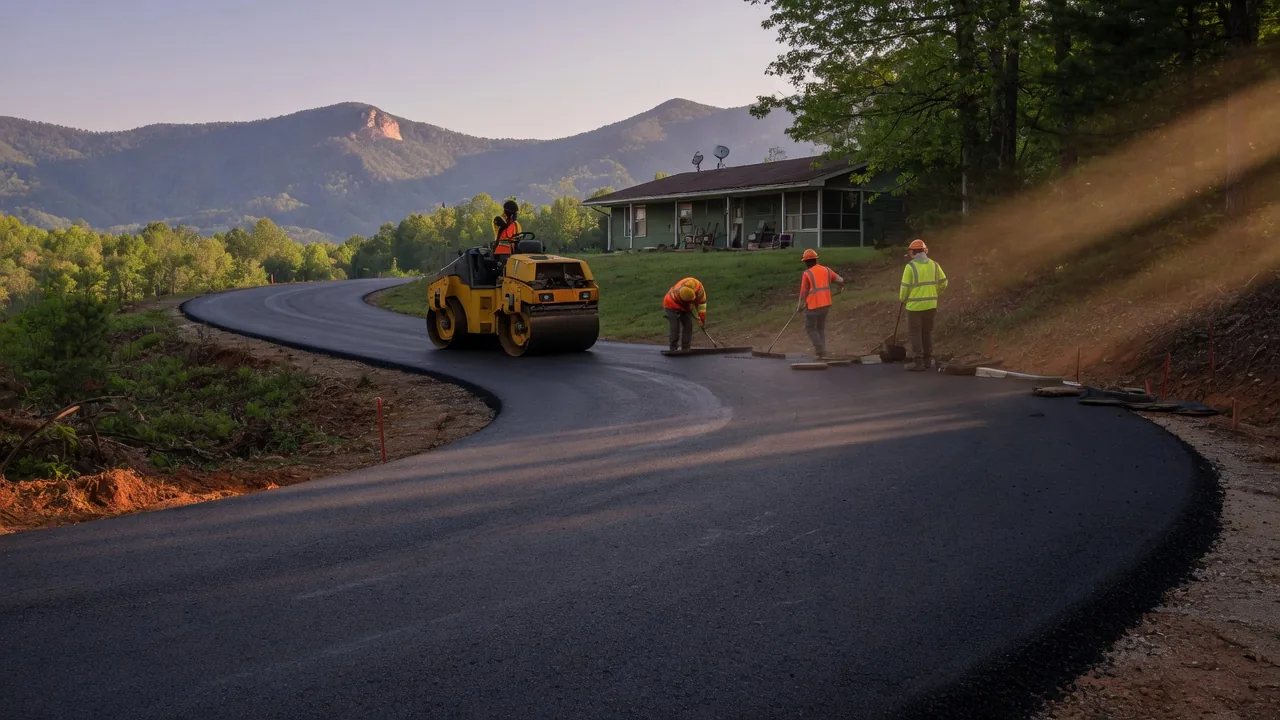
Fairview is not a grid of subdivision streets. The community runs along the eastern flank of the Blue Ridge, east of Asheville on US 74A, where residential properties typically span an acre or more and driveways follow the lay of the land — curving around rock outcroppings, descending a hillside, sometimes switching back to reach a garage set into the slope. The median tar and chip job here is a 300- to 500-foot approach on ground that pitches several degrees at minimum, usually more, with a gravel base that has been graded and topped through many rain seasons.
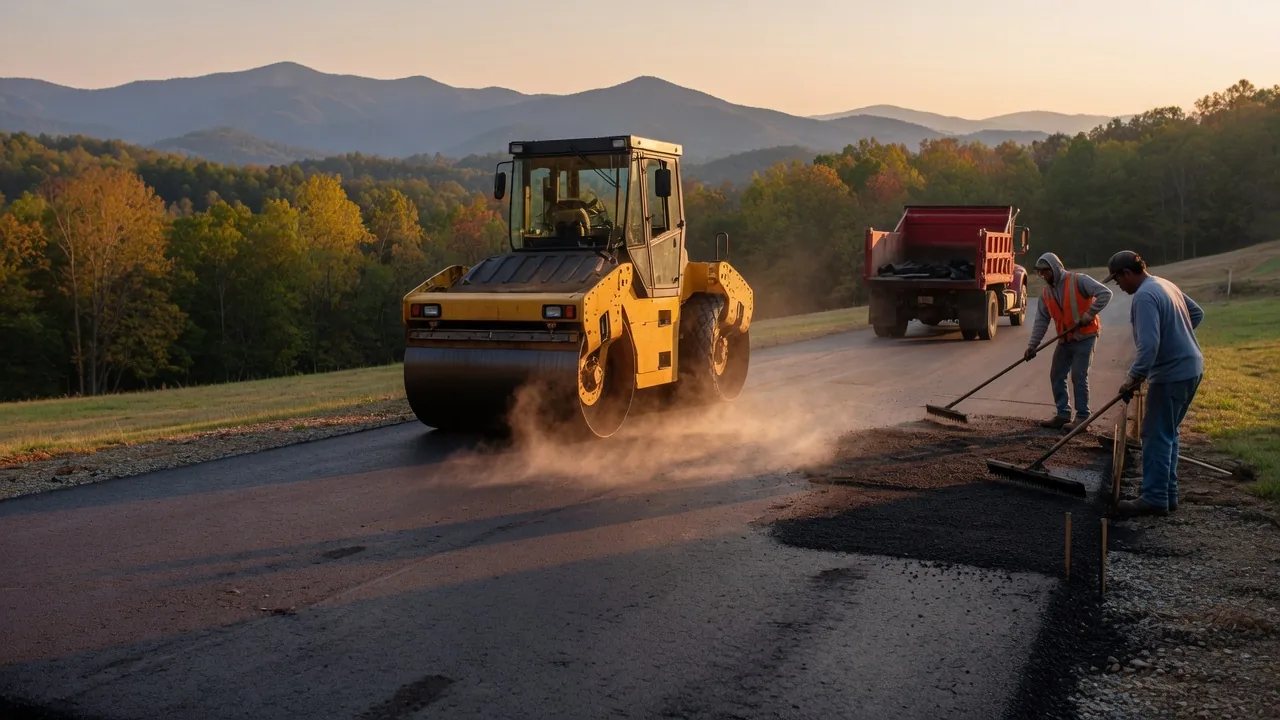
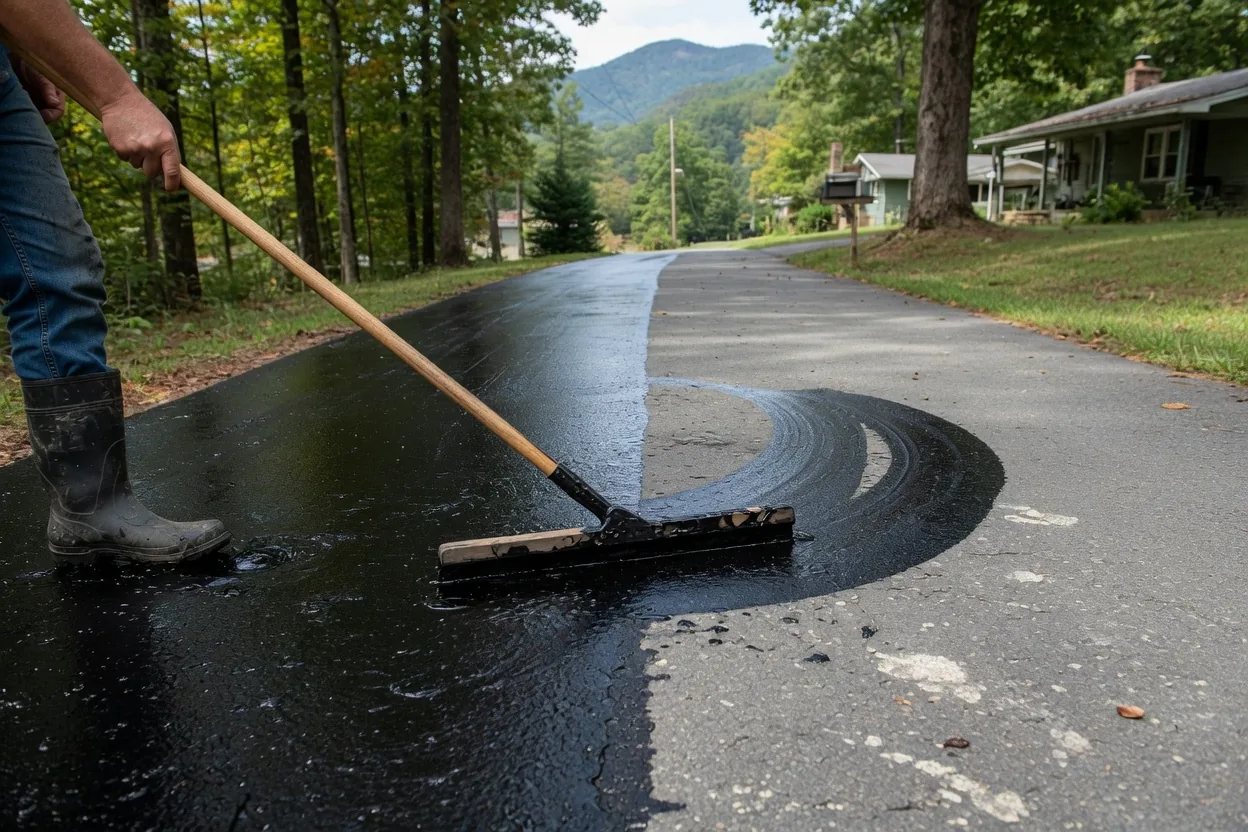
That length and grade are the defining facts of Fairview tar and chip work — not a ninety-foot suburban apron. They also shape the material choice: the aggregate surface grips tires on grades where smooth asphalt becomes slick in wet weather, and the open texture lets surface water sheet off the crown rather than sit and plane. Tar and chip was common on rural North Carolina roads before the state paved them, and it remains the surface that handles mountain terrain most honestly. For a full explanation of how the material is applied and what the finished surface handles over time, see the tar and chip driveways overview.
Slope and water before the first pass of binder
A flat driveway is a paving project. A sloped Fairview driveway is a drainage project that ends in paving. Before the first pass of liquid asphalt binder, the slope has to direct water somewhere defined — into a roadside swale, through a culvert, or over a stabilized grass edge that will not erode under concentrated runoff. Skip that step and the surface becomes a water management problem that happens to carry vehicles, and it shows that neglect after the first heavy storm.
Buncombe County's storm record frames the stakes. The 19 federal disaster declarations on record for this county (1973-2026) are weighted heavily toward storm and flood events. The National Weather Service data for the Asheville area documents the sustained rainfall patterns that stress any paved surface on sloped ground. A well-drained driveway protects both the chip layer and the compacted base beneath it. Drainage is not an optional upgrade on Fairview terrain — it is the baseline for durable paving.
What a Fairview quote actually covers
A quote for tar and chip in Fairview should itemize at least four things: surface preparation and base grading, the binder application, the chip spread and roll, and any drainage work the job requires. A bid listing only a per-square-foot surface rate on a sloped rural approach describes the material without accounting for the rest of the scope. Use the full cost breakdown to understand how each line item is priced before comparing bids.
The table below gives installed price ranges by project scope. Fairview driveways skew toward the longer rows.
| Scope | Approx. size | Installed price range |
|---|---|---|
| Short flat approach | ~400 sq ft | $1,400 – $2,600 |
| Mid-length, moderate grade | ~800 sq ft | $2,800 – $5,200 |
| Standard rural driveway, base ready | ~1,000 sq ft | $3,500 – $6,500 |
| Long rural approach | ~1,500 sq ft | $5,250 – $9,750 |
Drainage preparation and base rehabilitation are separate line items and are not included in the per-square-foot surface rate shown above.
Converting from gravel — the base question first
A large share of Fairview properties come to the paving conversation with an existing gravel driveway that has been regraded and topped for years. Tar and chip over a well-settled, properly crowned gravel base is a durable upgrade; the same surface over a soft, rutted, or poorly drained base fails within a winter or two as freeze-thaw cycles work under the chip layer and heave the edges loose. The pre-paving evaluation has to answer three questions: does the base bear load uniformly, does it crown toward the edges so water sheds, and is there any subsurface drainage issue that will reappear from below the new surface.
If the gravel needs significant work before a surface coat goes down, the gravel-to-asphalt conversion guide covers what base rehabilitation involves — the criteria and repair approaches are identical whether the finished surface will be tar and chip or full-depth asphalt. Get that answer before the surface quote, not after.
Stone chip, surface character, and service life
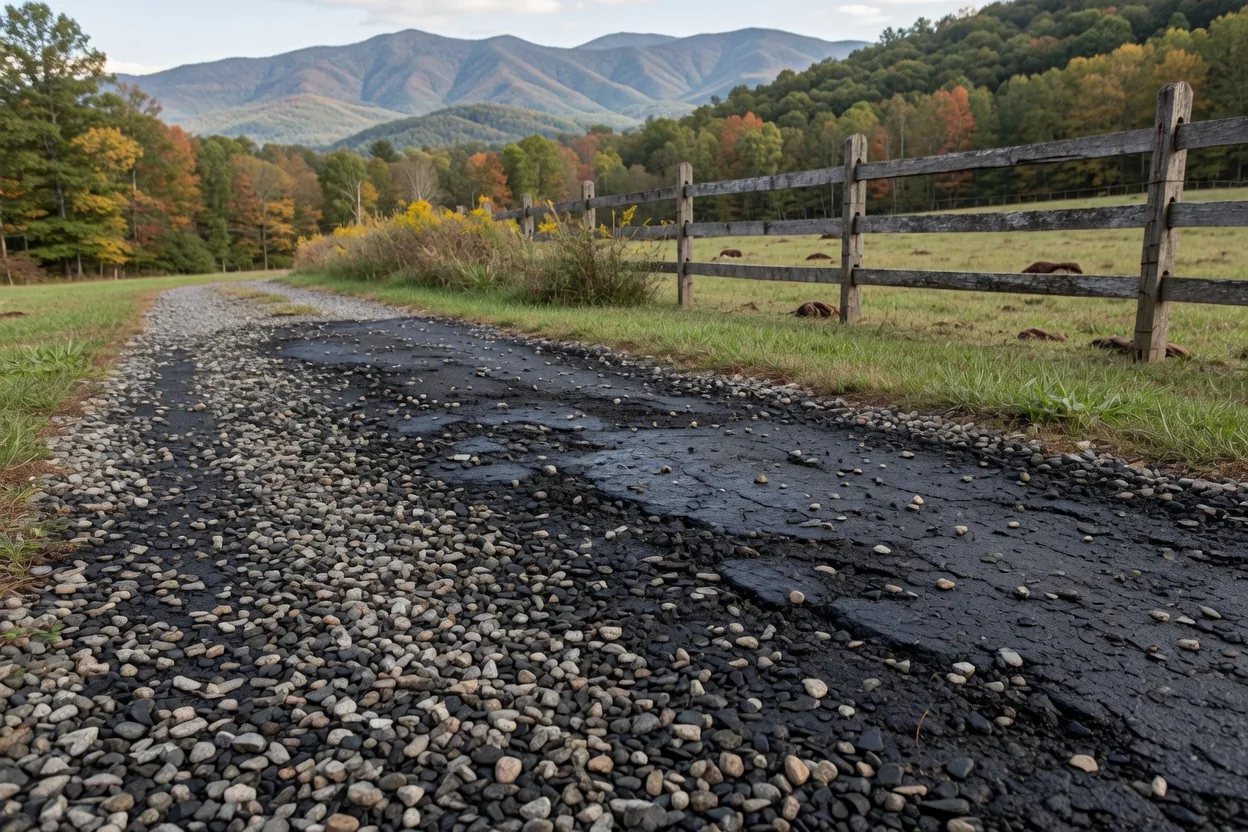
The chip layer is where the surface gets its color, texture, and traction. Chip size runs from a fine 3/8-inch stone to a coarser 5/8-inch or 3/4-inch, and the choice affects grip, surface noise, and the visual character of the finished driveway. Lighter-colored stone reads naturally against the wooded backdrop common on eastern Buncombe County properties; darker chips absorb more heat, which accelerates tar softening in summer and can cause chip loss on south-facing grades during a sustained hot spell.
Single-chip and double-chip applications both exist. A double-chip surface — two passes of binder and aggregate — produces a denser, more durable result and is worth the added cost on any driveway that carries regular traffic or sits on a grade steeper than roughly five percent. Ask your installer to specify which application they are quoting; the two carry meaningfully different service lives on mountain terrain.
The permit question at the road connection
Any new driveway apron connecting to a state-maintained road requires a driveway encroachment permit from NCDOT before work begins. The permit governs the apron geometry, the culvert sized for drainage under the entrance, and the angle at which the driveway meets the road shoulder. Applications go through NCDOT Connect. An installer who proposes to start work without confirming permit status is passing a compliance risk to the property owner, not absorbing it themselves.
For work entirely behind the right-of-way line — a long private approach connecting to an existing permitted apron — state contractor licensing thresholds apply once a job crosses certain dollar amounts. The NC Department of Transportation governs the road-connection piece; state licensing rules address contractor credentials for the private-property scope. Ask your installer which requirements apply to your specific job and confirm they are current before signing a contract.
Two public sources worth a look before any driveway work: the NC Department of Transportation sets the rules for driveways that connect to state-maintained roads, and the NC Department of Environmental Quality covers how runoff from paved and graded ground is supposed to be handled.