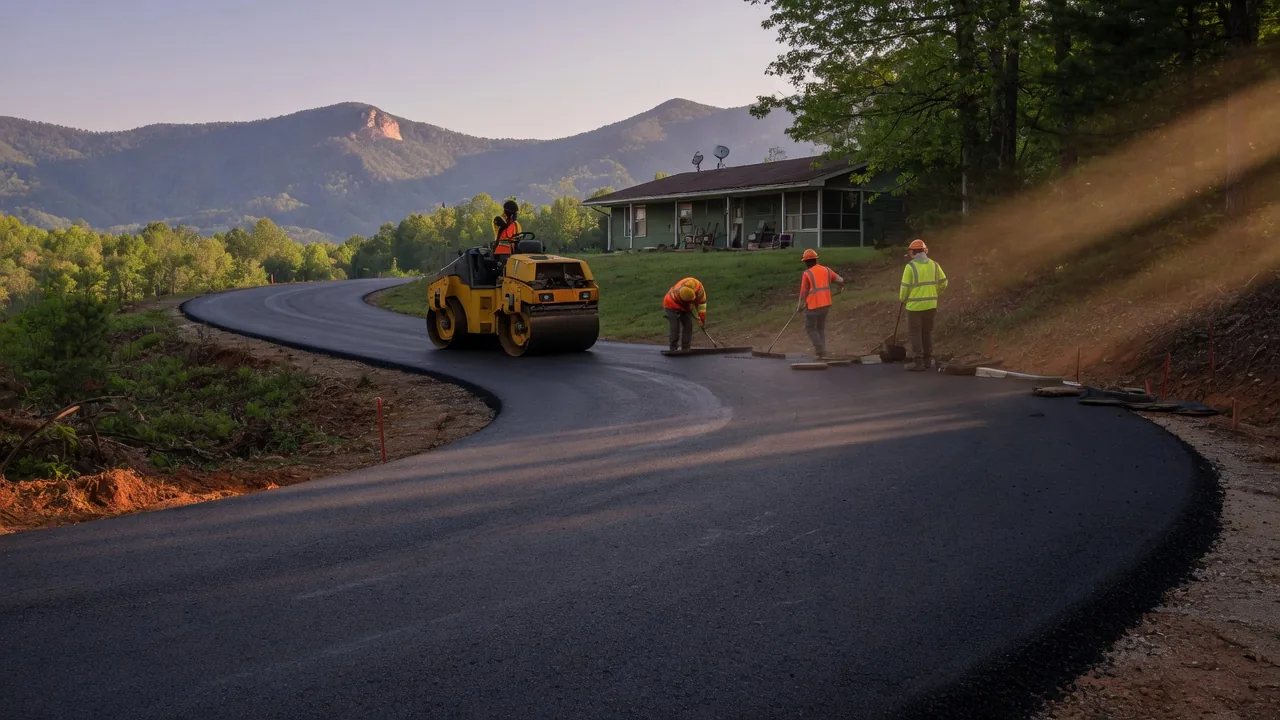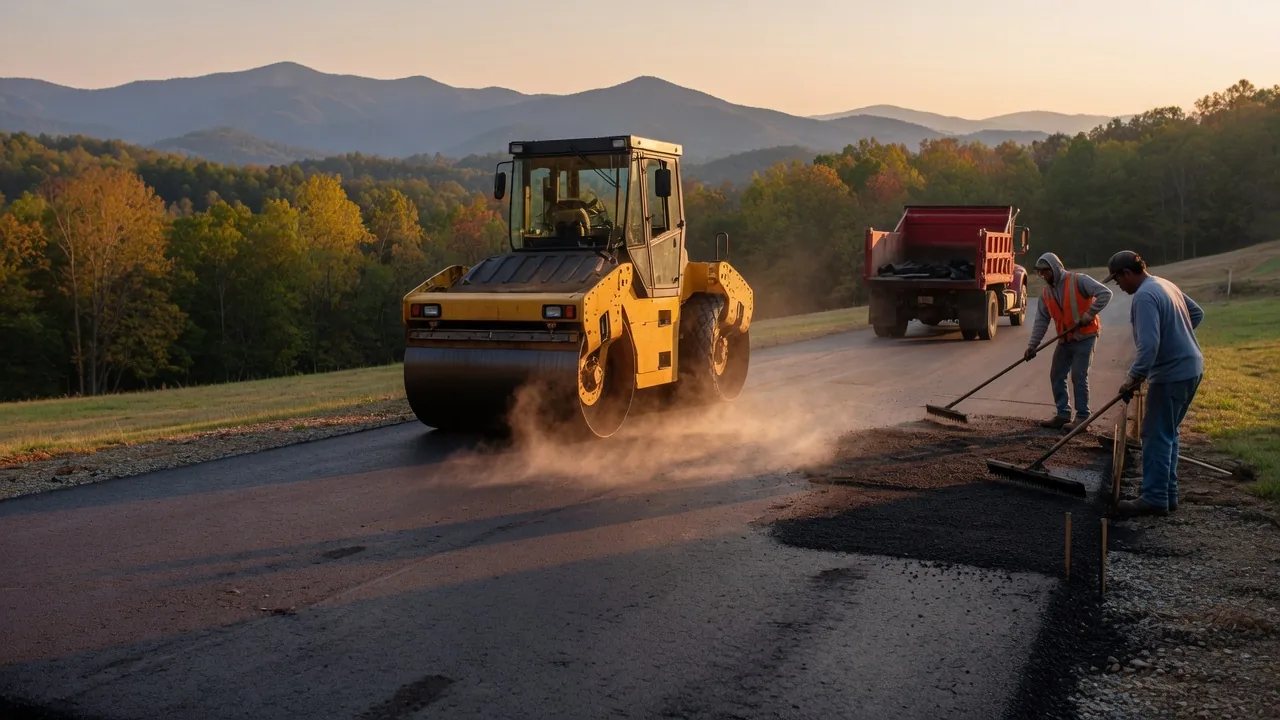
The permit step most Candler quotes skip
Candler sits in the western arm of Buncombe County, where the mountains open into rolling foothills along the I-26 corridor. It is unincorporated territory — no city inspector, no municipal permit office — and that single fact changes the opening question on every paving job: the road your driveway connects to is almost certainly maintained by the NC Department of Transportation, which means a driveway encroachment permit comes before the first load of base aggregate arrives on site.
Applications go through NCDOT Connect before any grading starts. The permit sets drainage apron dimensions, sight-line requirements, and stormwater routing specifications the paving crew is required to match. Contractors who work mostly inside Asheville city limits sometimes treat this step as optional because city roads run under a different process. In Candler, it is a prerequisite, and a bid that does not mention permit coordination is a bid that may stop mid-job when the state inspector arrives.
That permit step also pulls drainage onto the table early, which is exactly where it belongs. The right apron drainage plan shapes grading decisions twenty feet back into the lot. A crew that sequences permit, then drainage, then base, then asphalt is doing the job in the right order — one that produces a driveway that holds up rather than one that looks finished on day one and cracks by spring.
What the clay under Candler does to asphalt
Most Candler lots sit on red-clay subsoil that behaves predictably badly under a driveway. It shrinks and fissures in a dry summer, swells and softens after sustained rain, and cycles through those states with every season. That movement is what opens edge cracks, loosens aggregate at the margins, and turns a small surface defect into a structural failure faster than traffic ever could.
Buncombe County's storm history makes the drainage challenge concrete: the county carries 19 federal disaster declarations on record spanning 1973-2026, the majority tied to flooding and severe weather. Each event pushed elevated runoff at driveways built to a drainage assumption that was already marginal on clay. The National Weather Service continues to show above-average precipitation exposure for western Buncombe, and Candler's lower-elevation position in the county puts it in the path of that runoff before it reaches the French Broad valley.
The structural answer is a geotextile fabric layer, lime stabilization for saturated clay, or crushed aggregate deep enough to isolate the pavement from subgrade movement. Four inches of compacted gravel is the floor for this area; six is more honest for long lanes or sites with poor natural drainage. A quote that arrives without a base specification is pricing a different driveway than the one you intend to own for the next twenty years.
What Candler paving jobs cost
Candler driveways span a wide range because the parcels do. A newer subdivision lot might need 900 square feet of flat apron; an older rural property might have several hundred feet of gravel lane that has never been paved. The table below covers common residential scopes; the full breakdown with region-level comparables lives at the Buncombe County driveway cost guide.
| Scope | Typical size | Price range |
|---|---|---|
| New single-car driveway, flat grade, prepared base | 900–1,100 sq ft | $3,600–$8,800 |
| New double-wide driveway, flat grade | 1,200–1,600 sq ft | $4,800–$12,000 |
| Long rural lane, full base prep | 1,500–2,000 sq ft | $6,000–$12,000 |
| Clay subgrade stabilization add-on | varies | +$0.75–$1.75 per sq ft |
| Steep-grade surcharge | varies | +$0.75–$1.50 per sq ft |
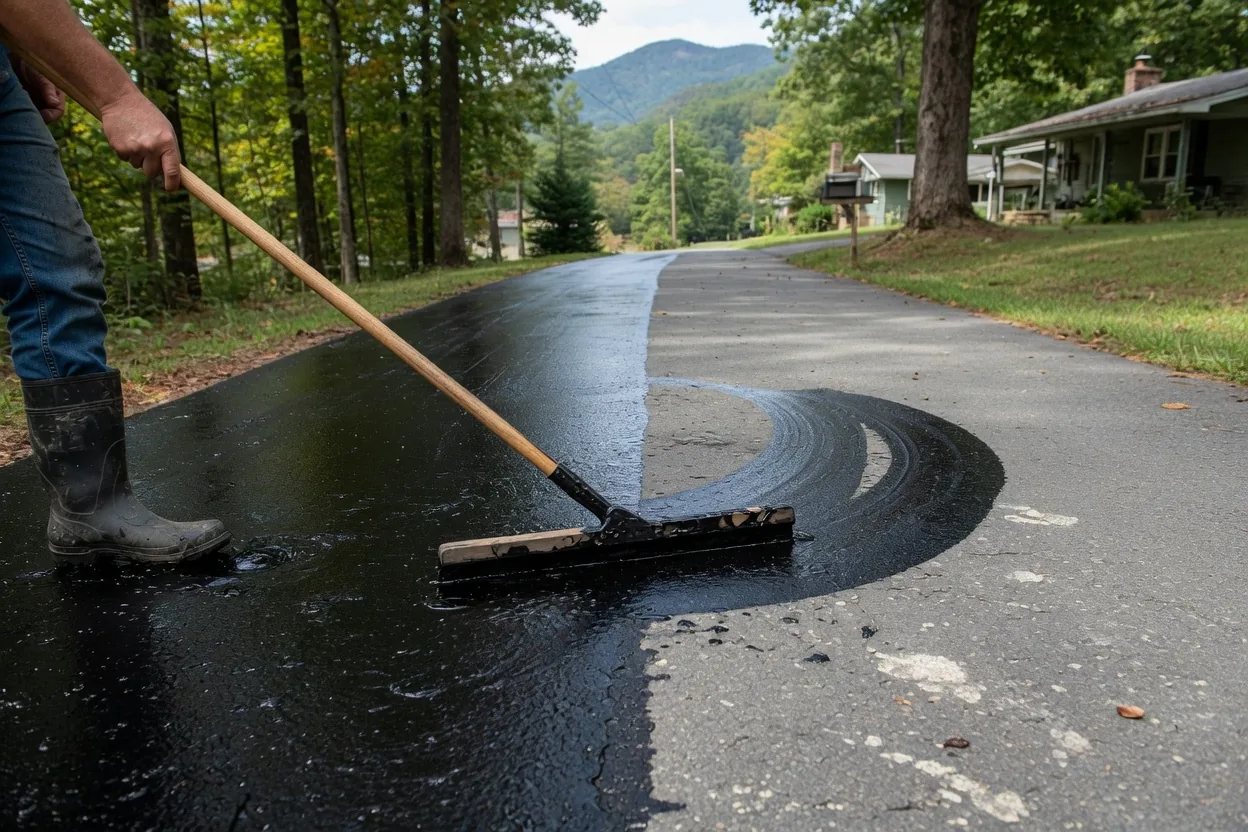
| Seal coat (maintenance only, not new install) | per sq ft | $0.20–$0.40 per sq ft |
When two quotes differ by $2,000, the gap is almost always in the base specification, not the asphalt layer. Ask each bidder for gravel depth, compaction method, and drainage plan in writing, then compare those numbers before you compare the totals.
Why long gravel lanes in Candler are getting paved now
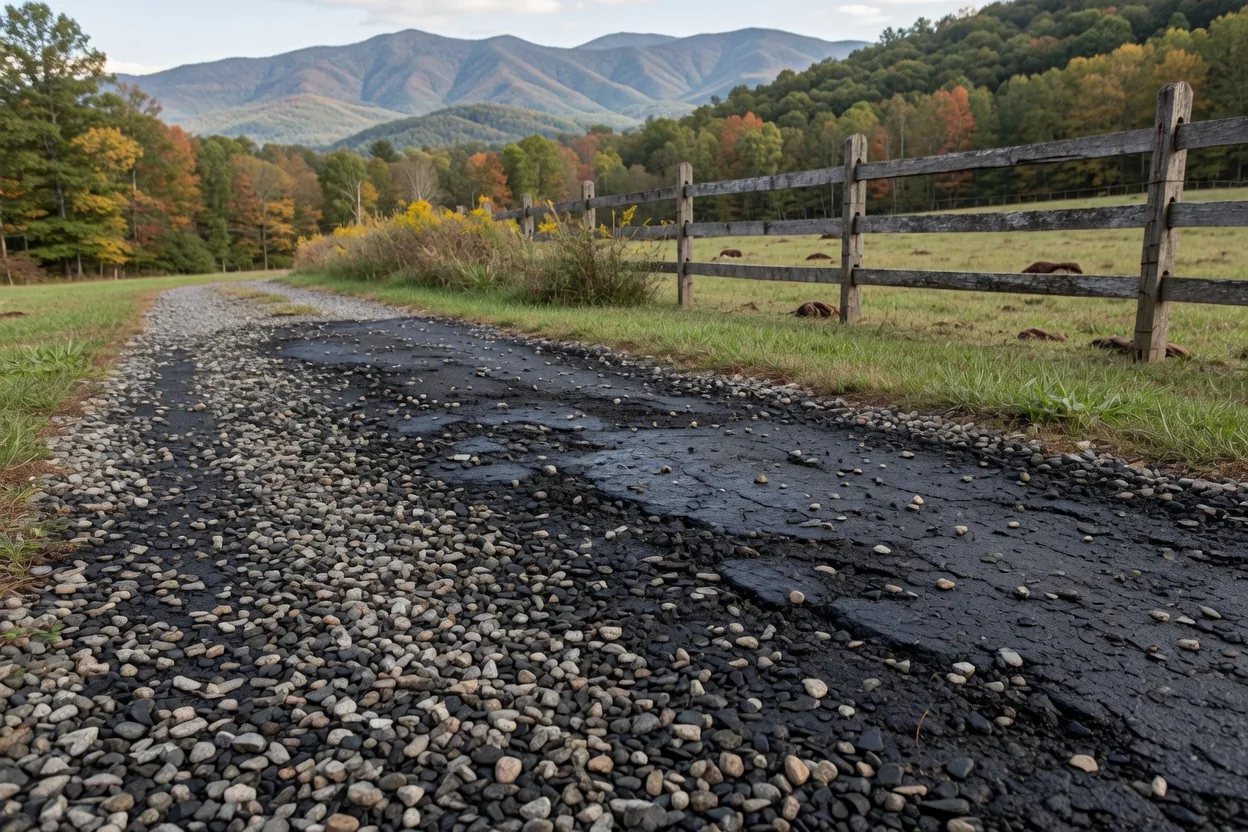
Unpaved lanes are part of Candler's rural character, and many older properties still run on packed gravel that worked fine when the surrounding area was farmland. As the corridor has filled in, those lanes have become a maintenance burden: loose gravel tracks onto NCDOT-maintained roads with every hard rain, creating a road-surface hazard that draws state attention. Gravel tracking on state-road frontages in unincorporated Buncombe is taken seriously, and long-term it creates more friction with NCDOT than the cost of paving does.
Converting an existing gravel lane to asphalt still requires the NCDOT encroachment permit process even when the physical footprint does not change. The drainage specification has to be re-evaluated regardless of how long the lane has been where it is. The gravel-to-asphalt conversion guide covers base evaluation, how to judge whether your existing gravel layer can carry part of the new base structure, and how total job cost compares to paving on raw ground. The full paving process overview walks every phase from site visit through final compaction roll.
What separates a complete bid from an incomplete one here
Western Buncombe paving work has a short busy season and crews that fill quickly. Jobs that begin with a site visit, a written scope, and a permit discussion are completed on schedule. Jobs that begin with a phone quote and a handshake tend to pause when subgrade surprises emerge or when the permit question surfaces mid-project. Three things worth confirming before any crew starts: whether they have run NCDOT driveway permits in Buncombe County before, what their standard base depth and compaction specification is, and how they plan to handle drainage at the road apron transition.
For residential paving work of this size, contractor insurance and bonding verification is a reasonable step. The NC Department of Insurance maintains contractor bonding and insurance records any homeowner can check. A cash-and-carry operation that cannot be reached after asphalt settles badly in its first spring is the main avoidable risk on a job of this scale — a business address and a certificate of insurance are the two documents that separate a contractor from a crew with a paver.