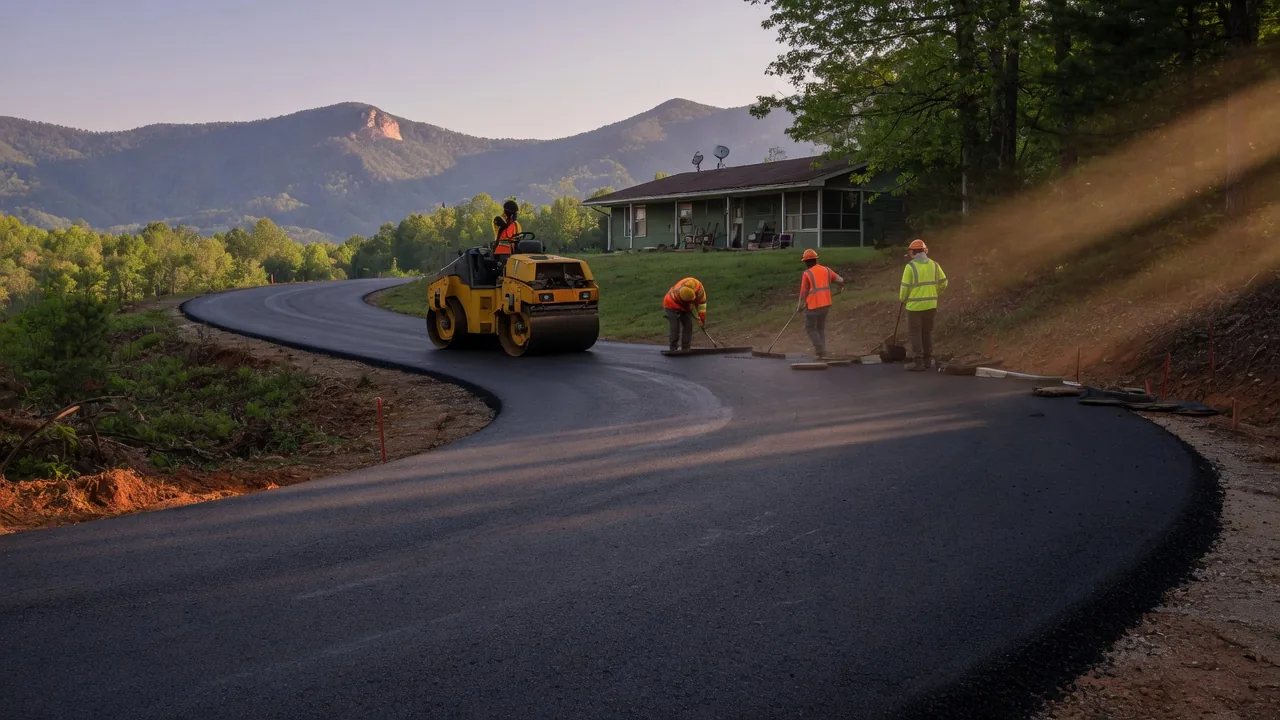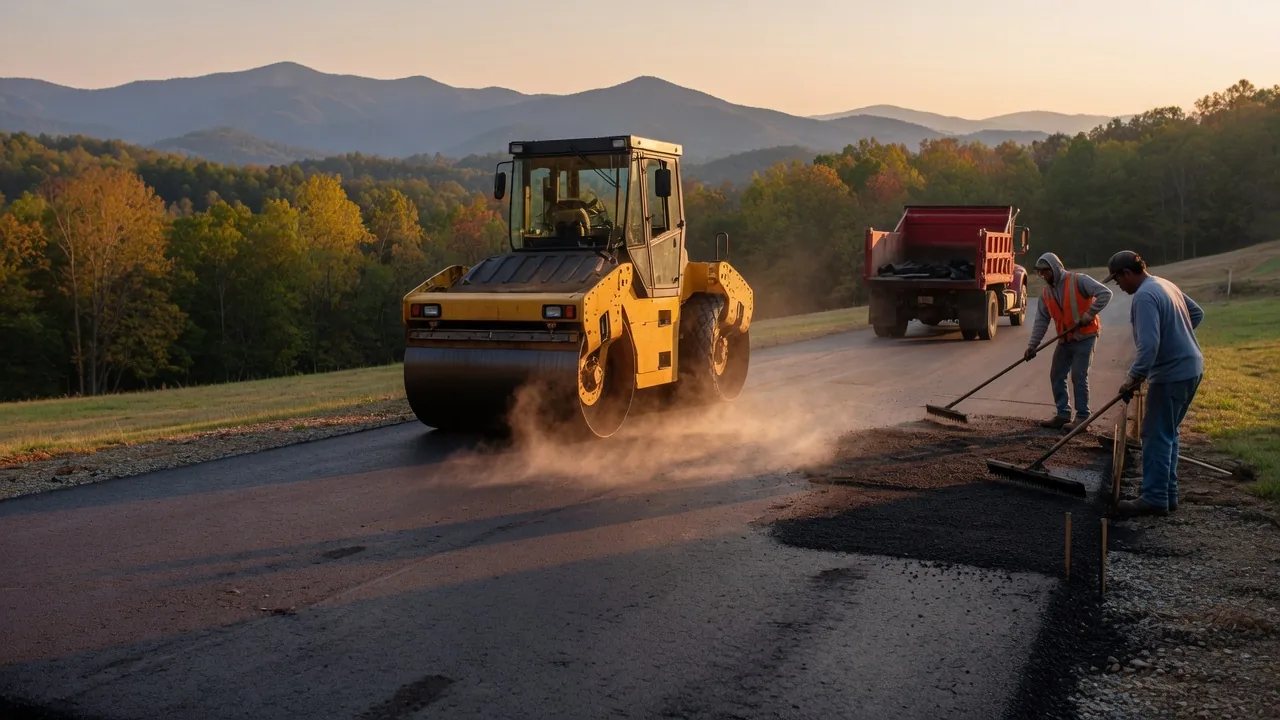
In the mountains, drainage isn't a detail — it's the job
Asheville sits at roughly 2,100 feet in the Blue Ridge Mountains, and a commercial lot in Buncombe County can intercept runoff from uphill properties, hillside grades, and adjacent rooftops before a single tire rolls across it. That's a different engineering problem than a flat-lot spec handles — and it's the first question a contractor who knows this terrain asks before quoting.
Buncombe County's combination of steep topography, clay-heavy soils, and year-round precipitation creates conditions where subgrade water is the primary failure mechanism. The National Weather Service records for western NC show precipitation distributed across all seasons, not concentrated in a few summer events — which means saturated subgrades are a recurring condition, not a once-a-decade anomaly. Heaving edges, alligator cracking, and premature section failure in local lots almost always trace to water under the base, not to anything that happened at the surface.
With 19 federal disaster declarations documented for this region across 1973-2026, the connection between persistent storm moisture and infrastructure damage is well established. Any paving project that doesn't address how a specific site drains — before the first load of base stone arrives — is budgeting for early repairs before it's open for business.
What a complete parking lot build actually covers
A parking lot project in a hilly market like Asheville involves more scope than a flat-site quote typically reflects. Here's what an honest project covers:
- Subgrade assessment and regrading. Soft spots, organic material, and unstable fill get cut out. Grade gets established for positive drainage away from structures and toward designated collection points. Sloped sites require more engineered earthwork than flat ones — that cost is real and should appear as a line item.
- Compacted aggregate base. Base thickness and stone type are the most consequential variables in a lot's lifespan. Mountain lots on clay subgrade typically require more base depth than a spec written for coastal or Piedmont soils would call for.
- Binder and wearing course. Commercial parking lots benefit from a binder layer under the surface course — this gives the pavement load-bearing depth. Residential-spec asphalt thickness on a commercial lot is a maintenance problem waiting to happen.
- Drainage structures. Catch basins, curb cuts, and edge drains are part of the pavement system, not accessories. They go in during construction; retrofitting them into a finished lot costs more and works less well.
- Striping and ADA layout. Accessible space count is not discretionary — it scales with total lot capacity under federal standards. Van-accessible space dimensions, aisle widths, and signage are fixed minimums regardless of lot age or whether this is new construction or a renovation.
A lot paving project connects directly to your adjacent surfaces: the asphalt paving that serves drives, approaches, and service areas shares drainage infrastructure with the lot and works best when designed as one system from the start.
What it costs and what drives the number
Per-square-foot pricing for parking lot paving in western North Carolina runs $2.50–$7.50 installed, with the spread almost entirely explained by base condition and drainage complexity. Mountain grade and clay subgrade push jobs toward the higher end; a flat lot with a sound existing base sits closer to the floor.
| Scope | Typical Range |
|---|---|
| Overlay on sound, prepared base | $2.50–$3.50/sq ft |
| Mill-and-overlay (remove deteriorated surface) | $3.00–$4.50/sq ft |
| Full-depth reconstruction, standard grade | $4.50–$6.50/sq ft |
| Full-depth with engineered drainage, mountain grade | $5.50–$7.50/sq ft |
| Small lot (~10 spaces), complete build | $18,000–$45,000 |
Striping, ADA markings, and wheel stops are typically quoted as separate line items. Ranges reflect installed work in Buncombe County.
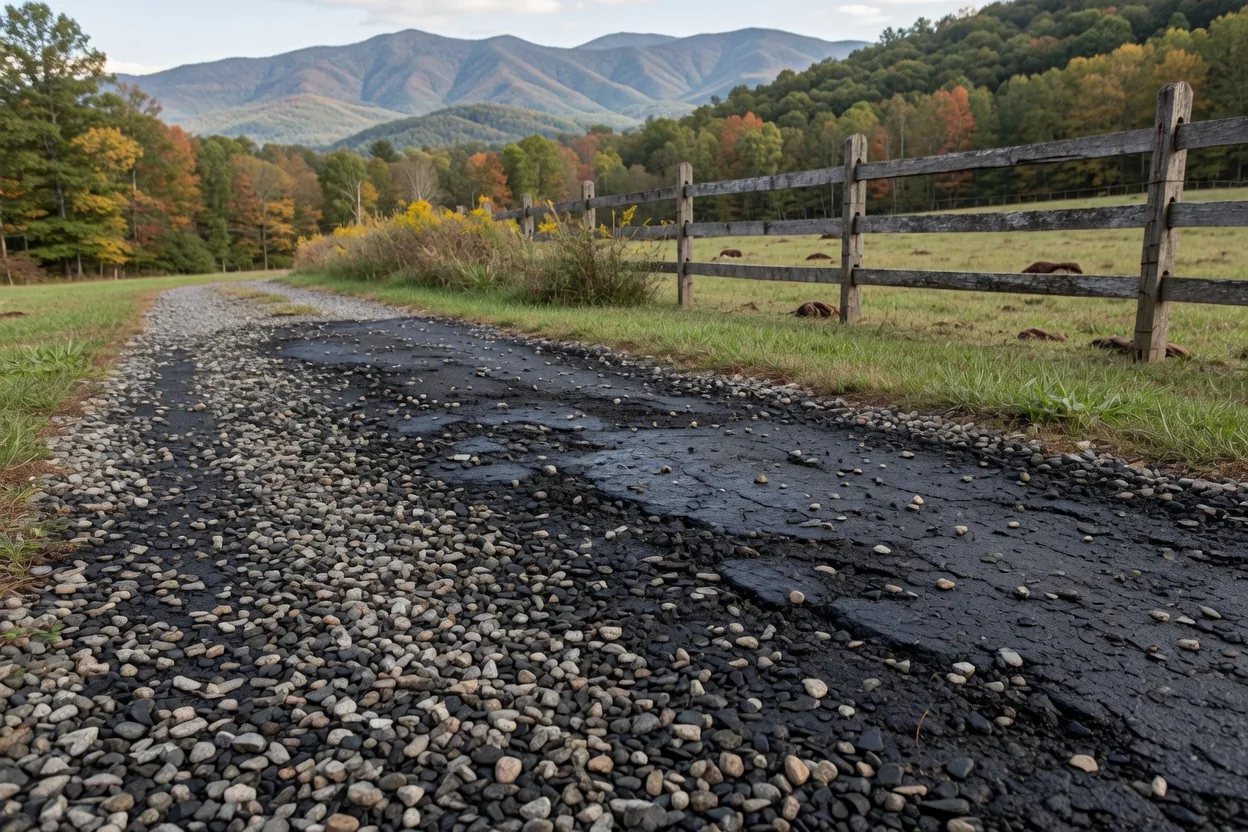
The biggest single cost driver is whether the existing base is reusable. Visible alligator cracking or section failure almost always signals compromised base material — overlaying a failed base puts new asphalt on an unstable foundation and reproduces the failure in a few years. Before accepting any contractor's assessment that the base is sound, ask for a core sample or probing report in writing.
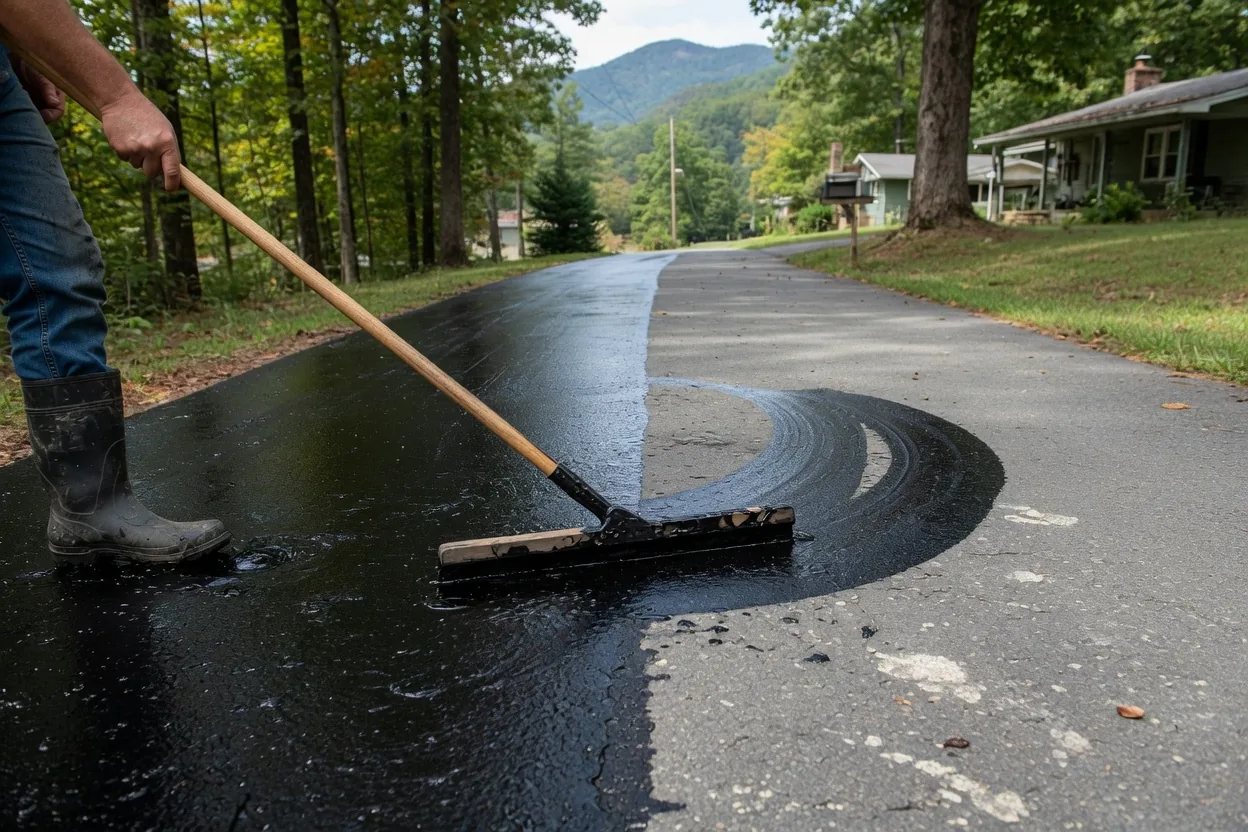
Lifecycle math matters here: a maintained lot outlasts an unmaintained one by a decade or more. Sealcoating on a 3–5 year schedule protects the surface from oxidation and water infiltration. When the surface has deteriorated but the base structure is sound, asphalt resurfacing is typically the right scope — it costs substantially less than full reconstruction and extends lot life if the underlying base supports it.
Permits, curb cuts, and what Asheville and NCDOT actually require
A new or expanded commercial parking lot in this area triggers permit requirements that are separate from the paving bid — and none of them come with the quote automatically.
If the lot connects to a state-maintained road, a driveway permit is required from NCDOT before construction begins. NCDOT Connect handles permit applications; the review evaluates sight distance, turning radius, and drainage impact on the state road. Starting construction without this permit can mean reconstructing the connection on your own dime after the fact.
For properties within Asheville city limits, the City of Asheville administers grading, drainage, and impervious surface requirements. New or significantly expanded impervious surface can trigger stormwater management review — a relevant threshold in a mountain watershed where downstream impacts are regulated. The city's development services office is the right first call before design begins, not after the bid is signed.
The NC Department of Transportation access management rules also govern how commercial driveways interact with traffic flow on collector and arterial roads — relevant if your lot redesign involves moving or widening an existing driveway cut. And ADA accessible parking requirements apply to new construction and substantial alterations: required counts, dimensions, and signage are federal minimums that a contractor cannot waive or defer to the owner.
One additional consideration for Buncombe County lots: grading permits and erosion control requirements apply to disturbed-area thresholds that commercial paving projects frequently meet. Confirm county or city requirements before breaking ground.