How Brevard's rainfall changes every driveway repair estimate
Transylvania County sits at the base of the Blue Ridge escarpment, where Gulf moisture climbs and stalls before it can clear the ridgeline. Brevard receives some of the highest annual rainfall totals in the eastern United States, and the surrounding Pisgah National Forest watershed amplifies runoff from every storm that moves through. For anyone pricing asphalt driveway repair brevard nc work, that rainfall pattern is the operating condition that changes every estimate and every decision about how to fix what is broken.
Water finds surface cracks and works in. In a climate where temperatures reliably drop below freezing on winter nights, that water expands, pries the crack wider, and lets more water in the following season. A fracture that was a quarter inch in October can become a two-inch gap by March. The repair window in Brevard is narrower than in most NC communities because the moisture loading between jobs is relentless.
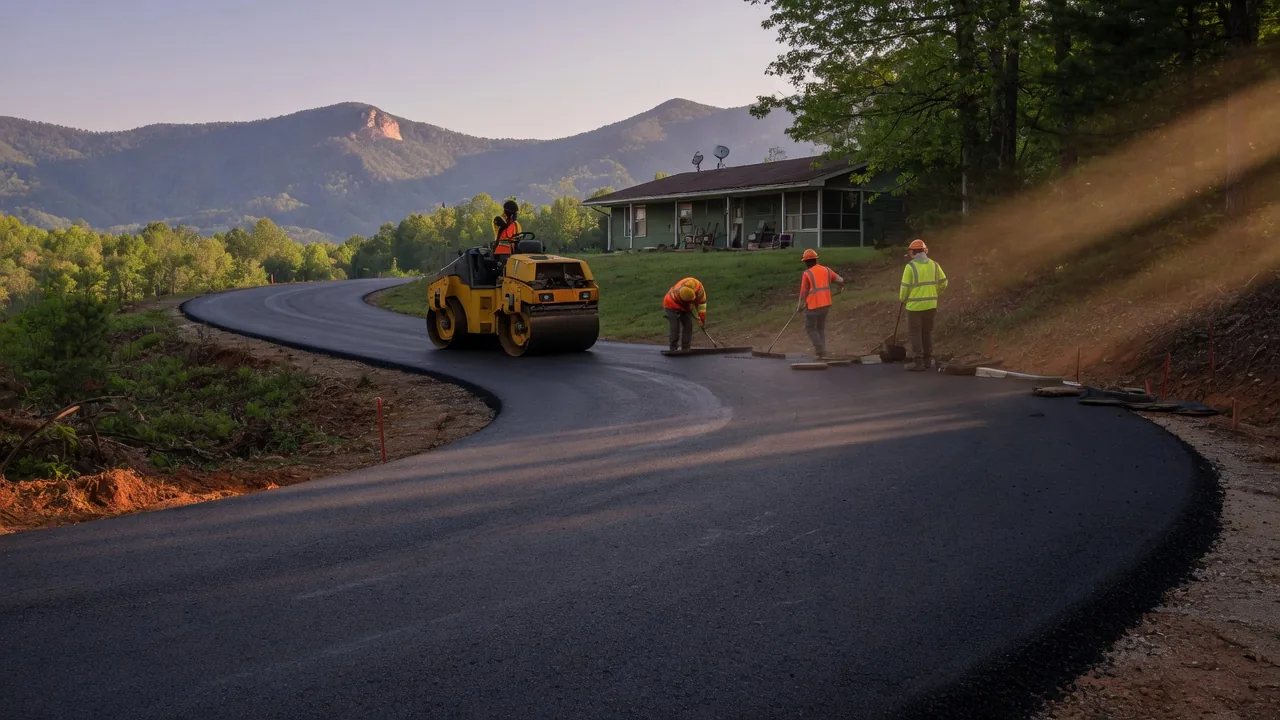
Terrain compounds the challenge. Driveways off US 64, the roads that climb toward Connestee Falls, and rural routes into the Pisgah Forest corridor often run at angles that accelerate runoff and concentrate erosion at the driveway's low edge — which is exactly where potholes like to start.
Reading the damage before you call anyone
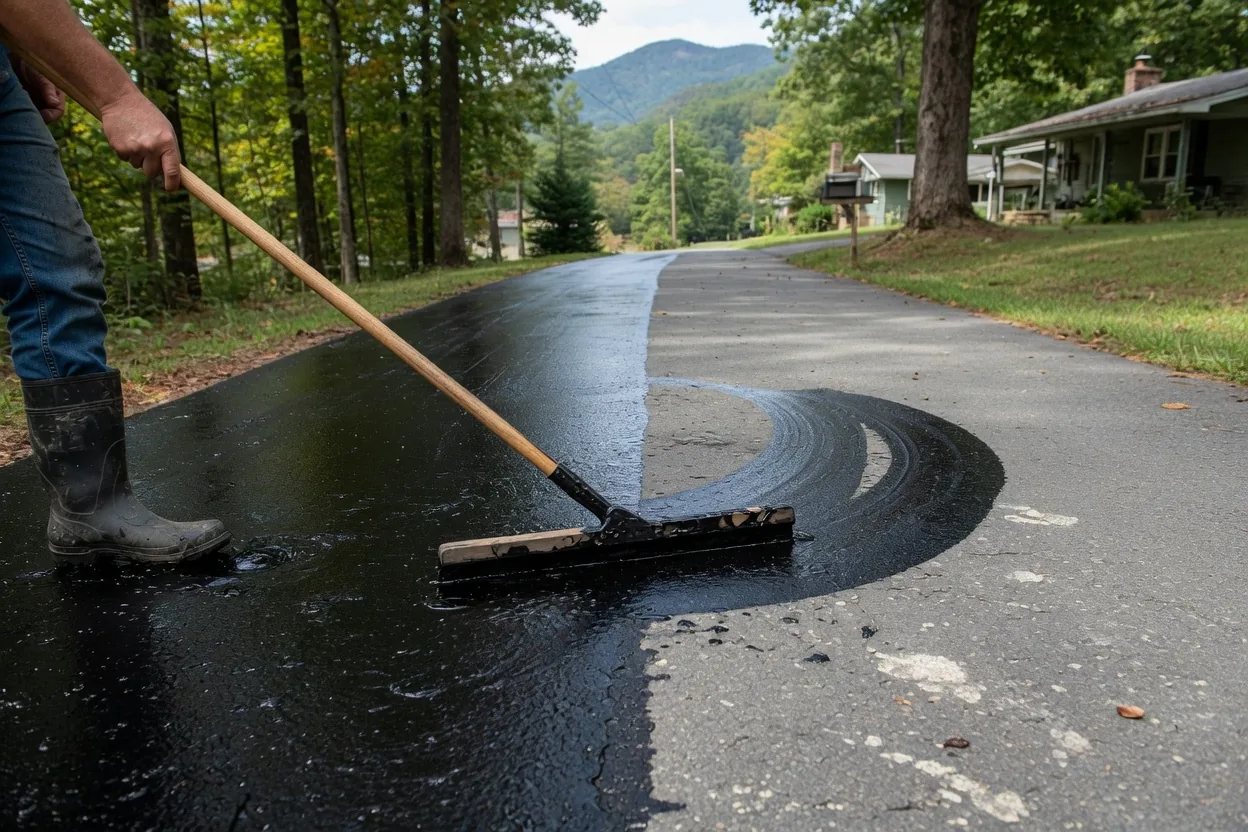
Asphalt fails in recognizable patterns, and knowing which one you have saves money. Linear cracks that run with the driveway's length are almost always freeze-thaw damage: water entered a small gap, froze, expanded, and widened it season after season. Early catch-and-seal at this stage — described in the asphalt cracking guide — costs a fraction of what waits at the next stage.
Alligator cracking, the chicken-wire pattern spreading across a wide section of pavement, is a different problem entirely. The surface is not just cracked; the subbase beneath it has lost bearing capacity because it is saturated or has been undermined by water movement. Patching over alligator damage without correcting subbase drainage is the most common Brevard repair that fails within a single season.
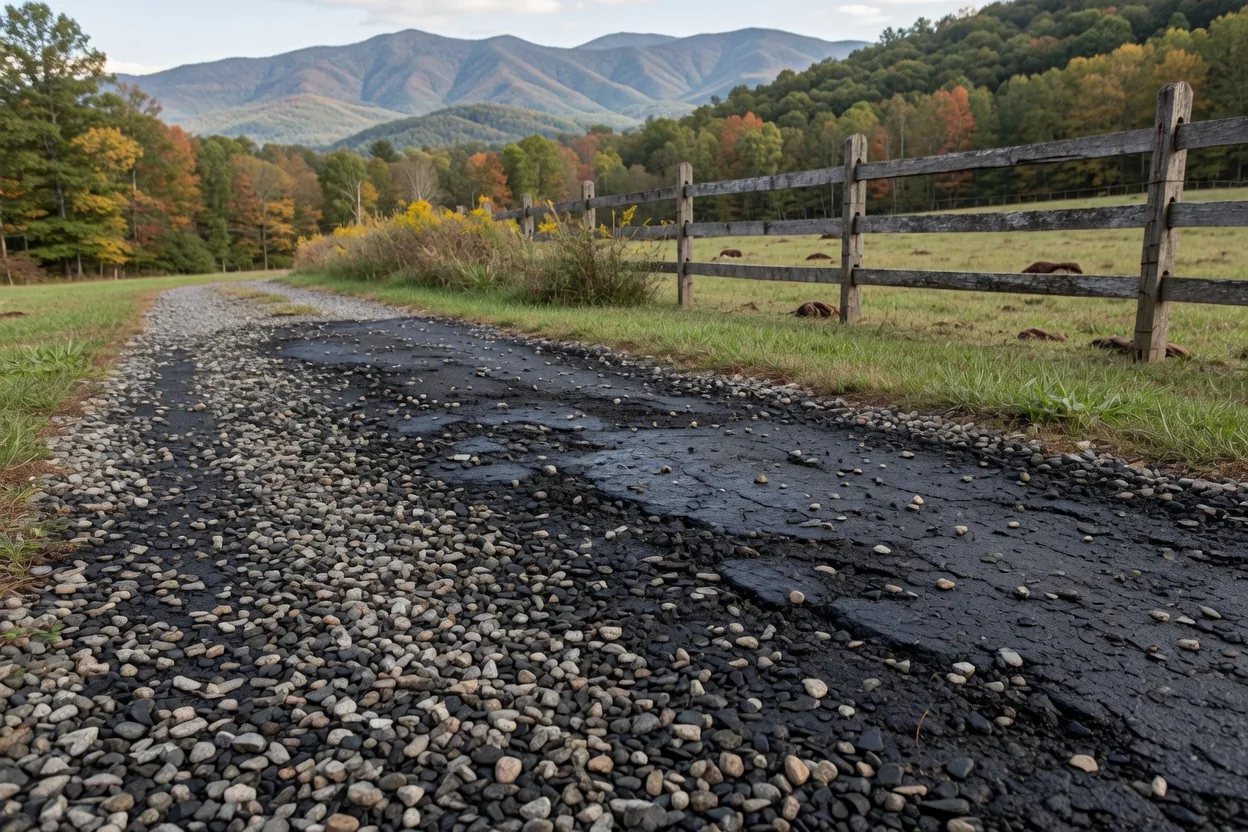
Potholes on mountain driveways typically form at the low end of the run, where runoff pools and frost action breaks the surface loose from a weakened spot. Understanding which failure mode you have determines whether the job is maintenance or a structural fix. The pothole repair guide walks through how to read depth and edges before agreeing on a scope.
What repairs cost in and around Brevard
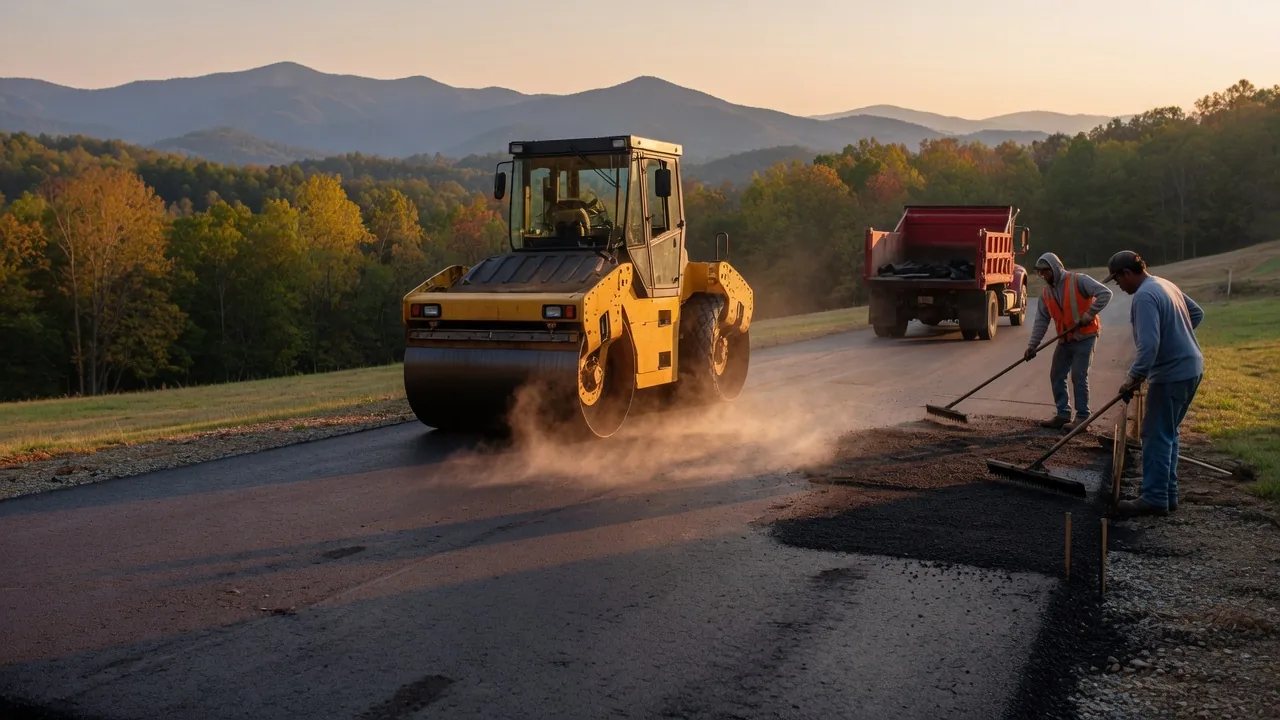
Cost follows scope closely in this market, but slope and drainage corrections can push any job toward the high end of its range. Steeper driveways require slower equipment work and sometimes hand-tamping in sections where rollers cannot operate. Any quote that does not address drainage prep separately from asphalt work is pricing only part of the job.
| Repair Scope | Typical Range |
|---|---|
| Single crack, sealed | $250 – $400 |
| Pothole repair (one to three holes) | $250 – $500 |
| Widespread crack sealing | $400 – $750 |
| Alligator cracking, section patch | $600 – $900 |
| Partial resurfacing (overlay, one section) | $800 – $2,500 |
| Full residential resurfacing | $1,500 – $4,500 |
Drainage corrections — regrading, adding a channel drain, or installing a French drain at the foot of the slope — may appear as a separate line item not reflected above. On sloped Brevard driveways, that work is often what makes the asphalt repair last rather than fail by the following spring. The full repair services page covers how contractors determine which approach fits which condition.
Storm history and why drainage comes before asphalt
Federal disaster records track what Brevard homeowners already know: 16 disaster declarations have touched Transylvania County (1993-2026), the great majority of them storm and flood events. The National Weather Service documents this region's high precipitation totals, and the pattern is consistent — sustained moisture from orographic lift against the Blue Ridge, periodic heavy rainfall from tropical remnants, and enough cold nights in winter to turn saturated subgrades into freeze-thaw accelerators.
Each storm reinforces the same mechanism: water loads the subgrade, weakens the base, and the cracks that looked manageable become entry points for the next event's runoff. Driveways that survived one heavy season without repair often accelerate into full alligator cracking after the second.
The practical lesson: address drainage before adding asphalt. A steep Brevard driveway with poor side drainage will fail again within a few years regardless of paving quality. Grading away from the centerline, cleaning or adding French drains at the foot of the run, and managing gutter discharge near the apron are all tasks a qualified contractor should evaluate before the asphalt crew arrives.
Permits and road connections in Transylvania County
Driveways that connect to state-maintained roads — which covers most of the numbered and rural routes around Brevard — require a driveway permit through the NCDOT Connect system before new construction or significant changes can begin. Repaving an existing footprint typically does not trigger that requirement, but widening, adding a second connection, or modifying the road-edge apron may. NCDOT publishes its driveway design standards online, and a contractor doing regular permit work in this county should be able to tell you on a first call whether your job qualifies.
Projects that require a permit may also require a temporary traffic control plan if equipment will stage at the road edge — a common situation on narrow Transylvania County roads where there is no shoulder to keep machinery off the travel lane. Confirm permit requirements before scheduling, not after the crew shows up.