Grade and rainfall: the two forces behind every Brevard paving quote
Transylvania County earns its place among the wettest corners of the southern Appalachians. The county's position where ridgelines west of Brevard intercept multiple storm tracks means rainfall totals that flatland contractors rarely factor into their bids. The French Broad River headwaters, Cathey's Creek, and the network of smaller runs draining into town all reflect a watershed designed to move a lot of water quickly — and every one of those flows starts on a hillside where someone's driveway sits. Water infiltrates subgrade, migrates beneath pavement during freeze-thaw cycles, and channels down steep driveways fast enough to erode base material from below before a surface crack ever shows above.
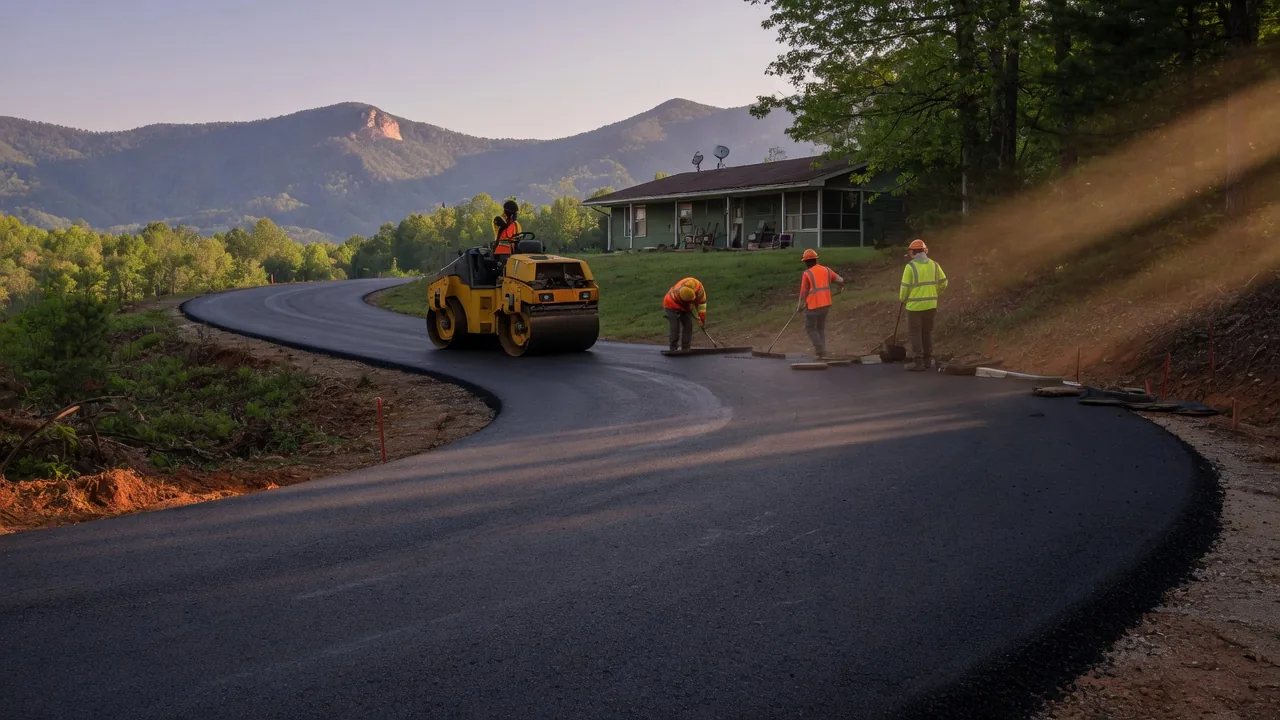
Steep grades compound the problem. Residential lots off the ridges near Connestee Falls, along Rosman Highway, up toward the Blue Ridge Parkway access roads, and throughout the older neighborhoods surrounding Brevard's downtown and Arts District drop sharply over a single driveway run. That grade changes drainage direction, affects how asphalt compacts, and determines how the transition apron at the public road must be built. A crew experienced with mountain lots thinks through those dynamics before the first truckload of mix arrives.
These two forces — rainfall and grade — explain why a Brevard quote that looks cheap is usually missing the base work and drainage line items that decide how long a surface lasts. The asphalt is visible. The preparation underneath is where the durability lives.
What asphalt paving costs in Transylvania County
The full Transylvania County asphalt driveway cost breakdown covers line-item ranges in detail. The short version: terrain moves the price. A flat lot with solid existing base lands near the installed floor; a steeply graded driveway with base repair required sits near the top. The table below covers the most common residential scopes around Brevard:
| Scope | Typical Installed Range |
|---|---|
| Small flat driveway (up to 600 sq ft) | $3,500 – $5,500 |
| Standard residential driveway (600–1,200 sq ft) | $5,500 – $9,000 |
| Steeply graded or long mountain driveway | $8,500 – $12,000 |
| Subgrade repair or base replacement (add-on) | $1.50 – $3.50 per sq ft |
| Gravel-to-asphalt conversion (existing base reused) | $4.00 – $6.50 per sq ft |
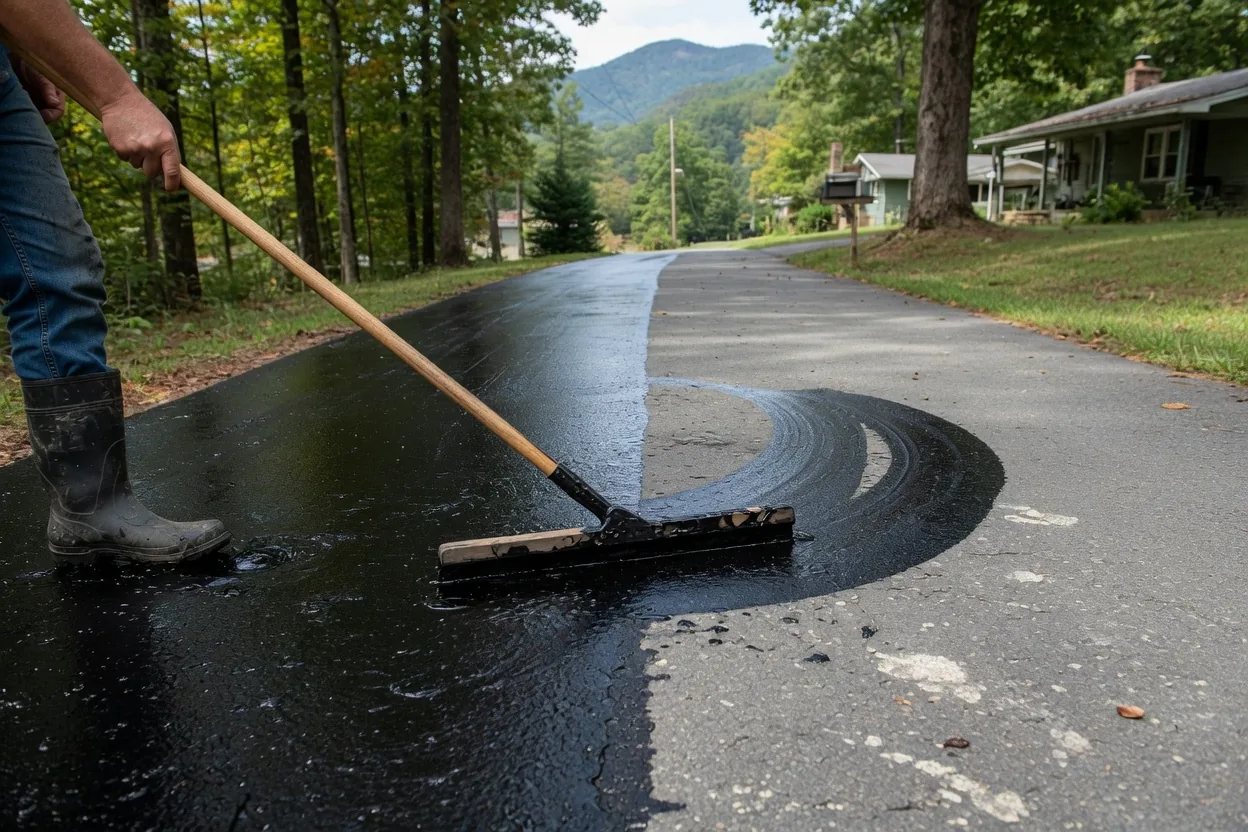
Any bid below the low end of a scope band that does not explain the omission should prompt direct questions: What is the proposed base depth, and how was that number determined for this specific site and soil condition? That answer, or the absence of one, separates a thorough scope from a price-only guess. The complete asphalt paving service overview covers what a properly built job includes from subgrade to finished surface.
Base preparation is the job underneath the job
Transylvania County has logged 16 federal disaster declarations over 1993-2026, the large majority tied to flooding and severe storm events. Each of those events sent water volumes at roads and driveways built for conditions that turned out to be optimistic. A driveway that survives the next heavy-rain summer is one built with that history in mind — not one that merely looks good in the week after installation.
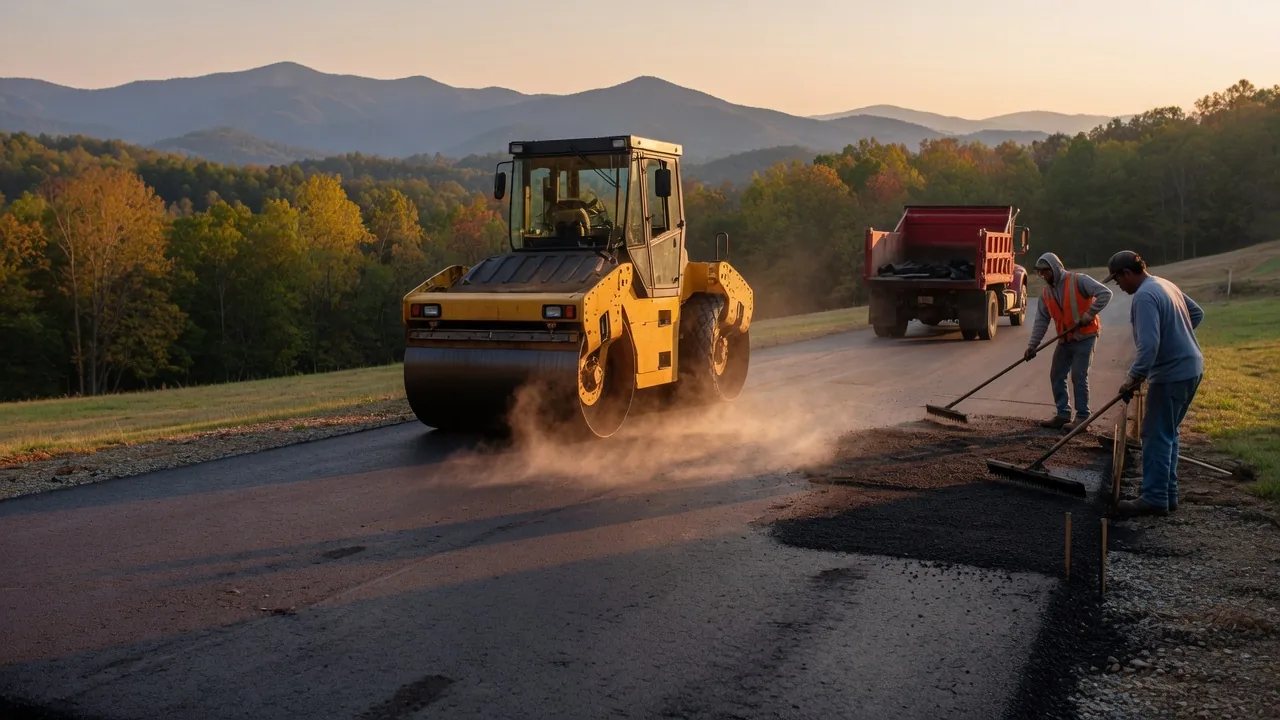
On a properly scoped job, the contractor evaluates existing subgrade bearing capacity before settling on base aggregate depth, establishes the driveway crown angle and drainage channels before any aggregate goes down, and identifies uphill runoff paths that would concentrate water at the pavement edge. The NC Department of Transportation sets base and drainage standards for driveway work that connects to state roads; a residential driveway built to those benchmarks will consistently outlast one that simply adds asphalt on top of whatever was there before.
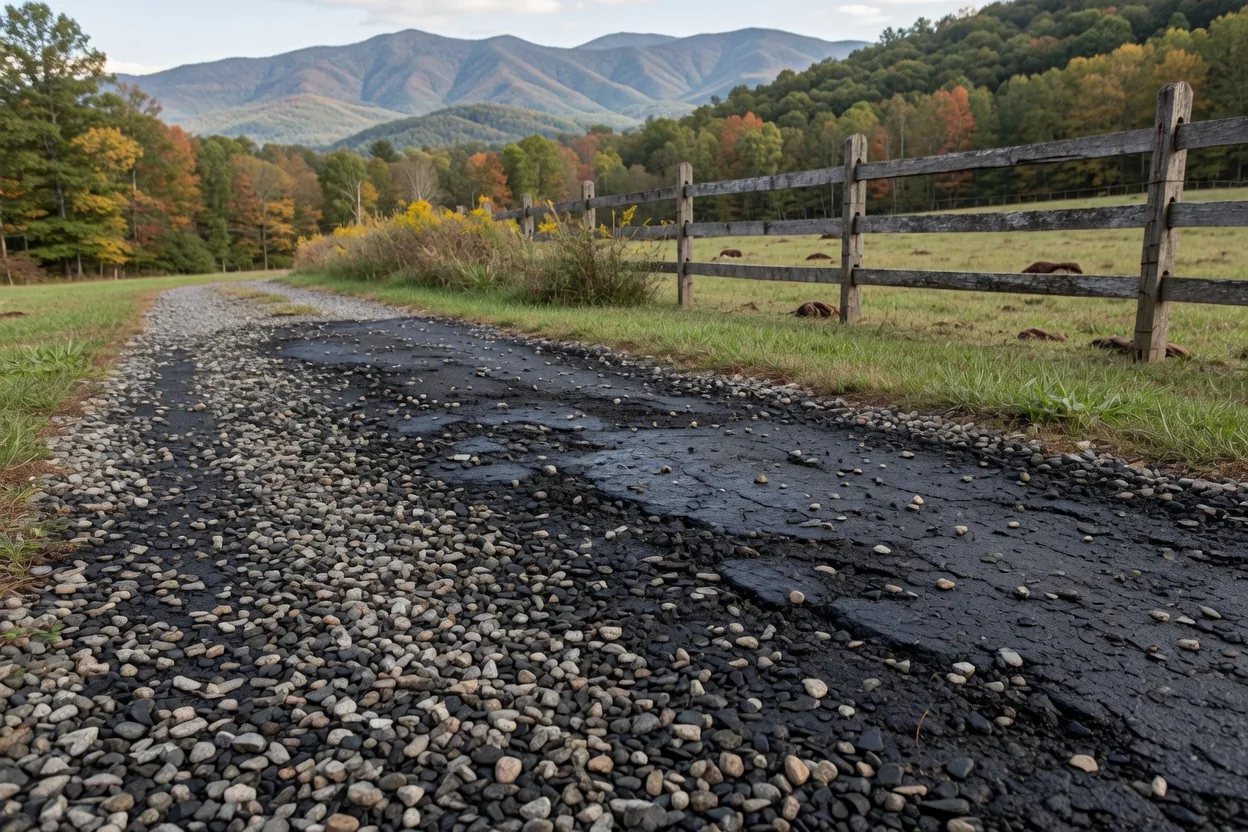
If the surface is currently gravel, conversion to asphalt is often more economical than a full new installation when the existing base qualifies. The gravel-to-asphalt guide explains which base conditions make conversion practical and what additional prep is needed when they do not.
NCDOT access permits for Brevard driveways
Any new driveway — or a widened or relocated apron — that connects to a state-maintained road requires a driveway access permit from NCDOT before construction begins. Most roads radiating from downtown Brevard toward Pisgah National Forest, Lake Toxaway, Rosman, and into the surrounding county are state-maintained routes, which means most new residential connections fall under this requirement. Applications go through NCDOT Connect, and approval includes geometry specifications — width, sight-distance clearance, and slope at the apron — that directly shape how the first several feet of the driveway must be graded and built.
These constraints carry real consequences: a paved apron that does not meet approved geometry may require removal and reconstruction at the homeowner's expense. A paving contractor who has worked state road connections in Transylvania County treats the permit application as part of the project scope, not something the homeowner resolves separately after the equipment has left.
What to ask before signing a paving contract in Brevard
Three questions separate crews that have worked mountain grades from those that haven't: Have they paved driveways on slopes above ten percent in this county? What base depth are they specifying for this site's soil and drainage conditions, and how was that depth determined? How do they route surface water at the road connection and along the driveway edges?
A contractor familiar with Transylvania County terrain will answer the third question before you finish asking it. Drainage routing is never an afterthought on a lot that channels significant rainfall through over a wet summer. A crew that leads with price-per-foot without walking the full grade and drainage path first is offering a number, not a scope.
North Carolina contractor licensing thresholds and bonding requirements for paving work are administered through the NC Department of Insurance. Confirming that any crew crossing the relevant licensing threshold carries the appropriate credentials is a straightforward step before signing — and it filters out the largest category of trade complaints.