What the French Broad corridor does to asphalt
Fletcher occupies the French Broad River valley floor between Hendersonville and Asheville, and that geography matters the moment a contractor quotes your driveway. Cold air drains off the surrounding ridges and pools in the valley bottom, cycling surfaces through freeze-and-thaw more times per winter than the towns sitting higher on the mountain slopes. Rainfall totals here are substantial — the National Weather Service records confirm that the western NC valley system ranks among the wettest corridors in the state — and water that works into surface pores and hairline cracks does concentrated damage each time temperatures dip below freezing. Unsealed asphalt oxidizes faster in this cycle than it would in the Piedmont: the binder that holds aggregate together dries and bleaches, cracks propagate, and the base gets wet. Henderson County properties also tend toward longer driveway runs than city lots — hillside subdivisions, rural parcels off Cane Creek Road, and newer pads near the Asheville Regional Airport all add surface area exposed to that valley climate. A sealcoat job done on schedule here is worth materially more than one that waited two seasons too long.
From pressure washing to curing: what the scope covers
Before any sealer goes down, the surface has to be right. On a Fletcher driveway that has gone through several mountain winters unsealed, prep carries more weight than it does on newer pavement in a milder climate. Crews clean oil stains, loose aggregate, and debris; cracks wider than roughly a quarter inch are filled separately with hot- or cold-pour crack filler before the sealcoat application. That crack work is a separate line item, not bundled into the base sealcoat price — ask for it explicitly on the quote.
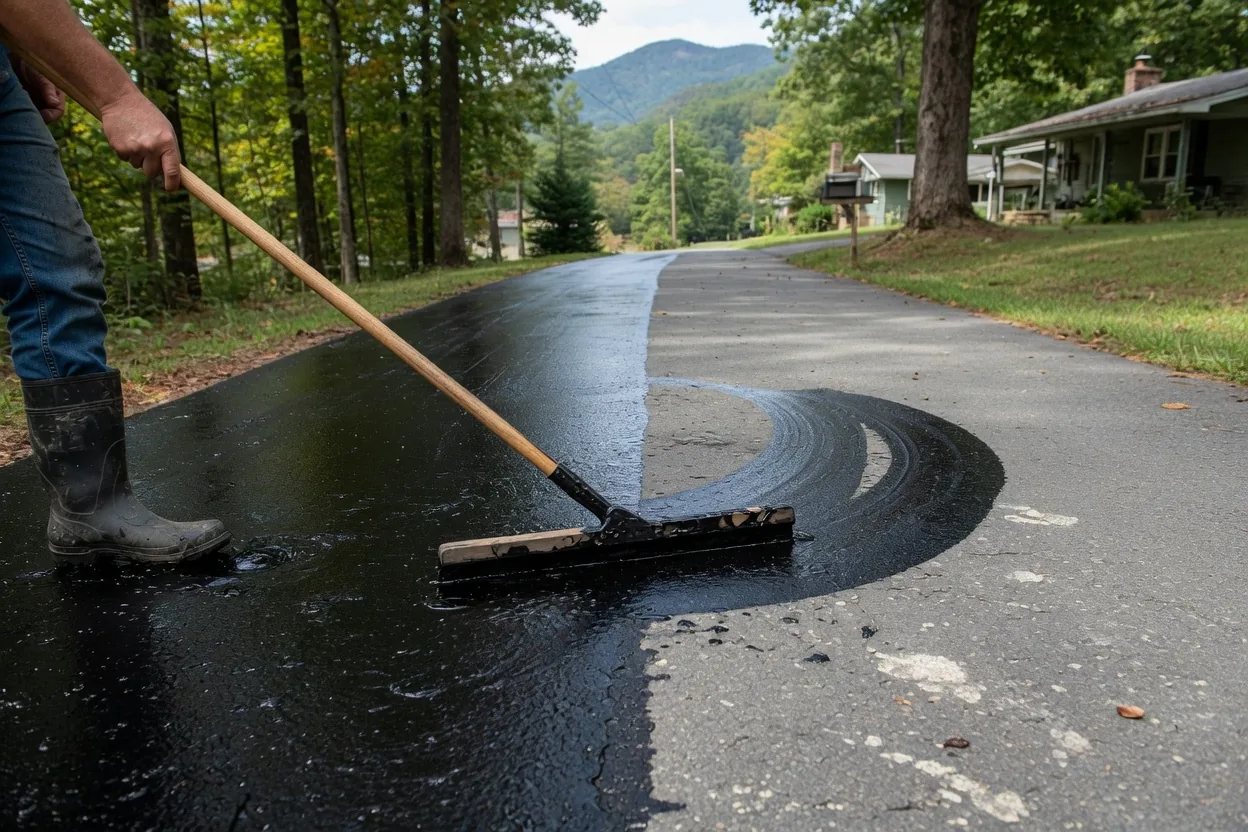
Two coats follow, typically applied with a squeegee on residential driveways; squeegee application leaves a slightly thicker build in low areas, which suits valley drainage conditions. Walk-on cure time is typically 24 hours, vehicle traffic 48, though the cooler temperatures and elevated humidity Fletcher sees from October through April extend both windows. If the driveway was recently paved, there is a mandatory wait before the first seal — the full explanation is in the guide on how long after paving to sealcoat, and the short answer is longer than most homeowners expect. A full overview of what a professional job includes is at sealcoating services.
What sealcoating costs in Fletcher
Around Fletcher, sealcoating runs about $0.18 to $0.35 per square foot for two coats on a clean, structurally sound surface — and a standard two-car driveway lands between $350 and $850 depending on size, prep condition, and access. Henderson County properties often run larger than urban lots, and longer driveway pads price toward the lower per-square-foot end once mobilization is covered. See the detailed sealcoating cost breakdown for what moves a job toward the high or low end of that range. The table below covers the most common configurations in this area:
| Scope | Typical surface | Estimated range (two coats) |
|---|---|---|
| Two-car driveway, good condition | 1,000–2,000 sq ft | $350–$700 |
| Two-car driveway, crack prep needed | 1,000–2,000 sq ft | $425–$850 |
| Long rural driveway | 2,000–2,400 sq ft | $600–$850 |
The seasonal window that applies in Henderson County
Sealcoating requires surface temperatures above 50°F and a dry forecast for at least 24 to 48 hours after application — conditions that effectively close the window in Fletcher from late October through late March. The practical target for most homeowners is September through mid-October in the fall, when temperatures are stable and summer construction backlogs have cleared. Henderson County has seen 16 federal disaster declarations over 1978-2026, the majority tied to storm and flood events that arrive in late summer and early fall. Scheduling before that storm window closes, while surface temperatures still support a full cure, gives the best odds of landing the job cleanly.
Spring bookings — April through late May — work when fall timing is missed, but contractors fill quickly as weather opens. A crew willing to apply sealer with rain forecast that evening is cutting corners; a rescheduled job for weather is normal and correct. Plan the booking at least a few weeks ahead of your target date, particularly if the driveway needs crack prep that has to cure before sealcoat goes down.
What to ask before you hire
Henderson County does not require a permit for residential driveway sealcoating on private property. Where a driveway connects to an NCDOT-maintained road — which covers a significant share of Fletcher addresses, including corridors off US-25 and the Mud Creek area — the driveway apron's tie-in to the state right-of-way may have conditions worth noting in the scope. If right-of-way treatment is a question, the NCDOT Connect portal has encroachment and permit information for state-maintained routes.
When you talk to a contractor, ask how they protect adjacent concrete, mulch beds, and vehicles from overspray — it is the most common dispute in this trade. Ask for their weather protocol: what happens if rain moves in the day the job is scheduled. And ask directly whether the driveway's current condition is appropriate for sealcoating or whether crack prep or base work needs to come first. A contractor who answers that question honestly is solving your problem; one who avoids it is filling their schedule.
When sealcoating cannot fix it
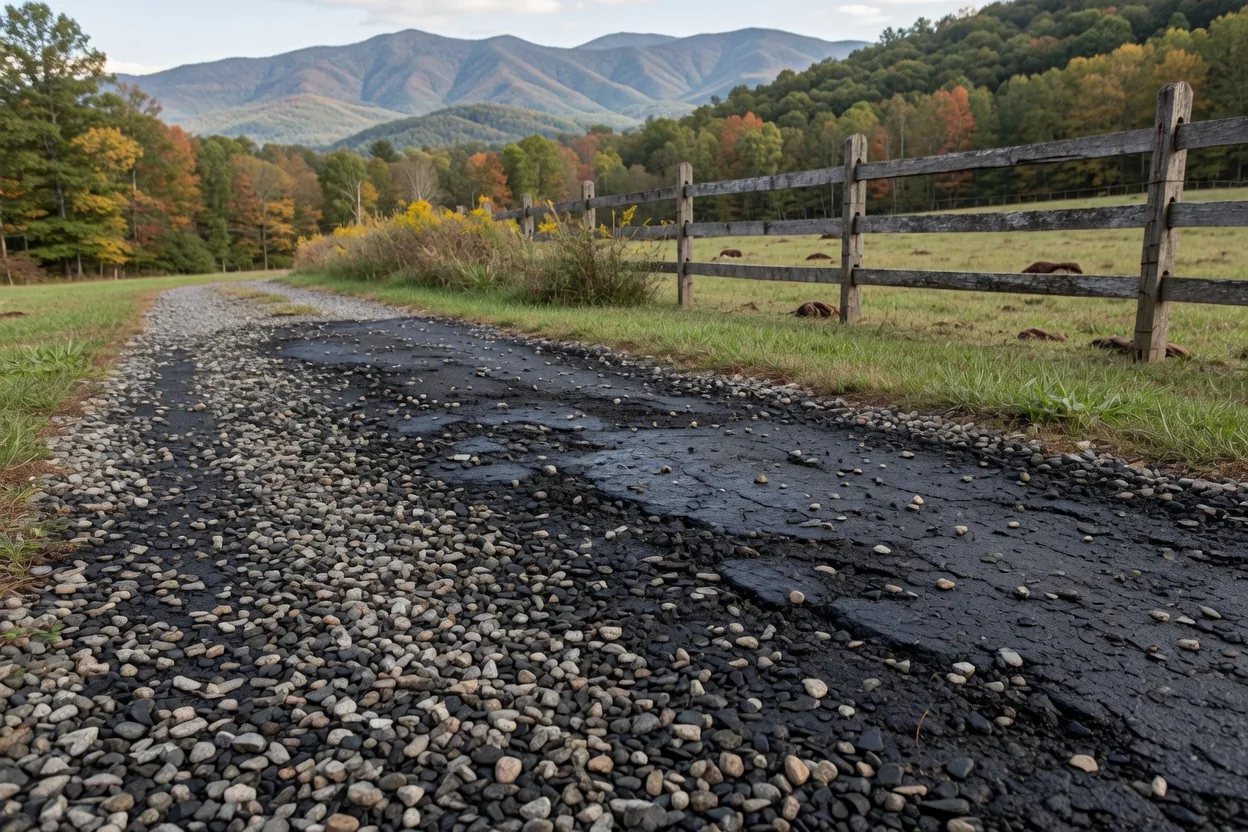
Sealcoating works on asphalt that still has its structural integrity — aggregate intact, surface-level cracks, sound base. The condition to watch for in Fletcher specifically is frost heave: the valley's soils can shift through repeated freeze-thaw cycles and break the pavement's base, and surface sealer applied over that damage seals in the problem rather than solving it. Alligator cracking — the interlocked web pattern that resembles reptile scales — is a base-failure sign, not a sealcoat candidate. Soft spots that deflect underfoot, sections that have heaved into uneven planes, and cracks wide enough to show daylight are all base-repair or full-replacement territory.
The mid-condition case — oxidized surface with isolated cracks, structurally sound base — is exactly what crack filling and sealcoating together address well, at a fraction of replacement cost. Knowing which side of that line a driveway sits on is the right conversation to have before any quote is signed.