What Haywood County elevation does to asphalt
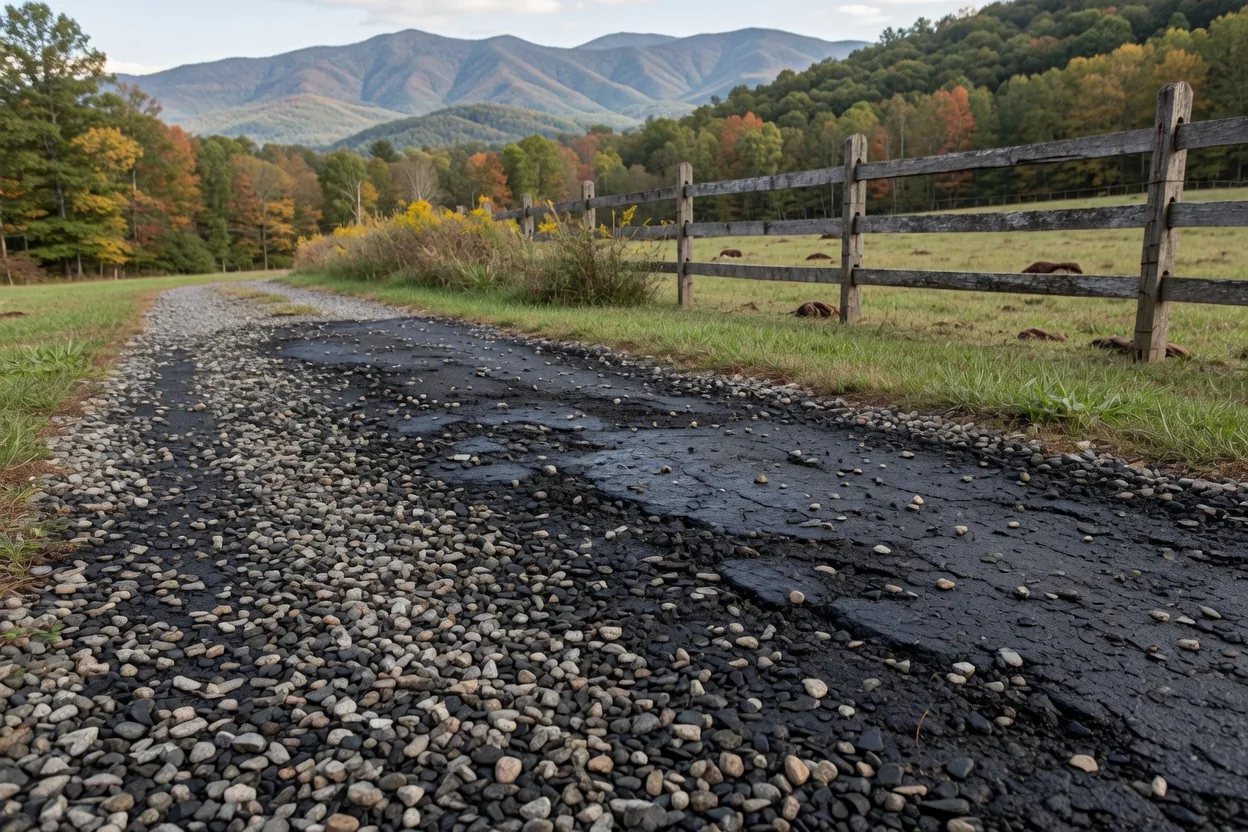
Waynesville sits above 2,600 feet in the southern Blue Ridge, and that elevation changes what asphalt does in ways that lower-elevation work simply doesn't see. Each winter, water that has worked into a hairline crack freezes, expands, and forces the crack open — then thaws, contracts, and draws in more water. At Haywood County elevations, that cycle repeats more times per winter than on a piedmont or coastal driveway. Repeat it a dozen times and a crack that was treatable last spring becomes a pothole with a compromised base by the time the ground refreezes.
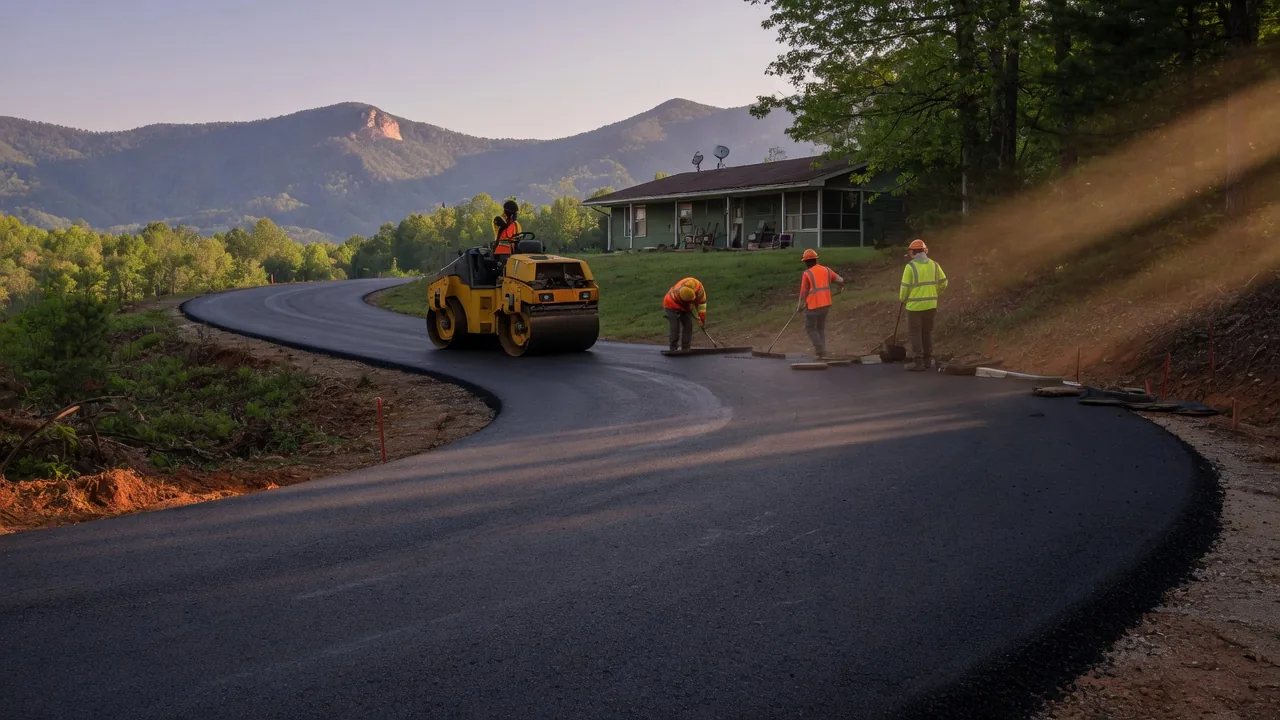
The grade compounds it. Most residential driveways in the Waynesville area slope to follow terrain — that is geography, not a defect. But a sloped driveway converts every significant rainfall into a drainage event that works against the compacted stone base the asphalt is built on. Over time, the base softens and erodes from the edges inward, which is why crumbling margins and longitudinal edge cracks are among the most common repair calls in this county. A driveway on a flat Piedmont lot fails differently and on a different timeline than the same mix installed on a Waynesville hillside, and the repair scope needs to reflect that difference from the first conversation.
Surface cracking is visible. Base erosion is not, until it shows up as a depression or a section that flexes underfoot. Diagnosing which one you have is the first step in the scope, not the last.
Repair scope and what each line costs
The ranges below cover the most common residential repair types in the Waynesville area. Slope, base condition, and drainage status are the price movers — not the surface damage alone. The full breakdown of what each scope involves lives in the asphalt driveway repair guide.
| Repair Type | Typical Range | What moves the price |
|---|---|---|
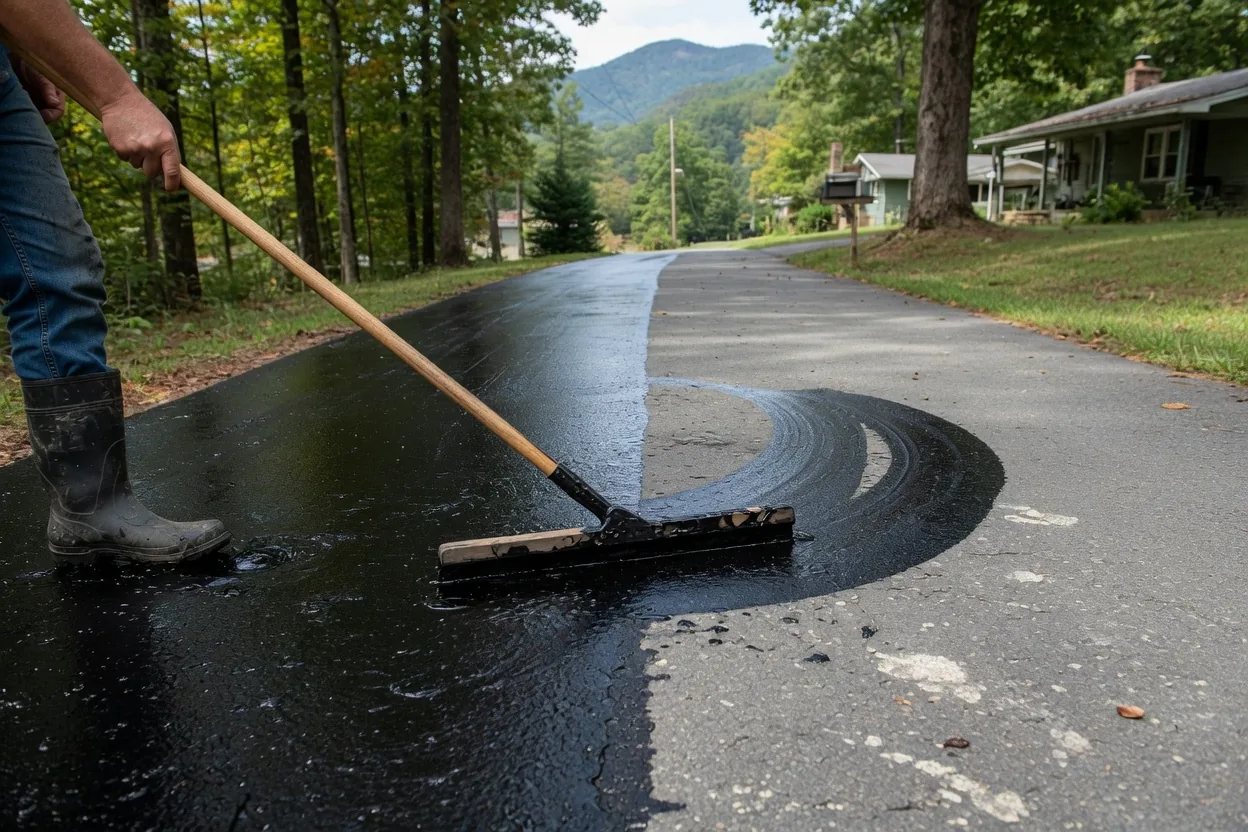
| Crack sealing (per linear foot) | $1–$4 /ft | Width and depth; best treated before cracks exceed ¼ inch |
| Pothole patching | $75–$250 per hole | Depth and base condition beneath the hole |
| Edge repair / crumbling margins | $200–$600 | Drainage correction often required alongside |
| Multi-area surface patching | $3–$8 /sq ft | Multiple areas on one mobilization |
| Full residential repair job | $300–$4,500 | Grade, drainage, and base condition all factor in |
Crack work treated early falls at the low end of its range. Neglected potholes on a slope lot with base damage push toward the top. See asphalt driveway cracking and driveway potholes for what each damage pattern means for scope and timing.
Mountain rainfall and what it does under your driveway
Haywood County carries 19 federal disaster declarations on record spanning 1973-2026, with storm and flood events making up the majority. That history matters for driveways because the storms behind those declarations send runoff across private property in patterns that shift after each major event — cutting new drainage paths and redirecting water toward structures and paved surfaces. Driveways that cross natural drainage lines, common on the rural and semi-rural lots throughout the county, absorb the worst of it when a storm pushes flow somewhere it hasn't run before.
The failure mechanism is straightforward: water gets under the asphalt, softens the base, and the surface above shows the damage later — usually as a depression or an edge crack with no obvious cause from above. Fixing the pavement without addressing where the water goes means the repair repeats. The National Weather Service record for western NC confirms consistent heavy seasonal rainfall on already-saturated mountain soil, which is the underlying driver of most recurring driveway failures in this region. The NC Department of Transportation drainage standards for private driveway connections to state roads are written with exactly this runoff pattern in mind.
Before authorizing paving work on any lot that sits near a drainage path or has a history of flooding, walk the drainage route with your contractor. The driveway is usually the last place the problem surfaces — the water source is uphill.
When your road connection requires a permit
A substantial share of Haywood County driveways connect directly to NCDOT-maintained roads — that is the standard setup on rural and semi-rural lots throughout the county, and on many properties inside Waynesville itself. When repair or resurfacing work changes the driveway connection point, alters a culvert beneath it, or modifies the drainage pattern at the road edge, NCDOT permit requirements may apply. The application process runs through NCDOT Connect, and confirming permit status before work starts avoids stop-work complications mid-project.
For most straightforward crack sealing and pothole patching well away from the road connection, a permit is not typically required. The threshold applies when work changes how the driveway meets the road or how water drains at that connection. North Carolina building code standards for drainage structures tied to private improvements are maintained through the NC Department of Insurance engineering and building codes division — a qualified contractor should know which thresholds apply to your specific job scope and address them in the proposal rather than leaving them as an afterthought.
Timing repairs and vetting contractors in this market
Mountain paving has a narrower working season than most of North Carolina. Asphalt needs stable ground temperature and dry conditions to bond and cure properly; at Haywood County elevations, that reliable window runs from late spring through early fall. Repairs pushed into cold shoulder seasons — when night temperatures drop below the adhesion threshold — can feel complete but fail within the first hard freeze cycle. The practical implication: cracks that open over winter and sit untreated through a wet spring grow measurably worse each month. Scheduling repairs in April consistently costs less than the same scope in September after another season of water infiltration has deepened the base damage.
Three questions distinguish contractors with genuine mountain experience: how they handle grade drainage on a sloped driveway (look for a specific, practical answer, not a vague one); whether your road connection requires a permit under NCDOT access rules; and what they do when a section needs base repair, not just surface patching. Haywood County slope driveways that receive surface-only treatment on a failed base typically need the same repair again within a few seasons. Contractors who skip the base conversation are quoting a number, not a fix.
Two public sources worth a look before any driveway work: the NC Department of Transportation sets the rules for driveways that connect to state-maintained roads, and the NC Department of Environmental Quality covers how runoff from paved and graded ground is supposed to be handled.