Long driveways and the Mills River math
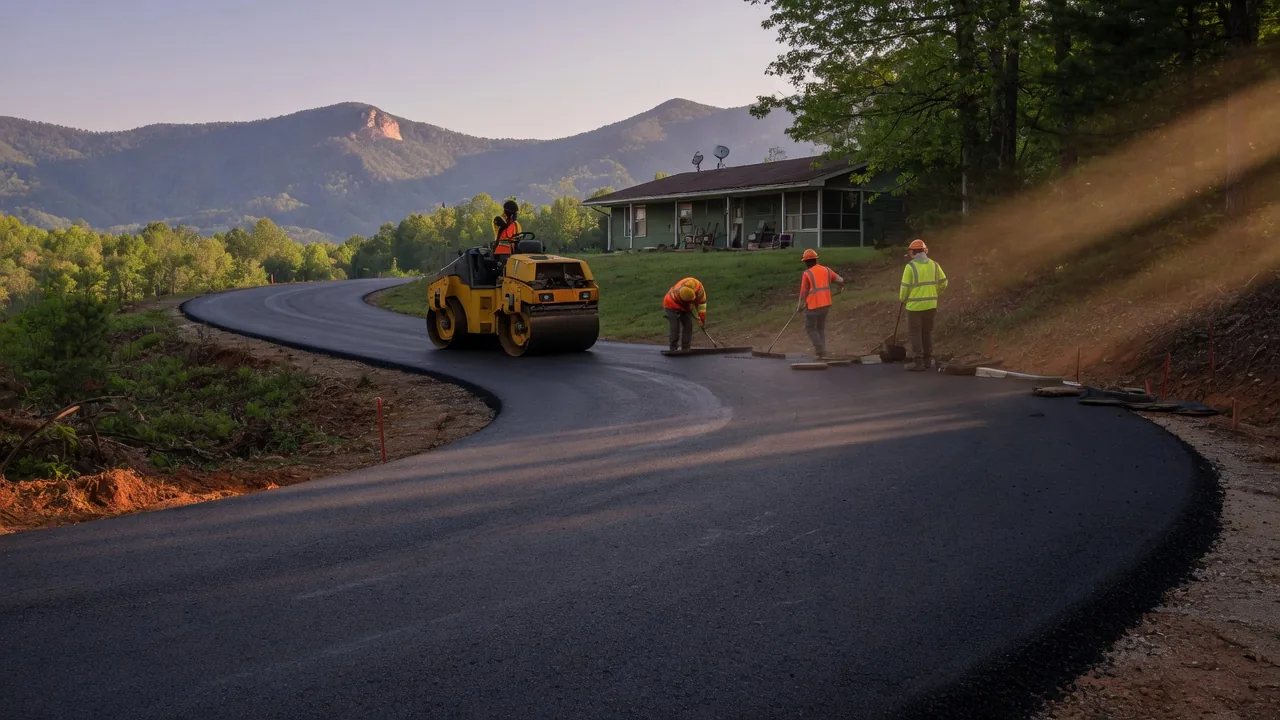
Mills River was incorporated from Henderson County farmland and apple orchard tracts in the French Broad River valley, sitting roughly between Hendersonville and the Buncombe County line. Residential properties here do not look like Asheville's in-town lots: a parcel off Haywood Road or Valley Hill Road might have eighty feet from road to garage; a rural tract on one of the ridge roads above Mills River can run three hundred or four hundred feet before it reaches a structure. That total linear footage is the first thing any contractor needs before a price makes sense.
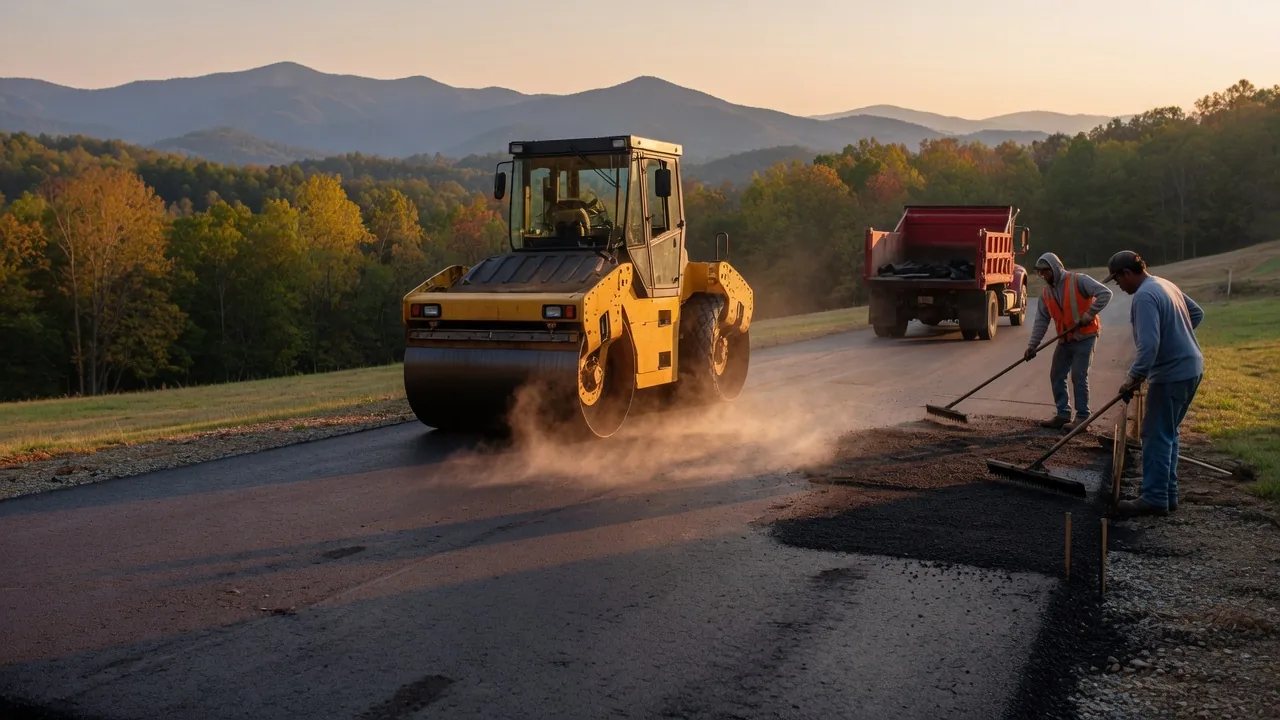
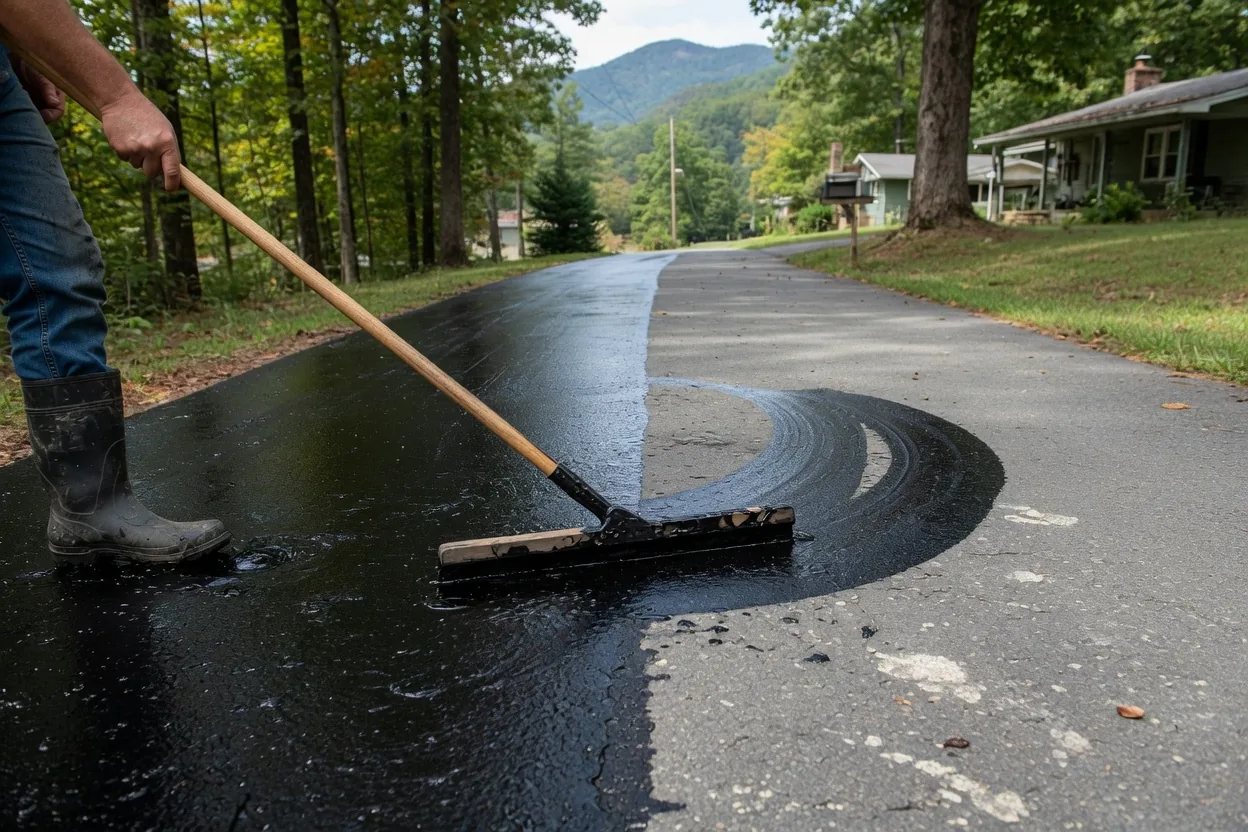
Tar and chip earns its place on these longer runs. Full-depth asphalt on a four-hundred-foot rural driveway is a substantial investment. Gravel on the same run is cheaper to start but becomes an ongoing maintenance commitment — regrading after storm events, replenishing material that migrates to the shoulders, managing the runoff channels that shift with every heavy season. A tar and chip surface gives you a sealed, drivable lane at a price that fits Henderson County's rural driveways. The complete tar and chip overview covers the full process; the short version is hot-applied liquid asphalt followed by pressed angular aggregate, swept clean and rolled into a finished surface.
Stone selection and what holds up in Henderson County winters
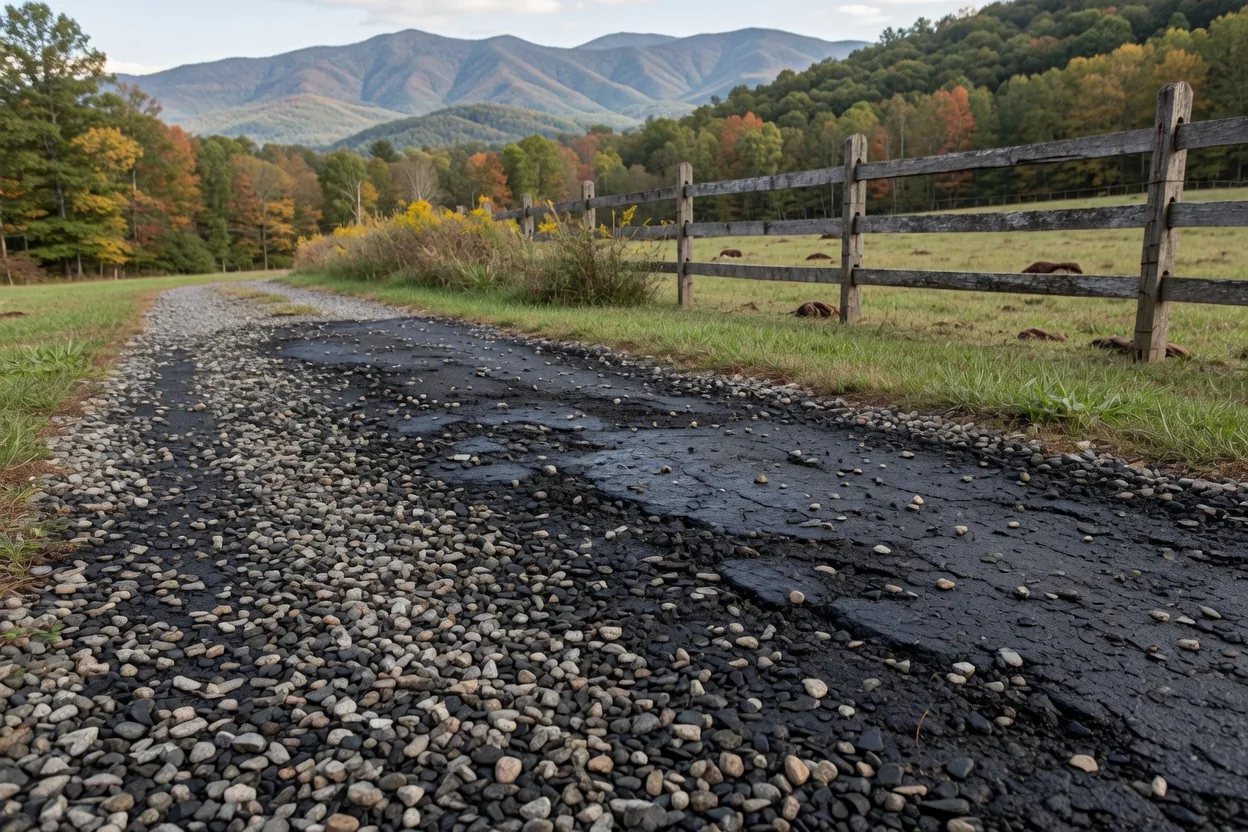
Henderson County sees genuine freeze-thaw cycling — not the sustained cold of the higher mountain counties to the west, but enough nightly freeze and morning thaw in winter to matter for a driveway surface. Angular crushed stone locks together better than rounded river aggregate under these conditions and resists migration when vehicles corner or brake at the bottom of a long run. Stone size matters as well: coarser chips hold position on steeper grades but can feel loose underfoot until the surface has had a full season of traffic to settle.
Where tar and chip surfaces fail early, the cause is almost always the base rather than the chip layer itself. Soft spots in the subgrade — old organic material, poorly compacted fill, low areas collecting seasonal moisture — show through the surface within a year of installation. Any contractor worth evaluating will have a clear statement about base condition before a number gets written down. If your current surface is gravel, the gravel conversion guide explains what base preparation typically involves and when a full regrade is necessary versus a lighter scarify-and-compact approach.
What the scope covers and what it costs
The full cost breakdown has detailed line items; the table below focuses on what shapes the number for Mills River driveways. Base condition, total square footage, grade, and drainage are the four variables that move a quote from the lower end of the installed range to the upper end.
| Scope | Typical installed range |
|---|---|
| Small flat driveway, sound gravel base (600–800 sq ft) | $3.50–$4.50/sq ft |
| Standard residential, moderate grade (1,000–1,200 sq ft) | $4.25–$5.50/sq ft |
| Long or steep driveway, drainage included | $5.25–$6.50/sq ft |
| Base repair or regrade required | $4.50–$6.50/sq ft |
Jobs with drainage built into the scope cost more upfront and consistently perform better over the surface's life. A tar and chip driveway that is not crowned or cross-sloped correctly will pond water at the low edge, and that edge fails first — cracking, then shoulder softening, then wheel-track rutting over the following seasons.
The table above assumes the chip surface is the primary scope item. When an existing driveway has significant soft spots, rutting, or standing-water low areas, base repair adds to the work before the chip surface goes down. Contractors who leave it out of an initial quote are not saving you money — they are deferring a conversation to a day when you have fewer options.
Rain, the French Broad watershed, and why drainage is non-negotiable
Henderson County carries 16 federal disaster declarations across 1978-2026, with storm and flooding events tied to the French Broad River drainage accounting for most of them. Mills River sits inside that watershed. A driveway surface without adequate crown and edge drainage concentrates water at the low shoulder; that water works its way into the base layer over time and is the primary cause of early tar and chip failure on rural driveways in this region.
The National Weather Service climate data for Henderson County documents meaningful annual precipitation — the southern Appalachians receive rain from summer convective storms and from tropical systems that track inland in late summer and fall. Driveways on grades above roughly 8 percent, or any driveway that collects runoff from adjacent slopes or uphill neighbors, should carry drainage line items in the bid: edge channels, dip culverts, or a proper outfall at the lower end. A bid that does not address drainage on a sloped Henderson County driveway is incomplete rather than inexpensive — that distinction is worth pressing before you sign.
Permits, road connections, and the Henderson County process
If your driveway connects to a state-maintained road — which covers most numbered county roads in Henderson County — a driveway permit is required before any paving work begins. Applications are filed through NCDOT Connect, and the permit addresses sight distance, access geometry, and drainage at the connection point. The NC Department of Transportation sets the standards for residential driveway connections to its road system; work installed without the permit can be ordered removed at the property owner's expense.
For driveways connecting to private subdivision roads or parcels subject to Henderson County land-use review, the county is the right first call. The permit question is worth raising directly with any contractor you are considering: a crew with real Henderson County experience will have pulled these permits before and can give you an accurate lead time. Work that goes in ahead of a required permit transfers risk from the contractor to you, and that risk is worth avoiding.