What Buncombe County's weather does to bare asphalt
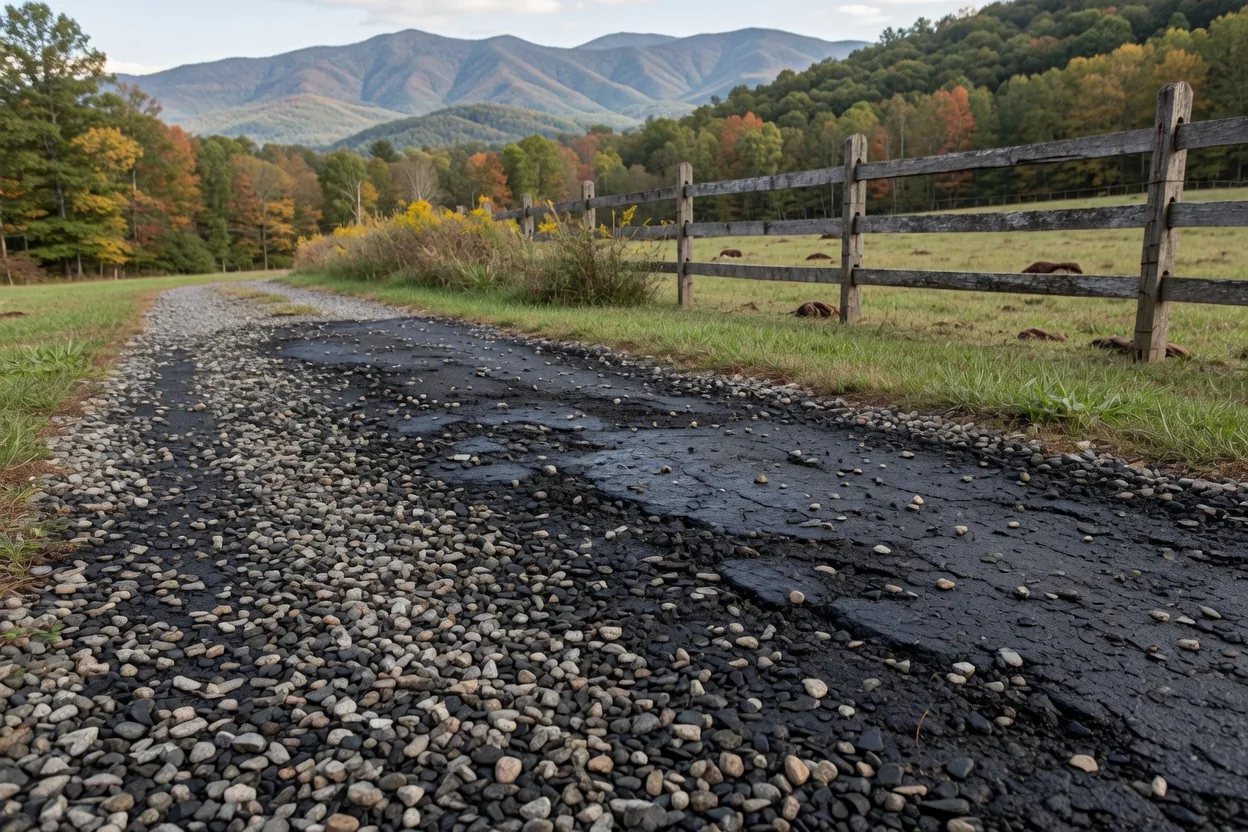
Arden is not the Piedmont. The mountains hemming Buncombe County deliver rainfall totals the National Weather Service tracks as among the highest in North Carolina, and the elevation swings mean that water sitting in a driveway crack can freeze and thaw within the same week during late fall and early spring. That freeze-thaw cycle is the mechanism that turns a hairline surface crack into a pothole starter — and it runs on its own schedule whether a driveway is sealed or not.
The federal disaster record confirms what anyone who has lived here through a hard winter already understands: Buncombe County has faced 19 declared disaster events across 1973-2026, most of them storm- and flood-related. Water infiltration is the driver behind almost every premature failure on an unsealed asphalt surface. Oxidation dries the binder, water finds the cracks, and frost does the rest. Sealing on a regular schedule interrupts that chain before it becomes a structural problem.
What a sealcoat covers — and where it stops
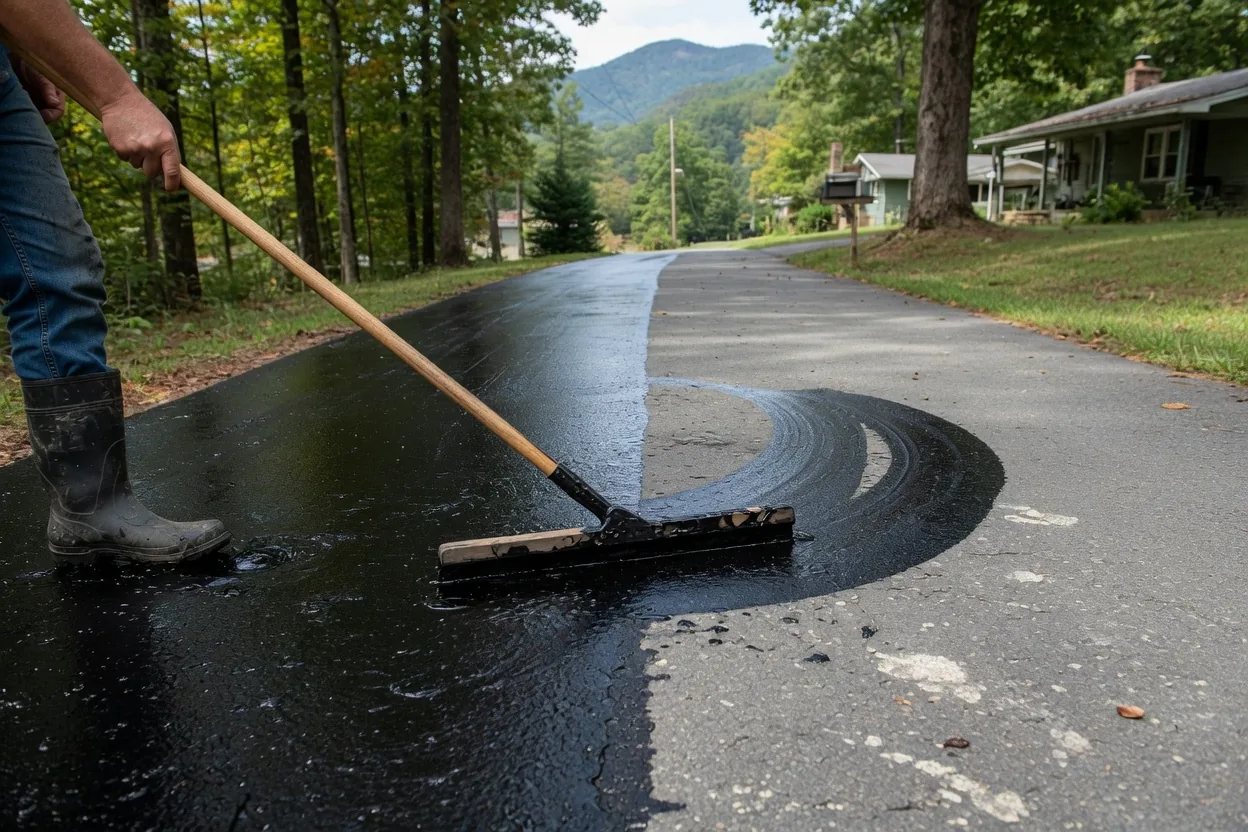
A sealcoat is a protective surface layer — coal-tar or asphalt emulsion — brushed or sprayed over an existing driveway to slow oxidation, repel water, and restore a uniform surface. It is not a structural repair. A driveway with active alligator cracking, deep ruts, or spots that flex underfoot under traffic needs patching or base work first; sealcoat over a compromised base peels and fails faster than bare asphalt would have.
A properly done job includes cleaning the surface, clearing loose debris, crack-filling hairline to three-quarter-inch cracks with rubberized filler, applying one or two coats of emulsion with adequate drying time between them, and protecting garage aprons, adjacent concrete, and landscape edges. Skipping prep is where cheap jobs become expensive problems. The sealcoating overview details material types, application methods, and what distinguishes a thorough job from a quick coat.
Arden driveway sealcoating cost by scope
The ranges below reflect typical pricing for Arden and the surrounding southern Buncombe area. Surface condition, prep work required, and access shape where a specific job falls within the band. A driveway that has not been sealed in five or more years almost always needs more crack fill and surface prep, which pushes the total toward the higher end. The full sealcoating cost guide breaks out material, labor, and the regional factors that apply here.
| Scope | Driveway Size | Typical Range |
|---|---|---|
| Single-car driveway, one coat, good condition | 300–500 sq ft | $55–$175 |
| Two-car driveway, two coats, clean surface | 700–900 sq ft | $350–$550 |
| Two-car driveway, two coats, crack fill included | 700–900 sq ft | $450–$750 |
| Two-car driveway, two coats, heavy prep or edge work | 800–1,000 sq ft | $550–$850 |
| Crack fill only (hairline to 3/4 in.) | per linear foot | $1–$3/LF |
Mountain climate makes two-coat applications the standard recommendation here. One coat may hold on a driveway resealed within the past two or three years in good condition; on a surface that has weathered several Arden winters without attention, one coat is under-served.
The timing window mountain homeowners work around
Asphalt emulsion needs temperature and dry conditions to cure correctly. Most products require air and surface temperatures above 50°F and a rain-free window of at least 24 hours after application. In Arden, that window opens reliably in mid-spring and runs through mid-October — but the shoulder seasons compress noticeably compared to lower-elevation counties in NC. An application pushed into November risks a cure failure if a cold snap arrives early, which it does with regularity in the southern Buncombe highlands.
New asphalt presents a separate question. Fresh pavement needs time to fully off-gas and stabilize before sealcoat can bond reliably — applying too early traps binder oils at the surface and reduces adhesion. The post-paving timing guide covers the correct wait period and explains why it matters more in a high-humidity mountain climate than in the drier Piedmont or coastal plain.
For an existing driveway, most crews prefer a forecast showing at least three clean days: the day before application, the day of, and the day after. South-facing lots in Arden that catch afternoon sun dry faster; shaded driveways under heavy tree cover hold moisture longer and may need an extra day before normal traffic resumes.
Permits, NCDOT thresholds, and what to ask before the crew arrives
A straight reseal on private residential property does not require a permit in most Buncombe County circumstances. Where the permit question becomes real is at the connection point: if any scope of work modifies the curb cut or apron where a driveway meets a state-maintained road, NCDOT Connect is the right place to verify whether a driveway encroachment permit is needed before work starts. For driveways that connect only to local or subdivision roads maintained by the county or an HOA, the threshold is different — a quick check ahead of time costs nothing and avoids a stop-work conversation later.
The NC Department of Transportation publishes encroachment permit requirements for state-system roads; the residential threshold is modest, but saw-cutting or reconfiguring an apron at a state road connection crosses it. A contractor familiar with Buncombe County work will know the line.
Three questions that reveal experience faster than any review metric: how they handle active cracks (still widening) versus stabilized ones, whether they use coal-tar or asphalt emulsion and what drives that choice, and what their specific cure-time guidance is for return to vehicle traffic. The answers tell you whether they understand mountain-climate variables or are giving you a flatland script.