What elevation does to asphalt in Haywood County
Canton sits where the Pigeon River cuts through the Blue Ridge at roughly 2,600 feet. The freeze-thaw cycle here is not the same conversation it is in the Piedmont. When temperatures cross the freezing threshold more times per winter, water that enters a cracked or under-built pavement base expands, heaves, and breaks the surface from the inside out. A driveway that holds for twenty years in Greensboro can fail within five in this county if the base is not built to handle the elevation.
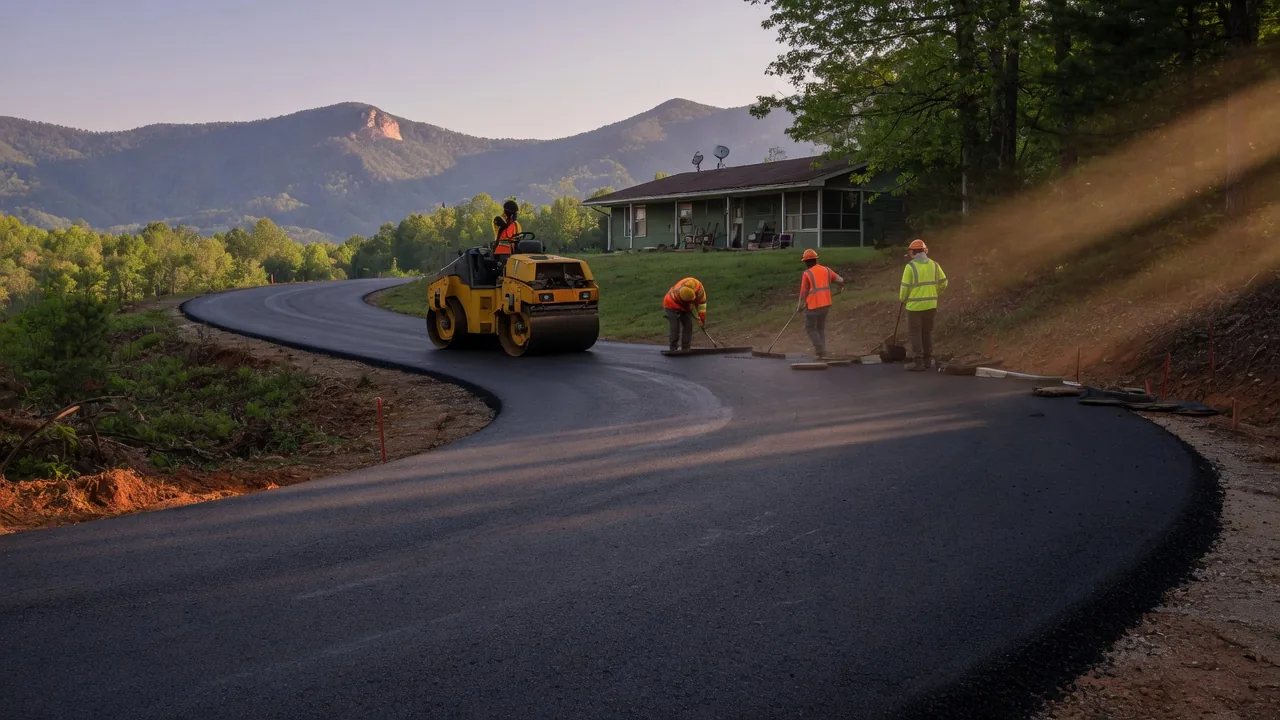
That makes the core question for any Canton asphalt job not the price per ton of material — it is the depth of the compacted aggregate base underneath. Standard residential work in this area calls for 6 to 8 inches of crush-and-run, graded and compacted before a single inch of hot mix goes down. Steep lots add an engineered drainage layer on top of that. Any quote that skips that conversation is not a bargain — it is an incomplete bid.
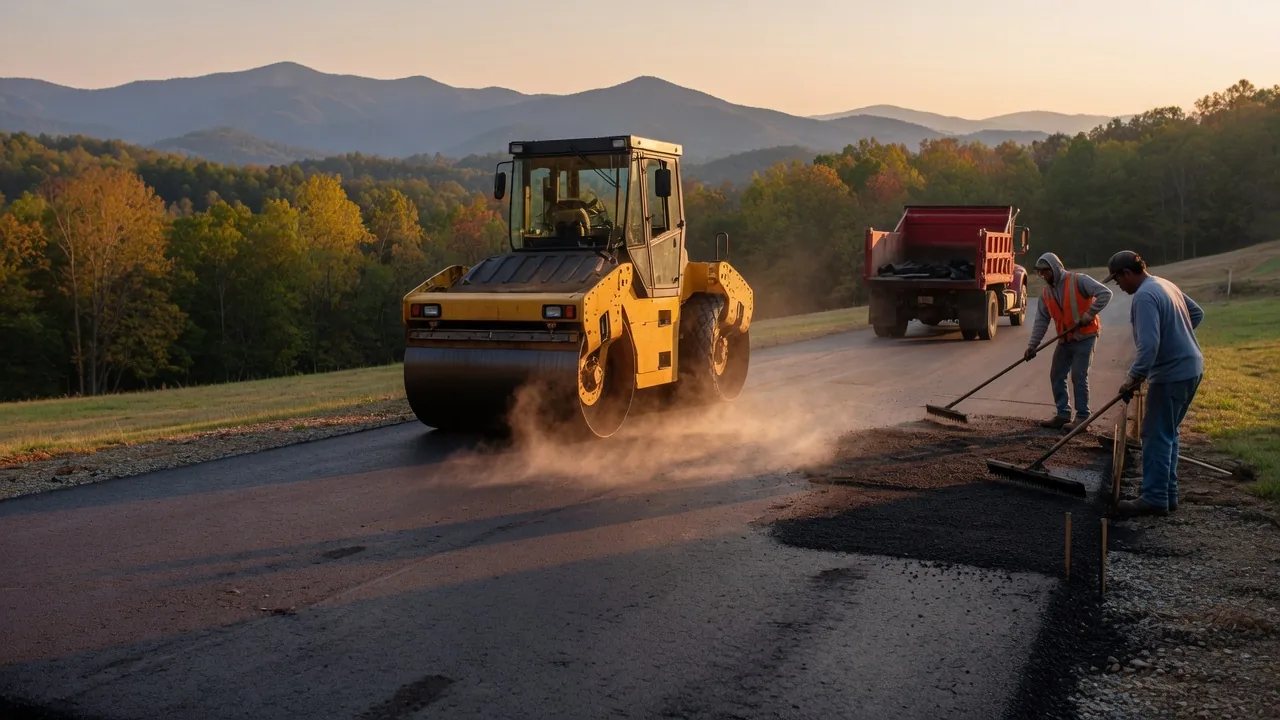
Paving season in Haywood County also runs shorter than in the Piedmont. Hot mix is temperature-sensitive, and reliable paving weather at this elevation runs roughly April through October with weather interruptions. Scheduling that accounts for the mountain climate separates contractors who work here regularly from crews drifting west from the flatland market. The asphalt paving overview covers how base requirements shift with terrain if you want the engineering explained in plain terms.
The Haywood County price picture
Residential asphalt paving in Canton runs $4 to $8 per square foot installed. The table below maps common job scopes to working price ranges; your quote moves within these bands based on lot slope, existing base condition, and driveway access. See the full driveway cost breakdown for line-item detail.
| Job Type | Typical Range | What moves the number |
|---|---|---|
| Crack sealing and patching | $200–$800 | Extent and depth of existing damage |
| Asphalt overlay | $1,800–$4,500 | Requires a sound existing base |
| New driveway, flat to gentle slope | $3,500–$7,500 | Standard 6-in base, 2-in asphalt layer |
| New driveway, steep mountain grade | $6,000–$12,000 | Engineered drainage and deeper base work |
| Gravel-to-asphalt conversion | $4,500–$10,000 | Base reuse versus full excavation drives cost |
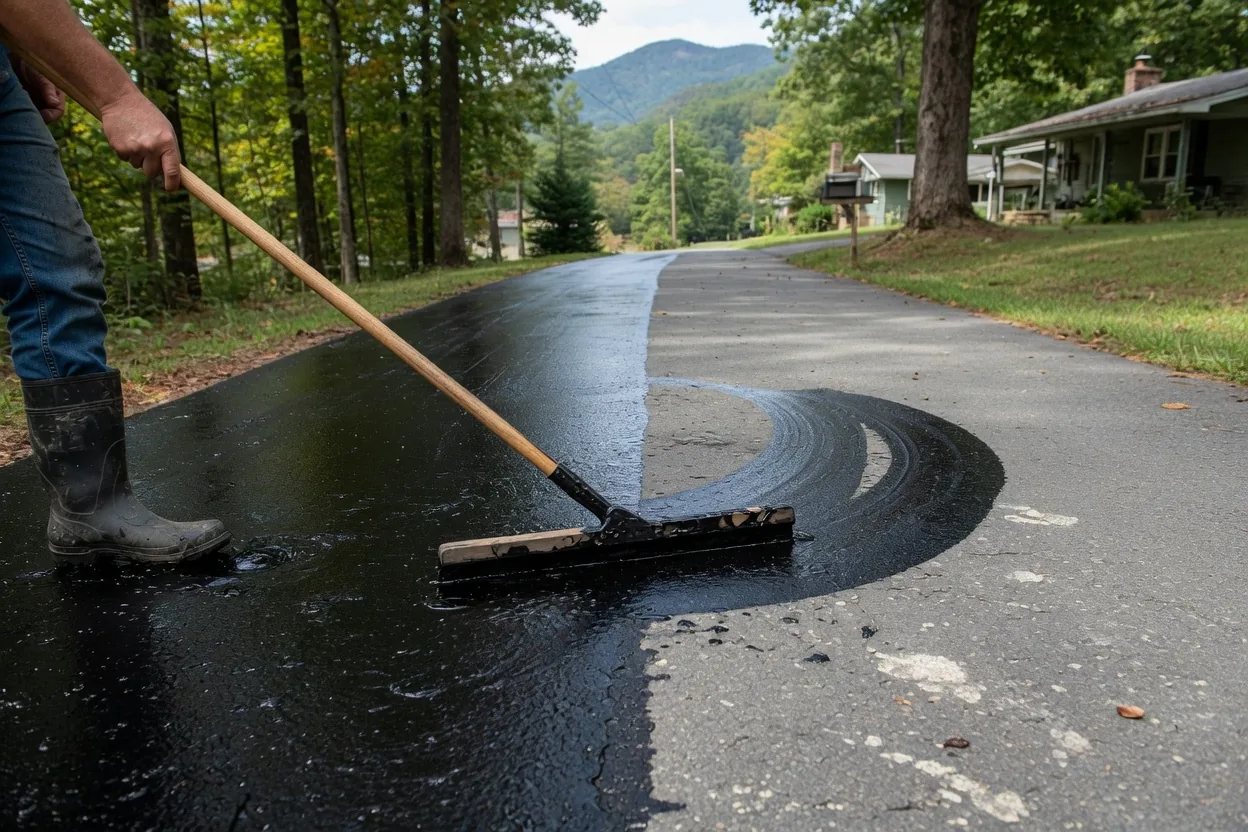
| Sealcoating (existing surface) | $150–$400 | Driveway size; maintenance only |
Steep-lot jobs on Canton's hillside properties and older mill-era neighborhoods almost always carry drainage and grading line items that flatland quotes never include. Treat any bid that omits them as unfinished rather than efficient.
Storm water and pavement lifespan in the mountains
Haywood County has accumulated 19 federal disaster declarations over 1973-2026 — overwhelmingly storm and flood events driven by the county's mountain watershed and the weather patterns that funnel through the Blue Ridge corridor. Each one tested whether the area's driveways, parking areas, and road margins were draining the way they needed to. Many were not.
The drainage question is not separate from the paving question in this county — it is the same question. Water sitting against or beneath an asphalt edge degrades the base and lifts the surface within a few seasons regardless of mix quality. The National Weather Service mountain climate data for western NC shows average annual precipitation well above the state mean, a structural fact that capable paving contractors here account for in both drainage design and asphalt thickness.
Grading at the pavement edge to direct water away from both the foundation and the asphalt margin is as important as the drainage at the road connection. A driveway that collects and holds water in a low point — common when cuts are made into a hillside without reshaping the swale — will fail at that spot first, regardless of how well the rest was built.
Before grading or paving any surface that drains toward a public road, check access and culvert requirements. NCDOT Connect handles driveway permit applications for state-maintained roads throughout Haywood County, and some drainage configurations at the road margin require review and approval before construction begins.
Converting gravel driveways in the mountains
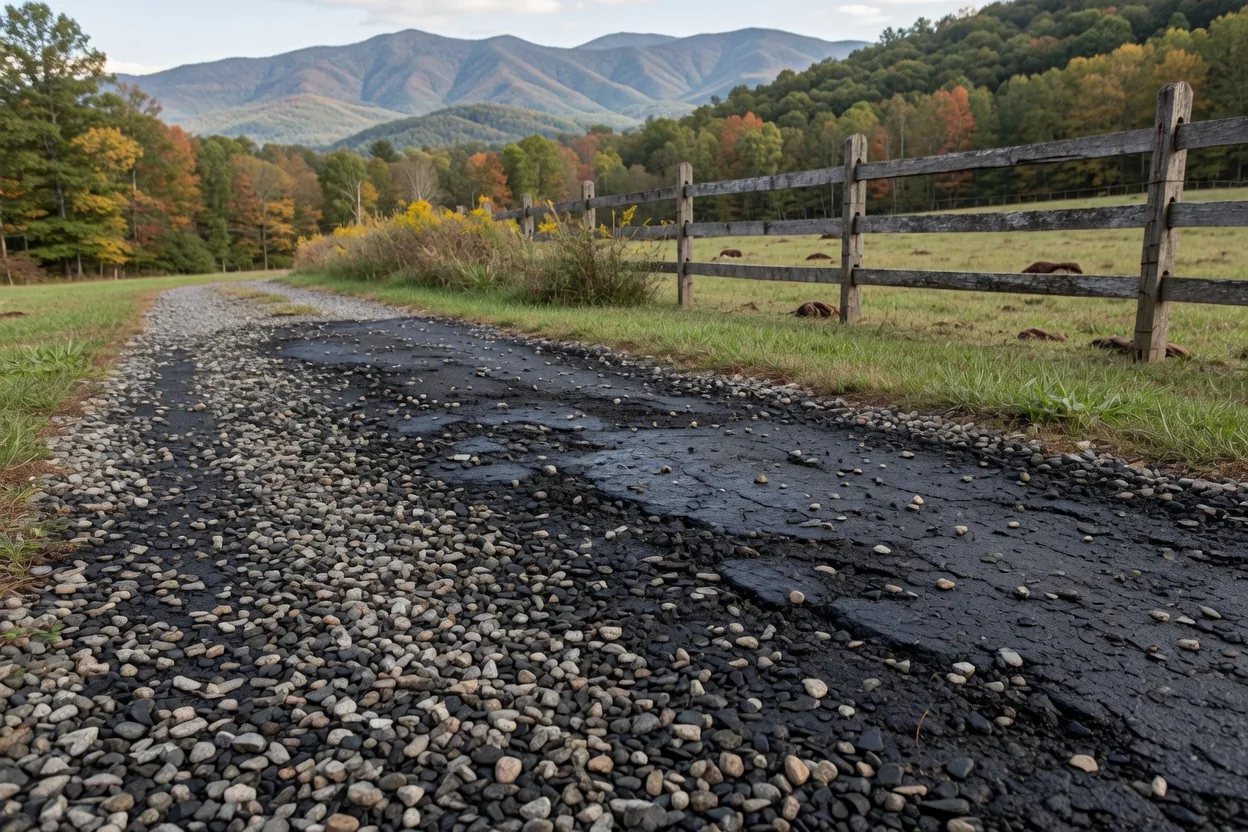
A significant share of Canton's older rural and residential properties still run on gravel — serviceable in dry weather, but a mud problem through winter and a recurring maintenance cost every spring. Converting to asphalt makes sense when a property owner is already spending annually on gravel replenishment, the grade is workable, and vehicle traffic volume justifies the upfront investment.
The decision that drives a conversion quote is what lies underneath the existing gravel. Gravel that is well-compacted, properly crowned, and draining correctly can serve as part of the asphalt base, which reduces excavation cost substantially. Gravel that has migrated, softened, or mixed with the clay subsoil typical of this part of Haywood County usually needs to come out before engineered crush-and-run goes in. A site visit is the only way to know which situation you are in — no responsible number comes without one.
The gravel-to-asphalt conversion guide walks through the evaluation criteria: what makes an existing base reusable, what full excavation adds to cost, and how to read a quote that accounts for what is actually on your lot rather than what a contractor assumes from the street.
Permits and NCDOT driveway access rules
Any new driveway or significant modification to an existing one that connects to a state-maintained road in North Carolina requires a driveway permit from NCDOT. In Haywood County, that covers a wide range of roads that are state-maintained even though they run through residential neighborhoods or rural stretches that feel like local streets. The permit governs the access point geometry, sight-distance clearance, and culvert sizing when one is needed under the approach.
Getting this right before paving starts is not optional. An access configuration that does not meet the standard can require removing finished pavement to relocate or resize the connection at your expense. Apply through NCDOT Connect early in your planning window, particularly if your property sits on a steep approach or a rural road with constrained sight lines. A contractor who regularly works in Haywood County can tell you quickly whether your project needs review and how long that process typically takes.
Two public sources worth a look before any driveway work: the NC Department of Transportation sets the rules for driveways that connect to state-maintained roads, and the NC Department of Environmental Quality covers how runoff from paved and graded ground is supposed to be handled.