Mountain rainfall changes the math on every driveway here
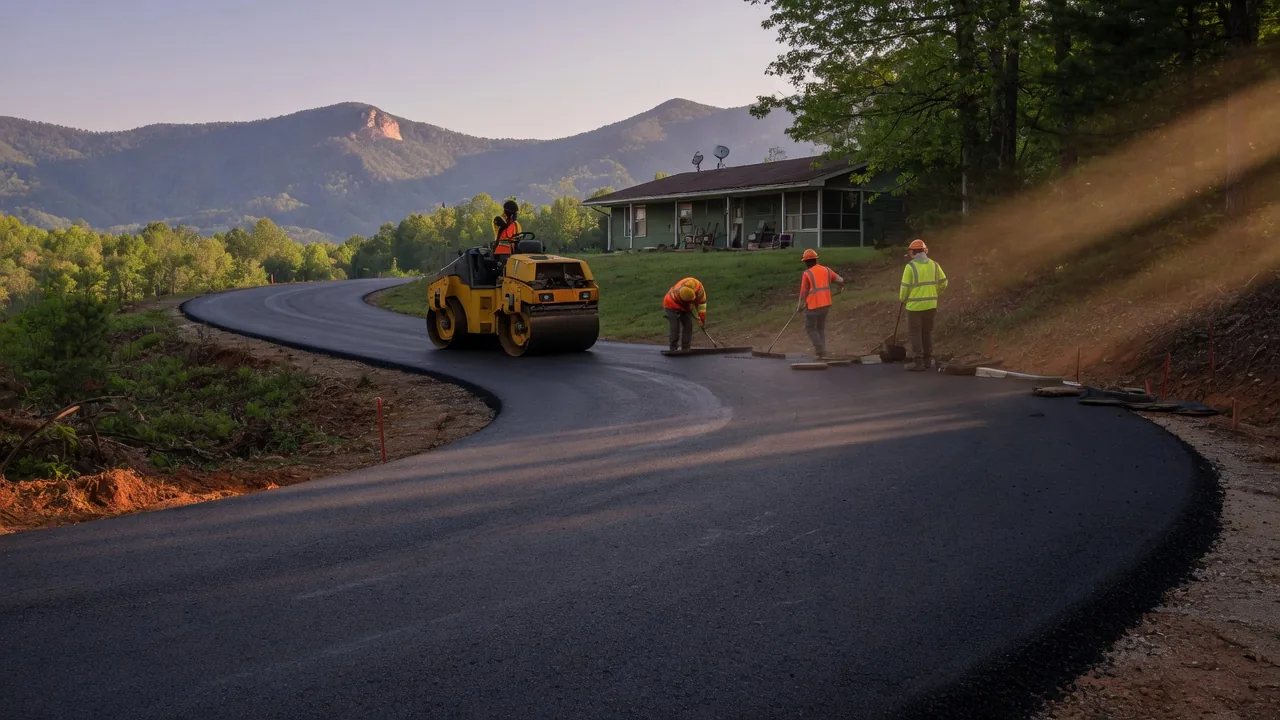
Brevard sits at the foot of the Blue Ridge escarpment in Transylvania County, a geography that captures more atmospheric moisture than almost anywhere in the eastern United States. The same orographic lift that fills the county's waterfall corridors deposits far more annual rainfall on residential lots here than in the Piedmont counties to the east. A tar and chip driveway installed without accounting for that reality won't last; one built around it will outlast plain asphalt on a shaded mountain lot and require less upkeep than gravel.
The terrain adds another layer: most residential lots in and around Brevard carry meaningful grade. Driveway pitch, cross-slope drainage, and where runoff goes after it leaves your stone surface all determine whether a tar and chip installation holds its edges and keeps its aggregate locked in over time. Federal disaster history reflects this: 16 declared events over 1993-2026 years touch this county, storm and flooding categories consistently leading the list. Read that record as a drainage brief before you read it as anything else.
A surface that fits mountain character
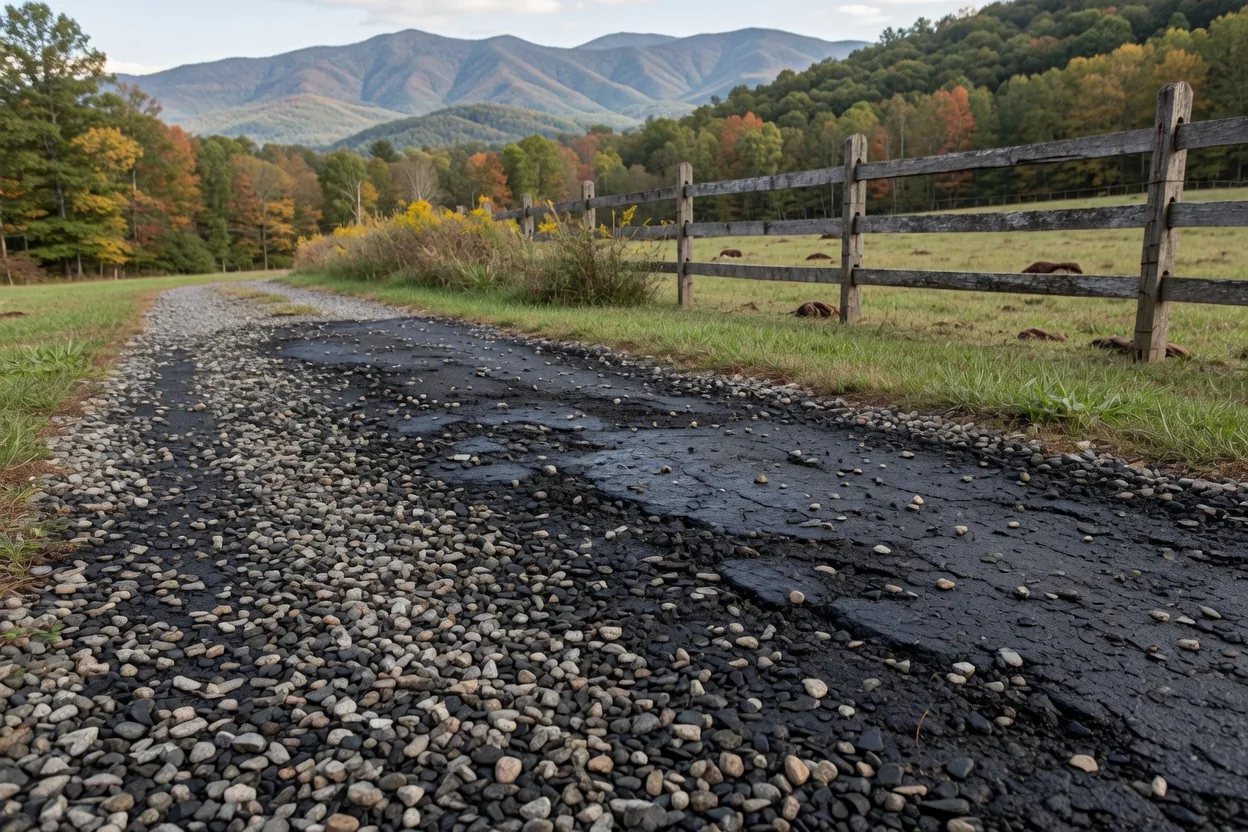
Tar and chip — also called chip seal — bonds crushed stone aggregate directly into a hot asphalt base layer. The result is a textured, slightly permeable surface that gives a long mountain driveway the character of native stone without the cost of full-depth asphalt. In Transylvania County, where wooded lots and long approach lanes are common, tar and chip reads like it belongs in a way that smooth blacktop rarely does. Aggregate color can be matched to local stone, and the rough texture outperforms polished asphalt on shaded driveways that stay damp and collect leaves through the shoulder seasons.
Homeowners weighing the move from gravel will find the comparison closer than expected — the gravel-to-paved comparison page walks through the full side-by-side. The short version: tar and chip delivers a gravel aesthetic with bound edges, meaning no stone migration into lawn margins, defined driveway edges year-round, and easier snow removal without a plow blade catching loose aggregate. For driveways over about 800 square feet, the economics favor tar and chip over annual gravel resprads once repeated hauling costs are factored in.
What Brevard-area jobs actually cost
Most residential tar and chip projects in Transylvania County price by the square foot, with the final number shaped by access grade, drainage prep, aggregate selection, and whether the existing base needs work before the surface install begins. Grade matters more here than in flatland counties: a steep approach lane takes more preparation material and labor to create proper cross-slope than a flat suburban driveway of the same square footage. The ranges below assume a sound base in serviceable condition. See the full tar and chip cost breakdown for line-item detail on base repair, edge banding, and what drainage work typically adds.
| Scope | Typical Size | Installed Range |
|---|---|---|
| Chip seal over existing sound asphalt | 500–800 sq ft | $1,750–$5,200 |
| New install, standard residential lot | ~1,000 sq ft | $3,500–$6,500 |
| New install, longer mountain driveway | ~1,500 sq ft | $5,250–$9,750 |
| New install, extended approach lane | ~2,000 sq ft | $7,000–$13,000 |
| Add: drainage prep and regrading | varies | +$500–$1,500 |
Mountain-lot jobs near Brevard frequently carry a drainage line item that flatland quotes never include. Treat any proposal that skips drainage assessment as incomplete rather than competitive.
Permits, drainage, and what NCDOT requires
Any driveway connecting to a state-maintained road in North Carolina requires a NCDOT driveway permit before work begins. In rural Transylvania County, the majority of residential driveways fall under this requirement. Applications go through NCDOT Connect, and the NC Department of Transportation's residential access standards cover drainage, setback, and culvert requirements that directly affect how a tar and chip driveway is built at the road connection. Skipping the permit step creates liability if your driveway's drainage affects the road shoulder or a neighboring property.
Beyond the permit, the practical question is where water goes once it leaves your surface. Transylvania County's rainfall totals mean a driveway without deliberate crown, cross-drainage, or culverts will channel water in ways that undercut the asphalt base and separate aggregate from the binder. A properly designed tar and chip driveway for this area includes cross-slope or crown grade, rock-lined swales or French drains where slope concentrates flow, and correctly sized culverts at any low-water crossing. These are not optional refinements in this county — they are what separates a fifteen-year installation from one that needs rework in five.
Timing the install and choosing the right crew
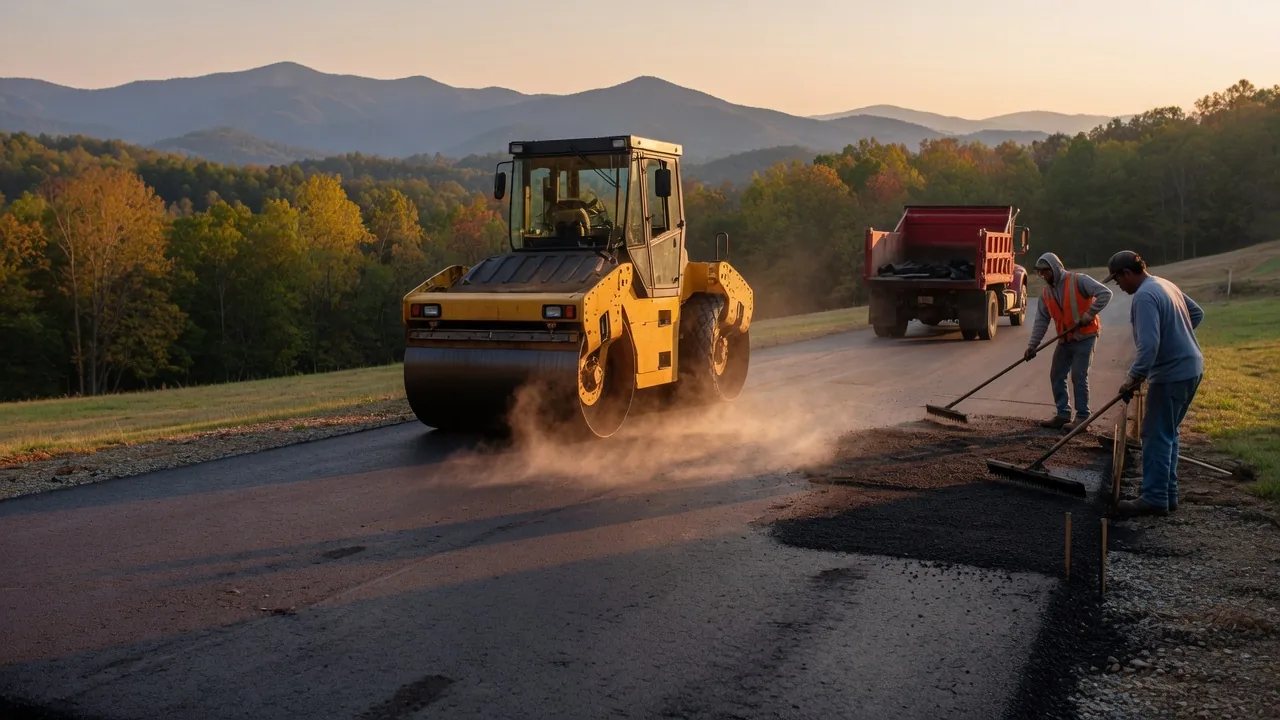
Chip seal requires warm, dry pavement and a stable weather window for the binder to set and traffic to seat the aggregate properly. Transylvania County's mountain weather can close those windows quickly — the National Weather Service forecast for the southern Blue Ridge shifts faster than lowland forecasts, and an experienced crew builds that variability into their scheduling rather than betting on a marginal forecast day. A contractor who won't delay for weather is one who will cut corners at your driveway's expense.
The questions that separate capable crews from marginal ones in this market: do they pull the NCDOT driveway permit themselves, or hand it to the homeowner? Do they assess drainage before they quote the surface? Have they worked long-grade driveways where aggregate wants to migrate under repeated traffic? The full install walkthrough at our tar and chip service page covers what a proper scope visit includes and what to ask before signing anything.
The maintenance schedule most Brevard homeowners should expect
Tar and chip is not a set-it-and-forget-it surface, but its maintenance is predictable. A properly installed driveway in Transylvania County's climate typically holds up well for ten to twenty years before needing a reseal or fresh chip application, depending on traffic level, tree cover, and how reliably the drainage system performs over time. The chip layer weathers and embeds over the first few seasons as tires seat it — that process is normal and does not indicate a failing surface.
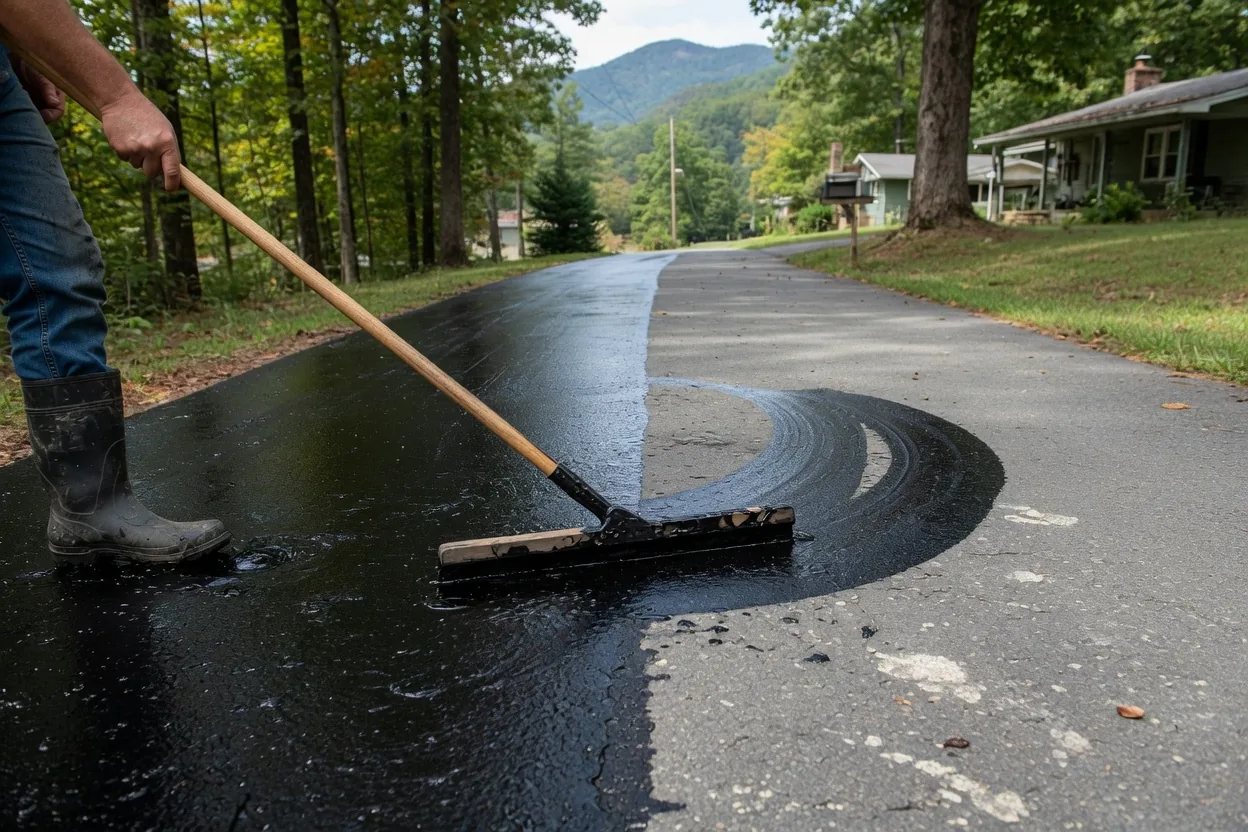
What does signal a problem: pooling water at the driveway edges, loose aggregate migrating after the first few weeks of use, and any section where the binder shows through without aggregate coverage. Those point to drainage or installation issues, not material failure, and should be addressed before the next full reseal cycle. Annual visual inspection costs nothing; catching a drainage problem early costs a small fraction of what it takes to relay a section of base.