The slope problem that defines driveway repair in Mills River
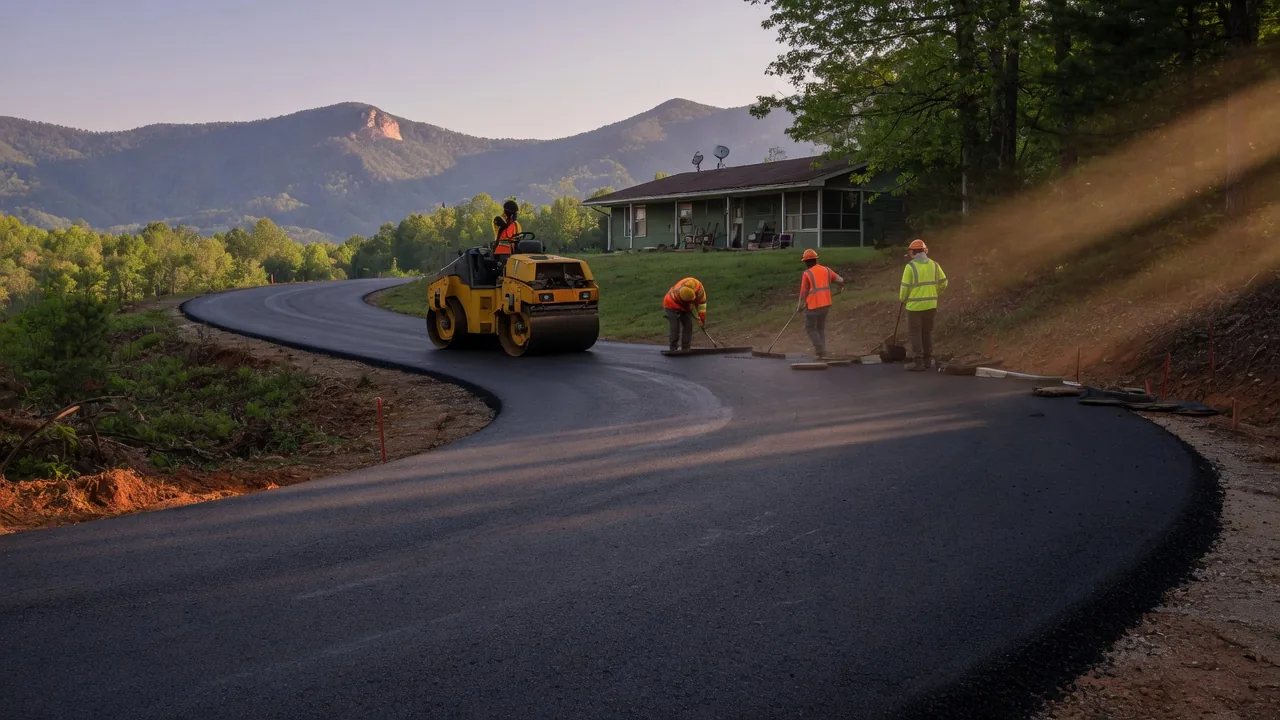
Mills River sits in the French Broad River watershed in western Henderson County, where the valley floor meets the first serious climbs toward the Pisgah ridge. Residential driveways along NC 280, Crab Creek Road, and the side roads feeding into the hollows west of town routinely navigate fifteen to twenty feet of elevation change between the road and the garage door. That slope is the defining fact of driveway repair here. Water that lands on a flat piedmont driveway runs off the surface and does its damage slowly. Water that lands on a sloped driveway in Mills River runs toward the low side — and if the crown grade is even slightly off, it pools, then works downward into every crack it finds.
Henderson County's clay-heavy soils amplify this. The profiles in the French Broad watershed expand when wet and contract when dry, the same moisture cycle that moves basement walls here also lifts and settles driveway edges over time. Edge cracking concentrated at the downhill perimeter, soft spots near the foot of the run, and potholes that cluster where runoff lingers after rain are the signature failures of this terrain. Repairing the surface without correcting the drainage is work that will need redoing — usually within two to three seasons.
Recognizing damage before the scope grows
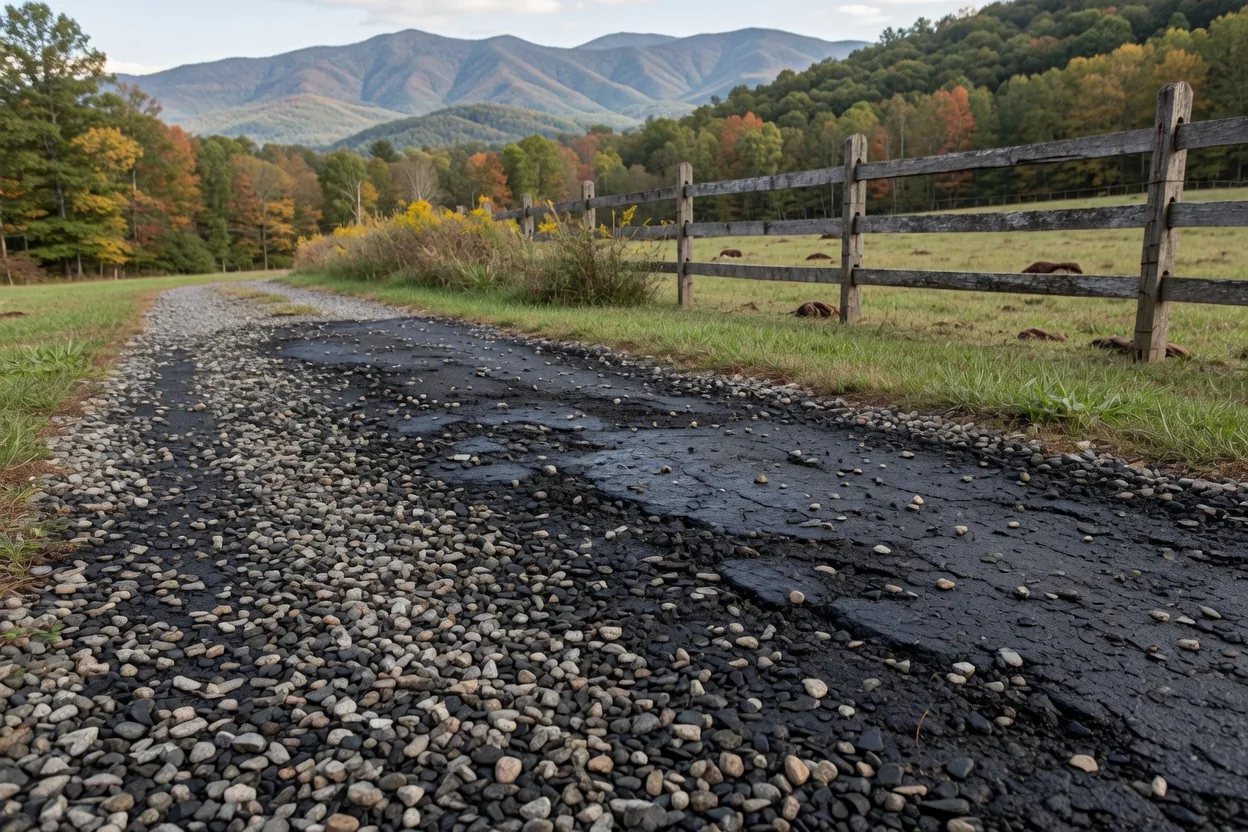
Asphalt signals failure before it fully fails. The complete range of crack types and what causes each is covered on the asphalt driveway cracking page, but Mills River driveways show a recurring pattern: edge cracking along the downhill side within two to four feet of where the asphalt meets the yard, and driveway potholes that concentrate at the low end of the run where tires brake hardest and runoff lingers longest after storms.
Signs worth acting on before the repair scope expands: any crack wide enough to pass a credit card through, a section that flexes visibly underfoot, and color variation that tracks where moisture stays longer than it should. Movement that appears after heavy rain and firms back up between storms points to a subbase losing its bearing. Movement that is steady and grows regardless of weather is structural. Both cost less to address while the surrounding surface is still holding — once a soft zone spreads, patching gives way to resurfacing.
What repair costs in the Mills River area
Scope determines price, and slope adds scope. A crack fill on a flat driveway and a crack fill on a twelve-degree grade with a drainage problem are two different jobs. The table below covers the most common repair types and their ranges for residential driveways in this area. Every figure sits inside the site-wide asphalt repair pricing framework; local factors can narrow a range or push a job toward its top, never past it.
| Repair Scope | What It Addresses | Typical Range |
|---|---|---|
| Crack filling (up to ½ inch wide) | Surface sealing, slows water infiltration | $250–$500 |
| Pothole patching — cold mix, 1–3 holes | Individual holes, immediate temporary fix | $250–$450 |
| Pothole patching — hot mix, professional | Larger holes, better bond and durability | $350–$650 |
| Edge repair and slope regrading (20–40 ft) | Downhill edge cracking, crown drainage | $450–$900 |
| Partial resurfacing — overlay on failing section | Alligator cracking, wide soft zones | $600–$2,500 |
| Full driveway repair with drainage correction | End-of-life surface, subbase instability | $1,800–$4,500 |
A quote that does not separate the drainage grading line from the asphalt surface line is combining two distinct scopes into one unmarked number. Ask for them itemized — the answer tells you whether the contractor has thought through both, and it lets you phase the work if budget requires it.
Storm history and why western NC asphalt ages faster
Henderson County has recorded 16 federal disaster declarations over 1978-2026, the large majority in the storm and flood category. Each of those events pushed water at driveways, culverts, and aprons built to drier assumptions. National Weather Service data for the western NC mountains shows this region consistently outpacing state rainfall averages, with the heaviest events clustering in late summer and early fall — the same window when asphalt is most porous from heat-cycle oxidation.
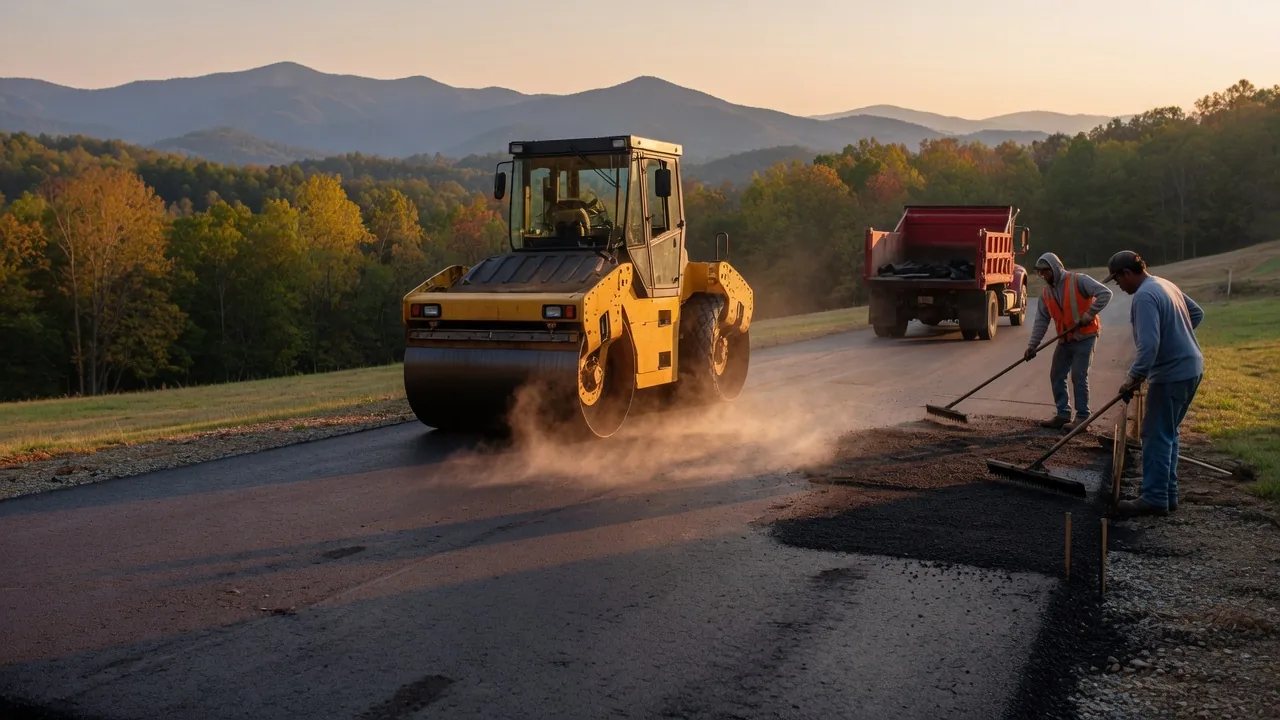
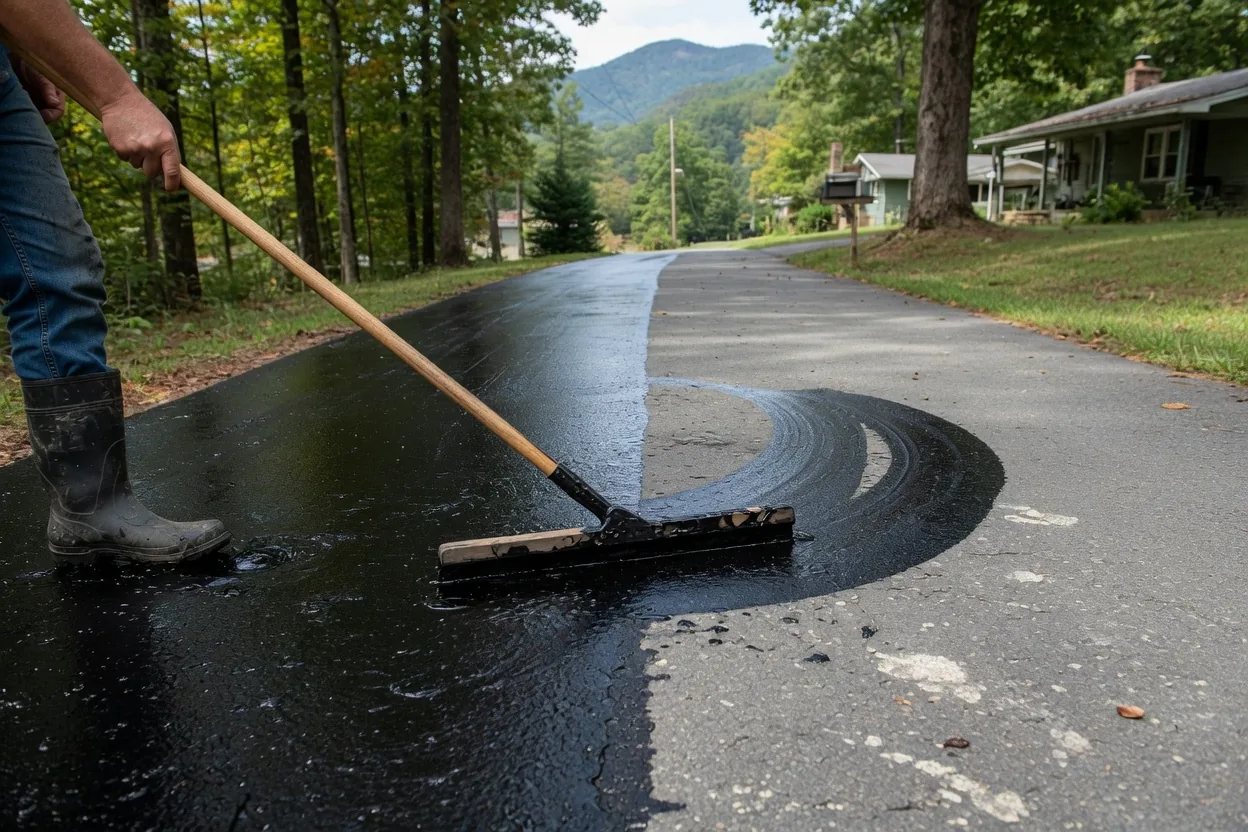
The result is a faster failure cycle than the piedmont or coastal plain. Cracks that open in July from thermal contraction become infiltration points in August rains. The freeze-thaw cycles that Mills River's elevation delivers in January push that water downward and pop the subbase. Sealcoating every two to three years is not optional maintenance at this latitude and elevation — it is what separates a driveway that holds twelve years from one that needs resurfacing at seven.
When a permit applies: the apron and the state road line
Most driveway repair — crack filling, patching, resurfacing confined to the property — requires no permit. The threshold changes at the apron: the transition strip between your driveway and the public road. If your driveway connects to a state-maintained road, work that alters the apron, changes the crown grade, or affects drainage at the road shoulder requires a driveway permit through NCDOT. Applications go through NCDOT Connect, the department's online portal for encroachment and driveway permits — it handles submissions, status tracking, and approvals.
For driveways on roads maintained by the county rather than the state, the relevant authority is Henderson County. If you are unsure which agency maintains the road in front of your property, that is the first question to settle before any apron work begins. A contractor who lays hot mix into an apron transition on a state road without verifying the permit requirement is transferring that risk to you, not carrying it themselves.