How Blue Ridge elevation rewrites the paving calendar
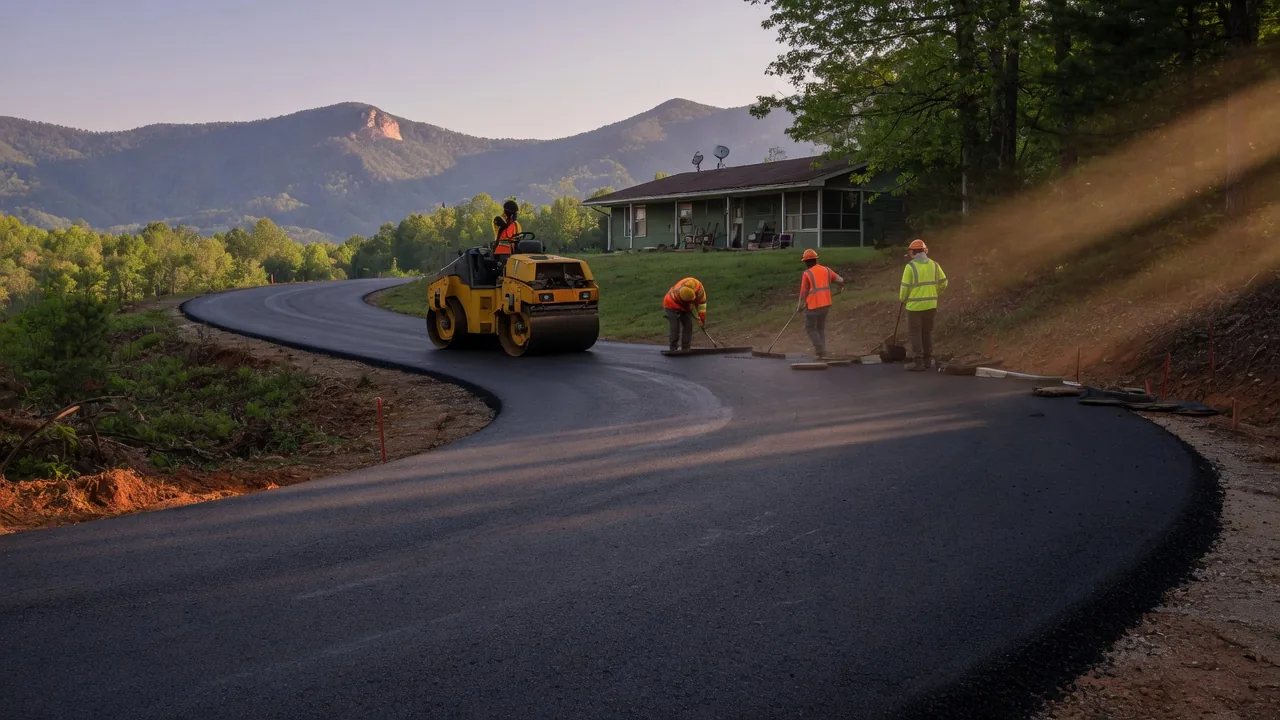
Asheville sits at roughly 2,100 feet above sea level, in a river basin ringed by ridgelines that push the surrounding terrain well above 4,000 feet. That elevation does not make asphalt paving impossible — it makes it seasonal in ways that lowland estimates do not account for. A contractor pricing your driveway from a schedule built around Charlotte or Greensboro conditions may show up in March expecting workable temperatures and find ground too cold to compact properly. The mountain paving calendar is a real operational constraint, not a scheduling preference.
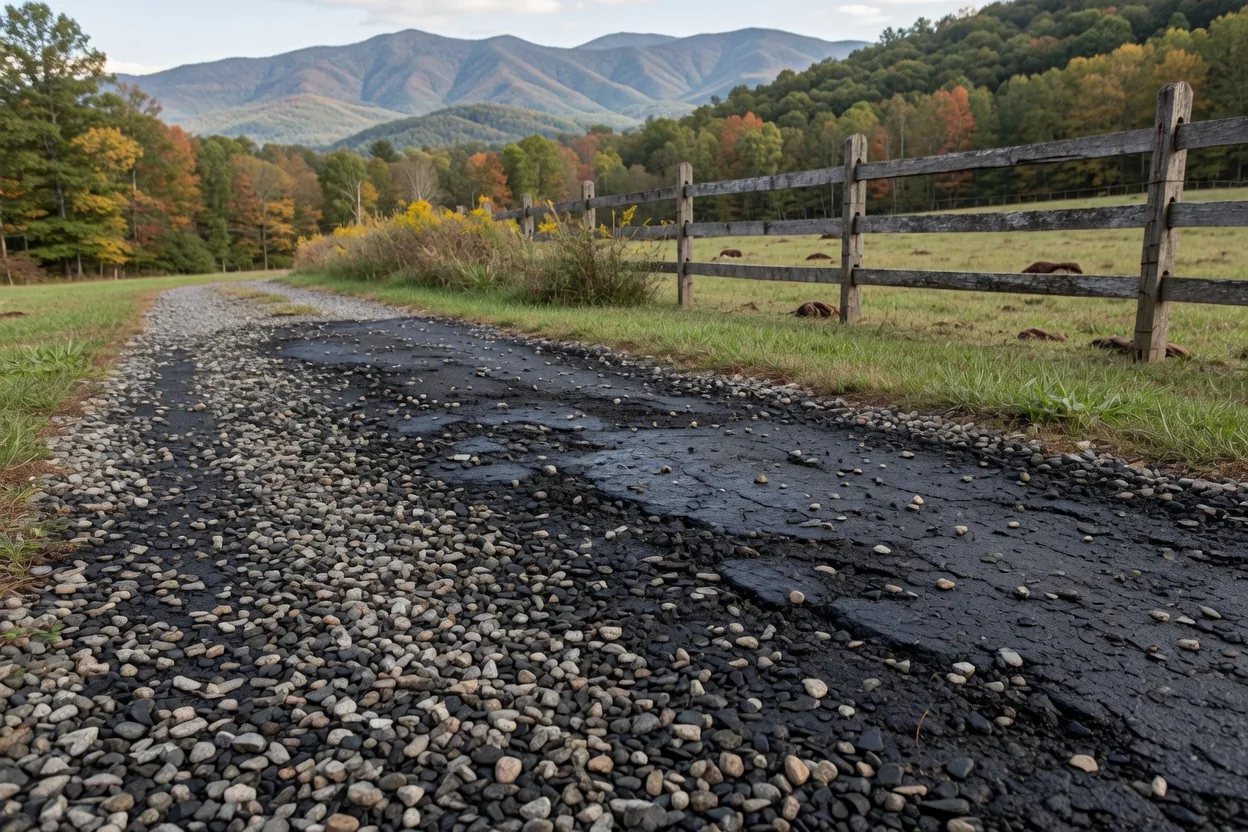
Asphalt is a heat-sensitive material. The mix leaves the plant at 275–325°F and needs the surrounding air and base course to stay warm enough — above 50°F, ideally 60°F or more — for the crew to roll and close the mat before it stiffens. At lower elevations in North Carolina, that window can open in late February or early March. In Buncombe County valley areas, reliable conditions typically begin in late April. Properties on ridge roads above 3,000 feet may not see consistent workable conditions until early May. A driveway that doesn't compact properly because temperatures dropped faster than the plan accounted for will show raveling and surface failure within a few seasons — work that looked fine on install day. Getting the timing right is about the service life of a $3,500–$8,000 investment, not comfort.
The temperature and weather conditions that govern the work
Three conditions need to be met simultaneously for a successful pour: ambient air temperature above 50°F and rising (not falling), base course temperature above 45°F, and no rain in the forecast for the duration of the pour and initial cure. Of these, base temperature is the one most often overlooked on mountain jobs — a week of cold nights will push ground temperature well below what the midday air reading suggests.
| Season / Conditions | Paving Verdict |
|---|---|
| Late April – May (valley floor) | Prime window — air and base temps stable, low afternoon storm risk |
| June – August | Viable; schedule early starts to beat afternoon thunderstorms |
| September – mid-October | Excellent curing conditions; book early, window closes fast at elevation |
| Late October – November | Marginal — first hard frosts arrive; outcome is elevation-dependent |
| December – March | No — ambient and base temps too low for reliable compaction |
| Any month with rain forecast | No — hard stop regardless of temperature |
The National Weather Service office serving western North Carolina issues mountain-specific forecasts and frost advisories for Buncombe County. Contractors who work this terrain regularly check overnight low forecasts before committing to a start time; if yours doesn't ask about the forecast before scheduling, that is worth raising. Rain is an absolute stop regardless of air temperature: water on a fresh mat cools it unevenly and disrupts the bond to the base course. Afternoon convective storms are common in the southern Appalachians in summer, which is why experienced mountain crews often begin jobs at first light.
Spring and fall: how the two windows work at this elevation
Spring: The reliable paving season in Buncombe County valley areas opens in late April. A warm week in early March can tempt a schedule commitment, but the mountains regularly deliver a hard frost in April — sometimes into late April on north-facing slopes and higher-elevation lots. Properties along the French Broad River corridor, which runs at lower elevations through the county, warm up earlier than lots on the ridge roads above Weaverville or Montreat. The City of Asheville resumes road maintenance paving in spring based on the same temperature thresholds that govern private work — watching when city crews are active is a reasonable real-world signal.
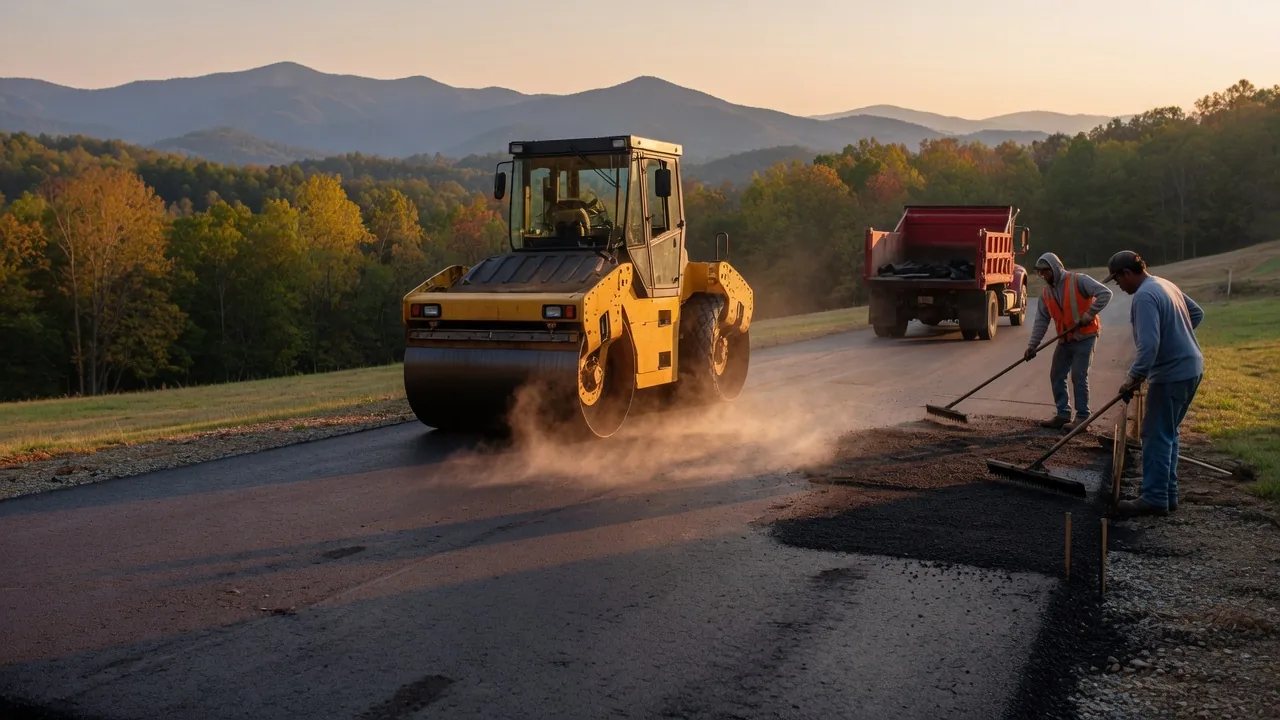
Fall: September and October are, in many years, the best paving window in western NC. Temperatures are stable, humidity is lower than summer, and afternoon storm frequency drops. Compaction is clean and the mat cures at a consistent rate. The window closes faster here than in the Piedmont — first hard frosts in Buncombe County valleys arrive in mid-October most years, and by November the risk of cold-weather compaction failure rises sharply. Plan your fall project for September or early October, not as a late-October contingency.
Summer: July and August temperatures are more than sufficient for asphalt work, but the afternoon storm pattern in the southern Appalachians is a genuine scheduling risk. Buncombe County has experienced 19 federal disaster declarations over 1973-2026, with severe weather and flooding accounting for a significant share of those events. The French Broad watershed makes summer water risk concrete rather than theoretical. Experienced local crews start jobs early and build in storm contingency time; factor that into your schedule expectations if planning summer work.
Permits for driveway connections to public roads
Not every driveway requires a permit, but every driveway connecting to a state-maintained road does. In North Carolina, that includes a large share of Buncombe County's secondary road network — roads that look residential but are maintained by the state. For these connections, a driveway encroachment permit is required from the NC Department of Transportation before work begins. Applications go through NCDOT Connect, and approval timelines vary; filing the permit is something to handle months before your target paving window, not the week you want to start.
For driveways connecting to city-maintained streets within Asheville, the permitting authority is the City of Asheville rather than NCDOT. Requirements around curb cut dimensions, drainage grades, and setback from the edge of travel lanes differ between city and state jurisdiction. Your contractor should know which office governs your parcel — a contractor who says no permit is needed on a connection to a public road is worth questioning. The permit protects you from a stop-work order mid-project and documents the work for resale and insurance. For a full look at what the job involves start to finish, see the asphalt paving overview.
What season choice does to your cost and cure timeline
Peak demand in Buncombe County runs May through September. Paving contractors fill their schedules in that window, material plants run at capacity, and the gap between calling today and getting a crew on site can stretch to weeks. The homeowners with the most scheduling flexibility are those who get on a contractor's calendar in late winter for a spring start — not those responding to a warm spell in June.
Residential driveway paving in western NC typically runs $3.50–$7.00 per square foot for the asphalt work, with total project cost depending heavily on base preparation. Mountain lots are often not flat, and grading and base-course work on a steep ridge-side property can represent a substantial share of the budget. A properly compacted and graded base on a Buncombe County slope will outlast a cheaper job that skipped that step — the elevation and freeze-thaw cycle punish substandard prep faster than flatland conditions do.
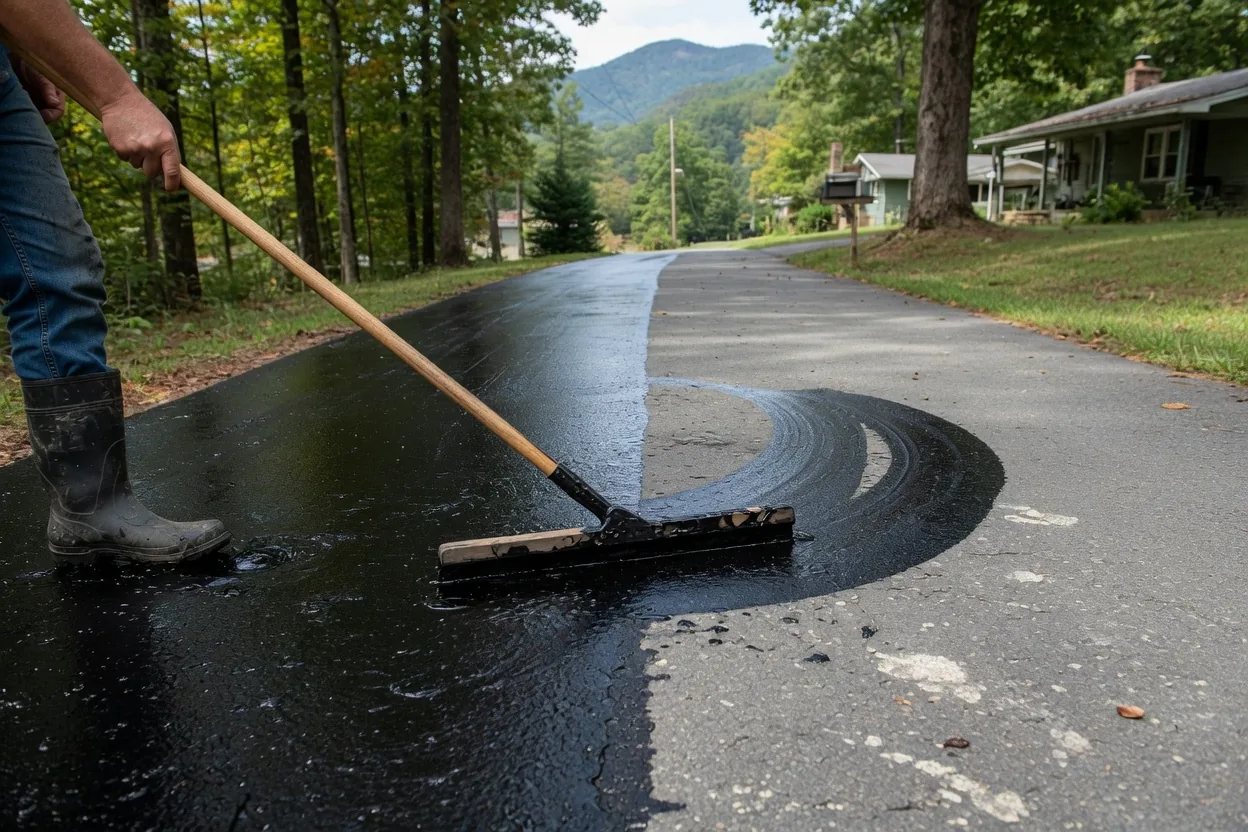
Two decisions that follow paving are directly tied to the season you choose. Sealcoating should not go down until the fresh mat has cured fully, and that timeline varies with temperature — a September pour in Asheville's cool nights behaves differently from a July pour in full sun. See how long after paving to sealcoat for the specifics. Driving on fresh asphalt too soon causes rutting; the safe window is shorter in hot weather and longer in cool shoulder-season temperatures. See when you can drive on new asphalt for guidance calibrated to season.