Asheville's altitude is the hidden cost multiplier
Asheville sits at roughly 2,100 feet above sea level, and that elevation has a direct effect on asphalt binders. UV intensity climbs measurably above 2,000 feet, accelerating the oxidation that turns a dark, flexible driveway into the brittle, gray surface where cracks form. Combine that with Buncombe County's temperature swing — warm afternoons and near-freezing nights are a regular feature from October through April — and a driveway here can lose its sealer protection in two to three years instead of the three to five a homeowner on the Piedmont might expect.
That shorter maintenance cycle doesn't raise the cost of a single application, but it changes the lifetime math. A homeowner working from Charlotte expectations will find themselves behind on maintenance and paying for more crack repair on the next round. Sealcoating is still the most cost-effective way to extend asphalt life in this climate — it just needs to happen more often in the mountains than most national guides suggest. A driveway in Kenilworth or Woodfin that gets sealed on schedule looks meaningfully different at year three than one that was treated once and forgotten.
What homeowners in Buncombe County actually pay
Per-square-foot rates in this market run close to the state average. Most residential driveways in Buncombe County fall between 800 and 2,400 square feet — a pull from a ridge road up to a detached garage on a half-acre lot often sits toward the upper end. The variables that move the total are surface condition, driveway grade, and how easily a crew can position equipment. A steep, narrow drive off Leicester Highway takes more setup than a flat apron in Swannanoa or a Weaverville subdivision. These are working ranges, not quotes; a contractor who prices over the phone without seeing the square footage and grade is averaging loosely.
| Scope of work | Typical Buncombe range | What drives it |
|---|---|---|
| Two coats, level surface, light prep | $350 – $620 | square footage, sealer grade |
| Two coats, standard prep + crack fill included | $400 – $700 | surface condition, crack count |
| Two coats, steep-grade access + full prep | $450 – $850 | setup time, grade, drainage clearing |
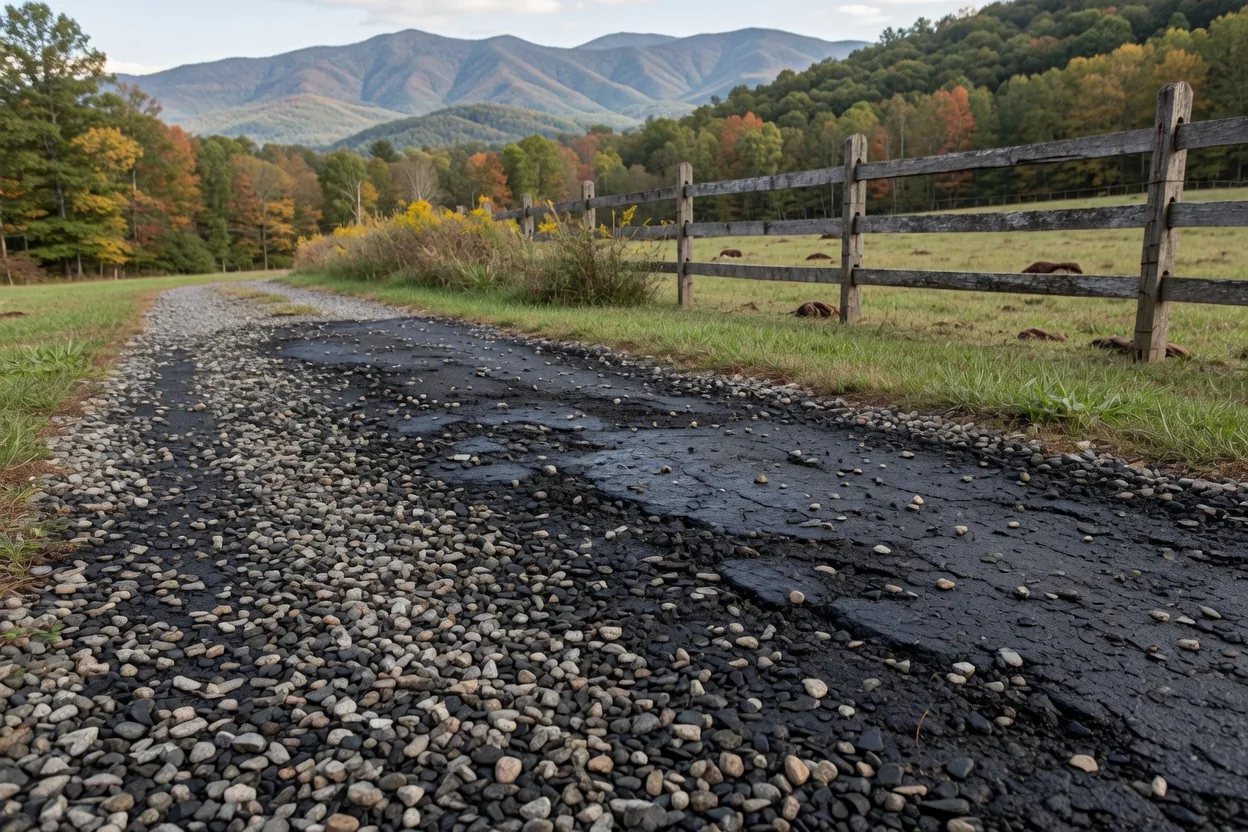
Surface damage beyond routine crack fill — potholes, alligatoring, or failed patches — should be addressed before sealer goes down. That structural work is priced separately and covered under asphalt driveway repair.
What slope and drainage do to prep time on mountain lots
The sloped driveways common in north Asheville, along the ridges above the River Arts District, and into the hollows off Merrimon Avenue require prep work that flat-lot contractors sometimes skip. On a grade, runoff concentrates at the base of the driveway and at the transition point where pavement meets the apron — exactly where sealcoating fails first if the surface isn't clean and dry before application begins.
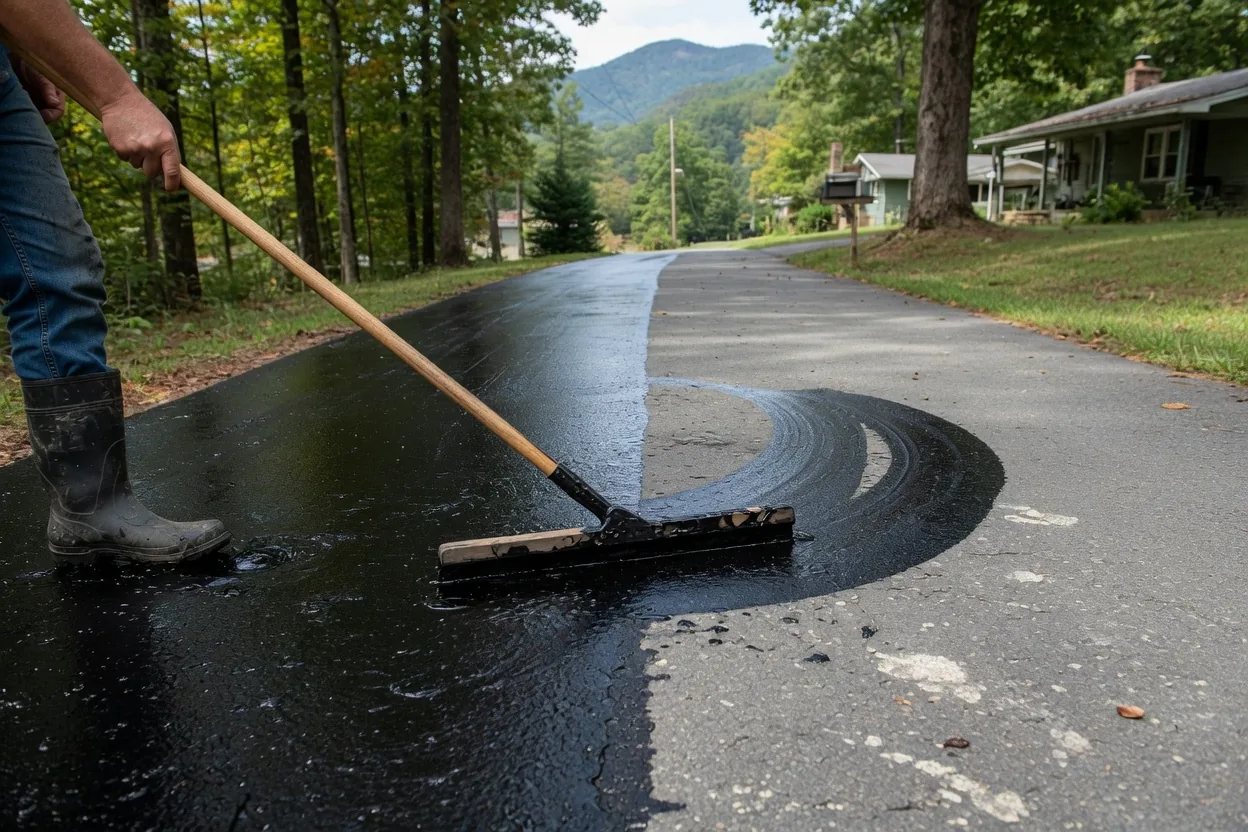
Sound prep on a sloped surface means clearing debris out of low-side joints, confirming the apron transition isn't holding water, and sometimes recommending a patch on surface damage that sealer alone won't bridge. Sealer applied over damp pavement or pooled moisture fails within a season, and the elevation-driven temperature swings here mean re-application costs arrive sooner than expected when that prep is skipped.
Storm frequency compounds the issue. Buncombe County has recorded 19 federally declared disaster events (1973-2026), most of them storm-related, and National Weather Service data confirm that Blue Ridge terrain drives convective storms capable of dropping two inches of rain in an afternoon. A driveway that doesn't drain properly soaks after every event and shortens whatever protection was just applied — making drainage assessment a genuine part of this job, not an upsell.
Scheduling around WNC's weather windows
Sealcoating requires dry pavement and air temperatures above 50°F — ideally 60°F or warmer through the cure window. In Buncombe County, the most reliable scheduling windows are late April through May and mid-August through mid-October. Summer months work, but afternoon convective storms build over the ridge frequently enough that a morning application gives the sealer several hours to set before weather becomes a factor.
One practical detail specific to WNC: fog and light moisture can roll off the Blue Ridge quickly, even on days that start clear. A professional crew watches for this and will hold application if humidity climbs enough to compromise adhesion. Scheduling for morning start time reduces that exposure considerably.
Avoid booking in the fall shoulder season without checking an extended forecast. A job applied on a 65-degree October afternoon can be compromised by an overnight frost — sealer needs 24 to 48 hours before temperatures drop below freezing. The National Weather Service Asheville forecast is the right reference when timing fall jobs. If the driveway was recently paved, the timing question is different; see how long after paving to sealcoat before scheduling anything.
Permits and right-of-way on NC driveways
Sealcoating on private pavement generally requires no building permit — it is maintaining existing asphalt, not creating new impervious surface. The exception involves work at the apron near a state right-of-way. If your driveway connects to a state-maintained road, the NC Department of Transportation may require a driveway permit for any work at or near that connection. Applications go through NCDOT Connect, and it is worth checking before a contractor cuts or resets an apron that reaches the state road edge.
For driveways within the City of Asheville, work extending to the curb or sidewalk zone falls under City of Asheville right-of-way rules. Standard sealcoating that stays on private pavement does not typically trigger this requirement, but if the crew is feathering sealer into a city sidewalk joint or resetting an apron against a city street edge, confirm the permit status before work begins. A stop-work order costs more to resolve than the permit application would have.
Making the bid comparison honest
Three questions separate a competitive bid from one that cuts corners:
- Coat count. Single-coat bids come in lower but wear faster — especially at Asheville's elevation. Two coats is the baseline the price ranges above reflect. See sealcoating application standards for what the protection difference looks like over a three-year cycle in this climate.
- Sealer type. Asphalt-emulsion, coal-tar, and acrylic formulations perform differently on UV-exposed mountain surfaces. Ask what product will be applied and whether the coverage rate per coat matches manufacturer specifications for your square footage.
- What prep is included. Crack fill and debris clearing are labor that low bids sometimes leave out. Confirm whether crack fill is included in the quoted price or priced separately — the table above assumes it is included in the two-coat totals.
When bids are far apart, ask each contractor to walk through their square-footage estimate and coat count. Those two numbers explain most legitimate gaps. The per-square-foot rate across this market holds at $0.18 to $0.35 — a two-coat bid that falls well below that range should prompt a specific question about what changed in the scope.