How Buncombe County grades shape the installed price
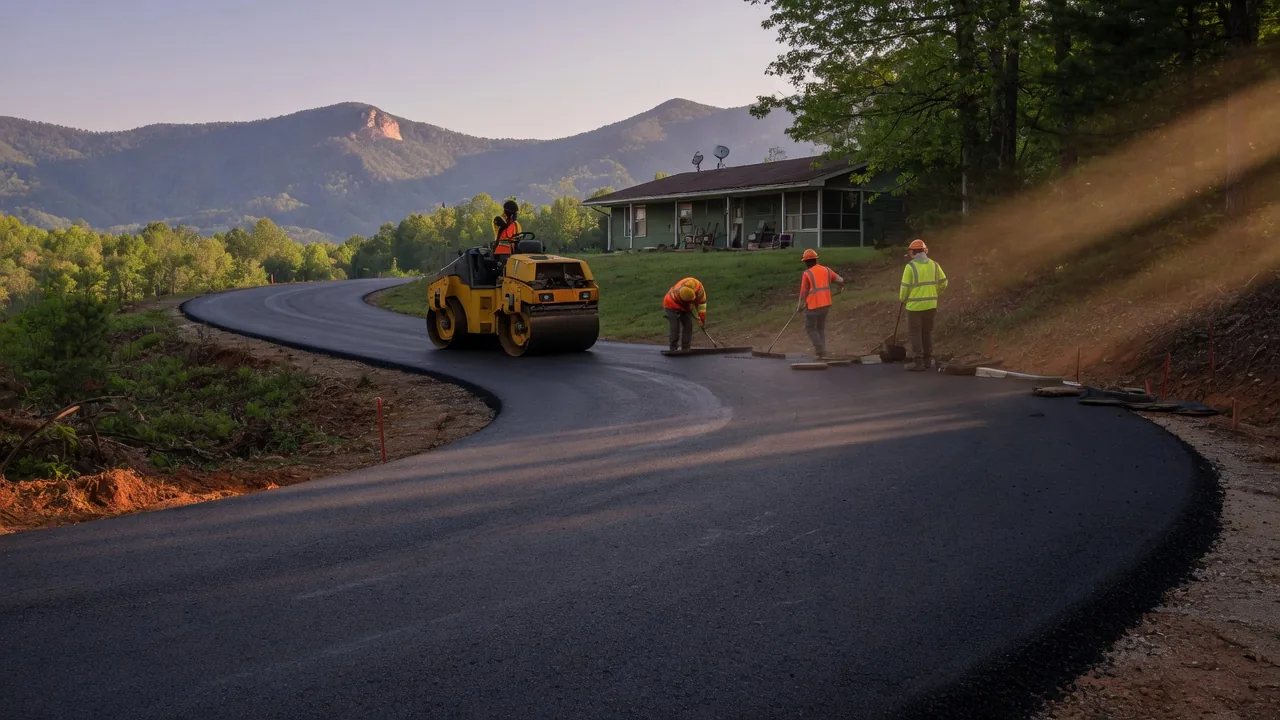
Homeowners searching national paving guides tend to see tar and chip quoted at the lower end of the range — flat suburban driveways in mild climates with straightforward bases. A Buncombe County driveway breaks that comparison quickly. Properties along the ridgelines above Weaverville, on the steep parcels west of Candler, or anywhere a driveway has to climb to meet the house rather than meet the road are working with a different engineering baseline than the national average assumes. A contractor who quotes the drive from a satellite view rather than a site walk is pricing a project that isn't yours.
| Scope of work | Installed rate | What drives it |
|---|---|---|
| Flat or gentle grade, sound existing base | $3.50–$4.50/sq ft | Single coat, standard aggregate, minimal sub-base work |
| Moderate slope, minor base repairs needed | $4.50–$5.50/sq ft | Grade correction, edge drainage, chip rate adjustment |
| Steep mountain drive, base rebuild or old-surface removal | $5.50–$6.50/sq ft | Engineered base depth, drainage channel, site accessibility |
These are working ranges for Buncombe County conditions, not quotes. A job that combines a deteriorated blacktop to remove, a long downhill run, and a yard that sheds uphill runoff directly onto the drive stacks all three cost drivers at once. Buncombe County has recorded 19 federally declared disasters over 1973-2026, most of them storm and flood events. That history shows up in base material failure every time a heavy event moves through the county — driveways where drainage was treated as optional tend to make themselves visible after those storms. Build the base to handle the county's rainfall or budget to do the job again inside a few years.
Tar and chip against asphalt: the cost comparison on mountain lots
On a flat suburban lot, the choice between tar and chip and asphalt comes down mostly to aesthetics and budget. On a Buncombe County hillside, the comparison gets more consequential. Smooth hot-mix asphalt is generally priced by ton of material and depth of lift; a thick, properly built asphalt surface on a steep slope often costs more per square foot than a tar and chip surface on the same property. What brings the gap back in asphalt's favor over time is maintenance: a well-installed asphalt drive is largely hands-off for the first decade, while chip seal benefits from a rejuvenating seal coat every several years to keep the aggregate bond healthy.
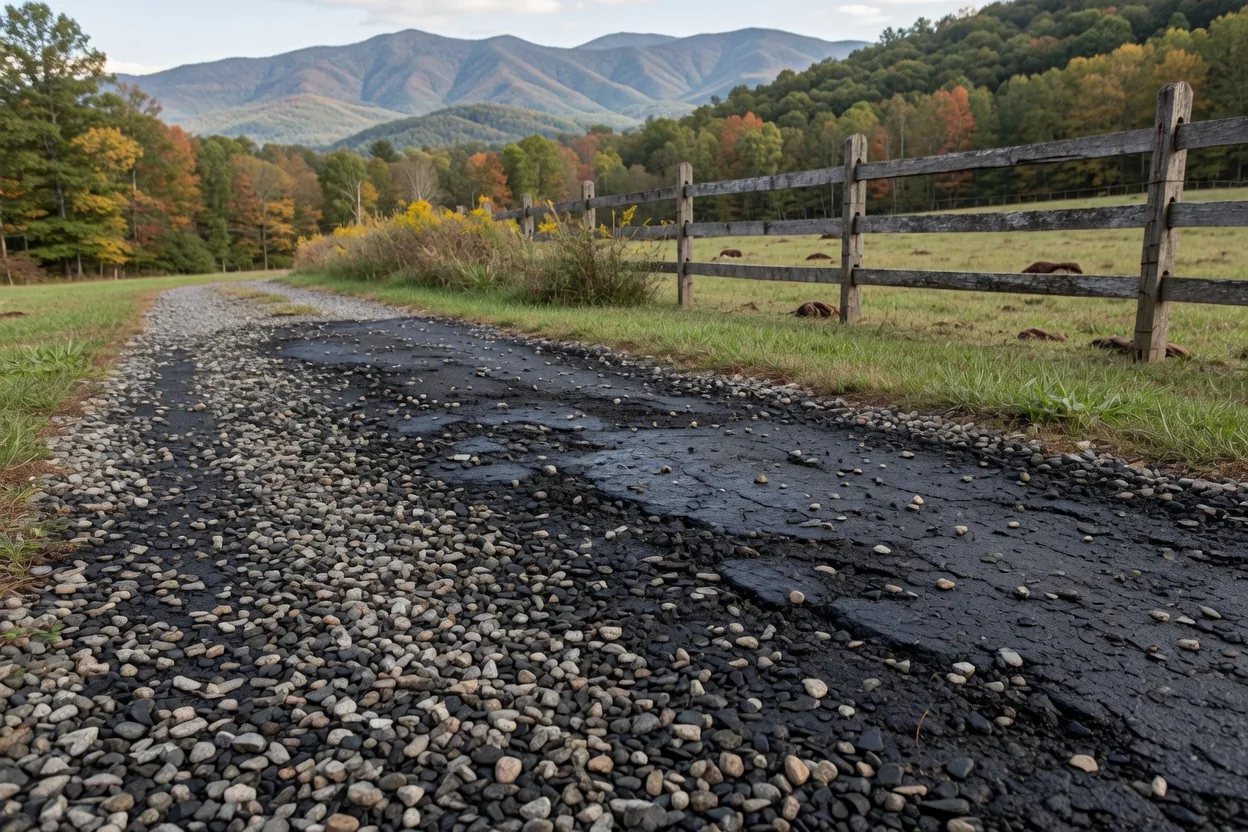
The performance argument for tar and chip on steep grades is real, and it has a cost dimension. The exposed aggregate grips tires and foot traffic on a wet or icy grade in a way smooth asphalt cannot. Asheville sits above 2,000 feet in elevation, and the area sees enough winter ice events that a polished blacktop descending steeply to a public road is a genuine hazard. That traction advantage does not appear as a line item in an asphalt quote, but it shows up every January. For a full price-range breakdown on the asphalt side, the asphalt driveway cost guide covers the asphalt-specific numbers for this market. For a closer look at the tar and chip installation process itself, the tar and chip overview walks through each step from base prep to final sweep.
The variables that push your quote up or down
Within the range in the table above, four variables account for most of the gap between the lowest and highest bids on similar-looking jobs:
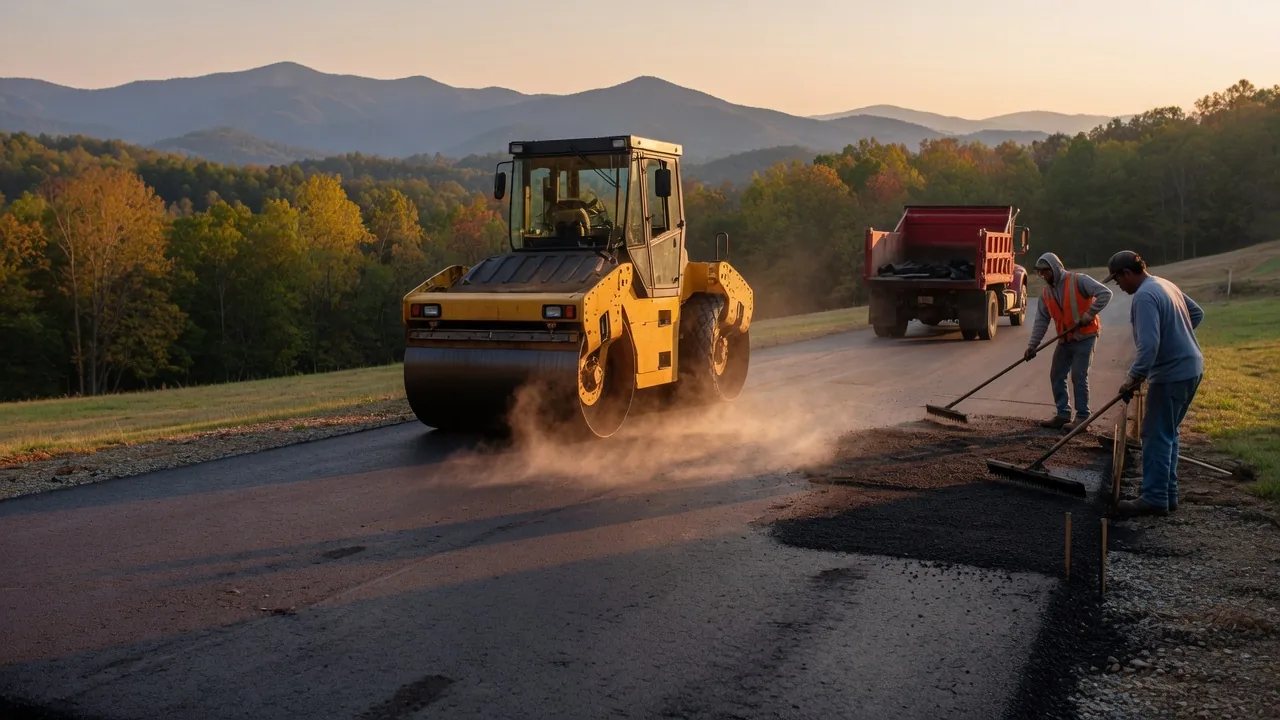
Driveway size and configuration. Price is set per square foot, so the difference between a 600 sq ft single-lane drive and a 1,800 sq ft double-wide with a turnaround is the entire project. Odd configurations — tight curves requiring multiple equipment passes, split levels, or a retaining wall running alongside — add labor that a straight rectangle avoids entirely.
What is already on the ground. A deteriorated asphalt or concrete surface that must be broken up, removed, and hauled before new work starts adds a real line item that is easy to miss when comparing surface prices. Gravel bases in solid condition can often be regraded and compacted as the new base, which saves meaningful money. Cracked blacktop with a failed sub-base beneath it cannot.
Base depth and drainage design. A driveway that collects standing water after a rain event needs its base corrected first — skipping that step means the new surface fails at the same locations as the old one. On a lot where intense rainfall events are part of the county's documented history, a cross-slope crown or a low-edge drainage channel is the most load-bearing line on the whole quote, not an optional upsell.
Aggregate grade and coat count. Standard grey crushed stone sits at the low end of material cost. Decorative options such as river rock or colored stone add cost. A second chip coat, sometimes specified on heavily traveled sections or on steep grades where the surface wears faster, also moves the installed rate toward the top of the range.
Permits and road access in Buncombe County
A standard driveway resurfacing on private property in Buncombe County typically does not require a county building permit. Two situations reliably change that: a new driveway connection to a state-maintained road, and paving work inside the Asheville city limits that modifies a curb cut or touches the public right-of-way.
If your driveway accesses a road maintained by the NC Department of Transportation, an encroachment permit is required before any crew starts work. Applications go through NCDOT Connect. This is not a formality — work done without the permit can require removal at the property owner's expense. Rural Buncombe County parcels are frequently on state-maintained roads that look identical to neighborhood streets. Confirm the road classification before scheduling the job, not after.
For properties inside the City of Asheville city limits, check with the City of Asheville development services team for current requirements. Drainage changes that route water toward adjacent lots or the public street can trigger additional review regardless of whether a standard permit applies. A contractor who assures you that no permits are needed without checking the road type and jurisdiction has not finished the pre-job work.
What to ask before signing a paving contract
Three habits protect your budget on a mountain lot:
Ask for a per-square-foot rate, not just a job total. Measurements sometimes shift between the satellite view and the actual site walk. A per-square-foot rate keeps the math honest when the scope adjusts. Every bidder should give you this number before the visit ends.
Lead with drainage before the surface conversation. Ask each contractor what happens to water that hits this driveway in a hard rain. A quote with no drainage answer is a quote for a job you may be redoing in a few years — particularly true on lots where the yard slopes toward the drive or where the low edge terminates in a flat area. If you are coming from a gravel surface, the cost to pave a gravel driveway covers what base evaluation and prep typically adds regardless of which surface you choose.
Compare base-prep specs, not just surface price. Two bids for the same driveway can show the same surface rate and diverge entirely on sub-base work. Ask each contractor to describe base preparation separately. That line item is usually where the real price difference between bids lives, and it is where the quality difference shows up after the first winter — when one driveway is still intact and one is not.
How the two surfaces compare over a ten-year horizon
Installation price is only part of the comparison. Over a decade, the surface that costs less to install may not cost less to own.
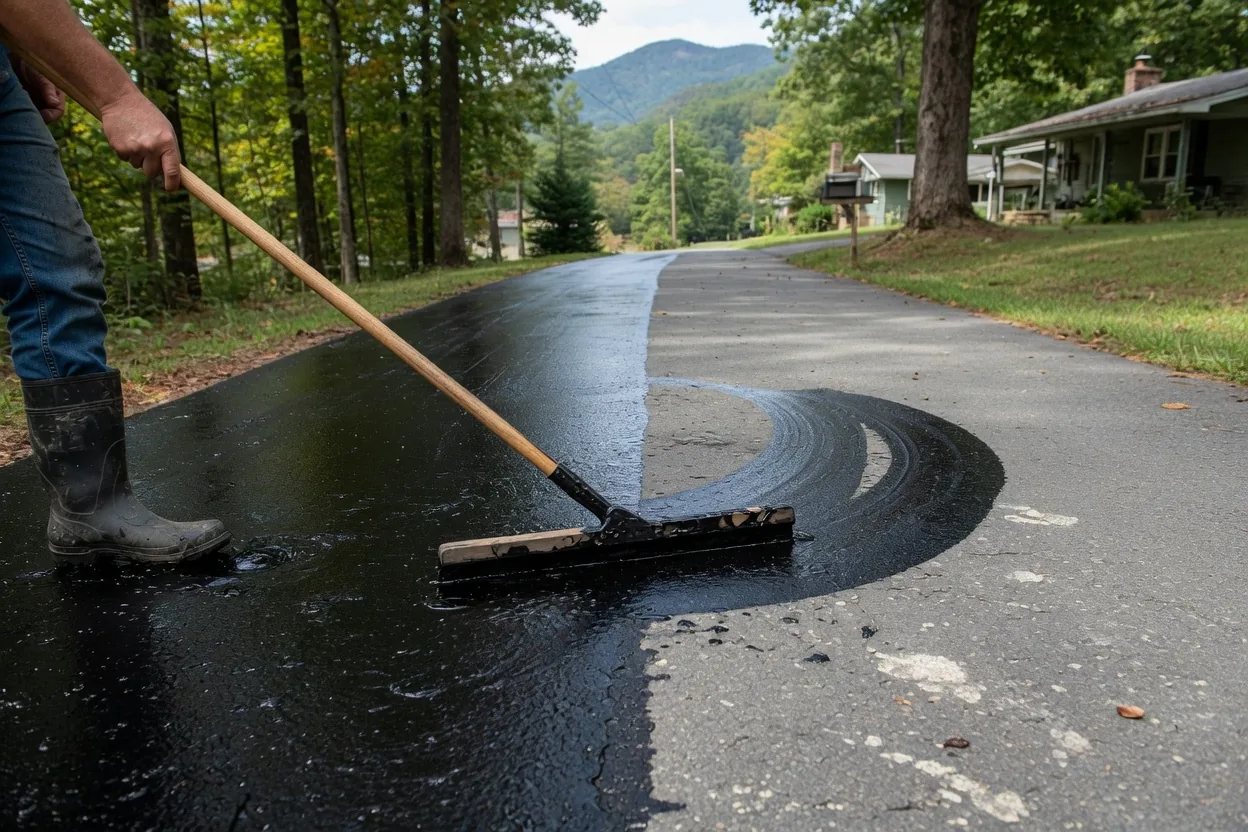
Tar and chip typically needs a rejuvenating seal coat every several years to keep the aggregate bond healthy. The exact interval depends on traffic, sun exposure, and installation quality — a chip seal on a shaded north-facing drive in Fletcher ages differently than one on a sun-exposed south-facing lot in Fairview. When the seal coat is due, the cost is a fraction of the original install. When it is deferred too long, chip loss accelerates and the surface needs more significant repair rather than a routine refresh.
Smooth asphalt requires its own cycle of crack sealing and sealcoating, typically every three to five years for the sealcoat pass. Individual asphalt maintenance events tend to cost less per square foot than a chip seal rejuvenation, but they recur more often. The larger asphalt cost typically arrives at the end of service life, when a failing surface requires a mill-and-overlay or full replacement rather than a surface refresh.
Neither surface wins cleanly on lifecycle cost. The honest comparison depends on what that specific driveway's traffic, grade, and sun exposure look like — numbers your installer should be able to walk through based on the actual site. A bidder who cannot discuss the maintenance schedule for what they are proposing has not yet finished earning the quote.