Elevation is the factor that reshapes the sealcoating equation here
Waynesville sits at roughly 2,600 feet on the eastern edge of the Smokies — high enough that winter here is a different animal than what Asheville or Charlotte driveways deal with. The elevation means Haywood County driveways cycle through freeze and thaw more often, and more deeply, than most of western North Carolina. Every freeze-thaw cycle is a small hydraulic event inside every unsealed crack: water expands when it freezes, widening the gap from the inside. A sealed surface turns that water before it penetrates the asphalt. An unsealed surface in this climate generates patching costs that compound year over year.
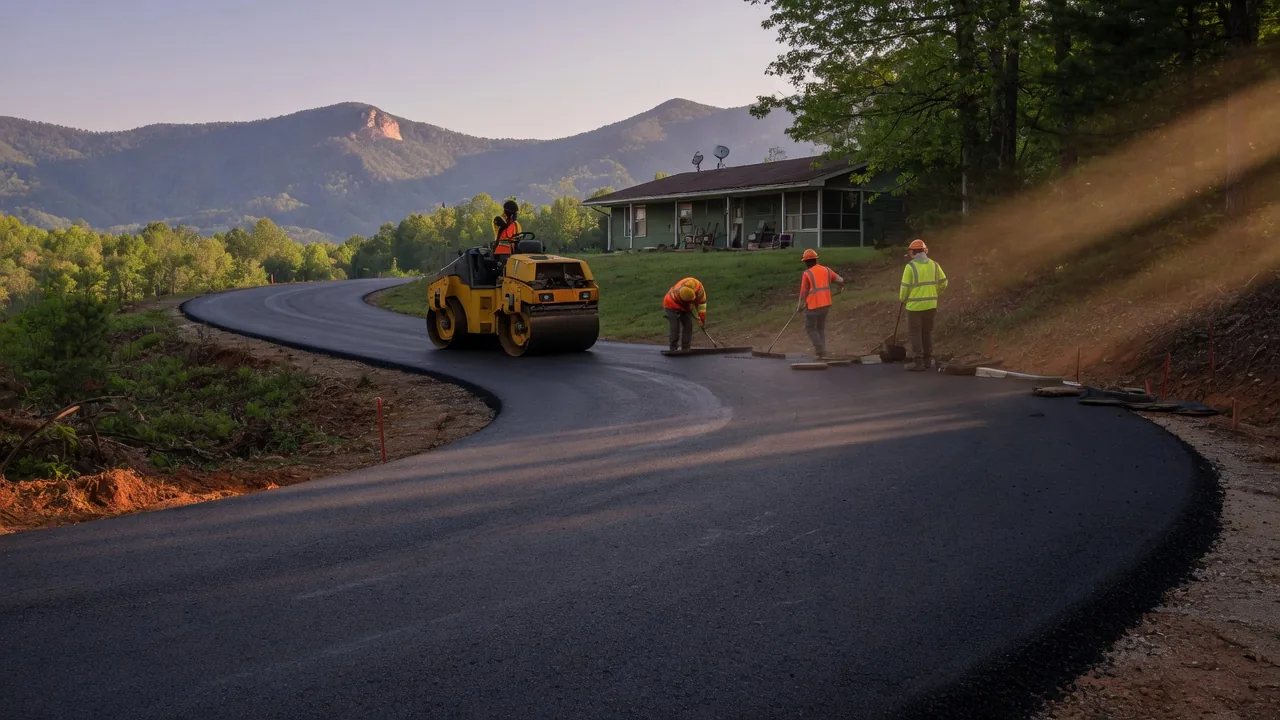
The terrain compounds the issue. Waynesville driveways are not flat. A steep apron that sheds water cleanly in summer holds ice in winter, and the melt-refreeze sequence at the pavement edge and expansion joints accelerates cracking where the slope changes. Any sealcoating job in town that does not account for grade and drainage is solving half the problem. The right crew asks about pitch and pooling before they quote square footage.
Waynesville's housing stock reflects its history as a mountain resort and regional hub: craftsman bungalows near downtown, mid-century ranches on the hillside streets north and south of Main Street, and newer construction tucked into ridge-cut lots in the surrounding county. Those driveways vary widely in age and condition, but nearly all deal with the same core problem — mountain cold, slope, and water — in whatever combination the site geometry produces.
Scope and price in Haywood County
The table below reflects current local conditions. Haywood County crews work shorter seasons than contractors on the piedmont, and travel time to rural addresses outside Waynesville proper gets factored into bids on smaller jobs. For the full line-item breakdown, the sealcoating cost guide covers materials, prep, and coat counts in detail.
| Scope | Typical surface area | Price range |
|---|---|---|
| Small single-car driveway | ~500 sq ft | $90–$175 |
| Standard two-car driveway | ~1,800 sq ft | $325–$630 |
| Large driveway or turnaround | ~2,400 sq ft | $430–$840 |
| Crack fill before sealing (add-on) | Per job | $80–$200 |
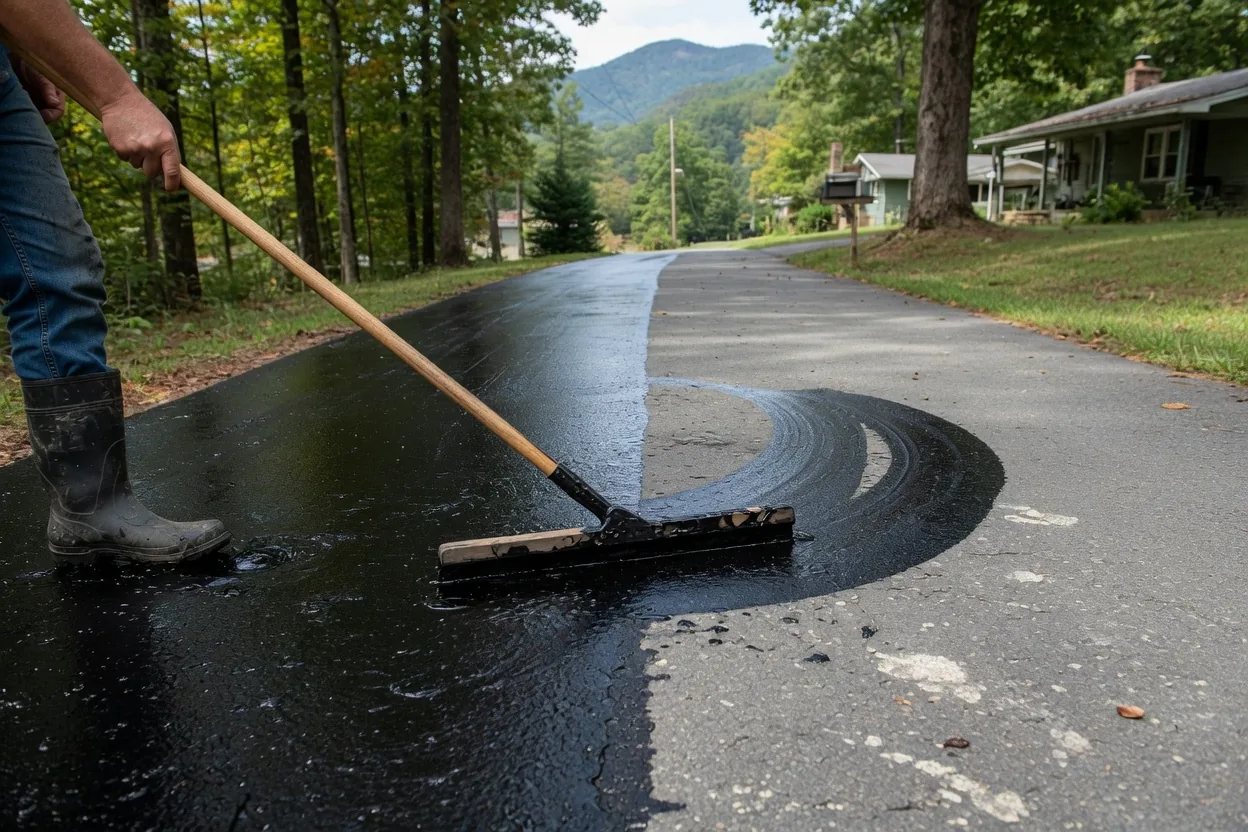
Steep grades and heavy cracking push jobs toward the upper end of the range — not because the square footage changes, but because prep time and material thickness increase. A driveway that has gone several seasons without sealing often needs crack fill before any sealer goes on, and that step should appear as its own line on any honest quote. Two full coats is the standard for durable protection; a single-coat quote priced the same as a two-coat job elsewhere is worth a direct follow-up question.
Mountain precipitation and the asphalt failure cycle
Haywood County carries 19 federal disaster declarations across 1973-2026, nearly all of them storm and flood events. The county sits in a terrain pocket where moisture off the Smokies meets cold air off the Blue Ridge, and the result is some of the highest annual precipitation totals in the eastern United States. The National Weather Service consistently records Waynesville among the wettest monitoring stations in the region. All of that water has to go somewhere, and on a driveway without a sealed surface, it goes into the asphalt.
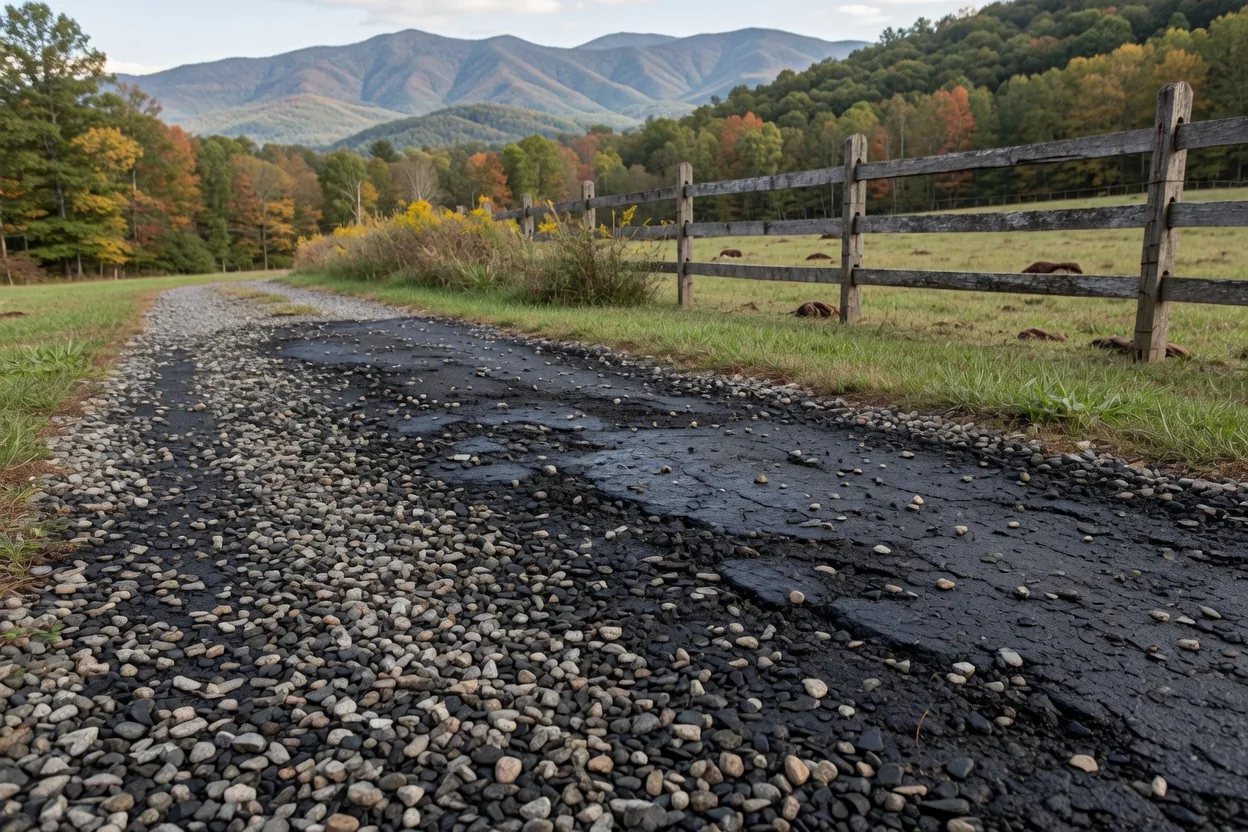
The failure cycle is predictable: rain finds small cracks, cold temperatures freeze the water inside them, the cracks widen, and the following rain event gets deeper. Two or three years of that cycle on an unsealed surface turns manageable hairline cracking into structural damage that sealcoating alone cannot fix. Sealing early and resealing on schedule is the maintenance that keeps the repair bill from becoming a replacement bill. A general overview of what sealcoating covers explains the prep and protection steps in full.
Before any crew quotes sealcoating, the condition of the existing surface should drive the conversation. A driveway showing active alligator cracking — the interconnected network pattern that means the sub-base has shifted — needs more than a sealer. Sealcoating is surface maintenance, not structural repair, and those two categories should not be confused when setting the scope.
The application window at this elevation
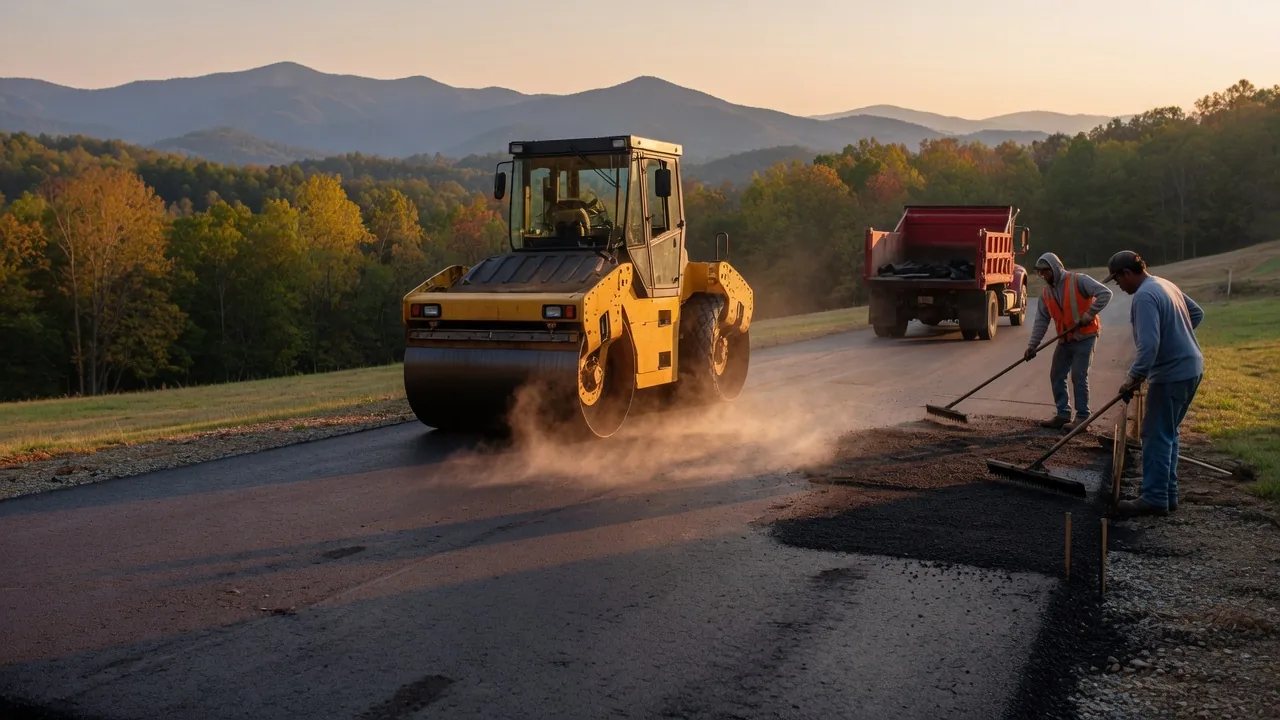
Coal-tar and asphalt-based sealers need sustained temperatures above 50°F — not just at application time but for the hours afterward while the product cures. At Waynesville's elevation, that window opens roughly a month later in spring and closes earlier in fall than it does in the piedmont. The practical calendar runs from late April through October, with the most reliable conditions in May through September when overnight lows stay consistently above the minimum threshold.
New driveways have an additional timing requirement that catches first-time owners off guard. Fresh asphalt contains oils that need to off-gas before a sealer will bond correctly; applying sealer too early locks those oils in and produces a surface that peels rather than protects. The specific wait time depends on mix, traffic load, and the temperatures the driveway has seen — the guide on post-paving wait times covers those factors precisely. In a mountain climate where summer temperatures run cooler than average, that cure period often needs to be longer than a contractor accustomed to lower-elevation work will suggest.
Hiring a sealcoating crew in Waynesville
Three checks specific to this market: ask whether the crew has worked steep Haywood County driveways — grade management during application is a real skill, and an applicator who learned on flat piedmont lots may rush a mountain job; ask how they handle crack fill before sealing, since a sealer applied over open cracks in a freeze-thaw climate lifts within a season; and ask what they do about drainage at the driveway apron. The third question separates crews focused on long-term performance from crews focused on coat coverage.
If your driveway connects to a state-maintained road, any work at the curb cut may require a permit before the crew starts at the road edge. The permit process runs through NCDOT Connect, and initiating it is typically the property owner's responsibility. The step is straightforward, and confirming it early avoids a stop-work situation once active work is visible near the road.