A growing community built on uneven ground
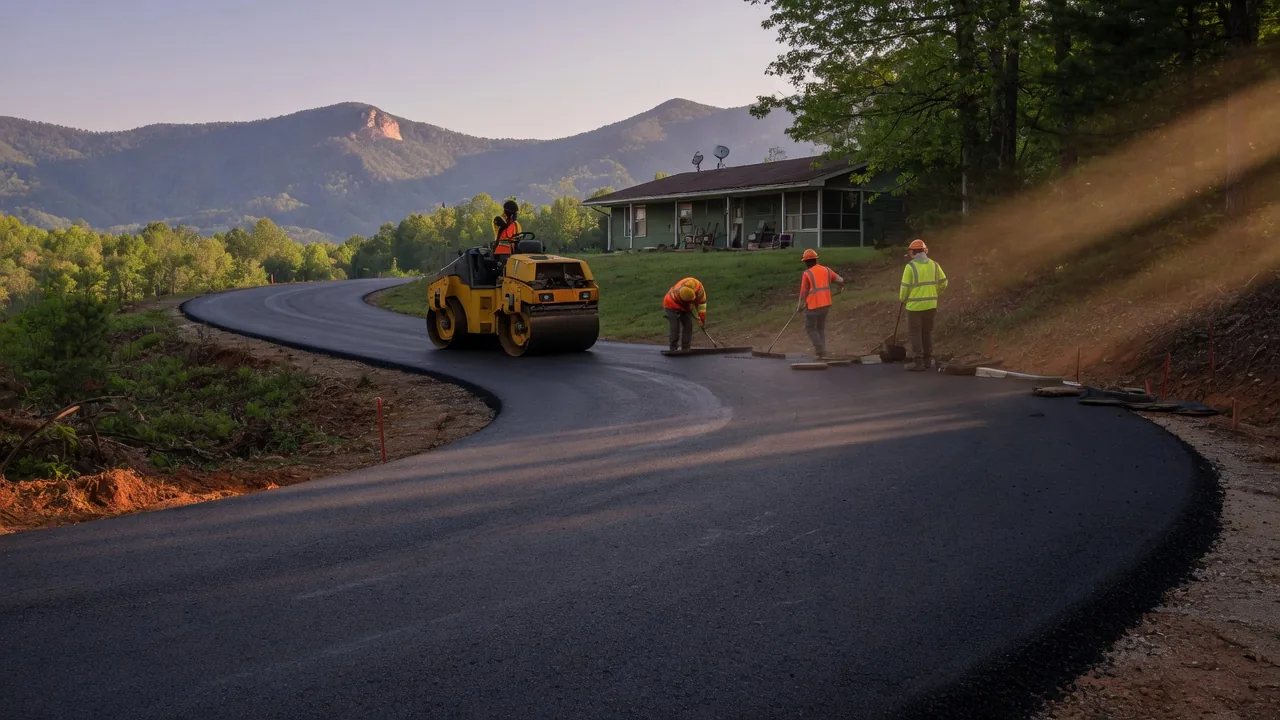
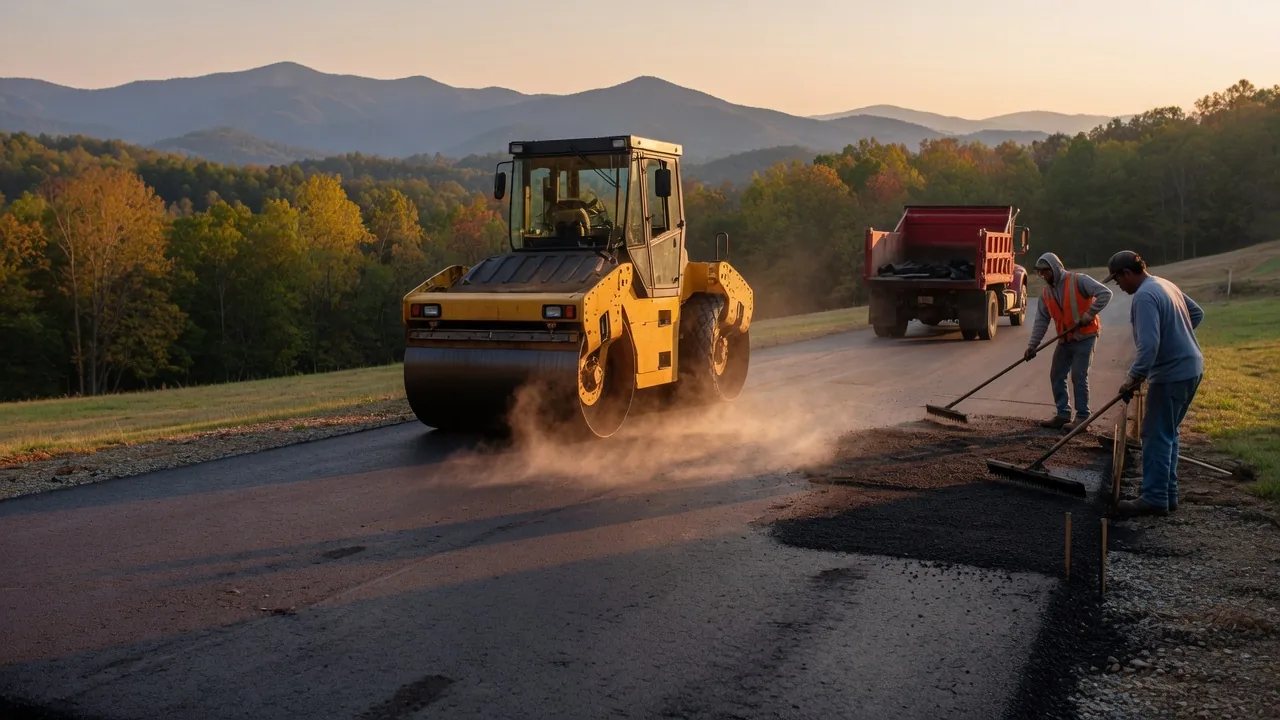
Mills River incorporated as a town in 2003, and the growth since has been fast: former apple orchards and farm parcels along the US-191 corridor and the NC-280 river valley floor have given way to subdivisions and residential roads that did not exist a generation ago. That transition shapes most asphalt calls here. You have long gravel driveways originally sized for farm equipment — now handling daily commutes — sitting next to new subdivision lots graded steep into the hillside. Henderson County terrain means very few properties are flat: a driveway that looks like a gentle roll from the road can carry a 10- or 15-percent grade at its steepest point, which changes base preparation, drainage design, and cost per square foot in ways a square-footage-only bid will never capture.
Clay-heavy mountain soil compounds the slope problem. When rainfall saturates clay, bearing capacity drops and base material shifts — which is why driveways that skip proper compaction and drainage here fail on a two- to four-year cycle rather than the twenty-year lifespan a well-built surface delivers. Any complete scope for asphalt paving in this part of Henderson County starts with grade and soil, not just dimensions.
What the numbers look like for Henderson County jobs
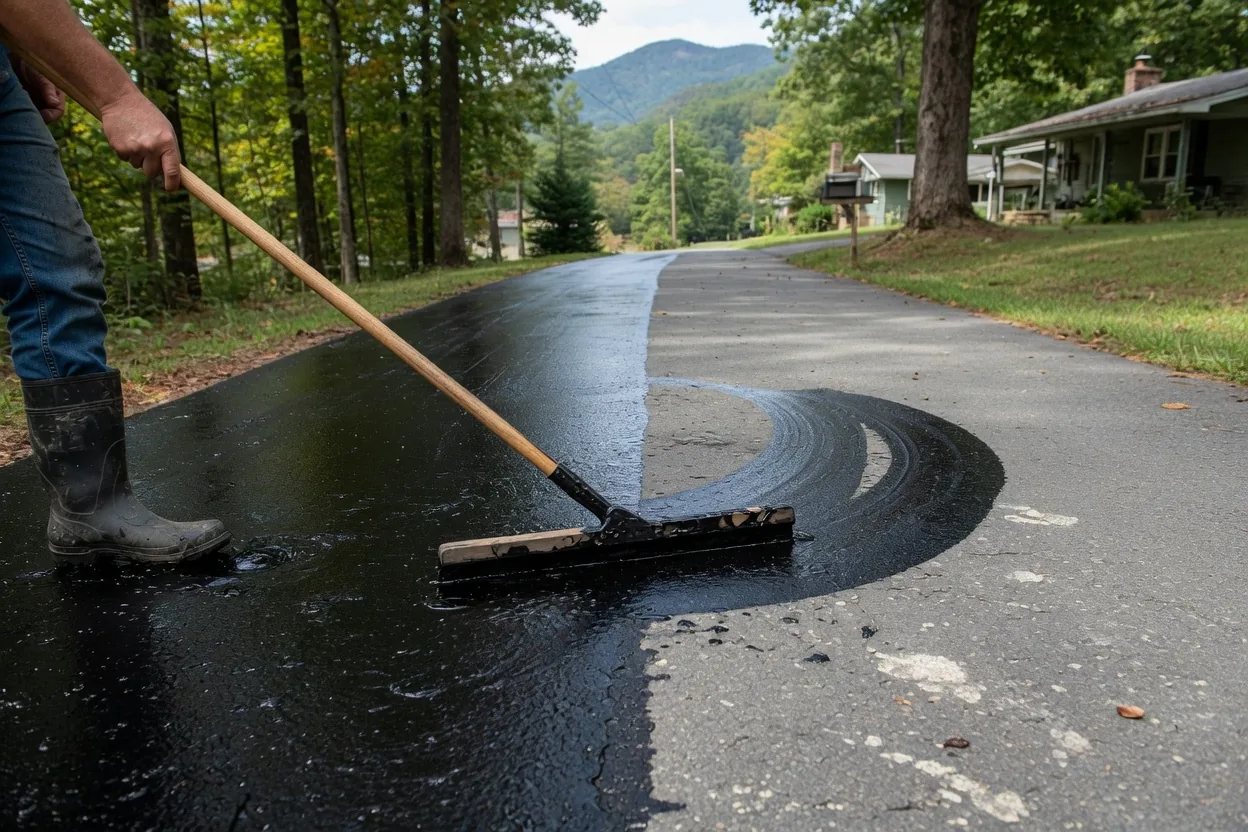
A new residential driveway around Mills River typically runs $4 to $8 per square foot installed. The full asphalt driveway cost breakdown covers line-item ranges, but the short version is that slope and base condition are the two price movers here, not just square footage. The table below gives working ranges for the jobs that come up most often in this area.
| Job scope | Typical installed range | What moves the number |
|---|---|---|
| New driveway — flat to gentle grade | $3,500–$7,000 | Length, width, base depth |
| New driveway — moderate to steep grade | $6,500–$12,000 | Grade correction, drainage, regrading |
| Gravel-to-asphalt conversion | $4,500–$10,000 | Existing base condition, slope work |
| Two-car parking pad with drainage tie-in | $3,500–$6,500 | Drainage, edging, connection to driveway |
Steep-lot jobs routinely carry grade correction and drainage line items that a flatland quote would never include. If a bid covers only material and labor without addressing how water moves off the finished surface, treat it as incomplete rather than inexpensive.
Why base prep and drainage decide how long the job lasts
Henderson County's storm and flood record is not abstract to anyone who has watched a driveway fail after a heavy mountain rain. Federal disaster declarations for this county number 16 over 1978-2026, overwhelmingly from storm and flood events that pushed water at surfaces built on drier assumptions. Annual rainfall in this part of western North Carolina regularly exceeds forty inches, and clay-heavy soils on hillside lots do not shed that water cleanly. An asphalt surface is only as durable as the base beneath it: if water infiltrates and the base softens, the surface cracks and heaves — sometimes within three years on an under-built job.
The repair cycle on a poorly built driveway costs more over a decade than building the base correctly the first time. The NC Department of Transportation treats subsurface drainage as a structural requirement on road work, and residential driveways fail for the same reasons when drainage is skipped. Grading away from structures, properly sized culverts where water crosses under the driveway, and a plan for uphill runoff should all appear in the scope before asphalt thickness is even discussed. The National Weather Service publishes precipitation data for this region — local contractors who have worked Henderson County terrain know how to translate those rainfall patterns into base-depth and drainage decisions specific to your lot.
State road connections and when a permit is required
A large share of Mills River properties front on NCDOT-maintained roads — US-191, NC-280, and the network of state secondary roads threading through the valley. When a new driveway or a widened apron connects to one of those roads, a driveway permit is required before work begins. Applications go through NCDOT Connect, and the standards cover sight distance from the travel lane, culvert pipe sizing, and drainage designed to prevent runoff onto the road. Missing the permit step can result in a stop-work order and required removal of finished work at the property owner's expense.
Henderson County also has land disturbance thresholds for larger grading projects — the Henderson County government site carries current requirements and contacts for the relevant offices. A paving contractor who does not ask about your road frontage on an initial visit is leaving that compliance exposure with you. Ask directly: does this driveway connect to a state-maintained road, and if so, is the NCDOT permit included in the scope?
Converting a gravel driveway on a rural Henderson County lot
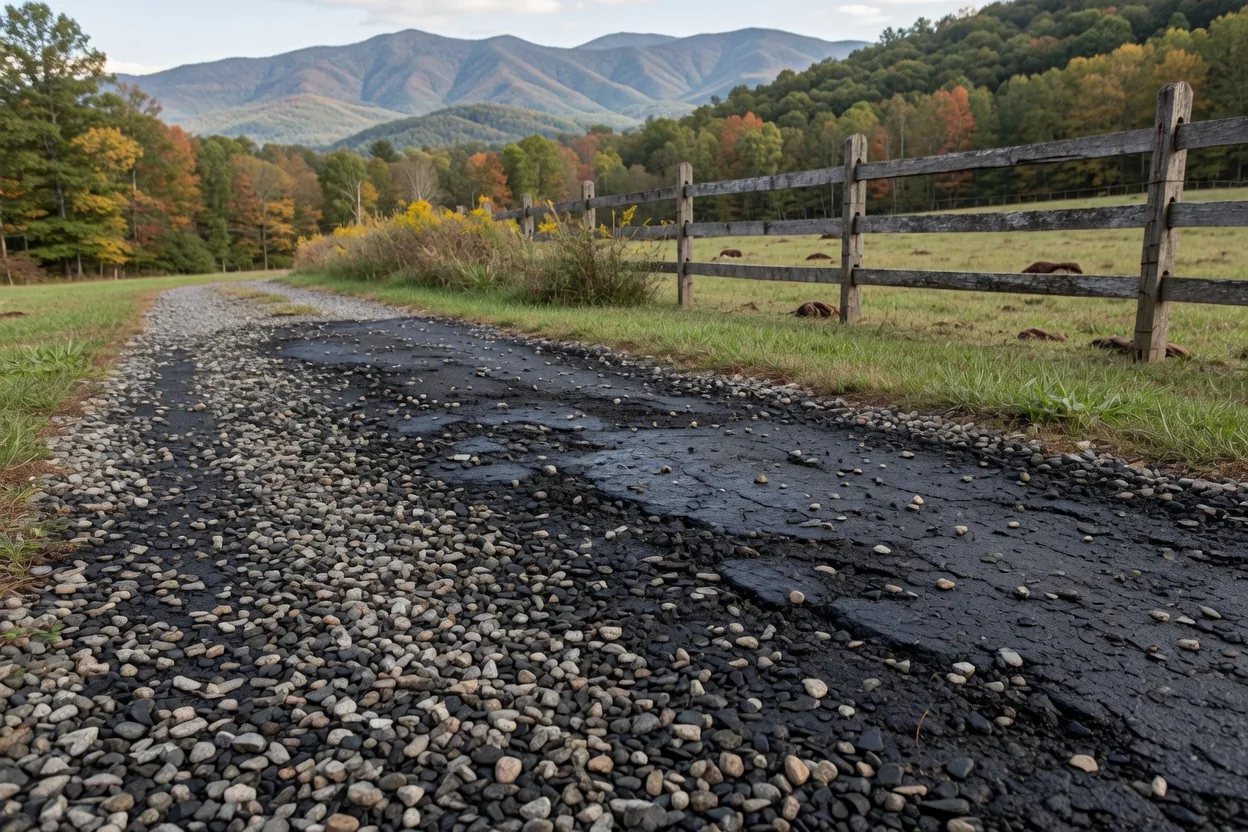
A significant share of Mills River properties still run on gravel — the rural character here means gravel was the default for decades, and many of those lanes are long, which makes the conversion decision financially meaningful. The honest comparison: switching from gravel to asphalt makes the most economic sense when gravel is washing away on a slope and replenishment has become a recurring cost, when the property is transitioning from agricultural to residential use, or when buyers expect a paved surface. A well-graded gravel lane that is already draining cleanly may need only modest base work before paving; a lane with drainage problems needs those resolved first, or the asphalt will fail on the same schedule the gravel did.
Grade matters more than driveway length when estimating conversion cost. A steep lane with drainage issues requires slope correction and infrastructure that adds to the base price before asphalt is even considered. A realistic scope spells out how much existing base material is usable, how much new aggregate is required, and exactly where drainage structures go — not just the finished square footage.