How Buncombe County's elevation changes the repair cycle
Buncombe County sits around 2,100 feet at Asheville's elevation, with neighborhoods on the surrounding ridges climbing higher still. That altitude delivers more freeze-thaw cycles per winter than any piedmont or coastal market in North Carolina — repeated small expansions and contractions that widen a hairline surface crack into a quarter-inch fracture over a single season. Sealcoating is the preventive layer that keeps water out before that cycle begins, but the same mountain climate that makes it valuable also makes scheduling harder than most homeowners expect.
The National Weather Service climate profile for Asheville documents significant rainfall across a large fraction of summer and fall days. The Blue Ridge terrain funnels moisture in ways that make western North Carolina measurably wetter than most of the state. Before calling anyone about sealcoating, walk your driveway after the next rain: standing water anywhere on the surface signals a drainage issue that belongs in your conversation with the contractor, not an afterthought addressed at billing time.
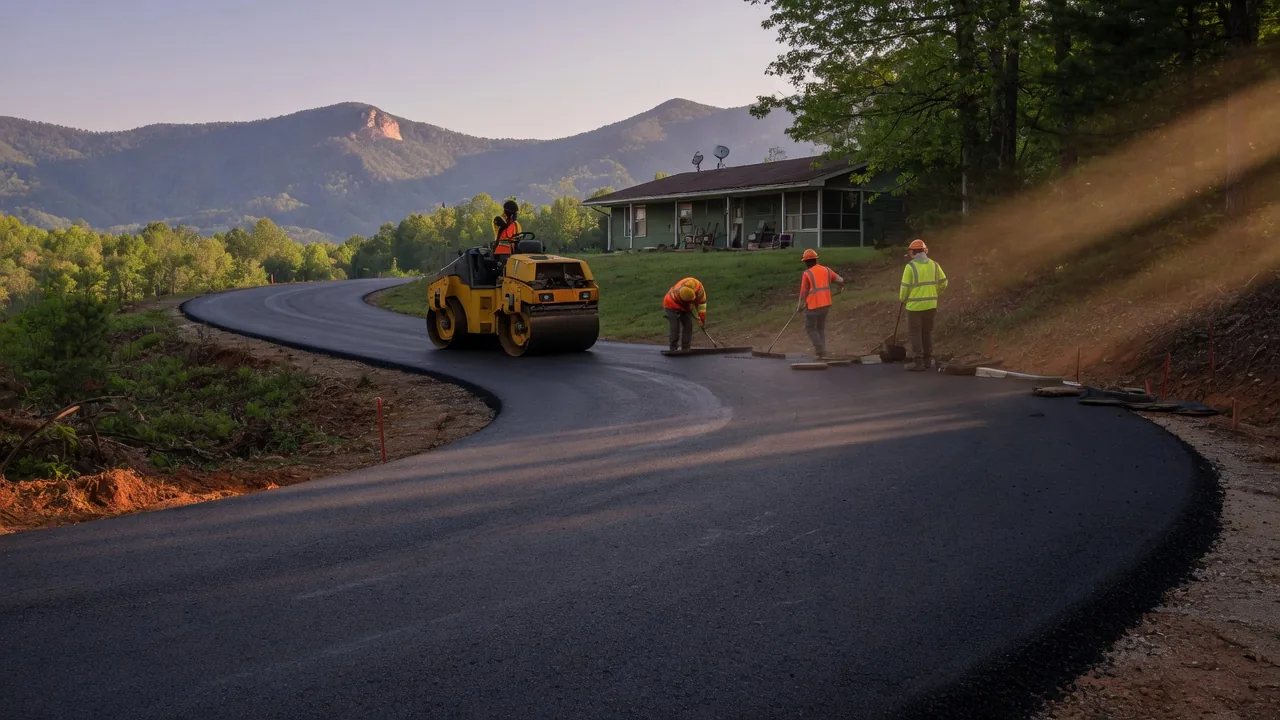
Buncombe County's housing stock spans everything from pre-war bungalows in West Asheville with short apron driveways to newer construction on steep lots across the surrounding hills. The range of pavement ages and exposure conditions means no two jobs price or schedule alike — but the elevation factor applies to all of them.
What a complete job involves, from first crack to cured surface
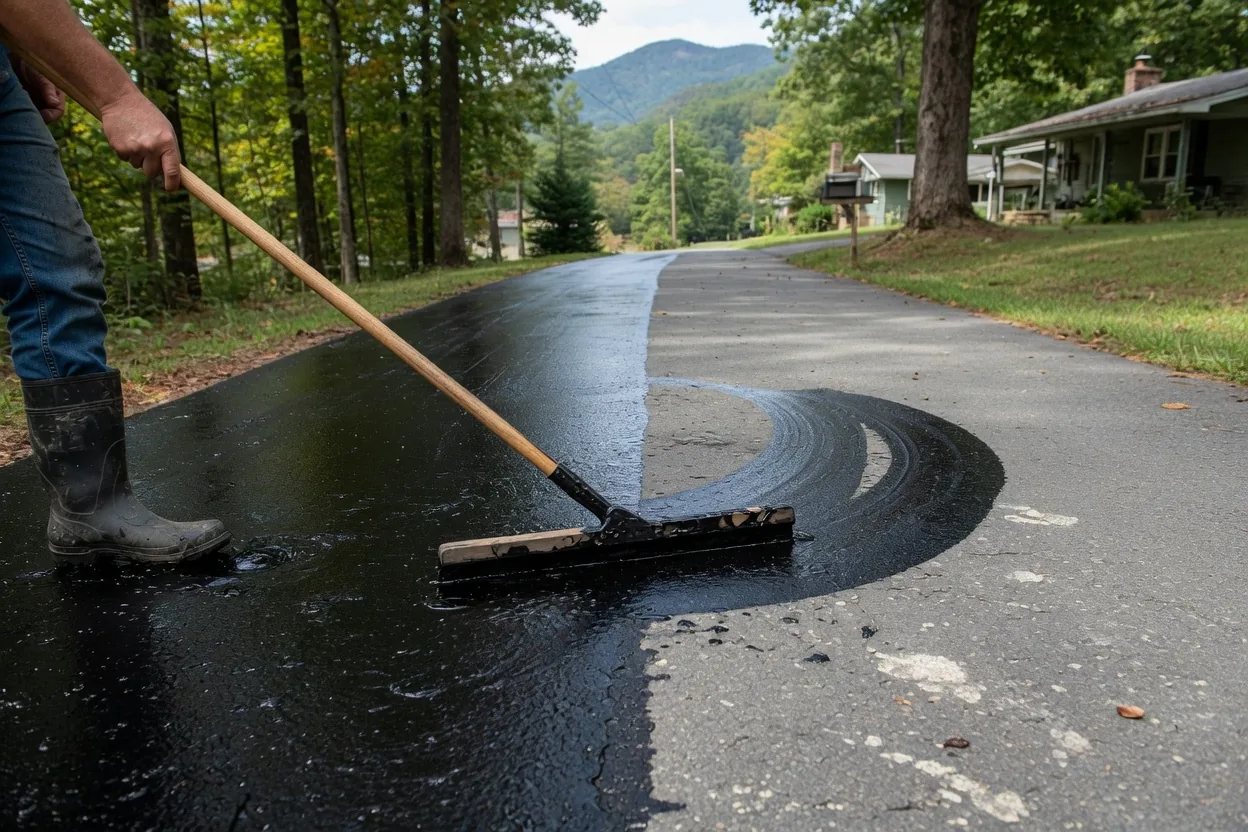
A properly executed sealcoat job runs in three phases that must happen in sequence, not in parallel:
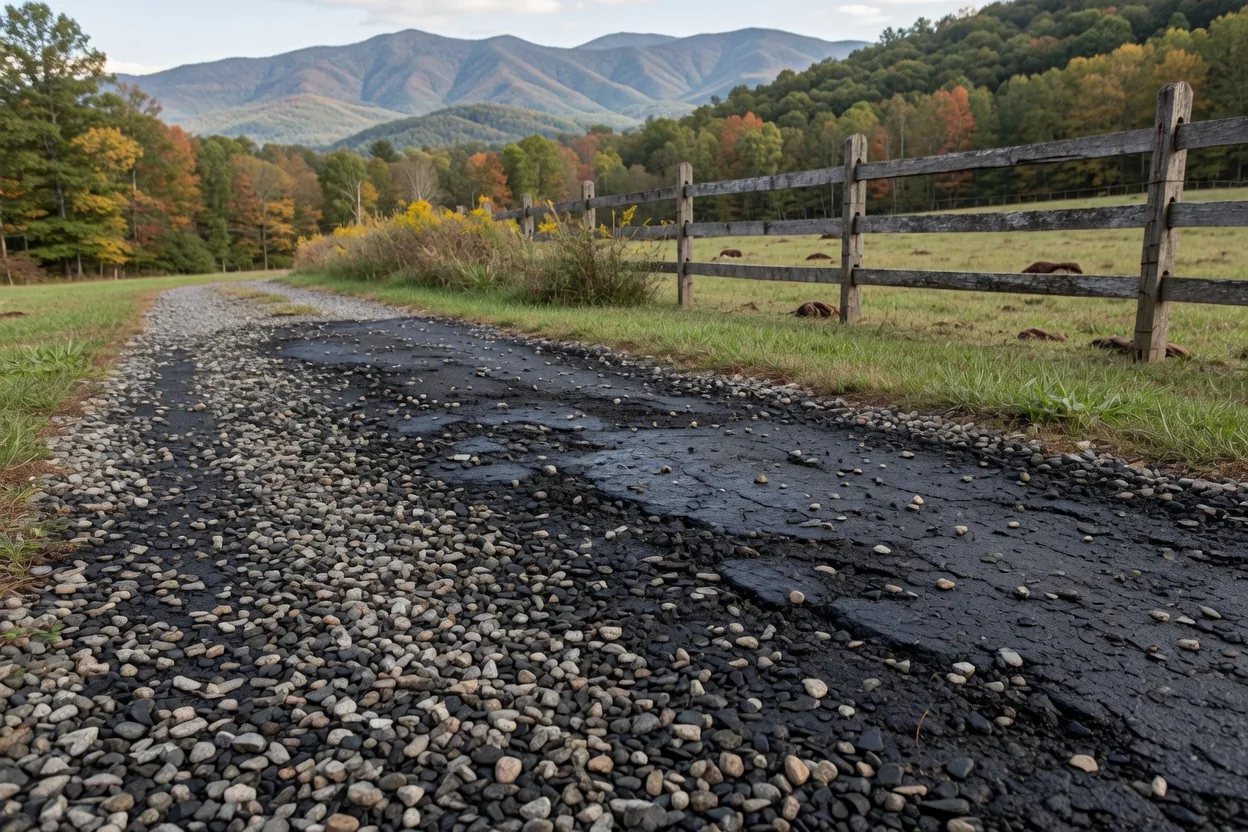
- Crack preparation. Cracks wider than a hairline get routed out, blown clean with compressed air, and filled with a flexible crack filler before any sealer goes down. Applying sealcoat over an open crack traps moisture underneath and defeats the purpose of the treatment. When crack damage has progressed beyond surface filling — fractured edges, lost aggregate, pavement that shifts underfoot — the job has crossed into structural repair territory. The threshold between maintenance and replacement is covered at asphalt driveway repair.
- Surface preparation. Oil stains get treated first because asphalt emulsion sealers do not bond over petroleum contamination. Skipping this creates adhesion failures that show up as peeling within a season. The surface is blown clean of loose material before the first coat goes down.
- Two-coat application. One coat at the right coverage rate seals the surface; the second adds service life. The two coats cure separately, and the final surface needs full cure time before any traffic. In Asheville, mountain evenings in September can drop to temperatures that slow curing significantly faster than a piedmont job would — specific timing guidance for your situation is at how long after paving to sealcoat.
What the job costs and what actually moves the number
Per-square-foot pricing for driveway sealcoating in this region runs $0.18–$0.35 installed for two coats with cracks addressed first. The table below maps common Buncombe County job scopes to realistic price ranges:
| Scope | Typical Price Range |
|---|---|
| Single-car or short driveway, 2 coats + crack fill | $180–$400 |
| Standard two-car driveway, 2 coats + crack fill | $350–$650 |
| Large or horseshoe driveway, 2 coats + crack fill | $600–$850 |
| Crack sealing only, no sealcoat | $150–$350 |
Three factors move any job toward the top of its range in Buncombe County specifically: crack volume (routing and filling is priced per linear foot before the main job starts), surface prep intensity (heavily oxidized or oil-stained asphalt requires more labor), and lot access. The steep driveways common across Asheville's hillside neighborhoods take longer to set up and maneuver equipment safely than a flat piedmont approach — that is a real local cost driver. A bid at the low end typically assumes flat terrain, minimal cracking, and clean asphalt. Ask specifically whether the estimate changes if crack footage runs higher than expected; this is a common source of final-invoice surprises on mountain-area jobs. For a full breakdown of how surface condition and job size interact, see sealcoating cost.
The scheduling window, and why it is shorter here than most contractors admit
Asphalt emulsion sealers require a pavement surface temperature above 50°F and at least 24 dry hours for adequate curing. Asheville's usable window typically runs from late April through mid-October — broad in theory, unreliable in practice. The National Weather Service forecast for western North Carolina regularly shows weather systems arriving faster and more frequently than piedmont residents expect. A Friday forecast that looks clear will sometimes show a Thursday front arriving early enough to disrupt a Saturday job.
Two rules that hold consistently in this market: book early in the season for the most reliable scheduling flexibility, and choose a contractor who communicates rescheduling decisions 48 hours in advance based on surface-temperature forecasts rather than rain probability alone. If a contractor has not mentioned surface temperature during the estimate conversation, ask — it is the actual variable that controls whether the job cures correctly.
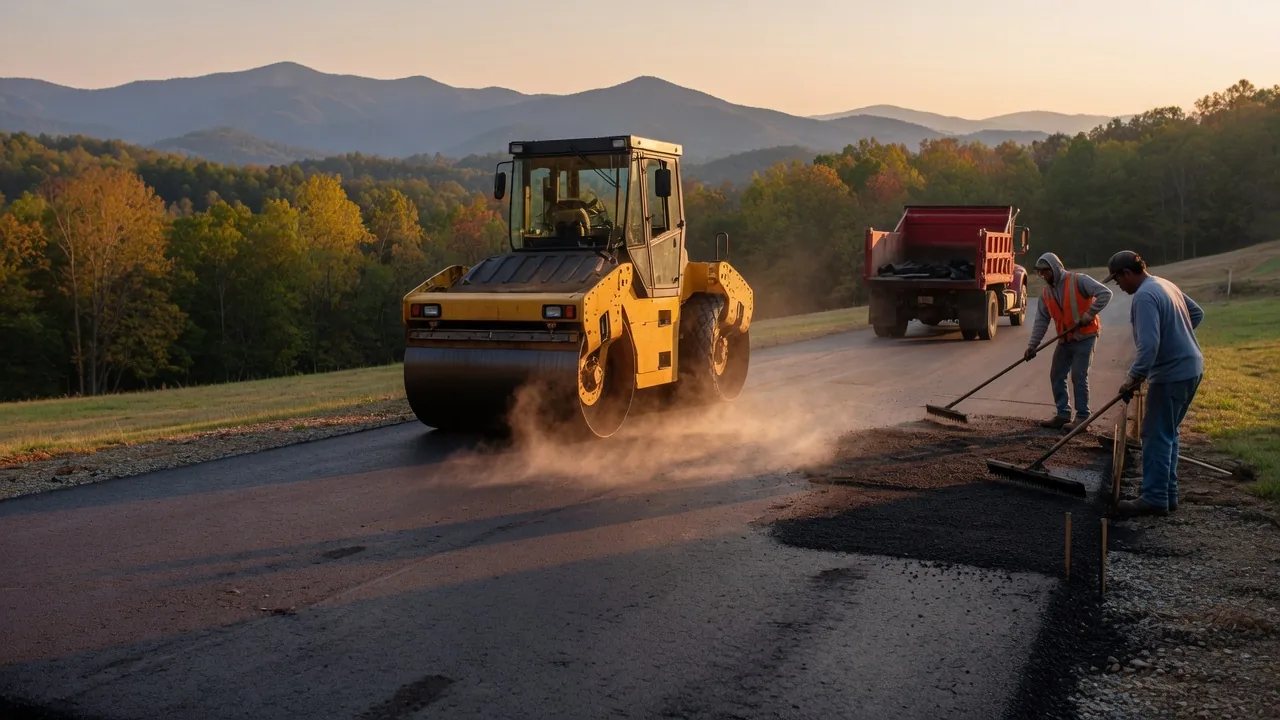
For driveways recently paved or resurfaced, timing has an additional layer: new asphalt needs the volatile oils to stabilize before a sealer bonds correctly. How long to wait depends on when and how the pavement was laid, and the full guidance is at how long after paving to sealcoat.
When sealcoating is not what the driveway needs
A sealer extends the service life of asphalt that is fundamentally intact. It does not bridge alligatored pavement, arrest base failure, or help a driveway that is sinking or heaving from subsurface water. Sealing over structurally compromised pavement costs money now and makes the eventual repair more difficult. The surface test worth doing before any contractor visit: examine the crack pattern. Isolated surface cracks following no directional logic are typical oxidation and a good candidate for crack sealing followed by sealcoating. Cracks running in lines parallel to the slope, or a network of interlocked blocks across a section, point to base problems that no surface treatment will resolve. More detail on the diagnostic and repair options is at asphalt driveway repair.
For driveways adjacent to NCDOT-maintained roads — common in Buncombe County where private driveways frequently cross state road shoulders — confirm whether the approach area falls within the highway right-of-way before work begins. Work touching city of Asheville right-of-way requires a separate review; the City of Asheville development services office handles encroachment inquiries for anything near a city street.
Buncombe County carries 19 federal disaster declarations spanning 1973-2026, most tied to severe weather events that saturate soils and stress pavement base courses. After any significant rainfall leaves standing water near your pavement edge, let the ground stabilize before applying sealcoating — sealing over a base still mobile from water intrusion locks in a problem that resurfaces the following season.