How the terrain east of Asheville changes the repair job
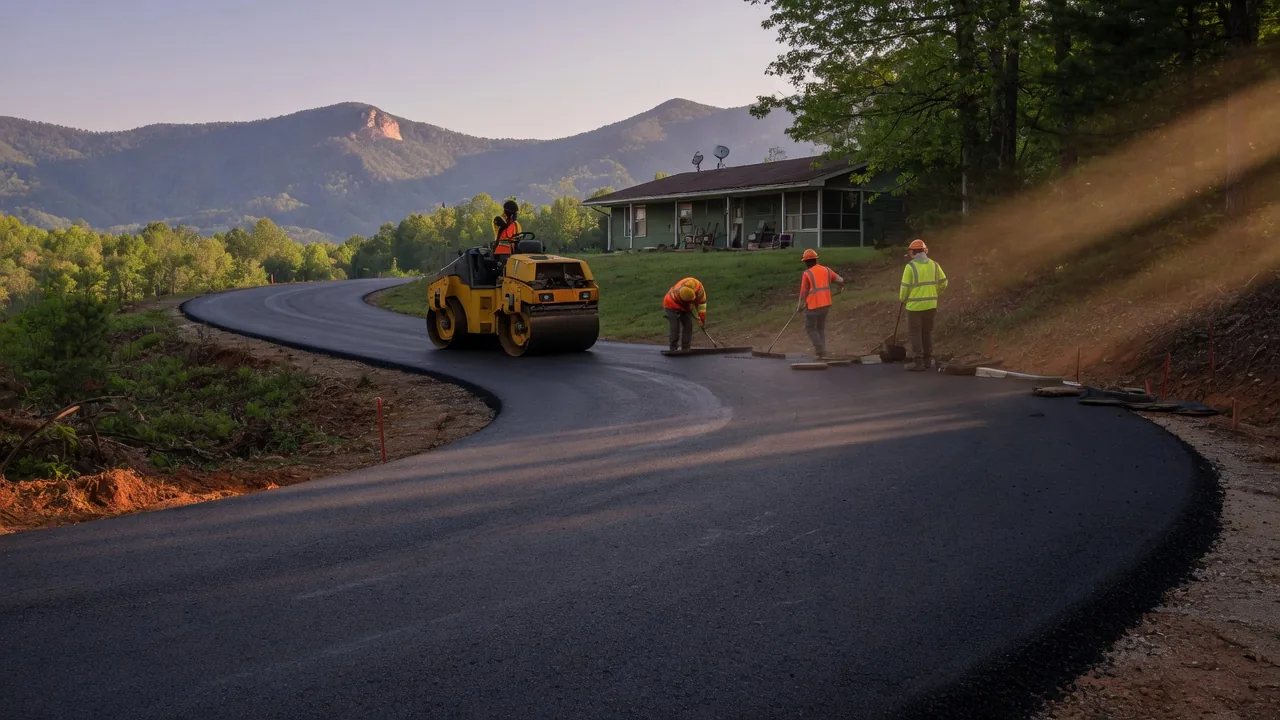
Fairview occupies a stretch of eastern Buncombe County where ridge lines stack up and residential lots drop steeply from their road frontage. Driveways here rarely look like the flat slabs found in suburban Asheville neighborhoods — they climb, curve around outcroppings, and sometimes run several hundred feet from US-74A to a garage tucked into the hillside. That geometry is the defining variable for any asphalt repair job on this side of the county.
On flat pavement, a crack is a void. On a sloped Fairview driveway, a crack is a water channel. Every rain pushes runoff straight into any unsealed opening, widening it from below and saturating the base course faster than the same crack would fail on level ground. A pothole at the base of a slope is fed by every storm that comes through. The grade is not incidental to the damage pattern — it is causal. Any repair scope that does not account for where the water goes is treating the symptom rather than the problem, and in this terrain, that distinction shows up clearly the following spring.
The damage Fairview driveways show
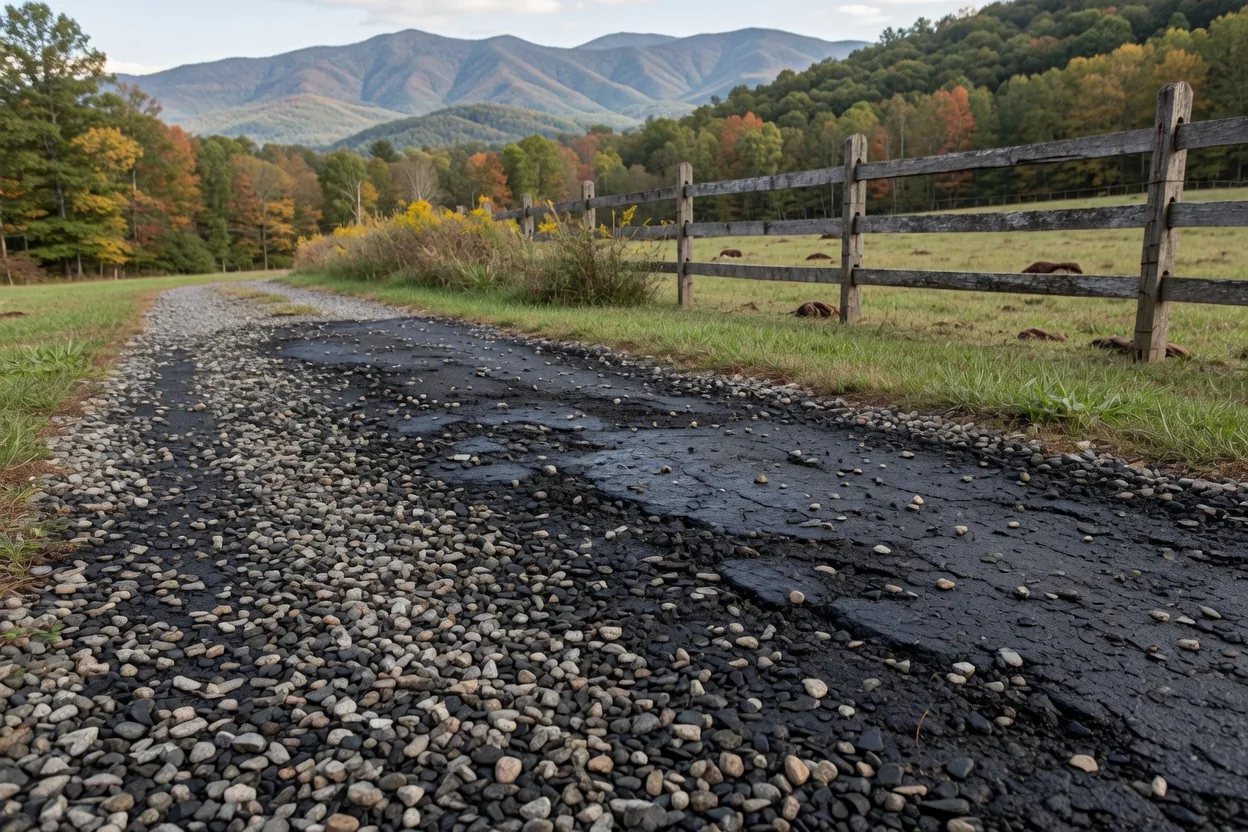
Edge cracking appears first: the shoulder breaking away where the driveway meets grass or gravel and has no lateral support to stop movement. On a hillside lot without structural edging or a properly compacted shoulder, the edge crumbles inward one winter at a time. What drives asphalt cracking runs deeper than surface wear in Fairview — the clay-heavy soils in eastern Buncombe expand and contract more aggressively with moisture and temperature swings than the rockier substrate found closer to Asheville proper, and that movement telegraphs directly into the surface layer above it.
The second pattern is longitudinal cracking down the centerline, caused by subgrade settling or freeze-thaw heave working unevenly across the driveway width. The third pattern — and the one that triggers the most urgent calls — is pothole formation near the base of a grade, where runoff collects after every rain and stays long enough to saturate the base course beneath it. Patching these spots alone without correcting the drainage almost always produces the same failure in the same location within a season.
What repairs cost on the east side of Buncombe County
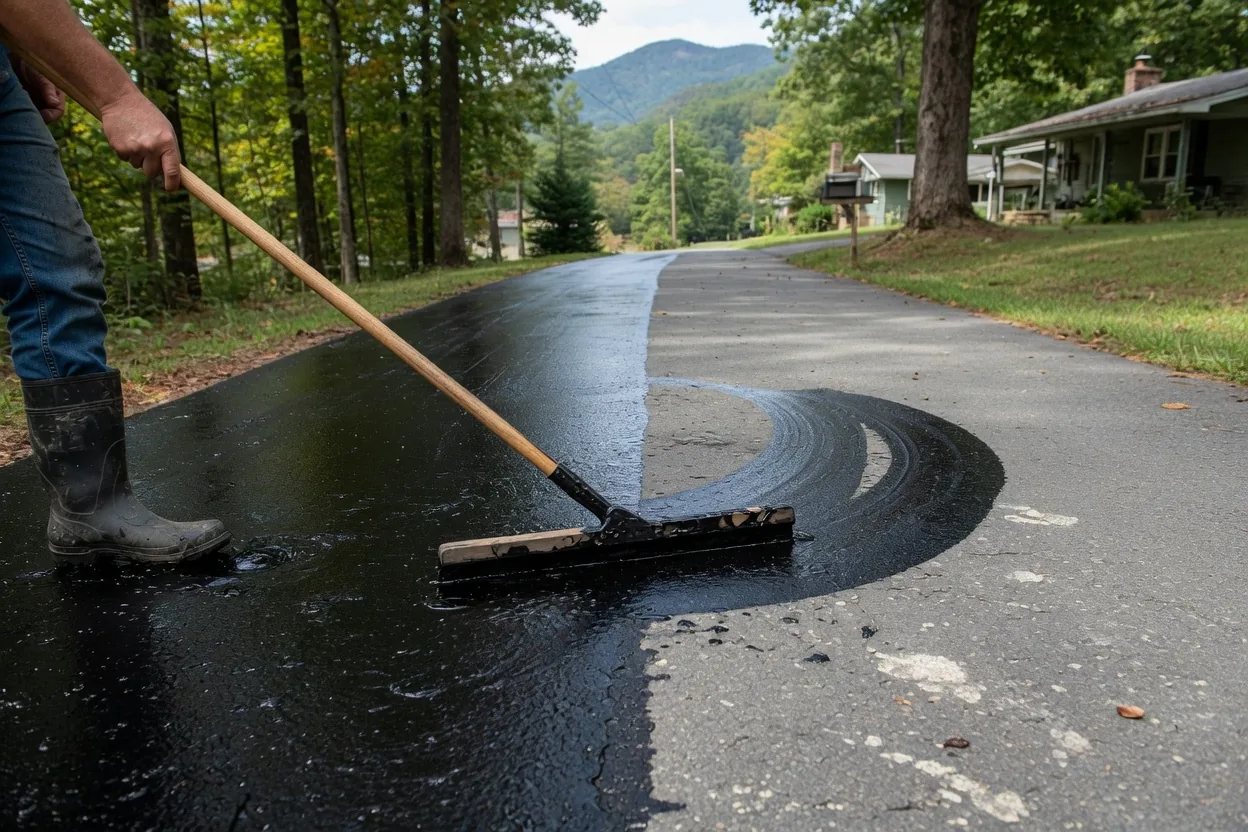
The full asphalt repair scope runs from simple crack sealing to section removal and complete resurfacing. Fairview jobs frequently carry slope prep and drainage line items that flat-lot quotes from Asheville contractors do not include — treat any bid that ignores grade as incomplete rather than affordable. The table below covers the common repair scopes and realistic ranges for this market.
| Repair scope | Typical range |
|---|---|
| Crack sealing, up to 50 linear feet | $250–$500 |
| Single pothole patch | $300–$600 |
| Multiple potholes, one crew visit | $500–$900 |
| Section removal and replacement | $900–$2,200 |
| Full driveway resurfacing | $2,400–$4,500 |
Tack coat and compaction requirements on a grade add labor that flat-lot work can skip. Section replacement at the base of a slope — where the subgrade is most likely to have been chronically saturated — often requires base remediation before new asphalt will bond and hold. Jobs that include French drain installation or significant shoulder regrading sit at the upper end of their category range.
Water, storms, and base saturation in this county
Buncombe County has 19 federally declared disaster events on record (1973-2026), the majority of them storm and flood events that pushed significant water at driveways and road surfaces across the county. The National Weather Service identifies the east-facing ridges of the Blue Ridge — where Fairview sits — as one of the wetter exposures in the Appalachians. Orographic lifting concentrates rainfall on these slopes: a storm that drops two inches on downtown Asheville can leave four or more on the terrain east of Swannanoa along US-74A.
Most residential driveways in this part of Buncombe County were paved without engineered drainage plans. They rely on crown slope and shoulder runoff to keep the base dry. When either is compromised — a settled crown, a clogged shoulder, a new retaining wall that redirected uphill drainage — the base saturates quietly over a few seasons and then fails visibly in one bad winter. Addressing the drainage question before or alongside the repair is what separates a fix that lasts several years from one that cracks in the same place again by the following fall.
Permits and hiring on the rural side of Buncombe County
Most private driveway repairs in Fairview do not require a permit, but one situation triggers NCDOT involvement: any work touching the apron where a private driveway meets a state-maintained road. Rural Buncombe County has a higher share of driveways connecting directly to NCDOT roads than Asheville's city grid, so this applies to more Fairview properties than owners expect. Driveway access permits are processed through NCDOT Connect; the NC Department of Transportation sets the standards for how apron work must be finished to protect road drainage swales and pavement edges. Starting work at the road connection without that permit creates liability that can complicate a future property sale.
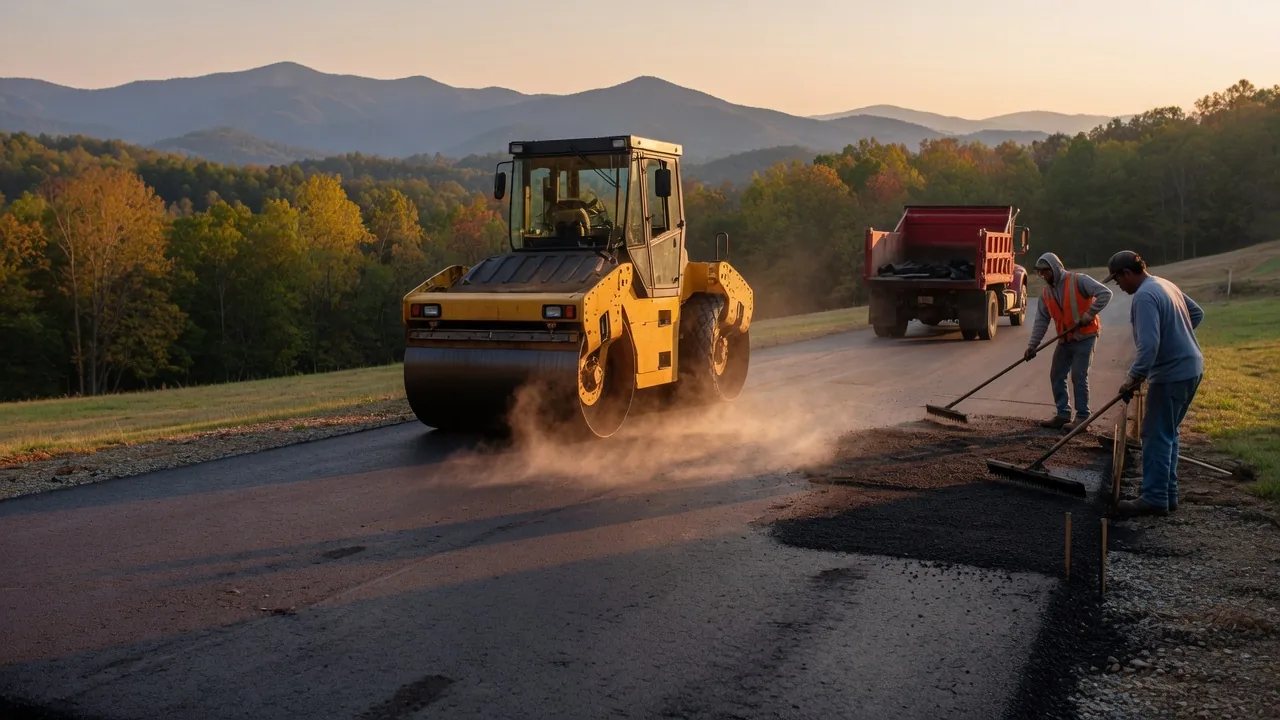
For contractor credentials, ask for the license number and verify it before signing. Beyond that, three questions separate crews who know mountain driveways from those guessing their way through the job: whether they have worked sloped residential driveways before rather than only commercial flat-lot paving, how they handle drainage as part of the repair scope, and what compaction equipment they bring for work on a grade. A roller suited to flat commercial lots is not always the right tool on a 10-percent incline. A blank answer to the drainage question is a useful signal before any money changes hands.
Timing repairs in a mountain climate
Asphalt repair in western North Carolina has a real season. Hot-mix patching and crack sealing require pavement temperatures above roughly 50°F to compact and bond correctly — in Fairview's elevation, that window runs reliably from late April through early October, with variability at both ends. Work done when overnight temperatures still drop sharply risks poor compaction and bonding failures that don't surface until the first hard freeze.
The practical window is late spring through late summer. Schedule repairs before the main storm season if possible; driveways that go into November with open cracks or unpatched potholes face a full freeze-thaw season with water already working at the base course. One winter of that cycle can easily double the scope — and cost — of the repair that should have been done in September. Cold-patch material can fill a pothole through the winter as a temporary measure, but it is not a substitute for hot-mix work when the weather returns.