Long driveways on mountain lots — what sets Mills River apart
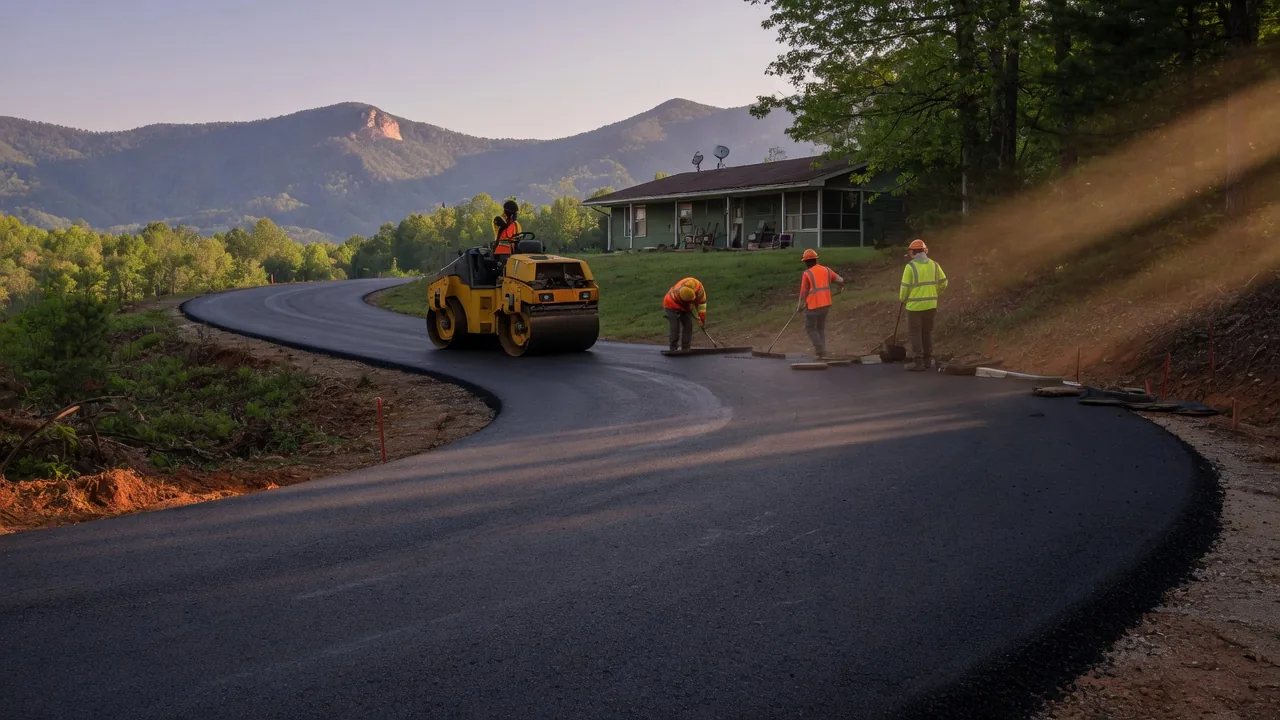
Rural land in Henderson County tends toward generous lot sizes, and Mills River reflects that. Many residential driveways here run 150 feet or more from the road to the parking pad — several times the length of a typical city driveway. That length, combined with the grade changes common throughout the French Broad River watershed, means a sealcoating job here is larger by square footage and harder by terrain than the suburban baseline most national price guides assume.
The valley floor around Mills River is relatively flat, but properties up the surrounding ridges carry slopes that affect how sealer is applied and how long it holds. A level two-car driveway and a sloped rural approach of the same square footage are not the same job — the second requires a slower pour rate, sometimes a product with higher tack, and a longer cure window before traffic returns.
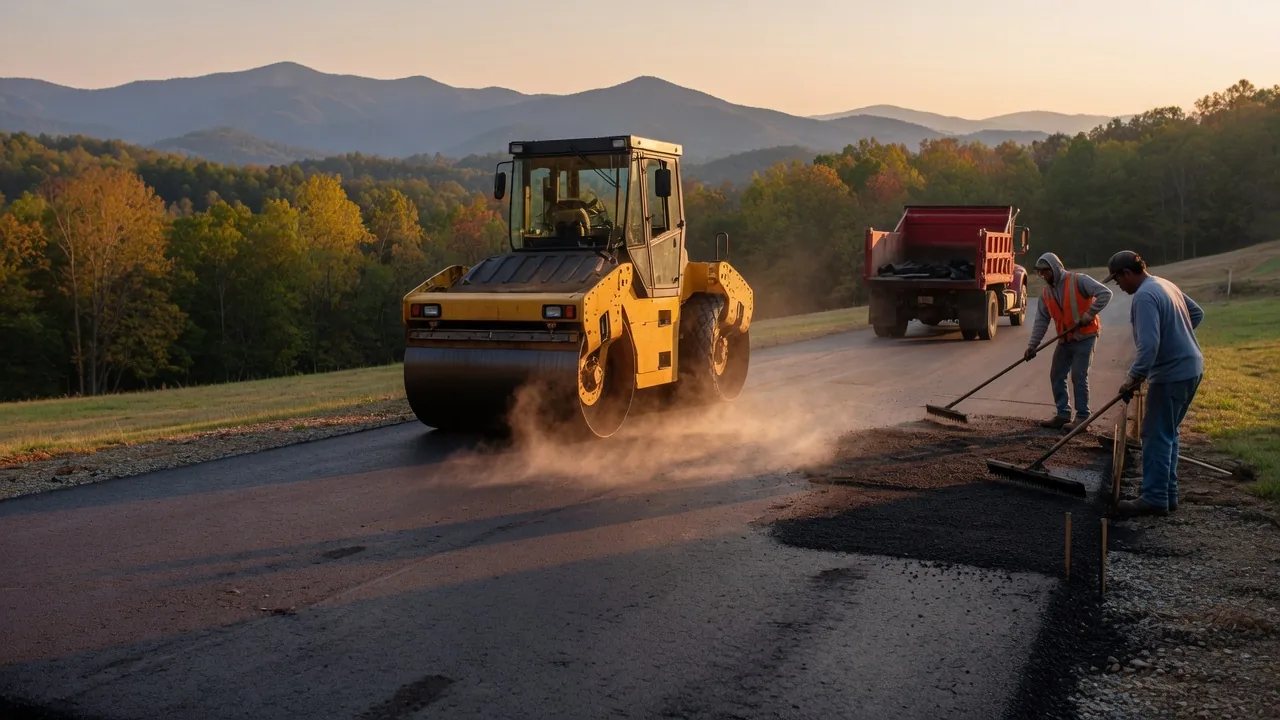
Mills River's housing stock also trends newer than most of Henderson County. The town incorporated in 2003, and much of its residential development came after that. Newer asphalt surfaces in good structural condition respond well to sealcoating, and the best time to start a maintenance cycle is before cracks develop rather than after. A seal coat applied while the surface is intact costs a fraction of repairing what unprotected asphalt accumulates across five or ten winters. The full service overview is at our sealcoating page.
What the scope and price look like here
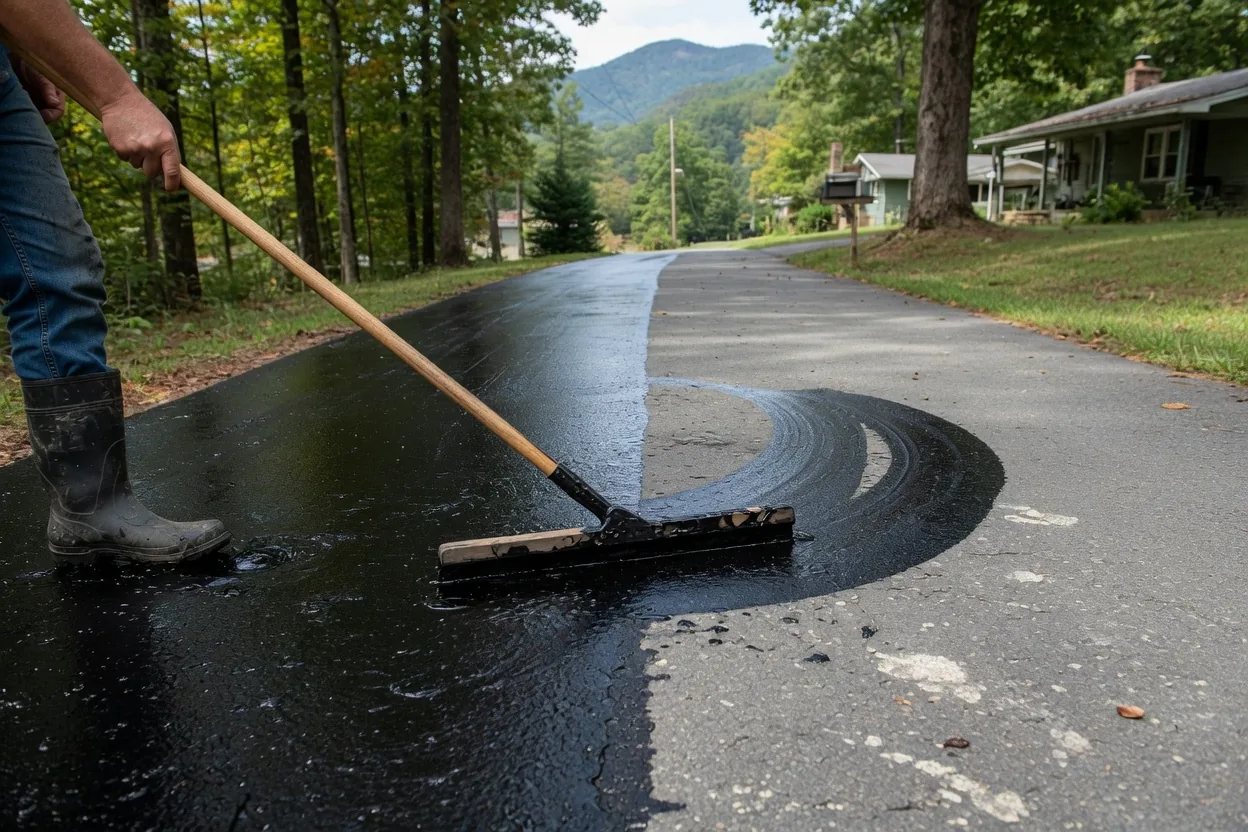
Two-coat driveway sealcoating in the Mills River area runs $0.18 to $0.35 per square foot. Rural driveways here often land in the larger size bands, so knowing your square footage before comparing quotes is the first step toward an accurate bid. The sealcoating cost guide has full line-item breakdowns.
| Job Scope | Typical Square Footage | Estimated Cost (2 coats) |
|---|---|---|
| Short single-lane approach | 600–900 sq ft | $110–$315 |
| Standard two-car driveway | ~2,000 sq ft | $360–$700 |
| Long rural approach (typical in Mills River) | 2,000–2,400 sq ft | $360–$840 |
| Crack-fill prep (recommended before sealing) | — | +$0.05–$0.10 per sq ft |
| Steep-grade surcharge (slopes above 8%) | — | +$0.03–$0.08 per sq ft |
Any quote for a Mills River driveway that doesn't ask about grade and drainage is missing information that changes both the method and the price. Slope affects application technique, cure time, and whether a bonding primer is needed before the finish coat goes down.
What Henderson County weather does to pavement
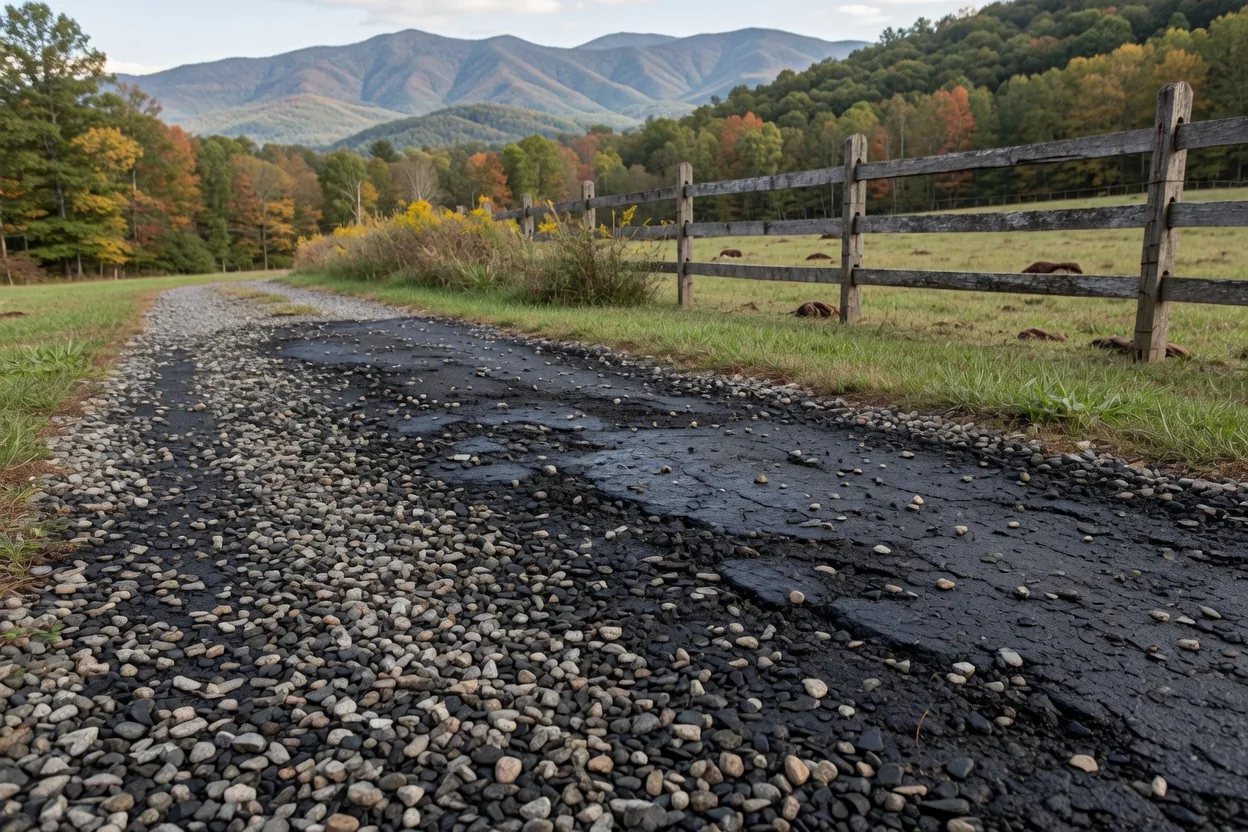
Henderson County sits in a mountain valley where summer surface temperatures can push asphalt toward its softening point and winter lows bring repeated freeze-thaw cycles. Water works into surface cracks, expands on freezing, and opens them wider every cycle. That mechanism does more aggregate damage per year than mild-climate pavement experiences in two or three. The National Weather Service climate records for western North Carolina document the elevation-driven temperature swings that accelerate this wear pattern across the region.
The county's storm history adds another factor: Henderson County has logged 16 federal disaster declarations across 1978-2026, with storm and flood events making up the bulk of that record. Heavy rainfall moves water across paved surfaces faster than most residential drainage was designed to handle, and standing water accelerates the oxidation that turns dark, flexible asphalt gray and brittle. A quality seal coat blocks both UV radiation and standing water. At Mills River's elevation, ultraviolet exposure is meaningfully higher than at lower altitudes, and UV oxidation is the mechanism that makes pavement go brittle before water and freeze-thaw cycles finish it. Both protections matter here.
Timing the application correctly matters too. Sealcoating requires surface temperatures above 50°F and at least 24 hours without rain after the coat goes down. Late spring through early fall works well in Mills River, but watch the overnight forecast — mountain evenings drop quickly, and a cold night inside the cure window compromises adhesion.
State road connections and when a permit applies
Most rural driveways in Mills River connect directly to roads maintained by the North Carolina Department of Transportation. That connection matters if a project goes beyond routine maintenance. Adding a new driveway cut, widening an existing entrance, or changing the grade of an approach that drains toward an NCDOT road can trigger a permit requirement. Applications go through NCDOT Connect, the state's online driveway and encroachment portal.
Sealcoating an existing driveway within its current footprint does not require an NCDOT permit. But any project where the scope could expand — additional impervious surface, regrading that changes drainage patterns, or a widened apron — is worth a quick check before work starts. For property-level questions about lot coverage and drainage, Henderson County planning and zoning is the right local contact.
Prep sequence: waiting, crack-fill, then the seal coat
New asphalt needs time to cure before accepting sealcoating. Applying too early traps oils that haven't finished volatilizing, producing a seal that peels rather than bonds. In the mountain climate Henderson County gets, curing can run longer than warm-climate timelines suggest — the full guidance is at how long after paving to sealcoat.
On existing driveways, crack filling determines whether the seal coat does its job or merely covers damage that keeps spreading underneath. Cracks wider than a quarter-inch need hot-pour or cold-pour filler as a dedicated prep step before any sealer goes down. Sealer is a surface treatment rated for surface protection — it is not a structural repair product, and applying it over active cracks wastes the job. Clean the surface, fill the cracks, let the filler cure, then seal.
What to ask before booking a crew
Henderson County terrain creates a real knowledge gap between contractors who have worked mountain driveways and those who haven't. Before booking, ask whether the crew has experience with slopes above 8% — steeper grades require a different application pace and sometimes a product rated for inclined surfaces. Ask specifically how they handle crack filling: it should be a separate prep step, not product squeegeed over visible cracks immediately before the main coat. Confirm the job includes cleaning before the first coat — loose aggregate and biological growth left on the surface break the sealer's bond and cut the useful life of the application.
Two coats are standard for a durable result in a mountain climate with real UV and freeze-thaw exposure. A single-coat bid at a low number is usually leaving the second coat out. Mills River driveways take serious weather; a short-cut seal coat shows it within a season.