Mountain grades are the first variable on every Black Mountain estimate
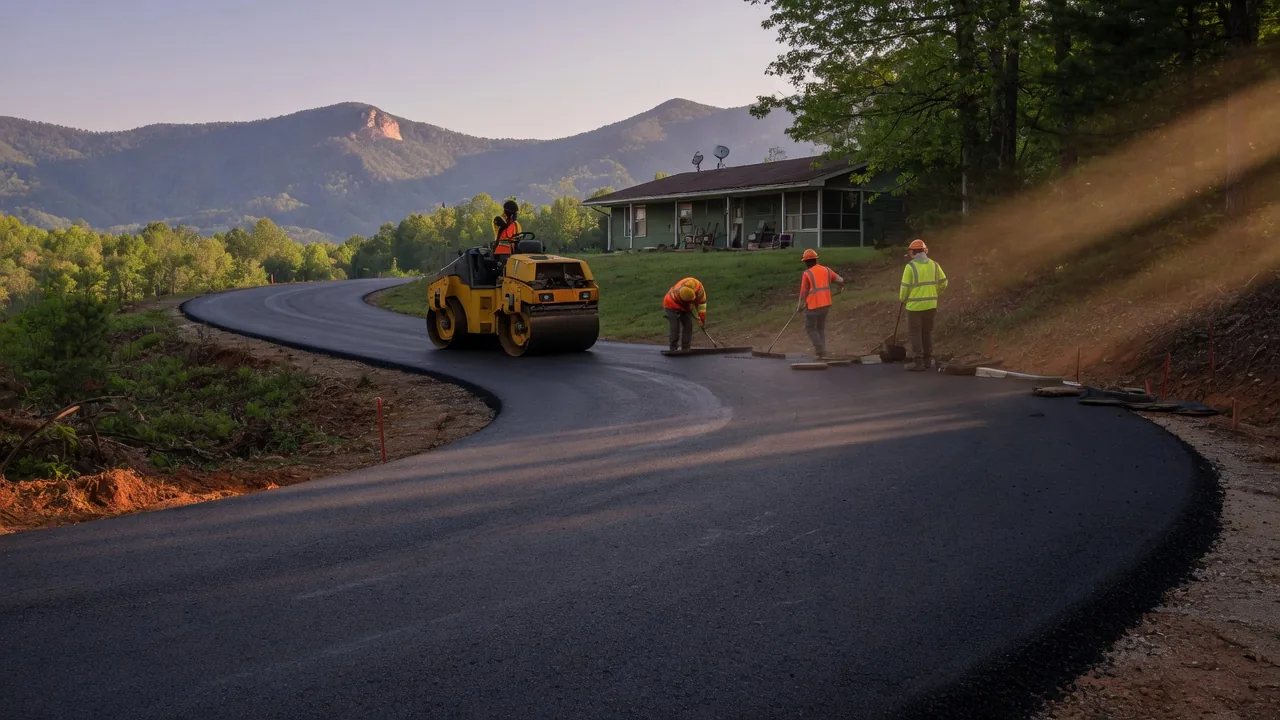
Black Mountain driveways climb. The town rises from the Swannanoa Valley floor toward the southern flank of the Blue Ridge, and residential lots above the town center carry grades that would count as severe anywhere east of the mountains. A contractor who seals driveways on flat Piedmont lots has never solved the problem that slope creates: sealer applied at flood volume runs downhill before it sets, leaving the high end thin and the low end pooled.
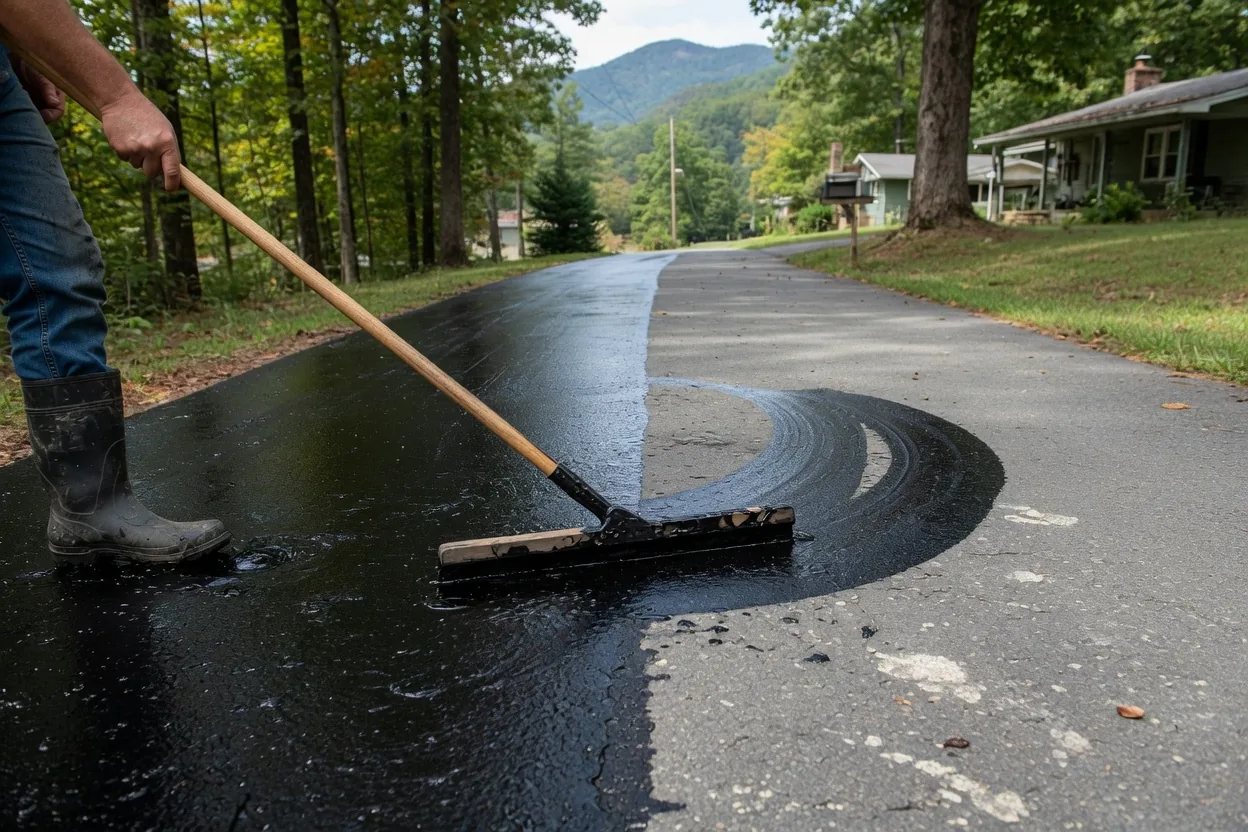
The fix is technique, not product. On a grade above roughly 8 to 10 percent, experienced crews use hand brushing or reduced-volume squeegee passes to build film thickness evenly from top to bottom. It takes longer, which is why steep-lot bids run toward the upper end of the range. If a contractor quotes a steep Black Mountain driveway at the same rate as a flat lot without noting the grade adjustment, ask specifically how they plan to apply it. That one question separates crews that work mountain driveways from crews that occasionally try to. For a full picture of what the process covers, the sealcoating overview lays out each step in sequence.
What sealcoating costs around Black Mountain
Around Black Mountain, driveway sealcoating runs about $0.18 to $0.35 per square foot for a two-coat application. A standard two-car driveway — roughly 400 to 500 square feet of paved surface — lands between $350 and $850 depending on grade, surface condition, and how much prep the pavement needs before any sealer goes down. See the full sealcoating cost breakdown for a line-by-line look at what drives the number in Buncombe County.
| Scope | Typical Range |
|---|---|
| Single-car driveway, 2 coats | $180 – $350 |
| Standard two-car driveway, 2 coats | $350 – $650 |
| Large or steep-grade driveway, 2 coats | $500 – $850 |
| Crack fill (per linear foot, add-on) | $1.50 – $3.00 |
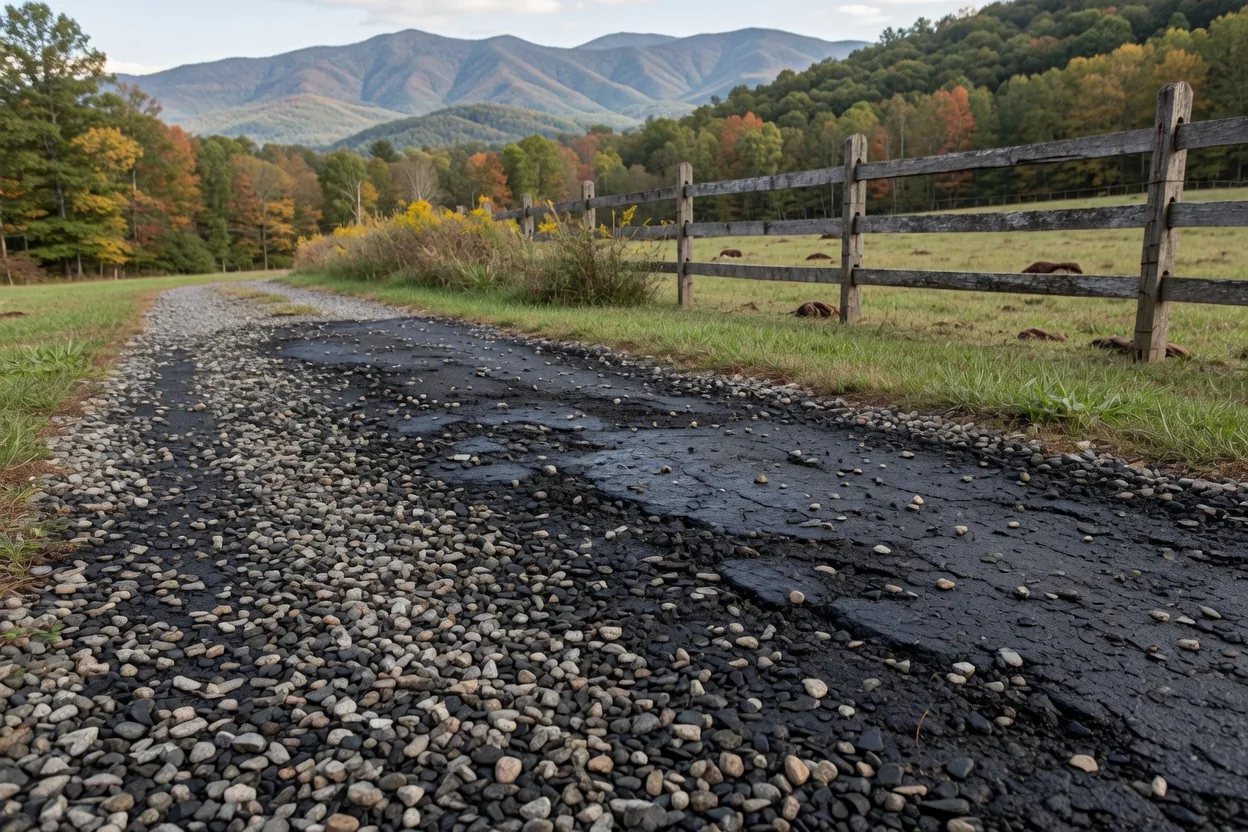
Crack filling is a separate line item from sealing — it uses a different product, takes a distinct labor step, and skipping it on a cracked surface voids most of the protection the sealer provides. A backer-rod fill for a wide structural crack behaves differently from a liquid filler used on hairline shrinkage cracks, and neither should be covered with sealer alone. Get an explicit number for prep work before comparing bids on the sealcoat itself.
Why staying on a seal schedule matters more at elevation
Black Mountain's elevation puts it in a different weather category than the Asheville valley floor and most of Piedmont North Carolina. Genuine freeze-thaw cycling is part of the mountain winter here, and the National Weather Service forecast record reflects it: nights that dip below freezing followed by afternoon highs above it happen repeatedly through a Black Mountain winter in ways they do not on the warmer valley floor twenty minutes west. When water enters an unsealed crack and freezes, the expansion forces the gap wider. After several seasons, a small maintenance problem becomes a structural one, and crack repair costs far more than the sealcoat that would have prevented it.
Resealing every two to three years is the schedule most Black Mountain pavement owners land on. The coats go on thinner as the asphalt oxidizes and the surface becomes less absorbent over time, which is why surface prep — cleaning, priming oil spots, filling cracks — matters more on an older driveway than a newer one. If you've had new asphalt laid recently and aren't sure when the pavement is ready for its first coat, the guide on timing the first sealcoat covers the curing window in detail.
Storm water, runoff, and what the driveway connects to
Buncombe County carries a documented federal disaster record: 19 declared events spanning 1973-2026, the majority in the storm and flood category. Mountain driveways sit at the top of drainage systems, not the bottom. A sealed asphalt surface sheds water faster and in more concentrated flow than an unsealed one — which is generally good for the driveway itself, and worth thinking about for where that runoff ends up. In steeper terrain, how the surface water transitions to the road edge or a drainage swale affects whether the paving investment holds up through wet seasons.
If your driveway connects to an NCDOT-maintained road — which covers most state routes through Black Mountain and the surrounding Swannanoa Valley — work at the road edge, including apron grading or resurfacing, may require a driveway permit filed through NCDOT Connect. Pure sealcoating within the property line typically does not cross that threshold, but a contractor familiar with mountain-county work knows where the line sits and should tell you if your scope approaches it.
What to look for when hiring a sealcoating crew in mountain terrain
Three checks apply specifically to mountain-area sealcoating work. First, ask how the crew handles grade. A specific answer about brush versus squeegee versus spray, and at what slope they switch methods, is the answer you need. A vague reply suggests they are adjusting their standard flatland process on the fly rather than working from an established method for steep lots.
Second, ask about the temperature and weather window they are scheduling into. Sealer requires ambient temperatures above 50°F and a dry cure window of at least 24 hours after application. In Black Mountain that typically means late spring through early fall. A shaded uphill driveway on a cool fall afternoon cures much more slowly than an open south-facing lot in July — crews that account for that in their scheduling protect your investment as much as their own timeline.
Third, ask what prep is included in the bid. A clean, properly filled surface holds a sealcoat for years; sealer applied over dirty asphalt and open cracks peels and fails faster than untreated pavement. The labor in a thorough prep step is where a quality crew earns the difference between their price and the low bid.