Mountain elevation changes the job
Waynesville is the county seat of Haywood County, set in a valley surrounded by ridgelines that push winter freeze-thaw cycles closer to the pavement than almost anywhere else in North Carolina. That altitude detail is not scenery trivia for an asphalt contractor — it is an engineering variable that the job has to be built around. Water that infiltrates a marginally prepared base expands when it freezes, lifts the surface, and contracts when it thaws, leaving the base a fraction weaker each cycle. A driveway that holds for twenty-five years in the Piedmont can show alligator cracking within a decade in the Waynesville hills if the base work was priced as an afterthought.
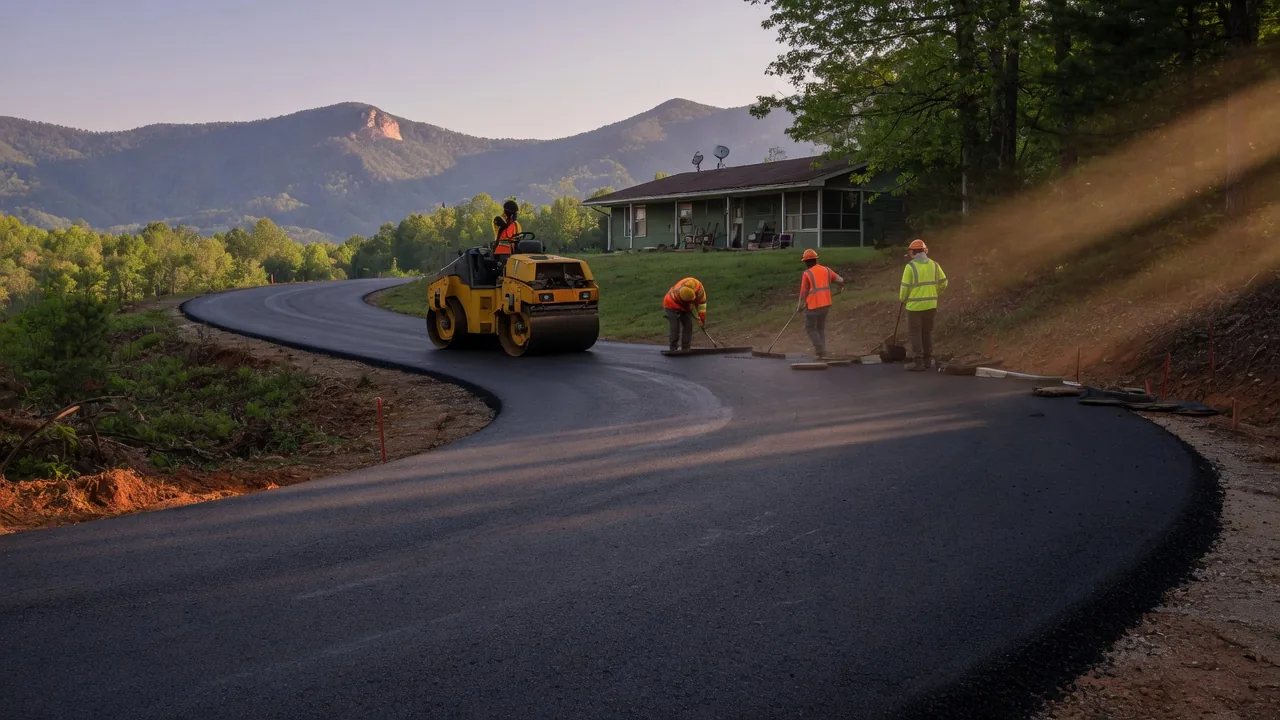
Slope compounds everything. A large share of residential lots in and around Waynesville are graded against a ridge or cut into hillside fill, which means surface water does not simply drain to the street — it runs at the driveway edge, works under the base, and finds any low point available. Runoff management is not a line item that can be dropped from a competitive bid here; it is the reason the driveway holds together through the first hard winter.
These two conditions — elevation and terrain — are what separate a local asphalt paving estimate from anything produced by a national cost calculator. Those tools assume flat ground and mild winters. Haywood County offers neither.
What a Waynesville driveway actually costs
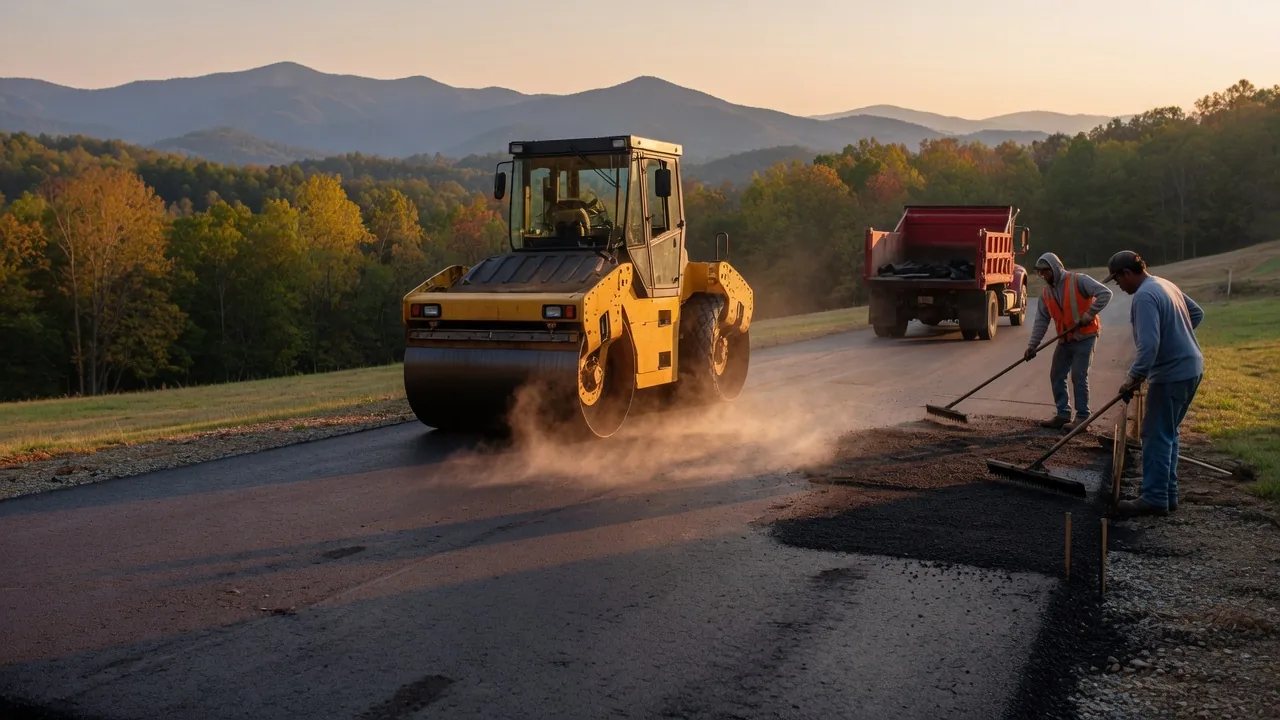
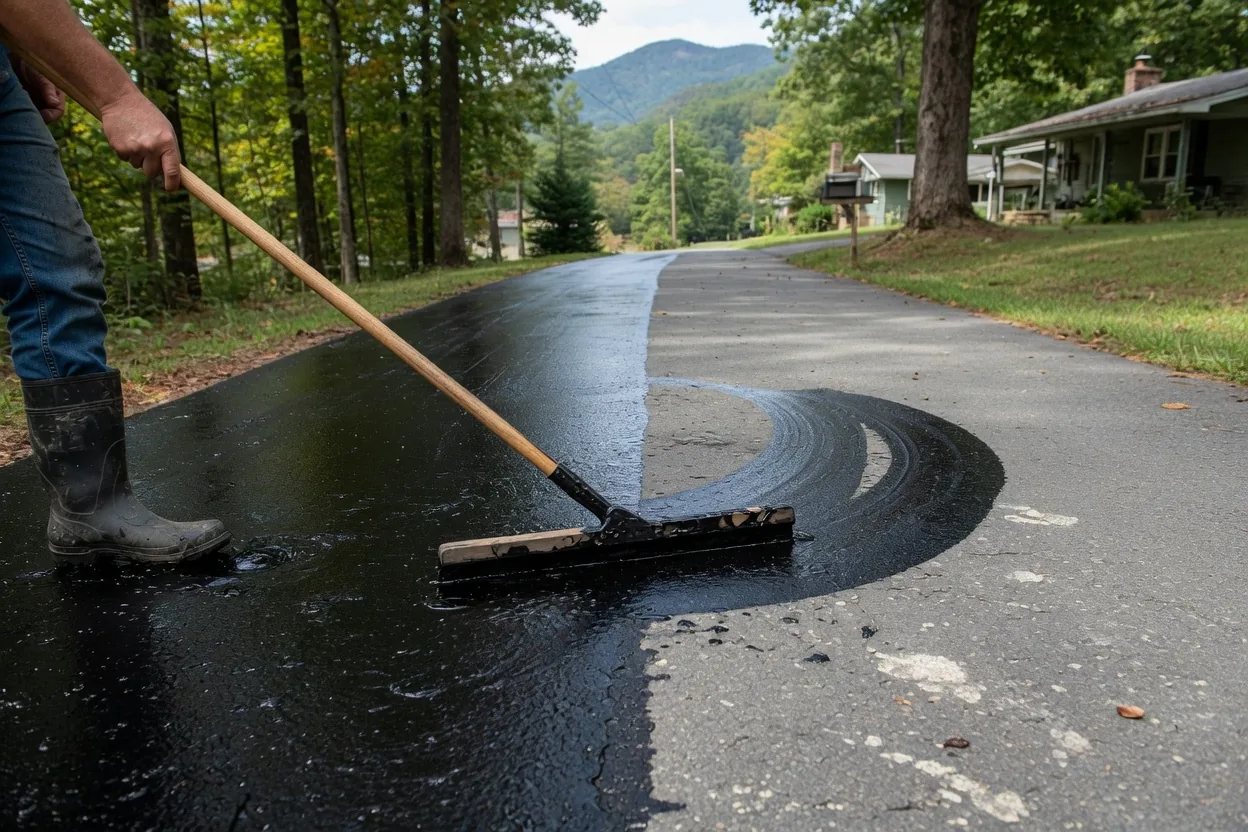
Residential asphalt in this market runs $4 to $8 per square foot installed, putting most driveways between $3,500 and $12,000 depending on size, grade, and what the base requires. The asphalt driveway cost guide covers how materials, labor, base depth, and drainage each move the final number. The table below shows how scope and site conditions translate to typical ranges for Haywood County jobs:
| Scope | Typical Range | Primary Cost Driver |
|---|---|---|
| Small driveway, flat lot (under 800 sq ft) | $3,500 – $6,400 | Base prep, mobilization minimum |
| Standard driveway (1,000–1,500 sq ft), moderate grade | $5,000 – $10,000 | Grading, drainage, 2-in surface course |
| Steep-lot or curved driveway, full base work | $7,500 – $12,000 | Slope equipment, drainage design |
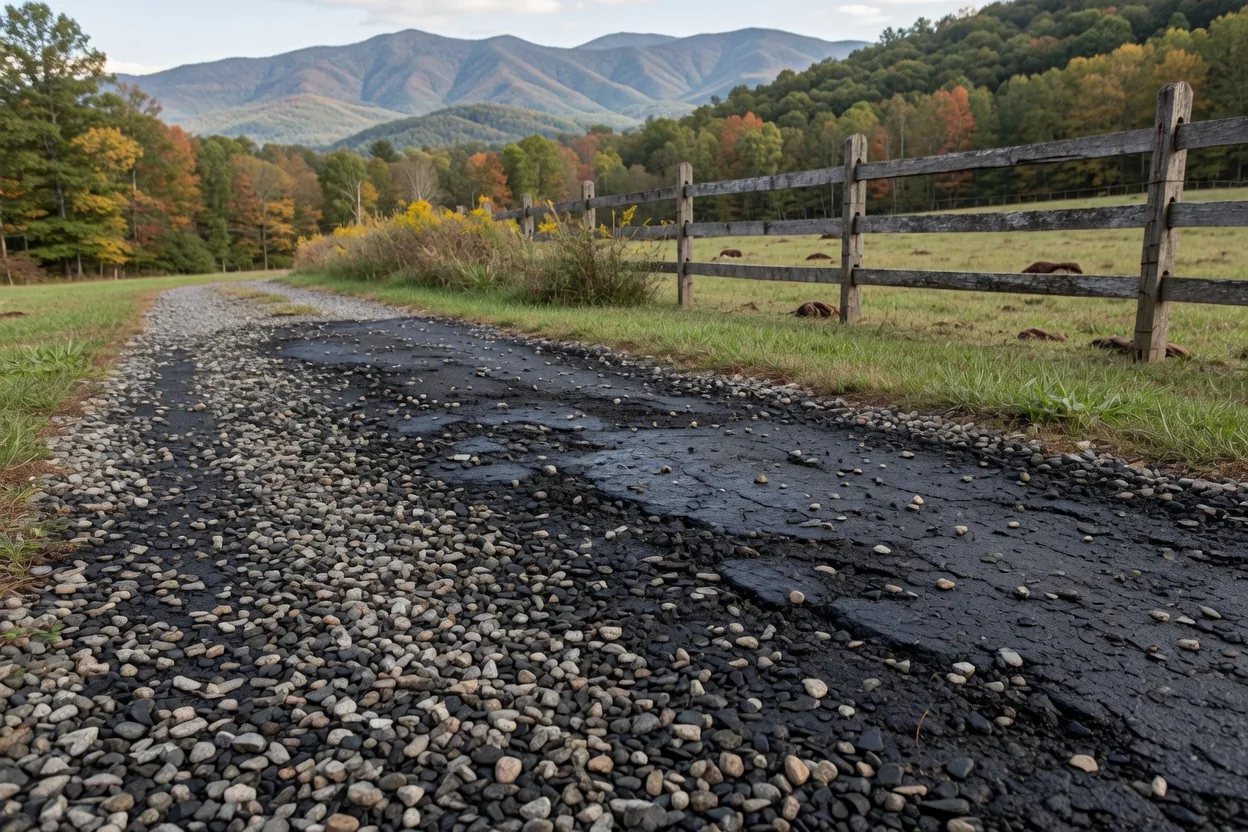
| Gravel lane conversion to asphalt | $5,500 – $10,500 | Base evaluation, stabilization, surface |
One pattern local crews consistently encounter: a driveway that looks routine from the street reveals a drainage problem once the contractor assesses the existing grade. Budgeting for that discovery before bids arrive prevents the awkward scope-change conversation once equipment is already on site.
Water, soil, and the base beneath everything
The asphalt surface is only as permanent as the base beneath it. In Haywood County, that base must contend with clay-heavy soil in the lower hollows — which holds water and resists compaction — and unstable engineered fill on ridge lots where the original grade was cut and rebuilt. Neither condition is unusual here, and neither can be corrected at the surface.
The flood history of this county puts the drainage question in concrete terms. Haywood County has been affected by 19 federal disaster declarations spanning 1973-2026, with the majority driven by storm-related flooding events. Each one demonstrated what happens when water has nowhere to go: it goes under. A driveway with inadequate lateral drainage becomes the collection point those events target. Building the drainage solution into the base specification — rather than adding it as a corrective after failure — is the difference between a repair call in two years and a driveway that outlasts the first ownership cycle.
The NC Department of Transportation sets drainage standards for driveways that access state-maintained roads, and crews with Haywood County experience know what those inspections flag. If your property has a seasonal wet area, a slope that accelerates runoff toward the lot, or a neighbor whose drainage approaches your grade, those conditions belong in the base design conversation before the first truck arrives.
If you're weighing a conversion from gravel to pavement, the base question is the most important one to answer first. The gravel-to-asphalt conversion guide explains how to evaluate whether existing gravel can be incorporated into the new base or whether full replacement is the more economical long-term decision.
Permits and road connections in Haywood County
Any new driveway that connects to a state-maintained road — which covers most routes in and around Waynesville — requires an encroachment permit from NCDOT before paving begins. Applications run through NCDOT Connect, and the review evaluates sight-distance clearance, approach angle, and culvert sizing relative to the drainage load the driveway will carry. On mountain roads with tight curves and limited shoulders, those reviews take longer than they would on a flat subdivision street. Factor the lead time into any project schedule, and confirm the permit is pulled before the crew mobilizes.
Work entirely within private property does not require a state permit, but Haywood County has local grading and stormwater rules that apply once a project moves a significant volume of soil. For any job that combines substantial regrading with paving — particularly on steep lots — verify the applicable thresholds with county planning before finalizing scope. A contractor who works this area regularly will know where the lines fall.
Hiring for Haywood County terrain
Three questions narrow the field quickly in the Waynesville market: ask whether the crew has paved steep-grade driveways on lots with a similar slope angle to yours; ask specifically how they approach base work on cut-and-fill lots; and ask what drainage solution they are proposing before they have said anything about surface thickness or asphalt mix. That third question is the most revealing — it tells you whether the crew has actually assessed your site or whether they are quoting the same job they do on a flat lot in a lower county.
Contractors who work mountain terrain occasionally without deep local experience tend to underestimate base and drainage work. The result is a competitive quote that looks attractive right up until year four when the surface starts reflecting what was skipped beneath it. When structural work such as retaining walls is part of the scope alongside paving, the NC Department of Insurance building codes division is the reference point for applicable licensing requirements. For a standard residential driveway, the questions above are the faster filter — crews that have done the work here answer them directly and without hesitation.