Elevation is the variable other towns don't carry
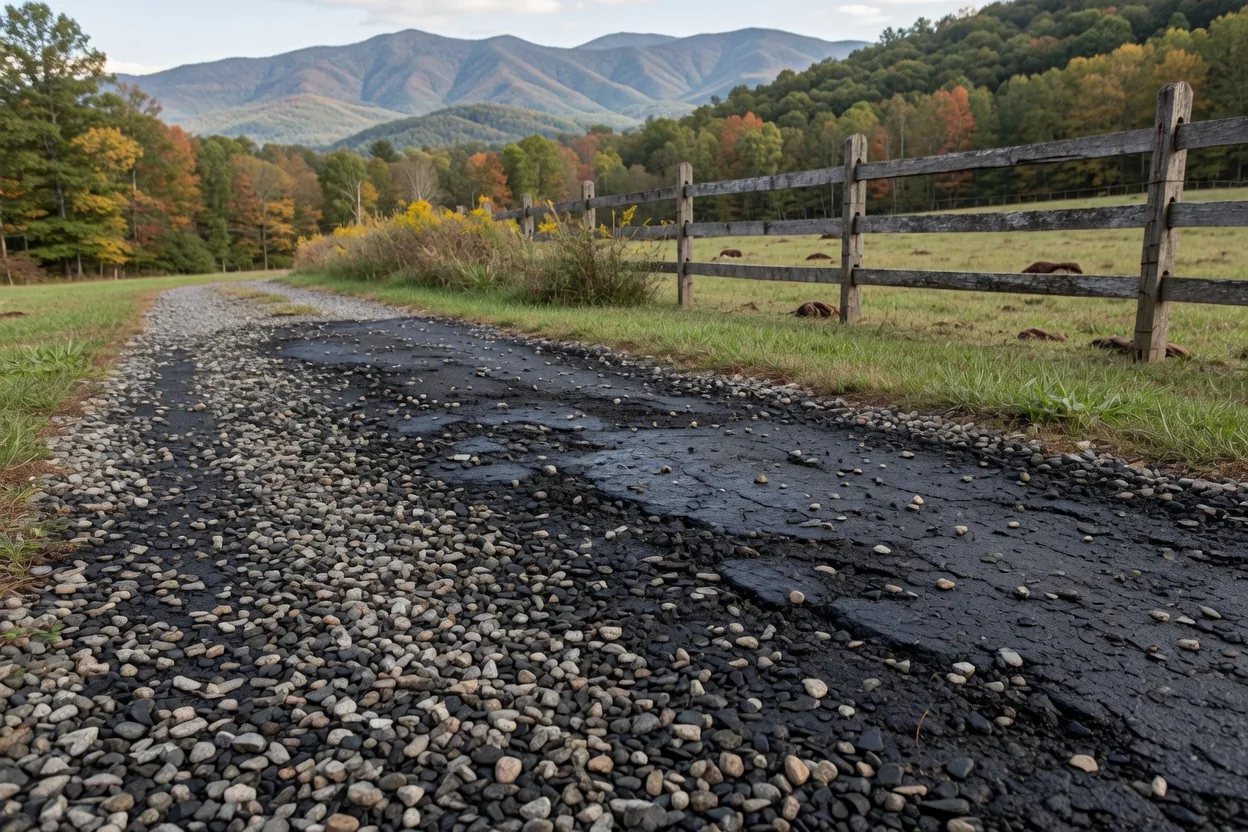
Asheville sits above 2,000 feet in the Blue Ridge, and that altitude creates a freeze-thaw pattern flatland driveways never face at the same intensity. When bare asphalt oxidizes and develops fine cracking — a process that takes three or four years in Raleigh — water finds those cracks, freezes overnight in a Buncombe County winter, and forces the gap open wider with each cycle. A driveway that would look serviceable for another few seasons in Charlotte can develop structural cracking requiring repair in two or three Asheville winters. That math makes staying on a regular sealcoating schedule less optional here than it is elsewhere in the state.
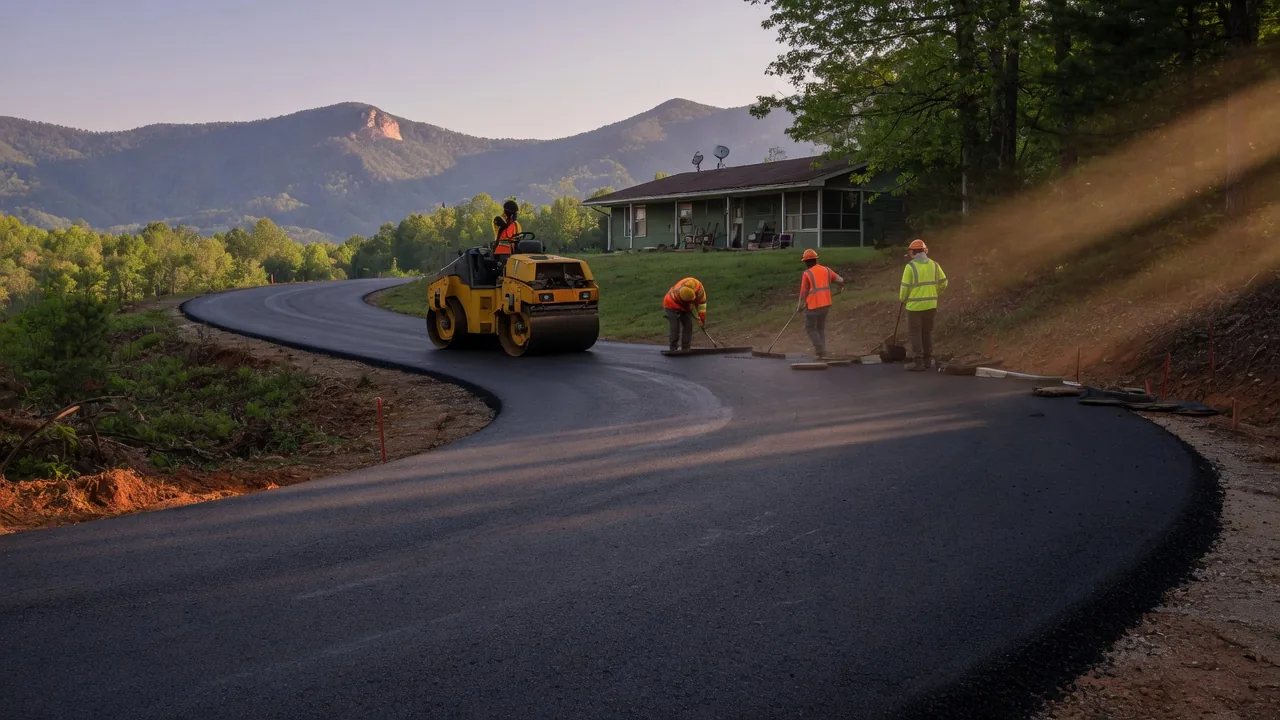
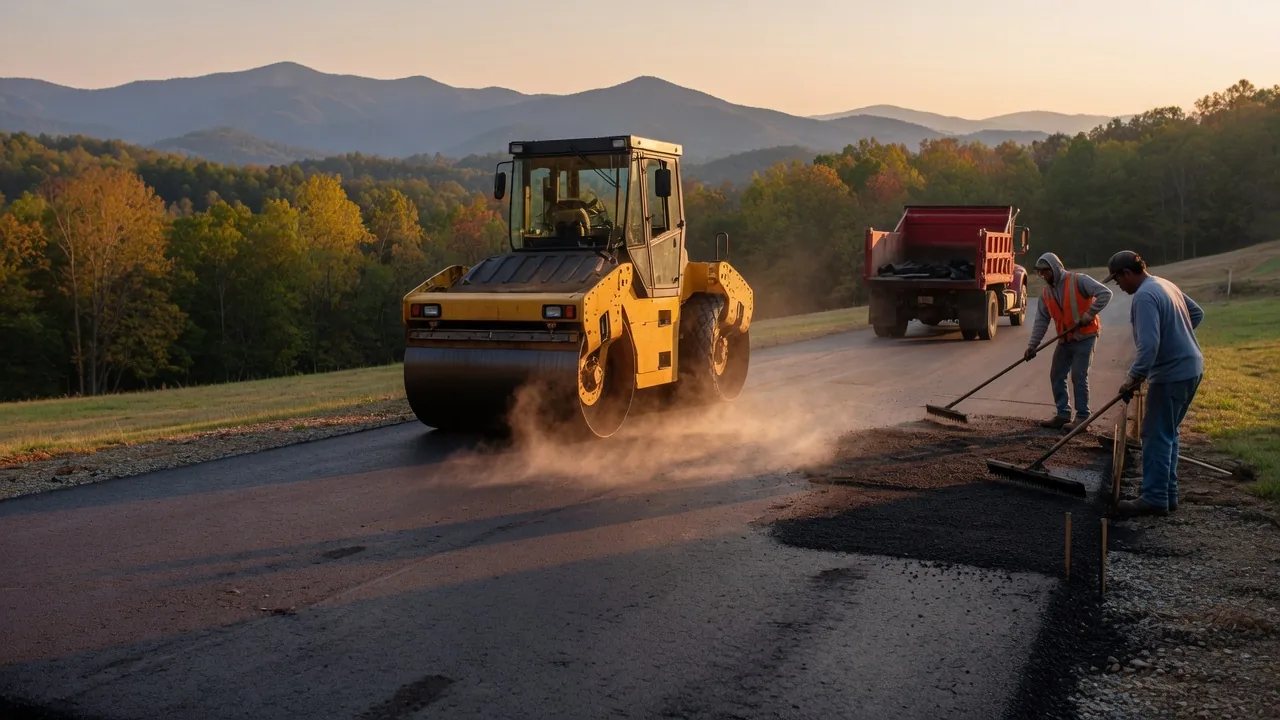
Buncombe County's older housing stock compounds this. The 1950s and 1960s construction common in Avondale and Oakley, the steeper hillside drives in Kenilworth, and newer builds climbing the ridges above Merrimon Avenue all deal with grades and surface ages that flatland sealcoating companies rarely encounter in the same job mix. New pavement anywhere in the county also has its own timing requirement before the first seal can go down — the paving-to-sealcoat wait guide covers that question in full, including how mountain temperature swings affect the cure window on fresh asphalt.
What sealcoating costs in Buncombe County
Rates here track the regional benchmark: $0.18 to $0.35 per square foot for a two-coat application, putting a standard two-car driveway in the $350 to $850 range. What moves a job toward the upper end isn't square footage alone — it's slope, the depth of surface oxidation, and how much crack prep the asphalt needs before sealer goes down. See the full sealcoating cost guide for line-item detail and regional comparisons.
| Scope | Primary Cost Driver | Typical Range |
|---|---|---|
| Standard two-car driveway, 2 coats | Flat to gentle grade, good condition | $350–$650 |
| Steep residential driveway, 2 coats | Hand squeegee required on grade | $500–$850 |
| Heavily oxidized surface, 2 coats | Crack fill and edge trim before sealing | $450–$750 |
| Crack fill add-on | Per linear foot | $2–$5/lf |
A bid that buries crack fill inside the flat rate is either absorbing the prep cost or skipping it — ask which before signing. Prep that gets skipped shows up as sealer peeling at crack edges within one season, and you pay to redo the job sooner than the surface warranted.
Mountain weather narrows the application window
Sealer requires pavement and air temperatures above 50°F with no rain for at least 24 hours after application. In Asheville that window runs reliably from late April through mid-October, but the Blue Ridge can see overnight lows below 50°F well into May and again by late September. The National Weather Service forecast for the Asheville area is the practical scheduling tool — a crew that doesn't check it before loading out may have to cancel on arrival or apply sealer in marginal conditions that fail before the first hard freeze tests the bond.
Buncombe County's storm history reinforces the discipline around timing. The county carries 19 federal disaster declarations spanning 1973-2026, overwhelmingly storm and flood events. The heavy autumn rainfall that follows summer sealcoating season does real damage to driveways that missed their application window — water penetrates oxidized asphalt faster than most homeowners realize until they see cracking that wasn't there in spring. Scheduling by August locks in a full cure before fall's wet pattern arrives and well before the first hard freeze tests the bond.
Steep grades and mature canopy add prep flatland jobs skip
Asheville's hillside neighborhoods carry some of the densest hardwood canopy in western NC. Root systems from mature oaks and maples commonly lift driveway edges and create low spots that pond water. Those areas need to be addressed before the sealcoat goes down, not after — sealer applied over a low spot that holds standing water lifts from the pavement within a single freeze-thaw cycle. A crew quoting a straight two-coat seal on a driveway with visible root-heave or edge lifting without mentioning prep is not giving you a complete scope.
Driveways that connect directly to a state-maintained road are subject to NCDOT right-of-way requirements for any work that reaches the apron. The NCDOT Connect portal handles driveway permit applications for exactly this situation — confirming whether your connection triggers that requirement takes a few minutes and avoids a stop-work situation. Most residential sealcoating stays comfortably within the private parcel, but on narrower lots in older neighborhoods where driveways run close to the curb line, it is worth confirming before the crew mobilizes.
What to ask before hiring a crew in this market
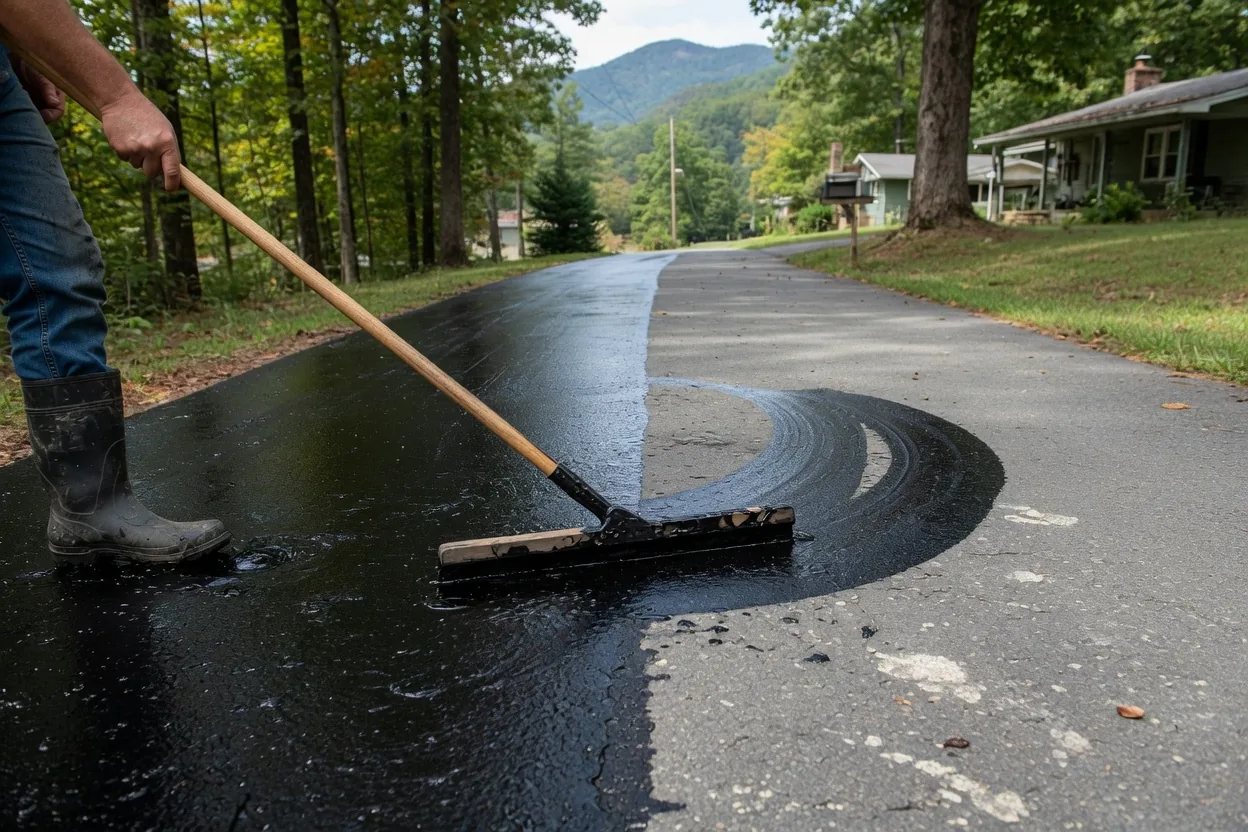
Three questions separate the prepared crews from the spray-and-go operations in Buncombe County. First: do they hand-squeegee steep sections, or spray only? Spray application on a pitched driveway produces thin coverage at the top edge that wears through first. Second: is crack fill a separate line item, and why? If it's included, confirm it's being done; if it's missing, find out whether the surface genuinely doesn't need it. Third: what happens when weather turns after scheduling? A crew that postpones rather than pushes through in marginal conditions is one that respects cure quality. Crews that have worked this county's hillside driveways for multiple seasons know which surfaces drain and which ones don't — field experience worth asking about directly.
The sealcoating service overview covers what a complete job should include from surface prep through final cure. The City of Asheville maintains right-of-way guidance for work near city-maintained streets — worth a check if your driveway fronts directly on a city road and the scope reaches the apron.