Elevation is the variable most Canton driveways share
Canton sits in the Pigeon River valley in Haywood County, but the residential neighborhoods climbing the surrounding ridgelines sit well above the valley floor — and that altitude is the first fact any contractor needs to understand. The western North Carolina mountains see more freeze-thaw cycles per winter than most of the piedmont sees in several years, and every cycle works like a mechanical pump: water enters a crack, freezes, expands, contracts, and leaves the crack slightly wider and the base slightly more disturbed than before. A driveway that would go fifteen or more years in the flatlands routinely needs its first structural attention in seven to ten years here.
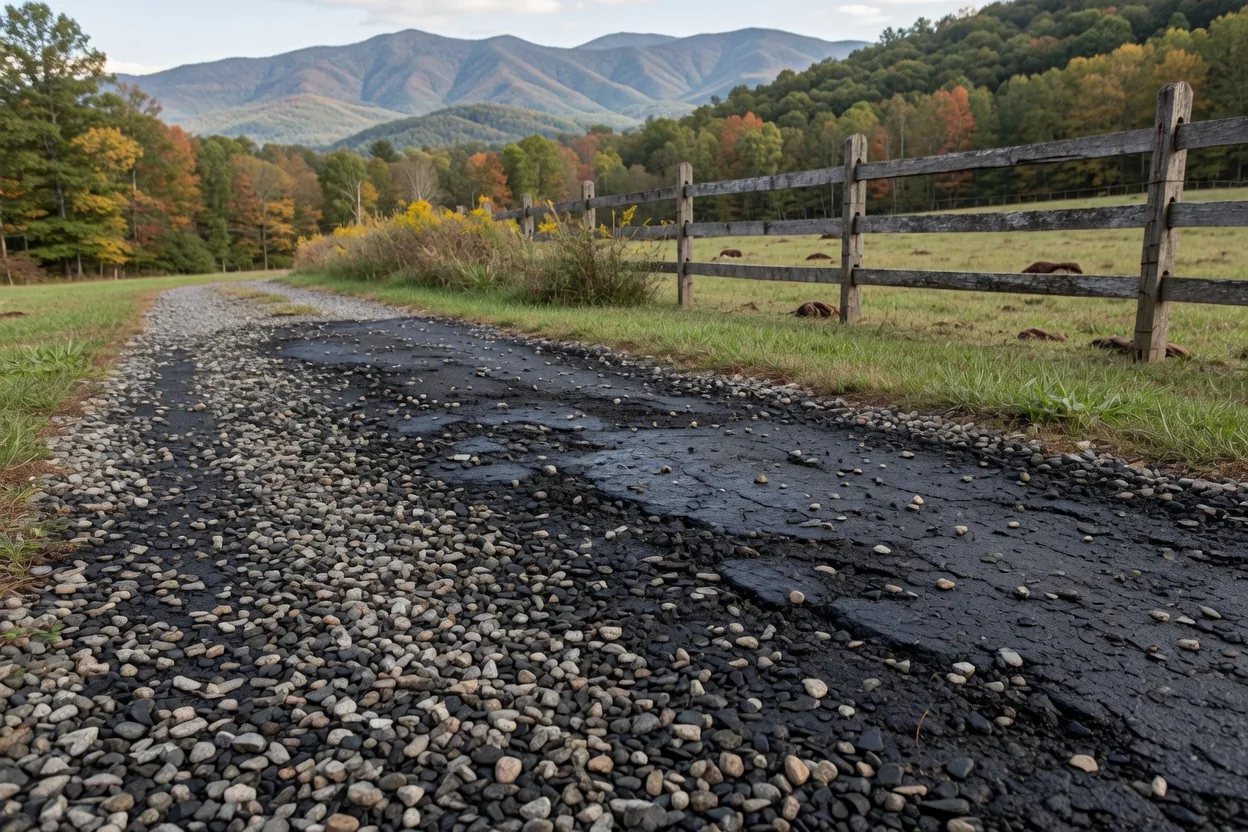
The failure patterns to watch for: lateral edge cracks where the sub-base has shifted, alligator cracking in low spots where water pooled and froze, and potholes on steeper driveway grades where surface water accelerated before it could drain. Each tells a different story about the base, and the repair scope follows the story. See the full asphalt driveway repair guide for how those failure types are diagnosed and scoped before a price is set.
What repairs actually cost in Haywood County
Canton jobs are not exotic — they are mountain-climate versions of the same repair categories found anywhere in NC. The price drivers are scope (how much surface and base is damaged), access (steep grades add mobilization time), and whether the base has to be addressed before surface work will hold. The table below maps common repair types to realistic ranges for this area.
| Repair Type | Typical Range | Notes |
|---|---|---|
| Crack filling (per linear foot) | $3 – $8 / ft | Best when cracks are still under ½ inch wide |
| Pothole patching (per pothole) | $250 – $600 | Price rises with depth and base damage underneath |
| Edge repair and re-definition | $300 – $700 | Common on slope lots where margins crumble first |
| Alligator cracking overlay (small section) | $800 – $2,500 | Requires a stable, dry base to hold through winter |
| Full section resurface | $1,800 – $4,500 | Larger area or heavily degraded surface |
Small-scope crack sealing and single-pothole work lands in the $250–$900 range. Structural patching and section work push toward the upper end of the $300–$4,500 residential band. Any bid that skips a base assessment on a pothole deeper than two inches is incomplete — ask what the crew found underneath before the price was set.
Water, slope, and why drainage comes before asphalt
Haywood County has a documented history of heavy precipitation events. The federal disaster record includes 19 declared events over 1973-2026, the majority tied to storm and flood categories. Those events do not just damage roads — they saturate sub-base material and redirect surface drainage in ways that do not restore themselves. A Canton driveway on a sloped lot is particularly exposed: every significant rain sends a sheet of water over the surface, and any low spot becomes a collection point where freeze-thaw does its worst work over the following winter.
Before surface patching makes financial sense, two drainage questions have to be answered: where is uphill water going, and does the driveway crown properly to break centerline runoff toward the edges? The pothole repair guide walks through how inadequate drainage shows up in the pavement and what that means for repair sequencing. For seasonal planning, the National Weather Service Western NC forecast area covers Haywood County — tracking the wet season helps calibrate when to seal cracks before winter rather than after it.
Permits, road connections, and the NCDOT question
Routine driveway repair on private property in Haywood County does not require a permit — you are maintaining an existing paved surface. The situation changes if work alters the driveway apron or the connection point where a private drive meets a state-maintained road. In that case, a driveway access permit through the NCDOT Connect portal is required before work begins. The NC Department of Transportation administers those permits; most residential modifications through an existing curb cut process straightforwardly, but skipping a required permit creates title and liability exposure on resale.
For the repair itself, ask any contractor whether they are removing damaged material or sealing over it. Hot-mix patching bonded over loose or wet base material fails within a single mountain winter. A crew that checks base condition before writing a number is working correctly. The driveway cracking guide explains what different crack patterns indicate about whether a surface repair will hold or whether base work needs to come first.
The repair window in a mountain climate
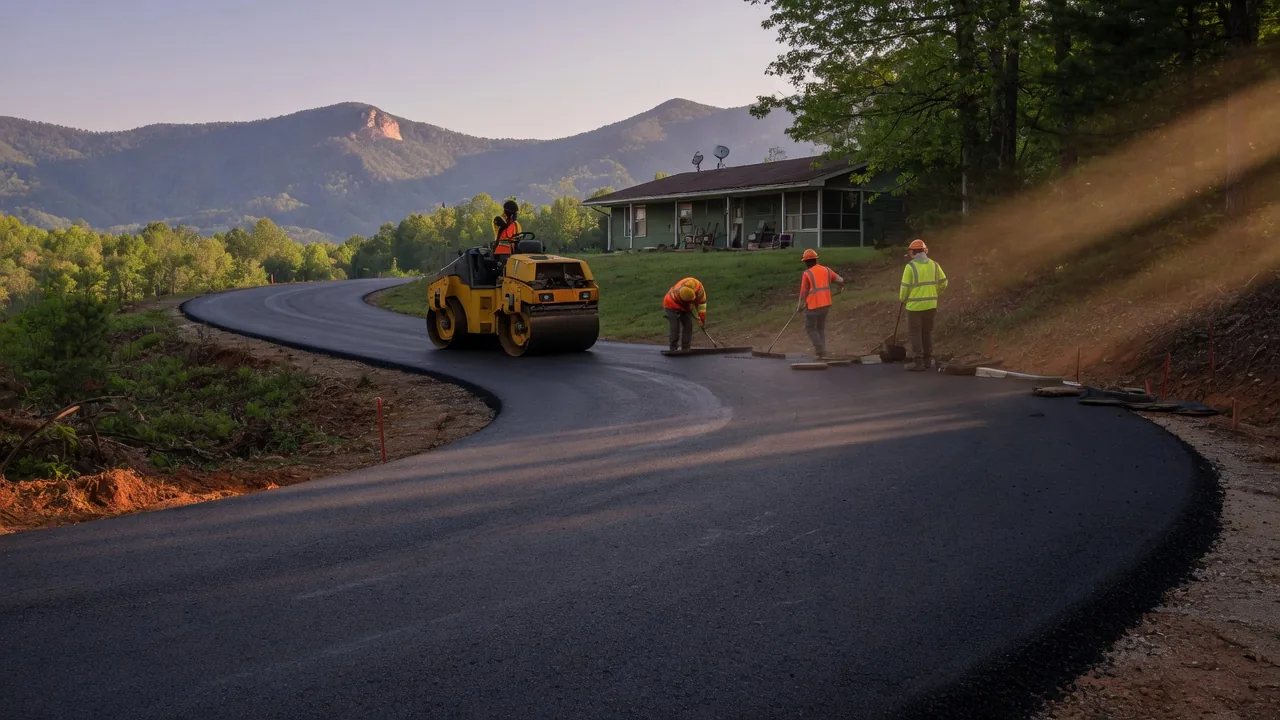
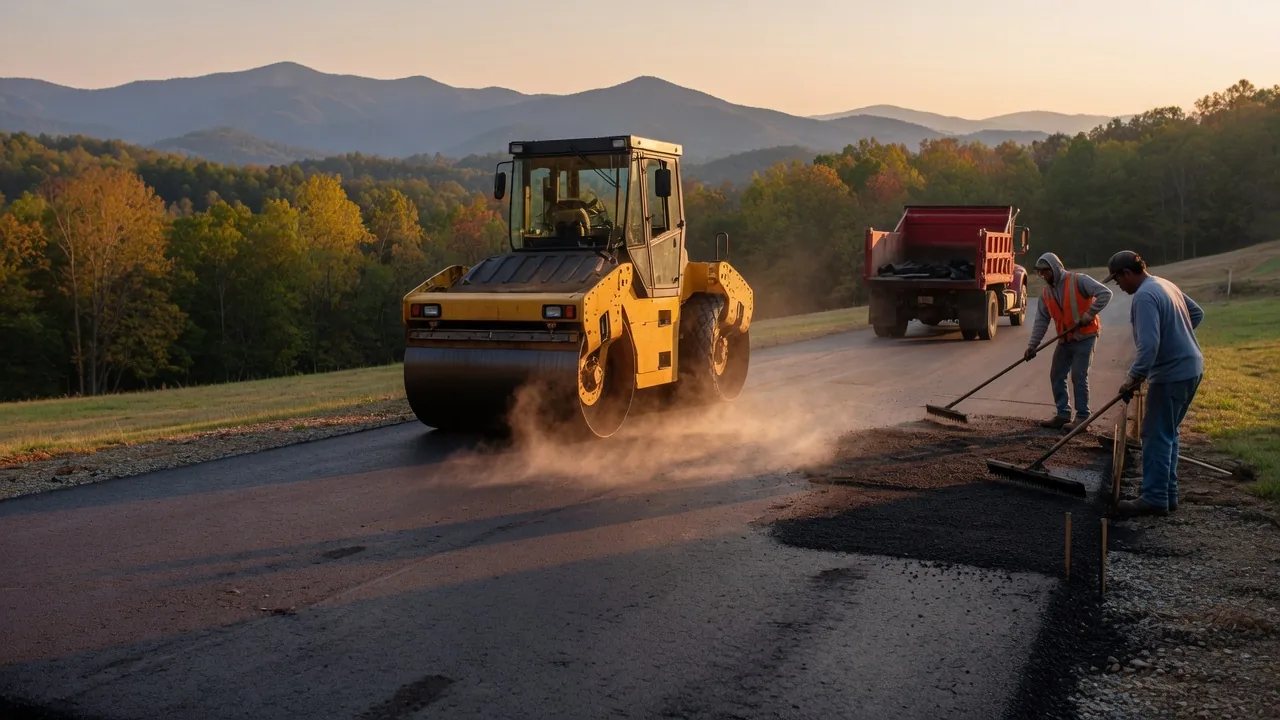
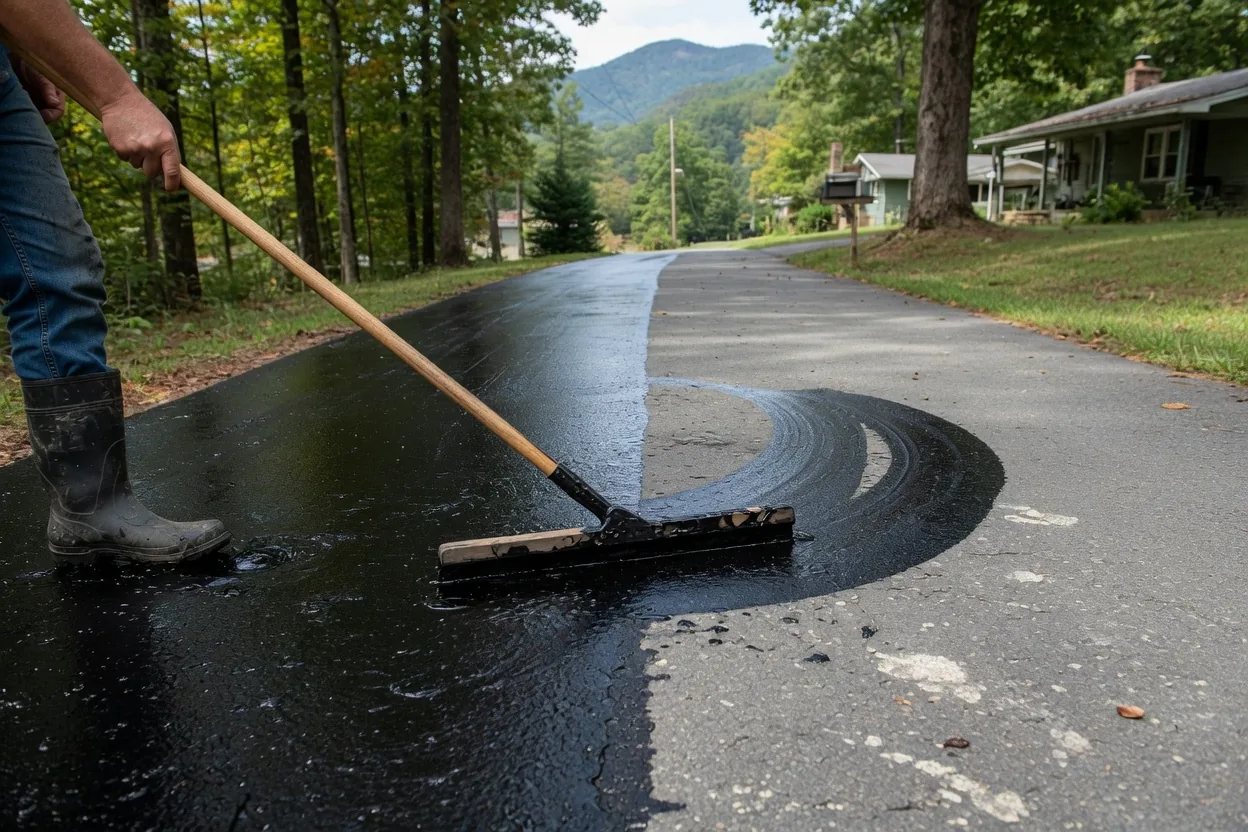
Asphalt repair has a tighter seasonal window in western NC than in lower-elevation parts of the state. Hot-mix material requires ground and air temperatures above 50°F to bond and compact correctly; most crews in the Haywood County area work April through October, with shoulder months depending on the specific week's forecast. Cold-pour crack filler extends that window — sealing a crack in late March before spring snowmelt enters it is worth doing even if structural work has to wait for warmer ground — but resurfacing and structural patching are warm-weather work.
The practical implication: if you notice new cracking or an emerging pothole in the fall, get it evaluated before winter even if the repair is scheduled for spring. A crack sealed in October stays narrow through the freeze-thaw season; the same crack left open can triple in width by March. That is the difference between a $300 repair and a $1,500 one, and it is the reason Canton driveways reward attention in September rather than waiting until April.