Grade and drainage before anything else
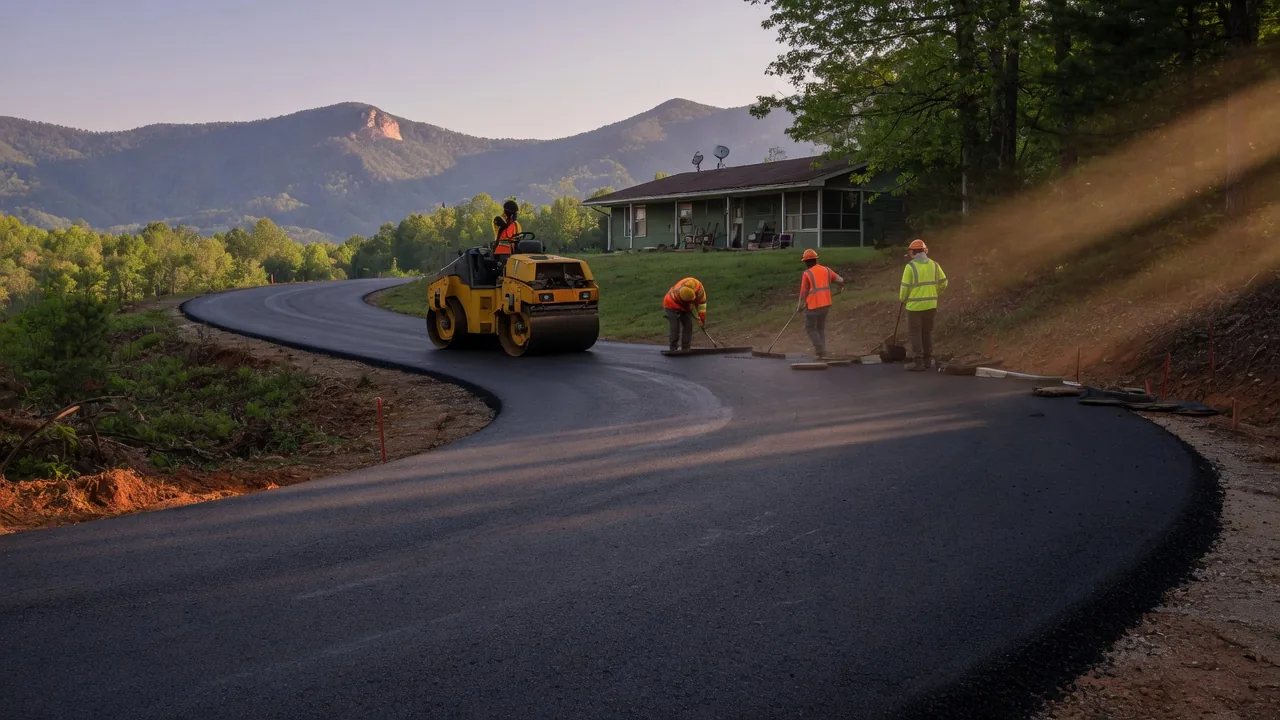
Buncombe County sits where multiple river valleys meet a ring of ridgelines, and residential lots climb steeply from Asheville's core into communities above Leicester, Weaverville, and Black Mountain. Mountain runoff here moves fast, channels hard, and finds every weakness in a paved surface. A driveway that drains fine on a flat Piedmont lot can pond in the wrong spot on a 12-percent grade, or wash its edge in the first hard rain after a job on a ridge lot. This is the one thing about paving in this region that changes the job: subbase preparation and drainage detailing are not options — they are the job.
Buncombe County records 19 federal disaster declarations spanning 1973-2026, and the saturated-soil seasons that follow heavy rain events are exactly when marginal driveways announce themselves. Elevation compounds it: freeze-thaw cycles at 2,500 feet are more severe than at valley floor, so a base that holds through winter in the Piedmont may not hold here. A competent crew uses all of this to spec base depth, set the crown, and plan edge drainage before the first ton of mix arrives. A crew that skips it is writing a three-year driveway.
New installation vs. overlay — what each job actually involves
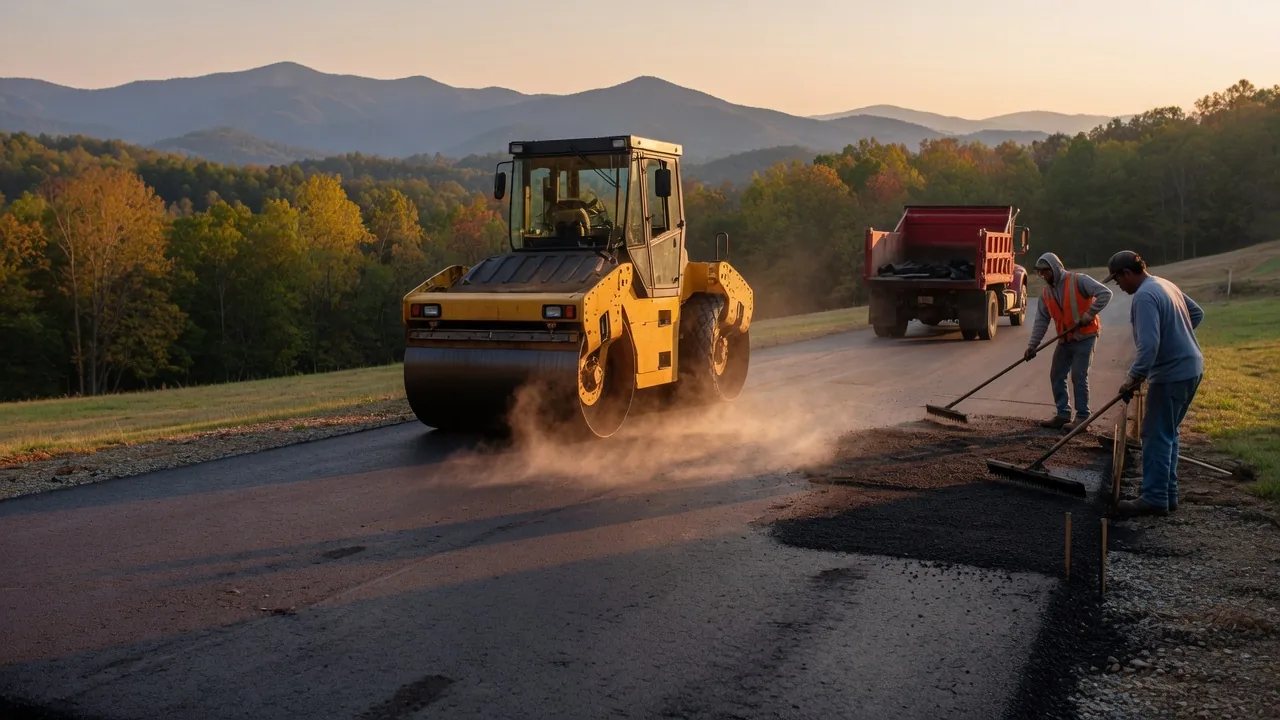
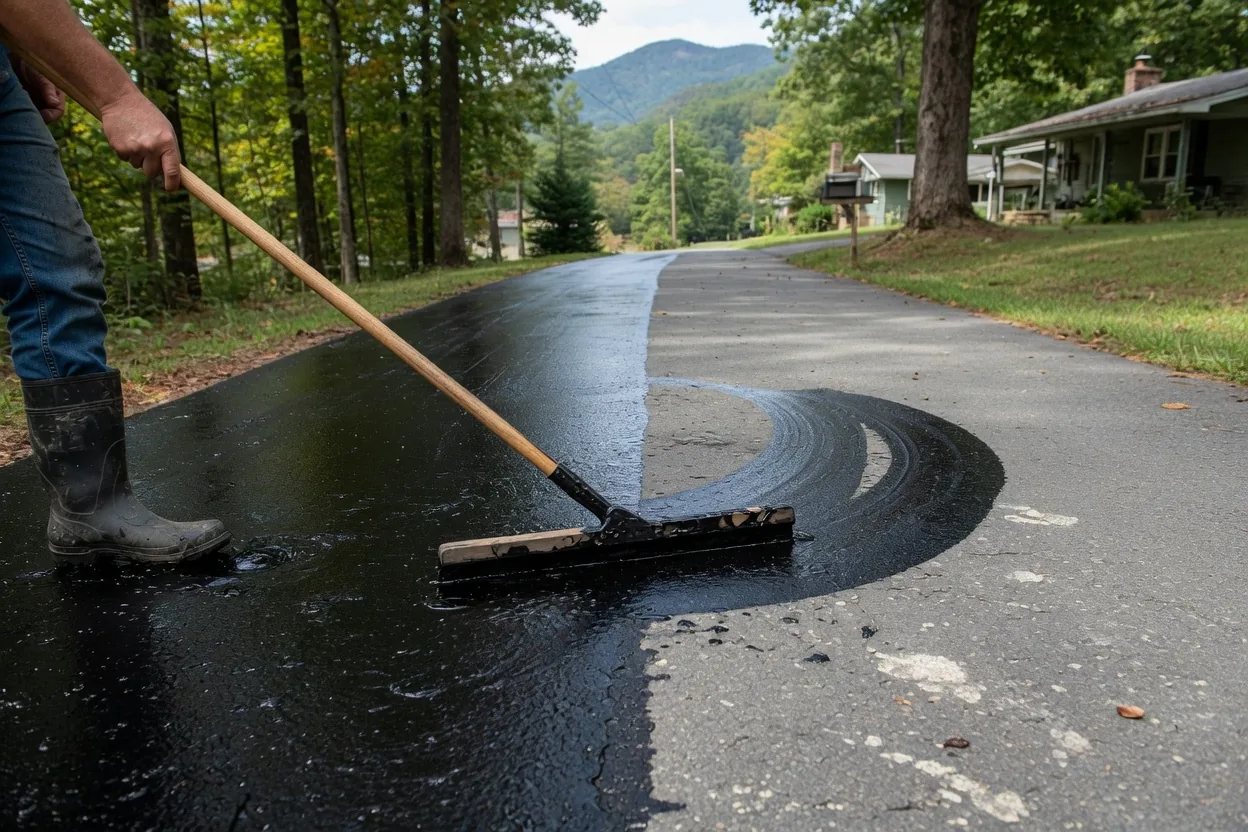
A full asphalt installation starts below the surface. The crew removes existing material, builds a compacted aggregate base — typically crusher run graded to drain — and paves in two lifts: a binder course for structure and a surface course for wear. That sequence is what creates a driveway that carries load over time. An overlay mills or scarifies the existing surface and lays a new wearing course on top. It costs less and works well when the existing base is still sound. The word sound matters: overlaying a failed base traps the failure underneath, and it will telegraph back through as reflective cracking within a few seasons. At that point the right repair is the full installation you should have done initially.
The thickness question looks different on mountain terrain. Residential driveways on grade typically require more base material to handle lateral load and aggressive water movement. A contractor who specs the same section for a 15-percent slope as for a flat pad in a valley neighborhood is quoting the wrong job. Ask what depth they're spec'ing and why for your specific lot — the answer tells you whether they've actually assessed the site or just walked it.
What paving costs in Buncombe County
New asphalt runs $4–$8 per sq ft installed across this region; overlays run $2–$4 per sq ft. The full cost breakdown covers the variables in detail — the table below maps typical residential scopes to what they actually cost:
| Scope | Typical Installed Range |
|---|---|
| Small driveway, 400–600 sq ft, minimal grade | $3,500–$4,800 |
| Average residential driveway, 800–1,200 sq ft | $5,500–$9,600 |
| Sloped mountain lot with significant base and drainage prep | $7,500–$12,000 |
| Overlay on sound existing asphalt | $2–$4 per sq ft |
Slope pushes cost in two directions: more aggregate base material to fill and level the grade, and slower equipment passes on steep sections. A driveway cut into a ridge above Weaverville prices differently from a flat pad in a West Asheville neighborhood at the same square footage — even with the same crew and the same mix. Material cost also tracks diesel and liquid asphalt prices, which swing enough between early spring and late fall that a firm written bid matters before you schedule work.
Permits and right-of-way — what actually requires one
Replacing an existing driveway in the same footprint typically does not require a building permit, but any new connection to a state-maintained road requires an encroachment permit through NCDOT. The application process runs through NCDOT Connect, and the requirement is serious: an unpermitted connection to a state road can result in the work being removed at the property owner's cost. Connections to city streets fall under City of Asheville jurisdiction with separate review requirements. A contractor who says no permit is needed for a new connection to a public road is telling you something worth verifying before the job starts.
Stormwater rules are the other layer. Buncombe County's topography makes impervious surface additions a regulated category in many situations. For projects that materially expand paved area — converting a large gravel area, adding a second pad — check whether your parcel has a stormwater review threshold. Your contractor should flag it; the City of Asheville's development services or Buncombe County planning staff can confirm if they don't.
The questions that keep a paving bid honest
"What base depth are you spec'ing, and why for this slope?" Any answer that doesn't reference your specific grade, existing material, and drainage plan is a sales walk, not a site assessment — and in Buncombe County's terrain, those details determine whether the driveway lasts 20 years or 5. "Is this a full removal and installation or an overlay on the existing base?" The price difference is real and so is the lifespan gap. Knowing which you're buying before signing prevents the most common post-job dispute. "What drainage work is included?" On a sloped mountain lot, proper grading and edge drainage are often the most consequential part of the project. A bid that is notably lower than others is saving money somewhere — on this terrain, it is usually here.
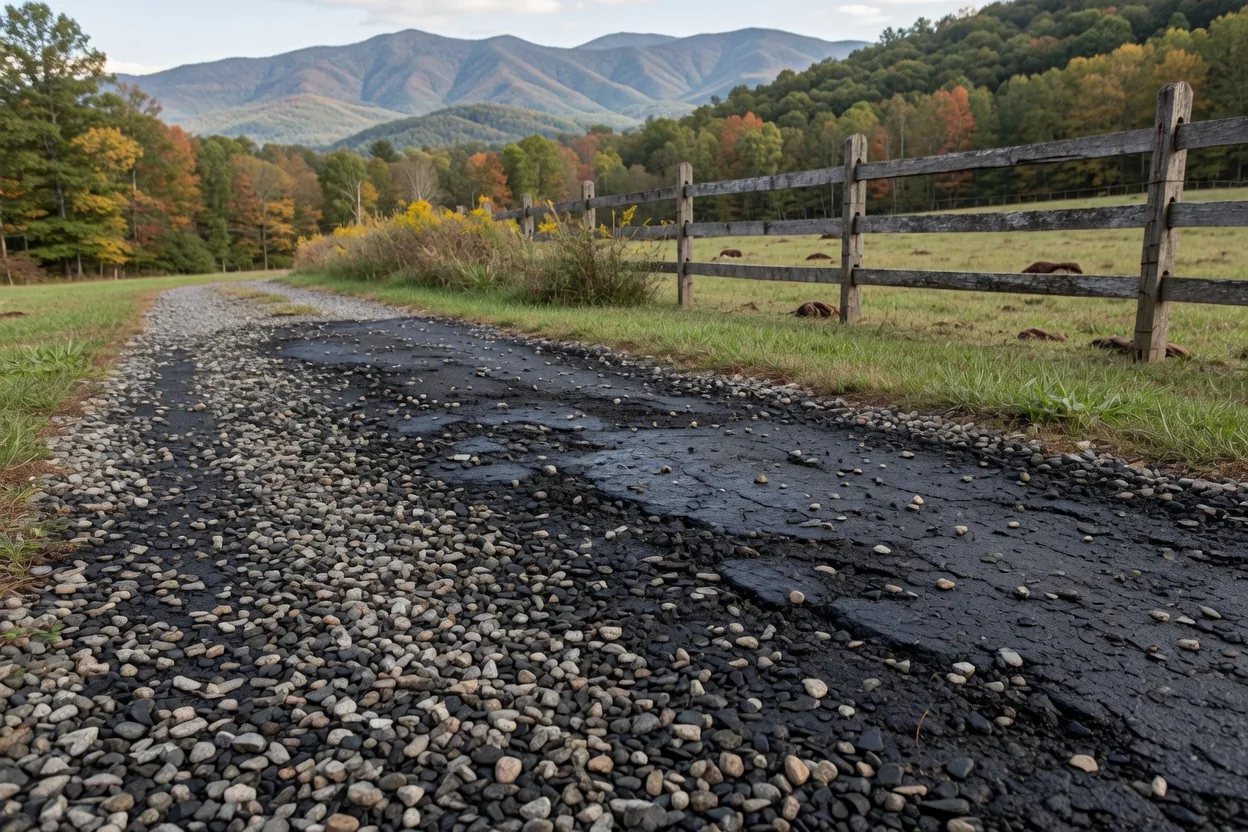
If you are considering a gravel-to-asphalt conversion, also ask how the existing gravel base is being treated: graded and compacted as structural base, or hauled off. That answer changes both the cost and the performance of the finished driveway.