What Henderson County terrain asks of an asphalt job
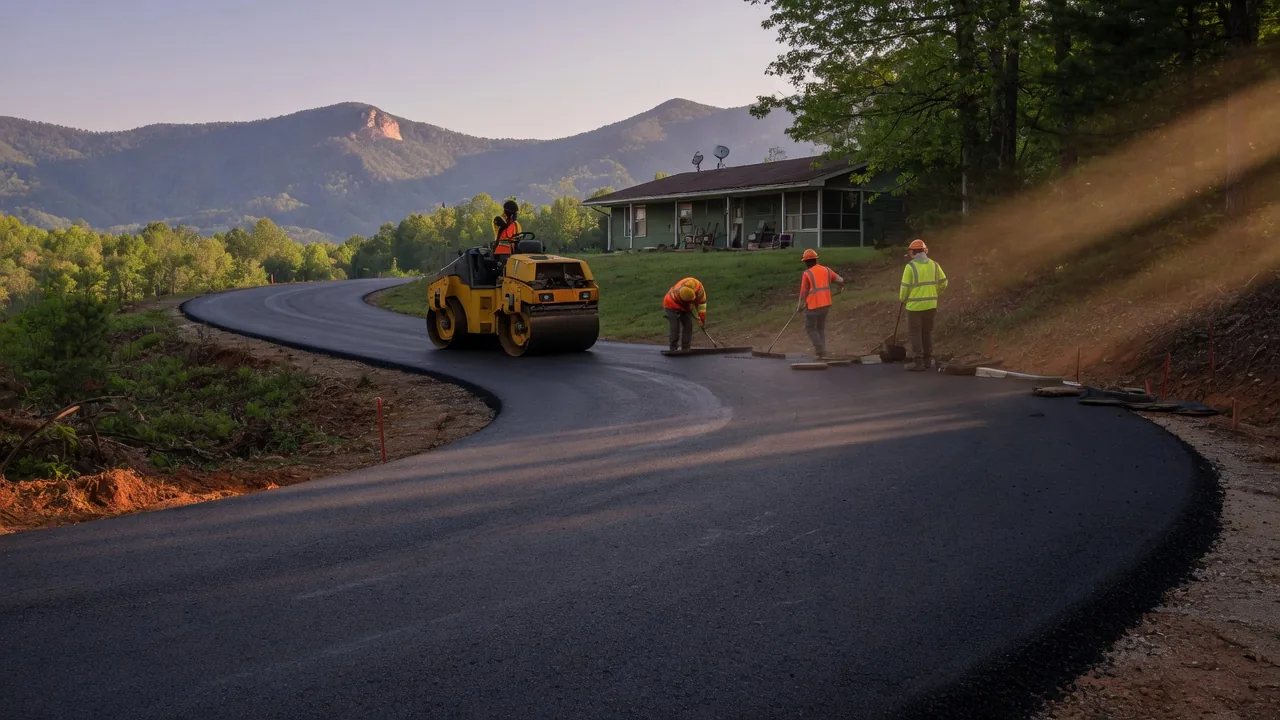
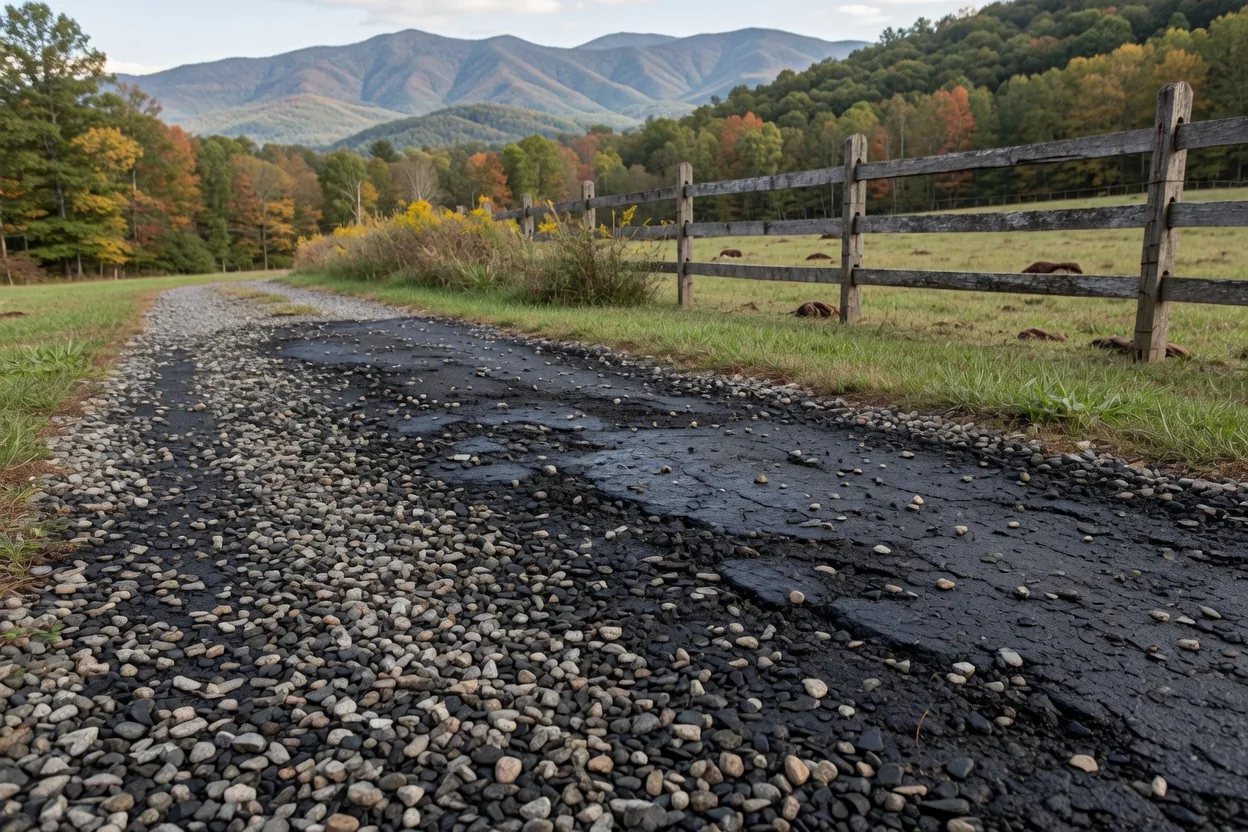
Hendersonville sits at roughly 2,100 feet in Henderson County's slice of the Blue Ridge foothills — well above the NC Piedmont and far enough into the mountains that freeze-thaw cycles arrive harder and more often than they do in Charlotte or Raleigh. That elevation shapes every asphalt job here. A base layer that holds for fifteen years on a flat suburban lot may heave and crack in five on a Henderson County hillside if it was not built thick enough for the terrain and the winters. Grade compounds the problem: nearly every rural driveway in the county carries meaningful slope, from the long drives running back through the apple orchards that make this county recognizable to the hillside cuts in older Hendersonville neighborhoods and the newer residential lots south of town on the ridgeline. On any of those runs, water moves fast, and asphalt installed without managing that flow channels runoff under the surface layer rather than away from it. If you are converting an existing gravel lane — which describes most longer driveways outside city limits — the gravel-to-asphalt conversion decision starts with a graded base assessment, not a surface quote. Settled gravel on a slope often requires full regrading before asphalt can go down correctly.
What asphalt paving costs in Hendersonville
Henderson County jobs price on the same per-square-foot range as the rest of mountain NC — see the full driveway cost breakdown for line-item detail. The ranges below reflect what Henderson County driveways actually look like, where sloped lots and long rural runs are common rather than exceptional.
| Scope | Typical Range |
|---|---|
| Crack seal and minor repairs | $250 – $800 |
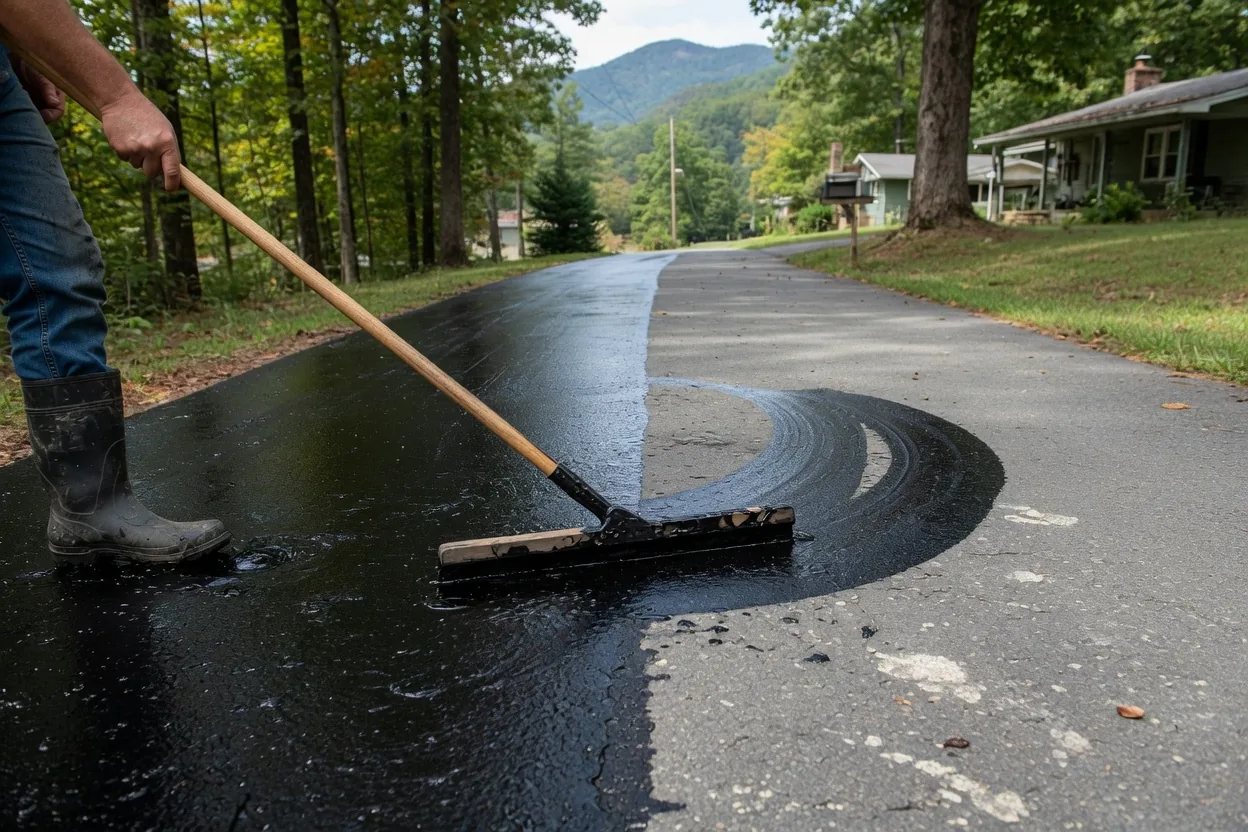
| Reseal over existing asphalt | $0.15 – $0.25 per sq ft |
| New driveway, flat to moderate grade | $4.00 – $6.00 per sq ft |
| New driveway, steep grade or long run | $5.50 – $8.00 per sq ft |
| Gravel-to-asphalt conversion | $5.00 – $8.00 per sq ft |
| Drainage structure at low end | $400 – $1,500 per item |
Steep-lot and long-driveway jobs routinely carry drainage and mobilization line items that suburban quotes never show. Treat any bid that does not address water flow as incomplete rather than competitive.
Storm history and what it means for pavement here
Henderson County carries 16 federal disaster declarations on record (1978-2026), the majority driven by storm and flooding events in the Blue Ridge. The National Weather Service data for this region reflects what long-term Hendersonville residents already know: heavy rainfall arrives fast in mountain terrain and moves faster downhill, and a driveway on a graded lot sits directly in that path. Pavement installed without a drainage plan channels water under the surface layer rather than away from it — once water finds the sub-base on a slope, failure accelerates. The drainage conversation before a job starts should cover shoulder grading, the outlet at the low end of the run, and whether the uphill property's runoff adds to the load. A paving scope that does not answer those questions was written for average terrain, not for Henderson County. Adding a properly sized catch basin or French drain at installation costs a fraction of the full-depth repair that follows when drainage is skipped.
Permits, NCDOT driveways, and utility clearance
If your driveway connects to a state-maintained road — which covers much of Henderson County outside Hendersonville's incorporated limits — the NC Department of Transportation requires a permit before new construction or significant surface modification. Applications run through NCDOT Connect, where the permit sets standards for culvert sizing, sight-distance clearance, and surface treatment at the connection point. Work inside Hendersonville's city limits follows the city's own building and zoning thresholds; grading above a set square footage may also require a separate county permit from Henderson County planning. Call 811 before any excavation begins — the sub-base grading a mountain driveway requires easily reaches depths where buried utility lines are a real risk, and a missed mark creates delays the permit process never imposed.
Reading a Henderson County paving scope
Three questions are worth asking before you sign with any contractor. First, ask about experience specifically on sloped lots — not just residential driveways in general, but graded work where surface drainage and edge retention are the variables. Flat-lot experience does not carry over cleanly to grade management on a mountain driveway. Second, ask for a written scope that names base thickness and compaction method, not just surface depth and asphalt tonnage; a two-inch surface on a poorly prepared sub-base fails faster than a properly compacted thinner job. Third, ask what the plan is for water at the low end of the driveway — where does it exit, and how does the installation account for it. That answer tells you more about a crew's experience on graded work than any claim in a brochure can. The asphalt paving overview covers what a complete scope should include so you know what to expect from a first site visit. Apply the city-swap test to every estimate you receive: does it name your specific grade, your drainage outlet, and your base condition? A quote that reads identically to one written for a flat subdivision lot in the Piedmont is a generic price, not a Henderson County one.
Timing and how mountain asphalt ages
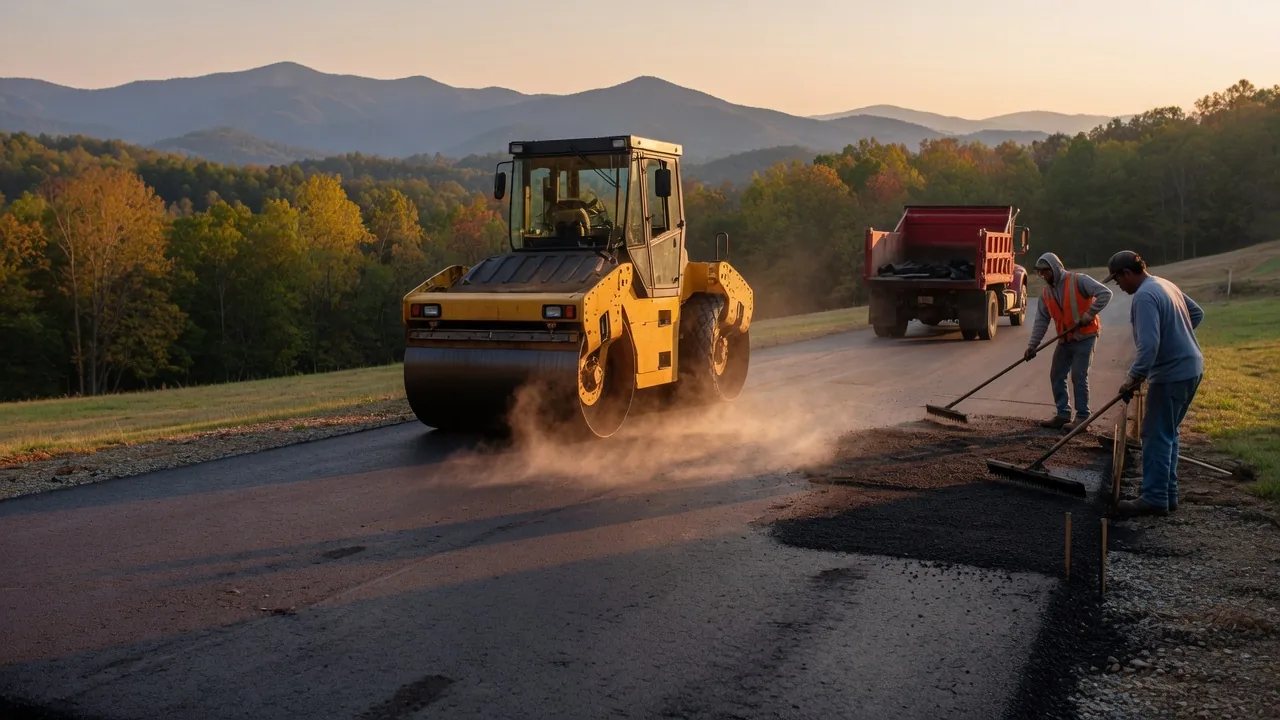
The reliable installation window in Henderson County runs roughly from late April through October. The county's elevation means spring shoulder-season work carries more temperature risk than it would at lower ground — soil that has not fully warmed will not compact correctly, and a rapid temperature drop after paving disrupts the cure. Projects pushed into November face shortened windows before hard frost arrives. On the longevity side, a well-installed driveway at this elevation will typically show its first maintenance needs — crack sealing, minor edge repairs — in the seven-to-ten-year range when drainage was handled correctly at installation. Freeze-thaw cycles accelerate failure once cracks open and water enters the sub-base: sealing on schedule is consistently cheaper than the full-depth repair that follows ignoring crack development for several seasons.