Asheville's elevation changes the standard timing
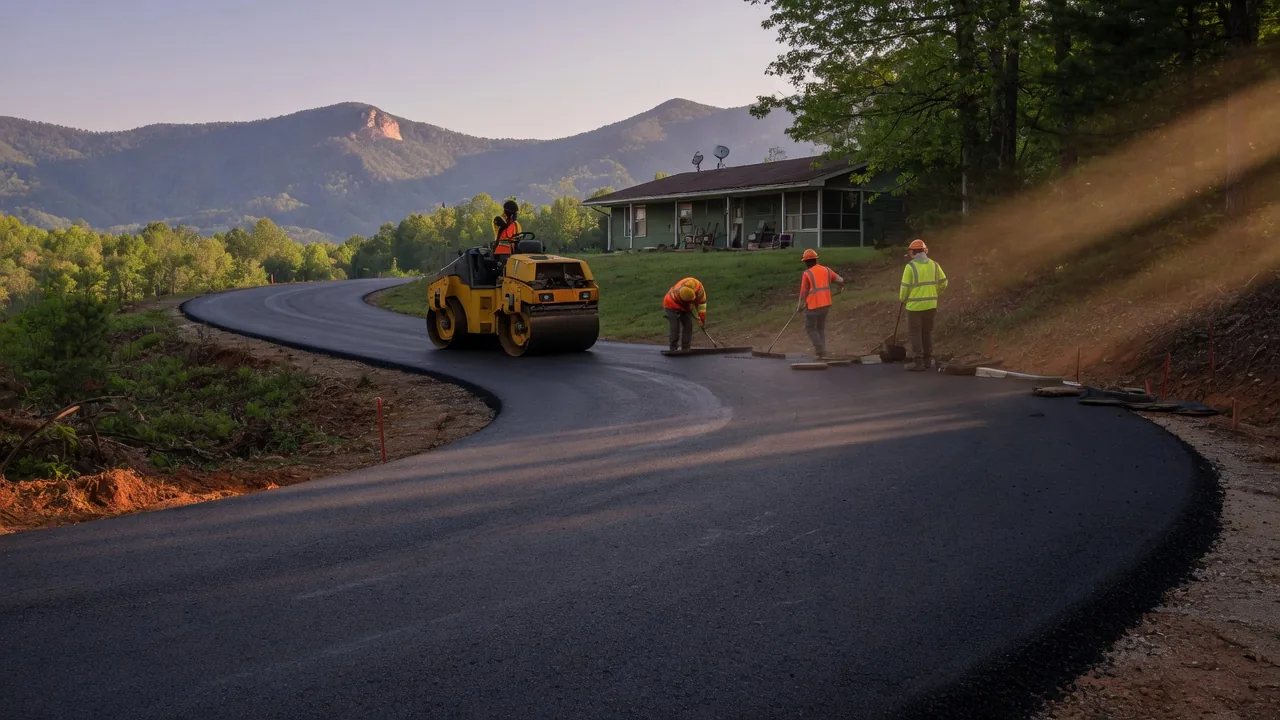
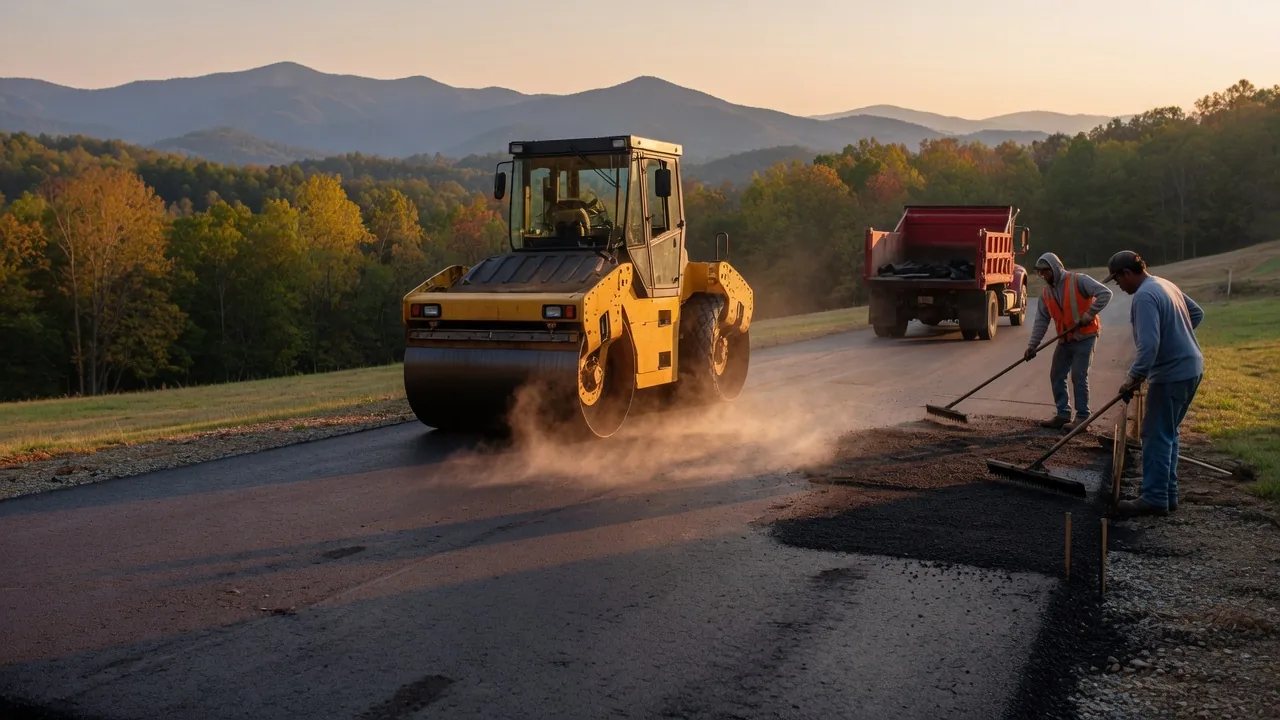
Buncombe County sits at roughly 2,100 feet in the Blue Ridge, which cuts the reliable paving-and-sealing season by four to six weeks compared to the NC piedmont. New asphalt cures through oxidation: light petroleum oils called maltenes evaporate from the surface, the binder stiffens, and only after that process completes does a sealer have a stable substrate to bond to. In Charlotte or Raleigh, summer heat accelerates oxidation enough that 90 days is a workable residential minimum. Around Asheville, nights that drop into the 40s through much of September and early October slow that process considerably; a driveway paved in late September may not reach adequate cure before the first hard frost arrives in the mountains.
| When pavement was laid | Recommended minimum wait before sealcoating |
|---|---|
| Summer (June–August) | 90 days minimum — a late-September application is still feasible in most years |
| Spring (March–May) | 90–120 days — watch the fall window closing around mid-October |
| Fall (September–October) | Wait until the following spring — mountain winters interrupt oxidation |
| Late fall or winter (November+) | Wait until the following summer — too little cure time before first freeze |
| Re-sealing established pavement | 3–5 years after the last coat — no new-cure concern applies |
The 90-day figure is a floor, not a target. The asphalt industry broadly suggests 6 to 12 months as preferable for new residential pavement where scheduling flexibility exists. In this climate, the most practical pattern is a spring or summer pave followed by a fall application that same year, or a fall pave with the first seal pushed to the following spring. The season the driveway goes down matters nearly as much as the raw number of days between paving and sealing — two facts that often surprise homeowners managing a full driveway project for the first time.
What sealing over uncured asphalt actually does
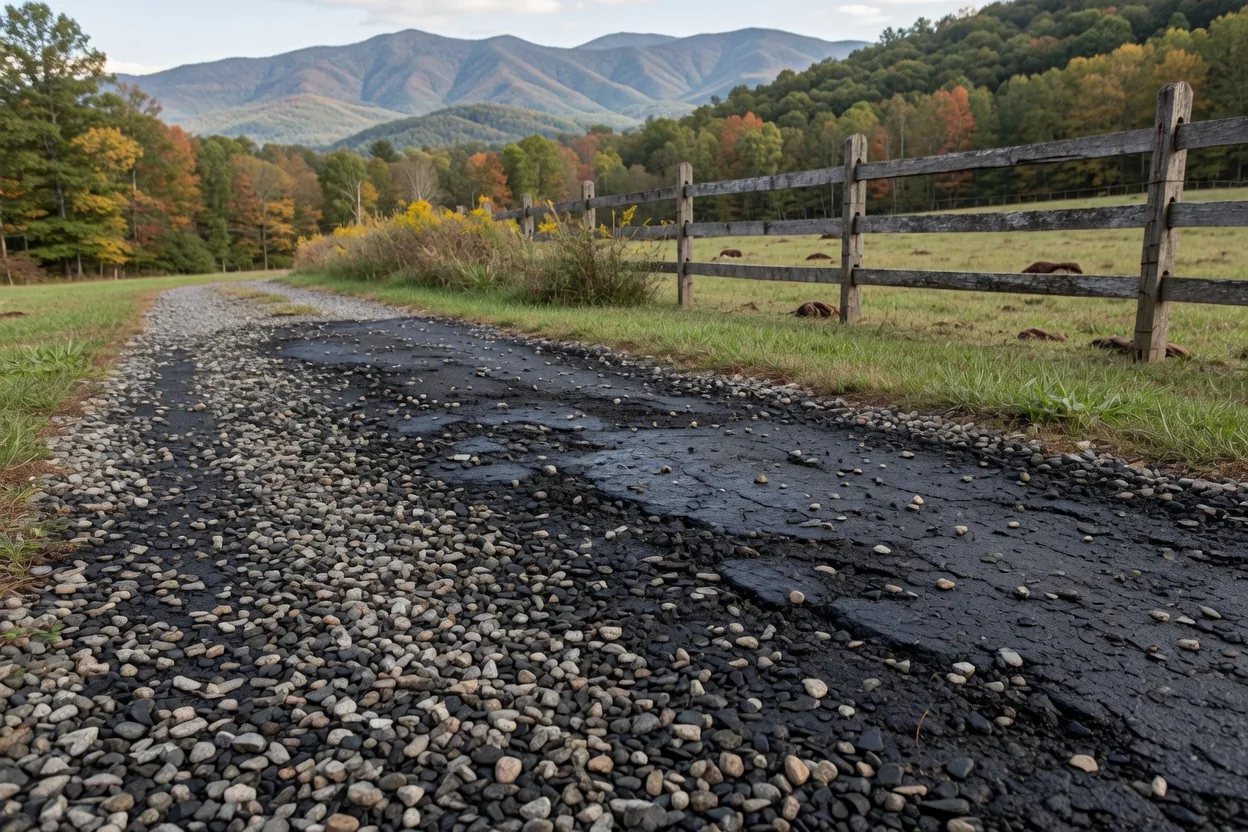
New asphalt contains volatile oils that take months to fully evaporate. Apply a sealer before they are gone and you trap them at the surface, creating a layer that is soft where it should be hard. The visible result: the surface scuffs underfoot, leaves tire ruts in warm weather, and begins to peel or bubble within one to two seasons rather than delivering the three to five years a properly timed sealcoating job should provide.
No manufacturer warranty covers early-application failures. Sealcoat product data sheets universally specify a minimum cure period for new asphalt — often 90 days, sometimes 6 months — and failures traced to sealing too soon are excluded from any recourse. Stripping a failed sealer, re-preparing the surface, and recoating costs more than the original application. A contractor who schedules a seal within days or weeks of laying pavement is either working around their own schedule or unfamiliar with the chemistry.
One specific failure mode is worth understanding in Buncombe County's freeze-thaw climate: a sealer applied over uncured asphalt can trap residual moisture at the bond line. When temperatures drop below freezing, that moisture expands. The result is delamination — the sealer peeling in sheets — which removes the protective function entirely and leaves raw asphalt exposed to the next winter cycle. The sealcoating cost guide covers what a correctly timed application runs in the Asheville area; remediation for a failed early coat comes on top of that figure.
The application window in Buncombe County's mountain climate
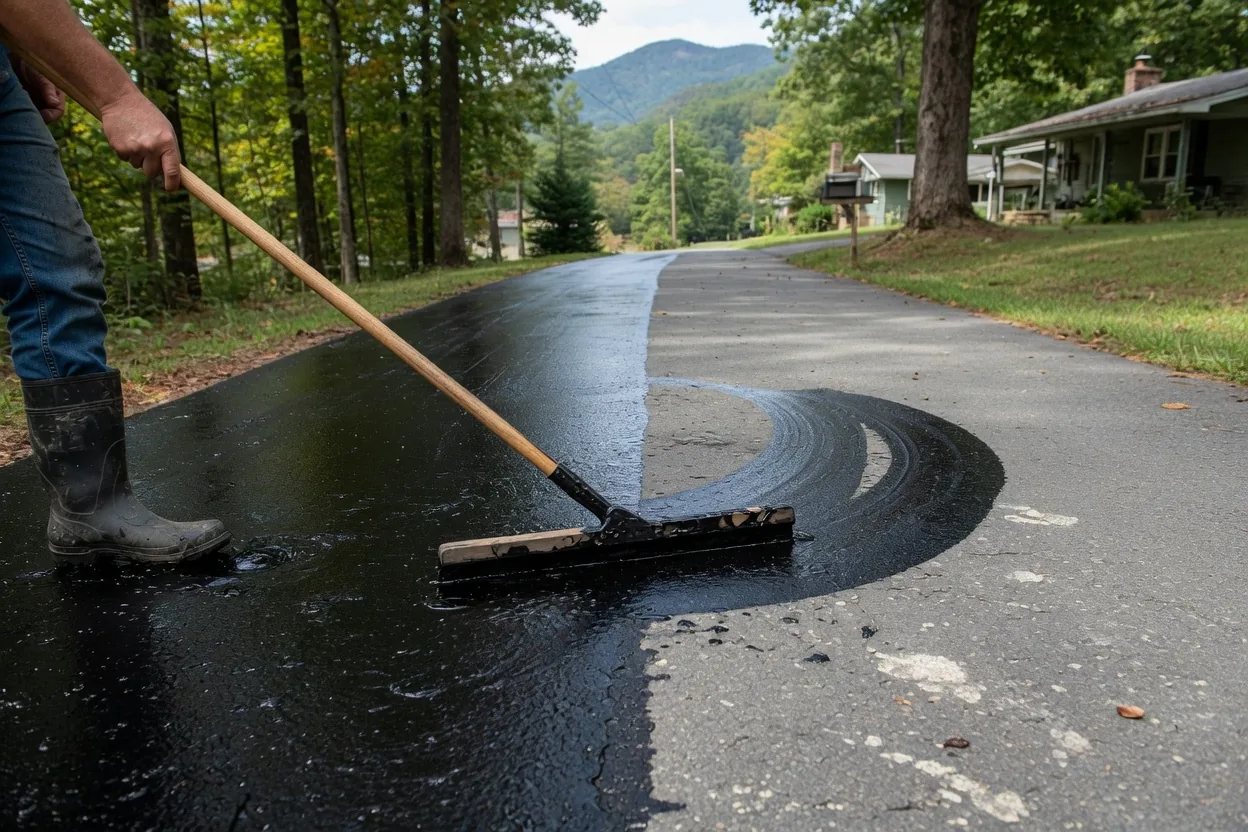
Beyond cure time, sealcoat application itself has weather requirements that are stricter in the mountains than on the piedmont. Most coal-tar and acrylic sealers specify that both air temperature and pavement surface temperature must exceed 50°F at the time of application and remain there for at least 24 hours afterward. Some products specify 55°F. Pavement in shade, or on north-facing slopes common in Buncombe County's mountain terrain, reads several degrees cooler than open-sun surfaces even when ambient conditions appear acceptable. Contractors must measure the pavement directly, not just consult the forecast.
Rain adds a second constraint: most specifications require a dry window of 24 hours before and 24 to 48 hours after application. The National Weather Service forecast data for the Asheville area shows that reliable dry windows shorten through September and October, as frontal systems arrive more frequently and afternoon convective storms remain possible into early fall. Scheduling sealcoating in October in Buncombe County carries a higher rescheduling risk than the same work in July, and contractors who work this market build weather contingency into fall bids accordingly.
The practical sealing season in this area runs from roughly May through mid-October in most years, with the most reliable window between June and mid-September. During shoulder months, crews typically delay start times until pavement surfaces warm — often until 10 or 11 a.m. rather than first light — to ensure the surface has cleared the temperature threshold after mountain overnight lows. Homeowners booking fall work should confirm the contractor's weather-cancellation policy before signing.
State road connections and permit requirements
If a driveway connects to a state-maintained road — common in rural Buncombe County, where NCDOT maintains many secondary routes — the department has jurisdiction over the driveway apron at the roadway edge. Sealcoating is maintenance and does not require a permit in that zone. Repaving or resurfacing the apron where it meets a state road shoulder is a different matter: that work requires a driveway encroachment permit, filed through NCDOT Connect before any work begins. NCDOT Division 13 covers Buncombe County.
For properties within the City of Asheville's limits, the City of Asheville maintains its own road network separately from the state system, and connections to city-maintained streets go through city permitting rather than the NCDOT encroachment process. The distinction matters because the city's urban core has tighter right-of-way standards and different inspection sequences than rural county routes.
For homeowners coordinating a full driveway repave — base, surface course, and eventual seal — the permit clock and the cure clock run in parallel, not in sequence. Both need to be planned before a contractor is scheduled. Once new pavement is down, the guide to driving on new asphalt covers what the weeks before sealcoating look like from a traffic standpoint.
The timing record that protects you at resale and in storm claims
A sealcoat applied too early fails inside two years rather than three to five. A buyer's home inspector who sees a recent seal on a recently paved driveway knows how to read the dates; if the application falls inside the cure window, the conversation about the driveway surface reopens during negotiation. The documentation required is minimal: paving date, contractor, sealer product and spec, and application date form the complete file. Keeping it costs nothing.
Buncombe County has seen 19 federal disaster declarations over 1973-2026, with water-driven pavement damage a recurring outcome in the mountains. An insurer reviewing a storm-related claim that involves the driveway or drainage will ask about surface condition and installation history. A premature or failed sealcoat is not a strong position in that review. For driveways connecting to the public road system, adding a copy of the NCDOT encroachment permit to the file confirms the apron work was done to the department's specifications — a detail that surfaces in both resale disclosure and insurance inquiries.